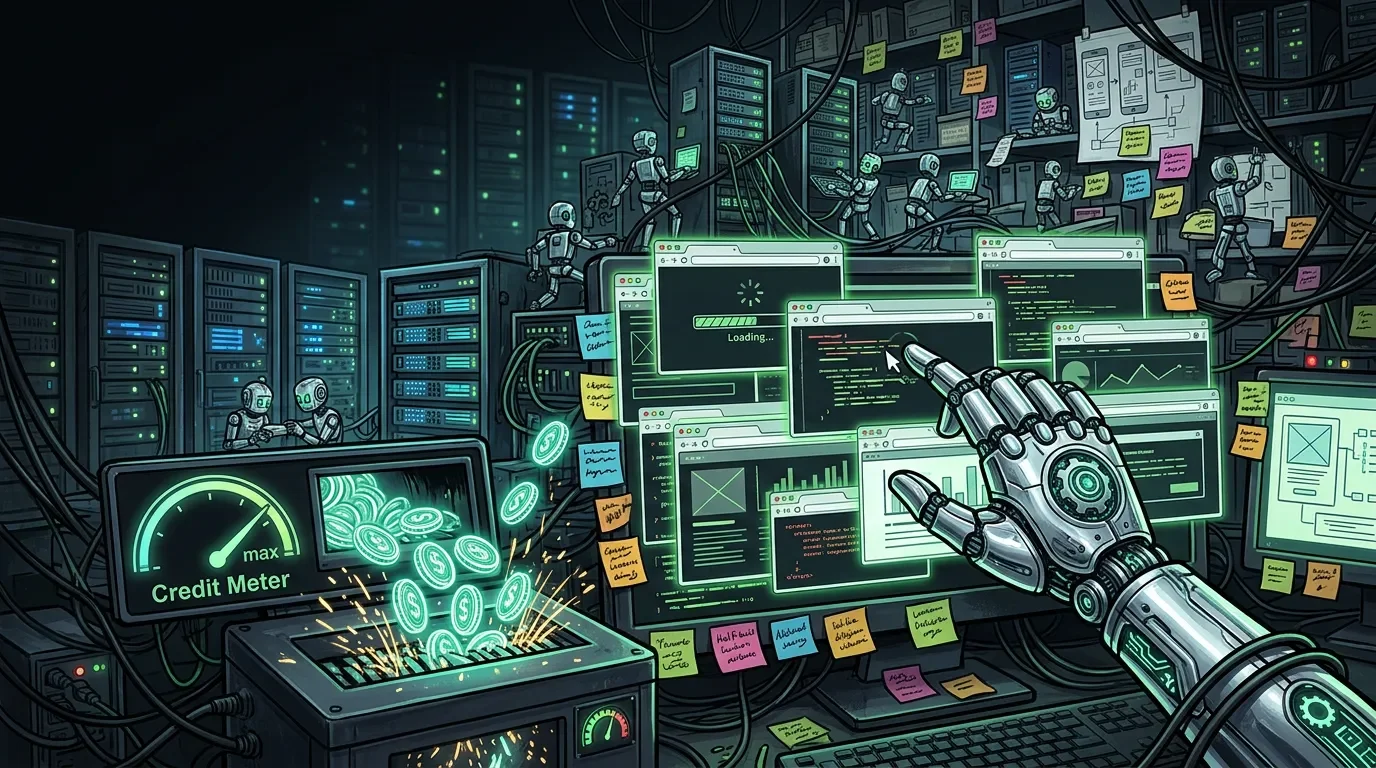
Manus: The $2B Agent That Turned Autonomy Into a Credit Shredder
Manus sells itself as a general AI agent that turns goals into finished work. The evidence points to a powerful but expensive prototype machine: big Meta drama, opaque credits, uneven app output, and real users watching the meter burn while the agent stalls.

研究速览
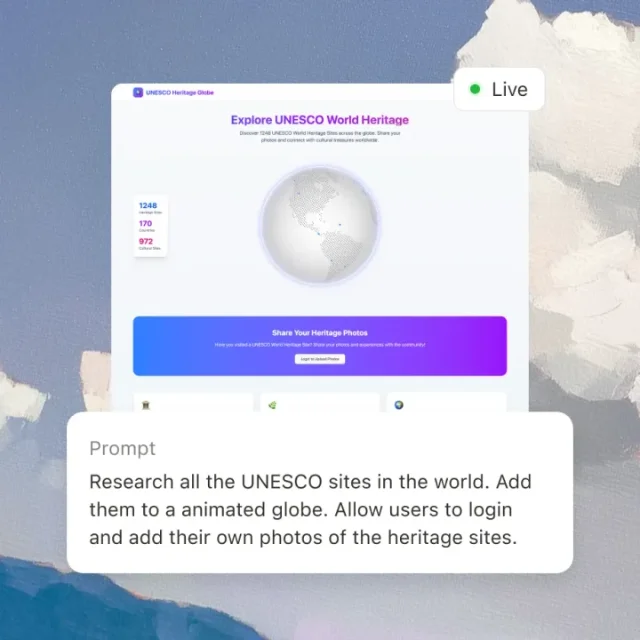
Manus has the perfect 2026 AI pitch: stop chatting with software and let a general-purpose agent do the work while you go touch grass. The homepage says it can create slides, build websites, develop desktop apps, design, and more; the web-app page goes bigger, promising "production-ready apps in minutes, not months" and "full-stack website from a single prompt" with a database, backend, auth, Stripe, analytics, and code export 1.
That is not a product page. That is a hostage note from the future of work.
The reality check: Manus looks less like an employee and more like a very expensive intern who found the cloud-computing budget. It can do impressive demos. It can also burn through credits, wander off mid-task, ship placeholder-looking prototypes, and make users babysit the "autonomous" worker they were told would free them.
The hype pitch: your AI development team, apparently
Manus sells itself as the execution layer for AI. Not a chatbot. Not a copiloting sidecar. A thing that takes a goal, spins up a working environment, browses the web, writes code, generates files, and hands back finished work. Its docs say credits are consumed based on the complexity and resources required for each task, and tell users to choose the right agent type, batch similar tasks, and review intermediate outputs to avoid wasted credits 2. Cute. Even the manual is quietly saying: please supervise the autonomous miracle.
Manus's own Meta announcement gives the most dramatic version of the story. The company said that in just a few months its agent had processed more than 147 trillion tokens and powered the creation of more than 80 million virtual computers 3. Those are monster numbers. They also read like a warning label: this product's core trick is turning vague human intent into a lot of machine activity.
The acquisition hype did not hurt. Meta said it was buying Manus to deliver general-purpose agents across consumer and business products, while BBC reported that analysts and The Wall Street Journal suggested the deal could be worth more than $2 billion 4. Reuters then reported on June 18 that early Chinese backers were planning to buy Manus back from Meta at the $2 billion price, and that The Information reported Manus's annualized revenue run rate had surged to $400 million to $500 million, up from $100 million when Meta acquired it 5.
So yes, the hype is real. The cap table is foaming. The numbers are big. The agent economy has another mascot.
Now open the product and try to get work done.
Reality check: the invoice can outrun the task
The most consistent complaint is not that Manus does nothing. That would be too easy. The complaint is worse: Manus does something, charges for the attempt, then sometimes leaves the user holding a half-finished mess and an empty credit balance.
One Reddit user in r/ManusOfficial wrote that they tried editing "a couple bugged pieces" of a single TSX file, had 800 credits, submitted one 100KB file, and watched Manus get stuck on task 2/6 for almost 40 minutes before burning every credit without completing the task or printing the file 6. That is not agentic AI. That is a vending machine eating your dollar, thinking deeply, and then dispensing a receipt that says "continue?"
正在加载内容卡片…
The same thread had a commenter saying Manus "burns through credits WAY too fast" and that they had upgraded plans twice in one month just to get more credits 6. Another Reddit post in r/AI_Agents called Manus "the Fyre Festival of AI platforms" and said a looping task burned about 88,000 credits before a Manus co-founder later followed up about a refund and extended Pro membership 7. That update matters: support did eventually engage. It also does not erase the core product smell. If a founder has to personally appear after the bonfire, the billing model is already doing PR in hard mode.
正在加载内容卡片…
Independent reviewers found the same pattern, minus the Reddit profanity. Till Freitag's March review called Manus "impressively autonomous — but not an autopilot" and warned that complex tasks can consume 500 to 900 credits, while long tasks may repeat steps, lose track, deliver incomplete results, or hallucinate pricing, statistics, and quotes 8.
Lindy's review needs a bias label because Lindy sells an alternative AI assistant. Fine. Label applied. The useful part is the hands-on test: Lindy gave Manus a digital-detox web-app brief, Manus completed all six planned steps, then delivered an app that the reviewer said looked like it was designed in 2005, included placeholder usage data such as 4.5 hours on Instagram and 6.5 hours on gaming, and still did not feel shippable after two rounds of feedback 9.
That is the Manus contradiction in one screenshot: the progress bars go green while the product output asks if GeoCities is hiring.
The catch: "autonomous" means you supervise the machine and the meter
The marketing phrase is "minimal human input". The operational reality is closer to: prompt carefully, monitor the run, check the facts, inspect the code, watch the credits, and pray the agent does not decide that a loop is a lifestyle.
Manus itself tells users to be specific, use chat mode for simple questions, batch tasks, and review intermediate results because unclear or multi-phase tasks waste credits 2. That is sensible advice. It is also the opposite of the fantasy being sold. If the user has to become a project manager for the agent, the job title changed; the labor did not disappear.
The web-app builder pitch is especially spicy. Manus claims users can "deploy production-ready apps" without engineering bottlenecks, with real backend, database, auth, Stripe, SEO, analytics, notifications, lead management, code export, version control, and rollback 1. That is a lot of surface area to trust to a conversational build flow. Every one of those nouns has failure modes. Auth fails differently than CSS. Stripe fails differently than SEO. Database design fails permanently if you are unlucky enough to get real customers.
The smart read is not "Manus is useless". It is more damning: Manus is powerful enough to tempt people into using it past the boundary where they understand the output.
For research spreadsheets, first drafts, market maps, and throwaway prototypes, the agent can be genuinely useful. The reviewers who criticize it still give it credit for research and prototyping 8. The problem begins when the pitch slides from "accelerates tedious work" to "your AI development team". A development team can explain tradeoffs, own production incidents, estimate cost, and stop when the task is obviously dumb. A credit-burning agent will gladly continue being very busy.
The business story is louder than the product story
The weirdest part of Manus is that its business drama is more legible than its user value. Reuters reported in May that Manus co-founders were weighing options to comply with China's order to unwind Meta's $2 billion-plus acquisition, including raising about $1 billion from external investors to buy their way back 10. The June report added that Meta had executed an operational split internally and stopped data sharing between the firms after Beijing's order 5.
So while users are asking why a TSX edit can eat 800 credits, the company is starring in a geopolitical fintech escape room involving Meta, Beijing, buybacks, annualized revenue run-rate math, and a possible Hong Kong listing. Nothing says "trust this agent with your production workflow" like a corporate structure doing parkour.
That does not make Manus fake. It makes the hype dangerously ahead of the product contract. The business wants to be priced like infrastructure. The user experience still behaves like a lab demo with a slot-machine handle.
Verdict: what you're buying is compute roulette with a nice onboarding flow
Manus is not the dumbest AI app in the room. That title has too many applicants. Manus can browse, plan, generate, and sometimes deliver useful work. It has a serious technical idea underneath it: give an agent a real computer, tools, files, browser access, and enough parallelism to attack messy tasks.
But the product being sold is not simply "AI that does work". It is metered uncertainty. You pay not just for the answer, but for the agent's wandering path toward maybe-answer. When it succeeds, it feels like magic. When it fails, it feels like being charged admission to watch software get confused.
The hype claim: Manus is your autonomous AI worker.
The reality: Manus is a high-agency prototype machine with unpredictable cost, uneven output quality, and enough user complaints to make the credit meter the main character.
Use it for research drafts, disposable prototypes, and experiments where you can tolerate babysitting. Do not hand it production systems, sensitive workflows, or a blank check. If your "AI employee" needs you to supervise the task, audit the facts, debug the output, and monitor the billing dashboard, congratulations: you did not hire an employee. You bought a Tamagotchi with a cloud bill.
参考来源
- 1AI website builder — Build full-stack web apps with Manus
- 2Plans and Pricing - Manus Documentation
- 3Manus Joins Meta for Next Era of Innovation
- 4Meta buys Chinese-founded AI agent start-up Manus
- 5Manus original investors plan to buy back AI firm from Meta for $2 billion, The Information reports
- 6Credit System Makes Manus Absolutely Unusable
- 7Manus AI: the most overhyped scammy AI platform you'll ever waste money on
- 8Manus AI Review 2026: What the Autonomous AI Agent Actually Delivers – and Where It Falls Short
- 9My Honest Manus AI Review: Can It Win Against The AI Giants?
- 10China's Manus founders seek $1 billion to undo Meta takeover, Bloomberg News reports
围绕这条内容继续补充观点或上下文。