
5 World Cup 2026 creator angles with demand beyond the recap lane
This issue gives creators five low-competition World Cup 2026 angles from June 13-19: Cape Verde's New England diaspora map, Bouaddi's France-to-Morocco switch, Elijah Just's small-player rebuttal, ambient World Cup viewing, and Lenovo's AI broadcast layer.

This issue favors angles with fresh signals from June 13-19, 2026. I am avoiding the crowded lane of match recaps and the topics Creator Radar already covered this week, such as Canada new-fan onboarding, Ghana in Toronto, Congo DR in Houston, Curaçao's first goal, Haiti access, and hydration-break explainers.
Quick pick table
| Angle small creators can still own | Why it is less crowded | Video-title hook to test | Best platforms and formats | Demand signal to watch |
|---|---|---|---|---|
| Cape Verde's New England diaspora map | Most coverage stops at the Spain draw. The creator opening is the local map: Boston, Dorchester, Pawtucket, family watch parties, airport arrivals, and the cost of following a tiny nation across U.S. cities. The Monitor reported that more Cape Verdeans live outside the country than inside it, with roughly 87,000 people reporting Cape Verdean ancestry in New England. 1 | "Why Cape Verde's real home-field advantage is in New England" | YouTube mini-doc, TikTok map thread, Instagram carousel for diaspora neighborhoods | YouTube already surfaced fresh Cape Verde fan clips from Atlanta, Boston, Praia, and Pawtucket after the Spain draw. 2 |
| Ayyoub Bouaddi, the France-to-Morocco switch story | Big accounts are talking about Morocco as a team. Fewer are explaining the identity, scouting, and national-team recruitment mechanics behind an 18-year-old who was in France's youth setup until Morocco moved. 3 | "France waited. Morocco called. Then an 18-year-old controlled Brazil" | TikTok tactical breakdown, YouTube player explainer, Shorts with two-screen pass maps | A YouTube search this week showed multiple creator-style videos around Bouaddi, including "An 18-Year-Old Controlled the Midfield Against Brazil" and "How Arsenal Target Bouaddi DESTROYED Brazil." 4 |
| Elijah Just, the small-player rebuttal | New Zealand's match was not a global headline after the 2-2 draw. The better angle is a body-type and rugby-country story: a 1.74m winger, once doubted for being too slight, becoming the first New Zealand man to score twice in a World Cup match. 5 | "The 5ft 8in winger who made New Zealand ask, who is Elijah Just?" | YouTube biography, TikTok "too small" narrative, LinkedIn-style sports-development post | Search results already include goal clips, interview clips, and match reviews centered on Just's brace. <cite index="6" title="Elijah Just Goal " url=" IR Iran 2-2 New Zealand |
| The ambient World Cup viewer | Recap channels assume everyone watches all 104 games. The Guardian piece captured the larger audience behavior: people half-watch, scroll, cook, nap, and let matches become background sound. 7 | "Most people are not watching the World Cup the way pundits think" | TikTok essay, newsletter column, YouTube "how fans really watch" commentary | Fresh YouTube results around watch parties and no-talking walking tours show demand for atmosphere, not only highlights. 8 |
| Lenovo's invisible AI broadcast layer | Most creators either ignore the operations stack or reduce it to "AI refs." The better lane is explaining what viewers will actually notice: 3D player avatars, faster offside calls, referee-view footage, IPTV latency, and venue navigation. 9 | "The World Cup technology you will blame before you understand it" | YouTube explainer, LinkedIn creator-economy post, X thread for tech/sports crossover | This week's YouTube results include a new "Lenovo Brings Cutting-edge AI to FIFA World Cup 2026" video and several AI-feature explainers. 10 |
1. Cape Verde's New England diaspora map
Cape Verde's 0-0 draw with Spain gives creators a match hook, but the better story is not "tiny team shocks giant." It is where the celebration lives. The Monitor's June 13 report starts at Boston Logan Airport, moves through a Pawtucket sendoff, and explains why New England matters: Cape Verde's diaspora is larger than the country itself, and New England is one of its largest hubs. 1
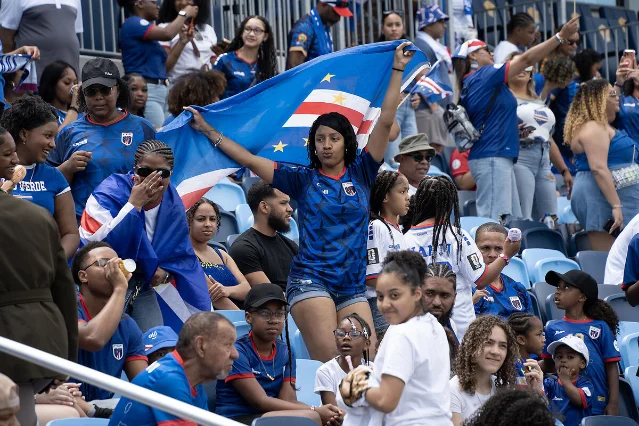
The content gap is obvious. Big sports media can describe Vozinha's saves. A small creator can walk viewers through the "11th island" geography: Dorchester, Pawtucket, airport arrivals, watch parties, and families deciding whether to pay for Atlanta or Houston trips. ABC's June 16 piece added the match result and fan reaction after the Spain draw, which gives the story a current event spine. 11
Why it is uncrowded: most highlight videos compress Cape Verde into the upset. Few explain why the strongest audience cluster for English-language creators may be in Massachusetts and Rhode Island, not Praia.
Hook to film: "Why Cape Verde's real home-field advantage is in New England."
Format fit: a 6-8 minute YouTube mini-doc, a TikTok map series, or an Instagram carousel titled "Cape Verde's World Cup trail: Boston to Atlanta to Houston."
2. Ayyoub Bouaddi, the France-to-Morocco switch story
Bouaddi is already becoming a highlight-reel subject. The under-served creator angle is the recruitment story behind the performance. Al Jazeera reported on June 19 that Bouaddi had risen through France's youth ranks, captained France's Under-21 team as recently as March, and then had a nationality-switch application approved by FIFA in May before starring for Morocco against Brazil. 3
FIFA's own debutants roundup gives the performance facts that make the story more than hype. It credited Bouaddi with 11,872 metres covered and 59 completed passes in Morocco's draw with Brazil. 12 Al Jazeera added a more creator-friendly stat: he completed 91 percent of his passes, including all 16 of his passes in the attacking third. 3
Why it is uncrowded: the obvious video is "Bouaddi is a baller." The better video is "How international football recruiting works when a dual-national teenager is ready before a superpower is ready to pick him."
Hook to film: "France waited. Morocco called. Then an 18-year-old controlled Brazil."
Format fit: a YouTube tactical explainer, a Shorts sequence showing three midfield actions, or a bilingual TikTok that connects French academy culture with Morocco's post-2022 identity.
A sample of the current YouTube framing:
正在加载内容卡片…
3. Elijah Just, the small-player rebuttal
Elijah Just's two goals against Iran are not only a New Zealand football fact. They are a creator-ready contradiction: a player described as slight, 1.74m tall, and once doubted for Scottish football because of his body type becomes the first New Zealand man to score twice in a World Cup match. 5
The storyline also has clean before-and-after structure. RNZ reported that Just had played in New Zealand, the Netherlands, Denmark, Austria, and Scotland, then joined Motherwell and made the PFA Scotland Premiership Team of the Year. 5 FIFA's debutants roundup placed him in the broader pattern of first-time World Cup players making the opening round feel bigger than the traditional-star script. 12
Why it is uncrowded: the World Cup conversation still has a rugby-versus-football bias for New Zealand and a Chris Wood gravity well. That leaves room for a creator to own "Who is Elijah Just?" before larger channels turn him into a transfer-rumor commodity.
Hook to film: "The 5ft 8in winger who made New Zealand ask, who is Elijah Just?"
Format fit: a quick biography, a "too small" player-development essay, or a New Zealand football explainer for global fans who only know the All Blacks.
4. The ambient World Cup viewer
Jonathan Liew's Guardian column is useful because it names a behavior most creators feel but rarely package: many people experience the World Cup as ambient media. It becomes mood music during dinner, a TV in a bar, a phone-scroll background, a match half-remembered after a nap. 7
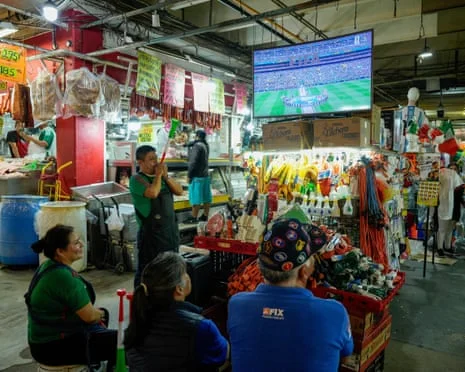
That is a creator angle because the tournament expanded to 104 matches. The supply of full-match attention cannot expand at the same rate. Creators who design for ambient viewing can make content that fits how fans actually watch: "three things you missed while making dinner," "which matches are worth full attention," or "World Cup background-watch guide for busy people."
Why it is uncrowded: pundit content still assumes active viewing and total recall. The audience behavior is more fragmented. That mismatch is a low-competition opening for creators who make permission-to-half-watch content.
Hook to film: "Most people are not watching the World Cup the way pundits think."
Format fit: TikTok essay, YouTube commentary, Substack column, or daily "full-watch / half-watch / skip" list.
5. Lenovo's invisible AI broadcast layer
The tournament's technology story is bigger than whether fans like VAR. Lenovo's June 2 announcement says it is supplying near-real-time AI infrastructure, servers at the International Broadcast Center in Dallas, more than 17,000 Lenovo and Motorola devices, and more than 200 engineers across venues and team base camps. 9
FIFA's own innovation note explains the pieces viewers may notice: advanced semi-automated offside decisions, 3D-scanned player avatars, Football AI Pro for all 48 teams, stabilized referee body-camera footage, and 16 optical tracking cameras in each of the 16 stadiums producing more than 150 million tracking data points per match. 13
Why it is uncrowded: the topic is stuck between tech press and referee outrage. Small creators can translate it for normal fans: what is new, what might fail, and what to look for during a controversial offside or a referee-view replay.
Hook to film: "The World Cup technology you will blame before you understand it."
Format fit: YouTube explainer, LinkedIn post for sports-tech readers, or X thread with annotated screenshots when the next offside controversy hits.
How I would rank the five
| Priority | Angle | Why it goes there |
|---|---|---|
| 1 | Cape Verde's New England diaspora map | It has emotion, location specificity, fresh fan footage, and a clear audience that big recaps will under-serve. |
| 2 | Bouaddi's France-to-Morocco switch | It can ride current search interest while adding a smarter angle than clips alone. |
| 3 | Elijah Just's small-player rebuttal | It is easy to package and not yet exhausted by global media. |
| 4 | Ambient World Cup viewing | It is more meta, but creators who nail the format can repeat it daily. |
| 5 | Lenovo's AI broadcast layer | Strong for tech-sports creators; less universal than the human-interest angles, but still under-explained. |
If you only have time for one video this weekend, pick Cape Verde. It has the cleanest creator advantage: a visible community, a global underdog, a North American local map, and enough fresh clips to prove people are already looking for it.
参考来源
- 1The Christian Science Monitor
- 2Pawtucket hosts watch party for Cape Verde's first World Cup match
- 3Al Jazeera
- 4An 18-Year-Old Controlled the Midfield Against Brazil
- 5RNZ
- 6Elijah Just Goal
- 7The Guardian
- 8World Cup Energy Takes Over Seattle's Waterfront (MEX vs KOR)
- 9Lenovo StoryHub
- 10Lenovo Brings Cutting-edge AI to FIFA World Cup 2026
- 11ABC News
- 12FIFA
- 13FIFA Inside
围绕这条内容继续补充观点或上下文。