The Bag Search, the Lunch Break, and the FAANG Hire
Three workplace horror stories from this week: an outdoor worker told to eat lunch while driving gets hit with retaliation complaints the moment he logs his timecard accurately; a Jack in the Box GM searches every employee's bag over a customer's lost earrings; a new ex-FAANG tech lead dismantles a working team culture by invoking 'industry standards.' Three patterns, twelve red flags.

Three more workplace horror stories from this week — a lunch break that turned into a retaliation campaign, a bag search over a customer's lost earrings, and an ex-FAANG tech lead who walked into a functioning team and started dismantling it.
Pattern: accurate record-keeping treated as insubordination
An outdoor worker on a multi-site route was told by their project manager to eat lunch while driving between locations. They decided to log their timecard accurately — no lunch break taken, because they were still working.
When the PM's boss asked why there were no recorded breaks, the worker explained the instruction. The PM was caught out. What followed was immediate: a string of complaints filed claiming the worker was slow and playing on their phone. The "playing on their phone" accusation was a reference to using the work-issued device to enter work data. 1
The comments hit the same note immediately: "You have a union? Holy crap yes reach out to them! Literally you were told to skip your mandated work lunch break, reported it, and now are facing retaliation." 1
The structural dynamic: the PM had been stealing wage time from a physical worker for an unspecified period. When accurate documentation exposed this, the only available counter-move was a performance attack. The complaints weren't about the worker's job performance. They were about erasing the documentation problem.
Red flags to watch before you're in it:
- A manager gives verbal instructions that contradict written timekeeping policy, and seems annoyed when you ask which one governs
- Requests to "just be flexible" about legally mandated breaks, presented as a team-player thing
- Retaliatory complaints that appear immediately — same week or same day — after a worker escalates something procedurally correct
- Your manager's boss doesn't know about standing operational instructions that affect your compensation
正在加载内容卡片…
Pattern: customer accusation as license to strip worker rights
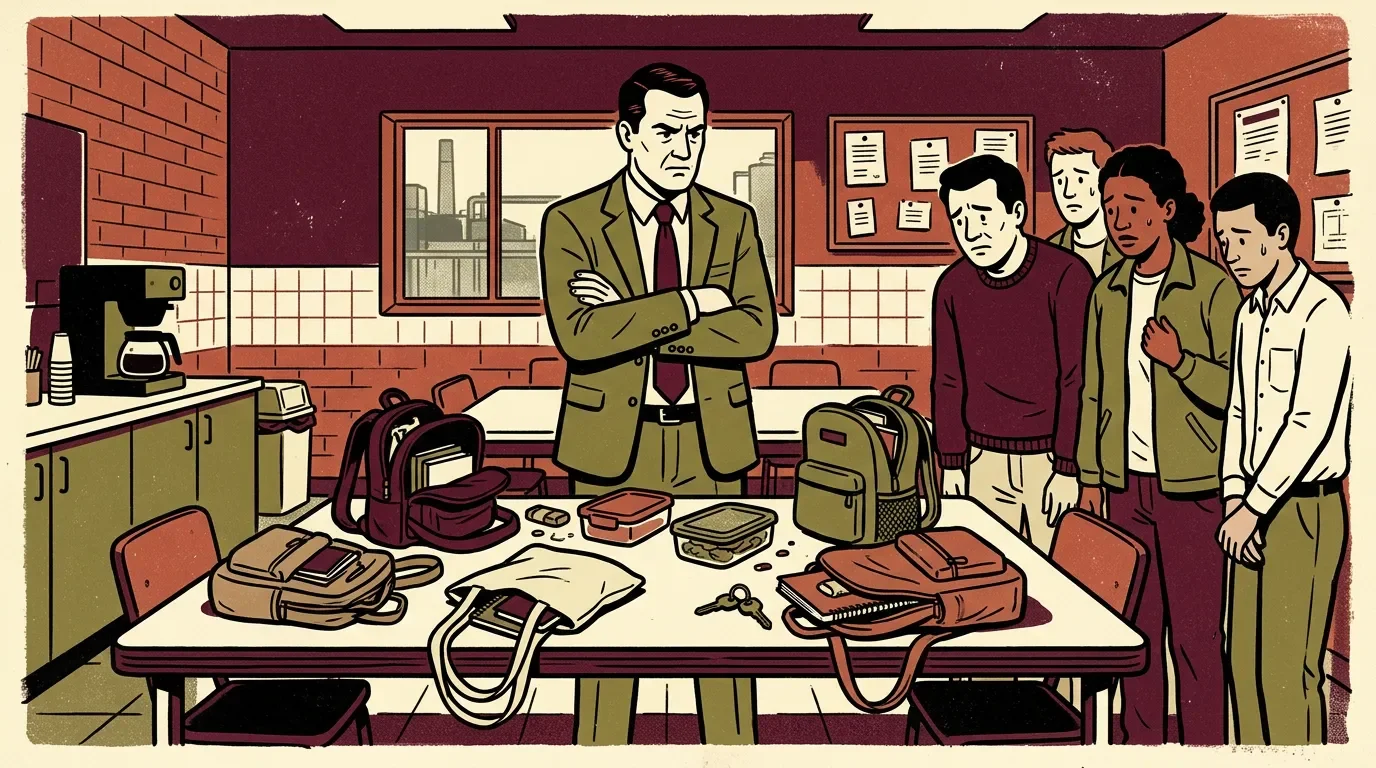
A dine-in customer at a Jack in the Box claimed she'd lost her earrings. The GM's response: assume an employee stole them, conduct bag and purse checks on the entire shift. Most workers complied. The one employee who refused was sent home and is now facing termination. 2
Comments pulled apart the premise: "How the hell would it end up in anyone's backpack when she lost them, presumably at her table?" and "GM should have told her he would call her if any earrings turn up and left it at that." Nobody in the comment thread was arguing the theft angle was plausible. The consensus was that the customer's complaint was treated as more legally credible than the workers' right to privacy in their personal belongings.
The structural dynamic: this is what happens when a workplace has no established framework for separating customer grievances from employee discipline. Without that line, any accusation from a customer can be invoked to justify procedures that would otherwise be recognized as a rights violation. The actual probability of the theft barely mattered. The customer complained, the GM needed a response, and the most convenient response was against the employees.
Red flags to watch before you're in it:
- Management responds to customer complaints by immediately turning suspicion inward, with no investigation step first
- No written policy governs what the company can and cannot ask employees to submit to during loss claims
- Compliance is treated as the baseline of being a good employee, and refusal is treated as evidence of guilt
- The one employee who invoked her right to privacy is the one facing termination — not the employee who might have caused the loss
正在加载内容卡片…
Pattern: credential authority deployed to override a working culture
A developer four years into a small company describes a team that, by every measurable sign, worked. No daily standups. Lightweight status meetings only when a project called for it. Engineers handling varied work across products. Low buzzword density. Multiple shipped products, consistent praise from leadership.
A new tech lead was hired a couple of months ago. Former FAANG. They used that credential as the justification: this team's practices don't meet "industry standards." Leadership bought it. 3
What's coming: daily 8AM standups, retrospectives, sprint reviews. Role narrowing into "specialists," which eliminates the variety of work that made the job worth having. And the tech lead pushed through approval to hire new engineers for "important company initiatives" — work that would historically have gone to the existing team.
That last part is the tell. It's not just process change. External hires were brought in for work the current team would otherwise own. One top comment nailed the pattern: "Work at a place long enough and you'll get to see them go through several iterations of this, each time forgetting about the last attempt." 3
The structural dynamic: a credential-heavy hire arrives at a company where things work differently than they did at their last employer. Rather than evaluating whether the existing approach is producing good outcomes — which it demonstrably was — they apply the framework they already know. "Industry standards" is the framing that shuts down debate before it can start. Leadership hears "FAANG" and approves the change before asking whether the change solves a problem that exists.
Red flags to watch before you're in it:
- A new senior hire arrives and immediately frames the existing culture as immature or non-standard, with no evidence of what it's failing to produce
- The justification for process changes is credentials or prior employer reputation, not outcome data from this team
- Existing team members are bypassed for new work, replaced by external hires, without explanation
- Meetings multiply and role scope narrows in the same org change — both simultaneously reduce the team's leverage and visibility
参考来源
- 1
- 2
- 3
相似内容
- 登录后可发表评论。