Day 6: Class 1, 2, or 3 — what your eBike's label actually means

Day 6: Class 1, 2, or 3 — what your eBike's label actually means

Every eBike sold in the U.S. carries a class label — Class 1, 2, or 3 — that determines where you can legally ride it, how fast the motor will assist you, and whether a throttle is included. This lesson breaks down all three classes with a comparison table, explains the Class 2 Rad Power Bikes RadCity 5 Plus as a real example, and gives you a two-step exercise to find your bike's class and check local trail access.

eBike School: 30-Day Daily Micro-Lessons
2026/6/11 · 8:12
1 订阅 · 7 内容

Today's concept: what the three eBike classes mean for you

You've probably noticed a sticker on your eBike — or seen "Class 1," "Class 2," or "Class 3" in product listings — without a clear explanation of what any of it means for your daily life. By the end of today's lesson, you'll know exactly what each class allows, where you can ride, and how to use that classification to make smarter decisions about the bike you choose (or already own).
Why it matters: the class label isn't just a marketing tag. It determines where your eBike is legally allowed, what equipment it must have, and — in some states — whether you need a helmet by law.

How the three-class system was created

The Class 1/2/3 framework didn't come from the federal government. It was developed around 2015 by PeopleForBikes and the Bicycle Product Suppliers Association to give regulators, trail managers, and riders a common language. 1 California adopted it first under Assembly Bill 1096, and as of 2024, more than 36 U.S. states recognize the framework. 2
The core idea is straightforward: the faster an eBike can go with motor help, and whether it has a throttle, the more it resembles a motorized vehicle — and the more restrictions apply.

The three classes, side by side

Class 1Class 2Class 3
Max assisted speed20 mph20 mph28 mph
ThrottleNoYesNo (or 20 mph cap)
Speedometer requiredNoNoYes
Minimum age (common)161617
Typical accessBike lanes, paths, most trailsBike lanes, pathsRoad lanes, bike lanes only
3
正在加载统计卡片…
The standout difference: Class 3 is faster and locked out of most shared-use trails, while Class 2 trades speed for a throttle. Class 1 is the most widely permitted option across parks and paths.

Class 1: pedal-assist only, 20 mph

A Class 1 eBike provides motor assistance only while you pedal, and it cuts out at 20 mph. No throttle, no coasting with motor help.
This is the broadest access category. Because Class 1 eBikes behave the most like conventional bicycles, they are generally allowed wherever traditional bikes can go — including mountain bike trails, multiuse paths, and greenways. If you're buying your first eBike and want the fewest restrictions, Class 1 is the safest bet. 1
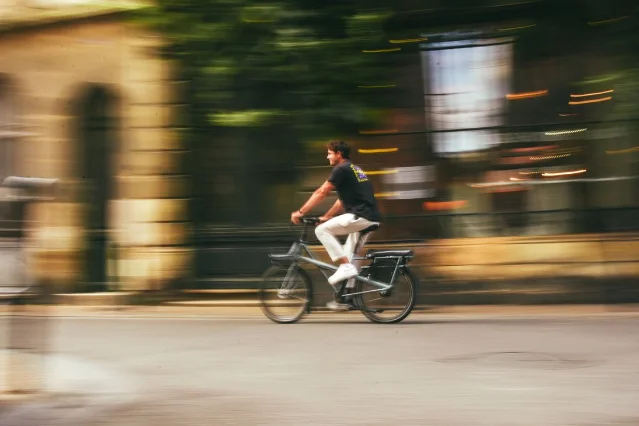
Man riding an electric bike through a city street with motion blur
Class 1 bikes are common on urban streets and shared paths — this is what a typical city eBike commute looks like. Photo by Jean Fourche via Pexels

Class 2: pedal-assist plus throttle, 20 mph

A Class 2 eBike has everything Class 1 has, plus a throttle — typically a thumb lever or a twist grip. The throttle lets you get motor power without pedaling, which is useful for starting from a stop on a hill, or giving your knees a rest on a flat stretch.
The assist cap is still 20 mph. If the throttle is the only difference, why does Class 2 matter so much? Because some trail systems, parks, and multi-use paths ban Class 2 bikes even when Class 1 is allowed — the presence of a throttle moves it closer to a moped in the eyes of some regulations.
Real example — Rad Power Bikes RadCity 5 Plus: this is one of the most popular Class 2 commuter eBikes in North America. It runs a 750W rear hub motor, carries a 672 Wh battery, and tops out at 20 mph with a thumb throttle. 4 Priced originally at $1,999 (frequently discounted), it shows the Class 2 sweet spot: daily commuters who want the option to rest their legs but don't need Class 3 speed.

Class 3: faster pedal-assist, 28 mph

Class 3 eBikes use pedal-assist only — like Class 1 — but the motor keeps helping you up to 28 mph instead of 20. That's roughly the speed of a fast recreational cyclist, which is why Class 3 bikes are more common among serious commuters trying to keep pace with traffic on urban bike lanes.
The tradeoffs:
  • A speedometer is legally required.
  • Riders must be at least 17 in most states.
  • Helmets are mandatory for riders under 18, and strongly recommended for everyone at 28 mph.
  • Access to shared-use trails and multi-use paths is typically prohibited — Class 3 bikes are limited to road lanes and bike lanes adjacent to roads. 1
Some Class 3 bikes include a throttle, but if they do, the throttle is capped at 20 mph — it cannot engage above that speed. California bans Class 3 throttles entirely.
The 8 mph gap between 20 and 28 may sound small, but at road speed it changes how the bike integrates with traffic and makes braking distance a genuine concern. Most Class 3 eBikes pair the higher assist ceiling with hydraulic disc brakes for exactly this reason.
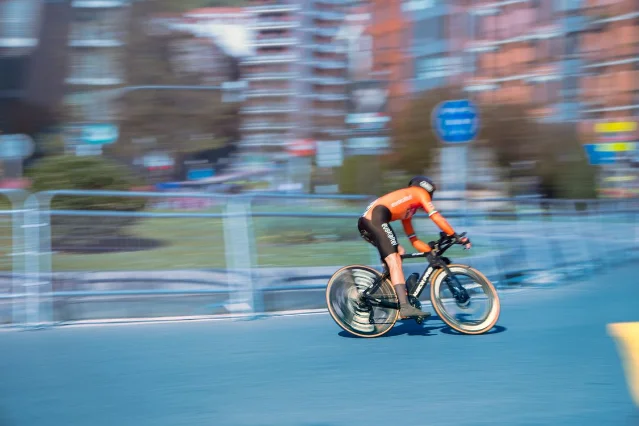
Race cyclist at full speed through a city street with strong motion blur
At 28 mph a Class 3 eBike moves at the pace of a competitive road cyclist — enough to ride alongside traffic in many urban lanes. Photo by Zakhar Vozhdaienko via Pexels

A note on Class 4 — and why it doesn't count as an eBike

You may come across "Class 4" in online listings. These have motors above 750 watts and no speed cap. They are legally classified as motorized vehicles in most states — not bicycles — and require registration, insurance, and often a license. Aventon, Rad Power Bikes, Trek, Specialized, and other mainstream brands do not make Class 4 products. If a listing claims Class 4, treat it as a moped or scooter, not an eBike. 1

One small exercise

Before tomorrow's lesson, do this two-step check:
  1. Find your bike's class label. Look on the down tube (the tube running diagonally from handlebars toward the pedals), the seat tube, or the packaging. Most bikes have a small sticker. If you don't see one, check the product listing or the manufacturer's spec page.
  2. Look up one trail or path near you. Search "[your city] + bike path + eBike rules" or check your local parks department website. See whether Class 1, 2, or 3 is permitted. Many trails that allow Class 1 specifically exclude Class 2 — knowing this before you show up saves a wasted trip.
That's it. You now understand the three numbers stamped on your bike.

围绕这条内容继续补充观点或上下文。

  • 登录后可发表评论。