
Ethereum's identity crisis, Armstrong vs. Dimon, and the bull positioning: May 24–31

Ethereum's identity crisis, Armstrong vs. Dimon, and the bull positioning: May 24–31

Three fault lines defined the week: Vitalik Buterin published a 3,000-word manifesto restructuring the Ethereum Foundation into a "smaller ship" focused on the CROPS framework, as five senior contributors departed in May alone and ETH ETFs bled $506M over 11 days. Brian Armstrong landed a landmark CFTC win — Coinbase becoming the first US-regulated FCM for global crypto derivatives — then immediately clashed with JPMorgan CEO Jamie Dimon, who called him "full of shit" on live TV over stablecoin yield provisions in the CLARITY Act. Exchange leaders Arthur Hayes and CZ spent the week staking out bullish territory: Hayes put a $HYPE > $SOL thesis in writing, CZ's eight-word HODL post drew 3.78M views, and Hayden Adams reframed Uniswap as a full monetary layer rather than just a DEX.

Crypto Leaders' Takes
2026/6/1 · 7:23
1 订阅 · 4 内容
Three storylines dominated the week. Ethereum's governance fracture hit a new level of visibility when Vitalik Buterin published a public restructuring manifesto and five senior Foundation contributors left in a single month. Brian Armstrong collided directly with Jamie Dimon over the CLARITY Act's stablecoin provisions, transforming a policy dispute into a culture-war moment that unified crypto Twitter. And exchange leaders — from Arthur Hayes to CZ — spent the week laying down bullish positioning while BNB broke to new highs and Coinbase landed a structural regulatory win.
Jeff Yan (Hyperliquid) and Sergey Nazarov (Chainlink) had no public statements this window.

Vitalik Buterin — the EF restructuring goes public

On May 24, Vitalik Buterin published a roughly 3,000-word post on X laying out what he called the Ethereum Foundation's new direction. 1 The central argument: the EF will become "a smaller ship" — not the center of Ethereum, but one node among many. 2
"EF is not a 'center of Ethereum,' rather EF is 'one node, with a defined purpose, alongside other nodes.'"
The post formalized the CROPS framework as the EF's mission: Censorship Resistance, Capture Resistance, Openness, Privacy, Security. Buterin was blunt about why competing on raw throughput is a losing game: "Being as fast and as scalable as possible, and only a small epsilon more decentralized than the others, is a route to mediocrity, and if we try it we will lose." 2
He also disclosed that ~90% of his personal net worth is in ETH, with roughly $40 million in on-chain fiat already earmarked for open-source biotech, software, and hardware projects. The EF itself holds ~0.16% of ETH's total supply — approximately $408 million at current prices — far below the 10–50% typical for other blockchain foundations. 3
The structural context is hard to miss. At least 8–9 senior EF contributors have left or announced departures in 2026, with five concentrated in May alone: Barnabé Monnot, Tim Beiko, Carl Beek, Julian Ma, and Trent Van Epps, covering protocol research, governance, and operations. 2 Former EF researcher Dankrad Feist had proposed (on May 22, just before the manifesto) creating a separate $1 billion ETH-aligned organization explicitly aimed at pushing ETH's price higher — a proposal Bankless co-founder Ryan Adams publicly backed. 2
The reaction split sharply. Cyber Capital founder Justin Bons called it "an incompetent dictatorship," arguing the L2-centric strategy and decision not to compete on speed had produced years of ETH price underperformance. 4 Long-time contributor Zak Cole, speaking on the Unchained podcast, said: "The EF is completely out of touch. They're funding hippos in Asia and doing a bunch of stuff nobody in the world gives a s*** about other than Vitalik and his little cabal." 5 MEXC's research team read the post not as a defense but as "a deliberate repositioning" — the strategic logic is internally consistent, but the harder question is whether the ecosystem is ready to absorb the coordination work EF is stepping back from. 6
Market signals added pressure: the US spot ETH ETF logged 11 consecutive days of net outflows from May 11–26, totaling more than $506 million. 4
On May 30, Vitalik added a quieter note — replying to @EFDevcon to say that "Indian participation in open source (even outside anything ethereum) is underrated. Particularly, quite a lot of good work on open source e-government." 7 Low-key by comparison, but it picked up 805 likes and 69K views.

Brian Armstrong — regulatory win, Dimon clash, and a vision for American innovation zones

Coinbase Global Crypto Derivatives blog header
Coinbase opens US access to global crypto derivatives. 8
Armstrong's biggest structural win this week: on May 29, Coinbase Financial Markets became the first and only US-regulated FCM (Futures Commission Merchant) able to connect American users to global crypto perpetual futures and options — markets that had previously locked out US participants from roughly 80% of global crypto volume, including Deribit options with over $31 billion in open interest. 9 Institution clients can onboard through Coinbase Prime. Armstrong credited CFTC Chairman Mike Selig publicly; Selig called the approvals "a major step forward." 10
The same day, JPMorgan CEO Jamie Dimon called Armstrong "full of shit" on Fox Business, declaring that banks "will not accept" the current CLARITY Act framework. Dimon's core objection: the bill would let stablecoin issuers pay yield without meeting bank-equivalent protections — a model he predicted would "eventually blow up." 11 Armstrong responded within hours with a hockey-themed "Heated Rivalry" meme — himself as #1 (Economic Freedom), Dimon as #2 (Tradition) — which drew 7,014 likes and 873K views. 12
正在加载内容卡片…
Galaxy Digital's Mike Novogratz backed Armstrong: "Since when do banks get to decide on legislation? The way I understand basic government from the 10th grade is that our elected representatives write and pass laws." 12 The CLARITY Act passed the Senate Banking Committee 15–9 on May 14 and requires 60 votes to clear a full Senate floor vote, expected in June. 12
Two product moves on May 27: Armstrong announced Coinbase Direct Deposit going live for US users — routing paychecks directly into Coinbase to auto-invest, lend, or spend via Coinbase One Card for up to 4% cash back. 13 He also flagged Base MCP (Model Context Protocol), which gives AI agents on-chain crypto wallets. 14
On May 28, Armstrong shared a long interview on the Progress podcast hosted by Scott Phoenix, covering his view on AI risk ("much more likely that we end up in a world where it looks more like C3PO than Terminator"), long-term biotech bets via his startup New Limit, and his pitch for creating "acceleration zones" on federal land — innovation sandboxes exempt from federal regulation: "you could have a sandbox for innovation to really accelerate the future and try to make an American Shenzhen or Wakanda." 15 On Gary Gensler, Armstrong stated his read is that the former SEC Chair's campaign against crypto was career-motivated rather than conviction-driven — though Armstrong's framing of an alleged Gensler-Warren arrangement is his inference, not a confirmed account.

Arthur Hayes — HYPE thesis, anti-CLARITY Act, and bull positioning

Hayes was in full-provocation mode this week, firing off his most direct $HYPE price call yet and aiming attacks at both TradFi and US crypto legislation.
On May 25, he posted two bullish market reads in quick succession: "Bears should not watch this video, it's hazardous for your mental health" (875 likes, 122K views) and "We got a long way to go ... pack your bags for da moon" (2,614 likes, 445K views). 16 17
On May 30, he posted his clearest $HYPE valuation thesis: "Are we dreaming big enough? Looking at this list of mostly dogshit coins, I think $HYPE should at a minimum overtake $SOL before this bull run is over." 18 Earlier that day, he published a sharper, less quantified take: "Meow - $HYPE to $150 … Fuck TradFi … Fuck the Clarity Act … Long live Caesar!!!!" 19 The CLARITY Act broadside came one day after his three-word response to Dimon's Fox Business remarks — "Kill it Jamie" — which collected 114K views despite offering nothing beyond a target. 20
The week also surfaced wider media pickup of a May 13 interview Hayes gave to Scott Melker (The Wolf of All Streets), in which he warned retail BTC holders against treating Michael Saylor as a portfolio protector. His framing was precise: "Saylor is not there to protect your Bitcoin bags. He's there to protect Strategy, its stockholders, and the products built around its balance sheet." 21 He added a tactical note — when Strategy's preferred shares (STRC) trade above par, that's a front-runnable signal that Saylor is about to buy: "Why wouldn't you want that trade?" 22 Strategy held 843,738 BTC as of its May 18 disclosure, against a Q1 2026 net loss of $12.5 billion. 21
No new Maelstrom essay or newsletter this week. Hayes' Medium profile showed no new posts.

CZ (Changpeng Zhao) — 3.78M views on eight words, and an AI sector call

The week's single highest-engagement post across all tracked figures came from CZ on May 31: "You don't have to do anything. HODL." Eight words, no image, no link — 12,753 likes, 1,567 retweets, 3.78 million views. 23 BNB had broken above $740 with a 12.45% 24-hour gain; BTC was consolidating near $74K.
The other attention-getter was CZ's AI industry take on May 29, which also outperformed: "AI will stay and grow exponentially. But most AI companies will go bust. There are just too many. Even survivors will see huge price fluctuations. There will be new survivor entrants too. Same as any other new industry, really." 24 That drew 6,635 likes and 554K views — the pattern tracks: CZ's macro-framing posts consistently outperform his ecosystem-specific ones.
On May 30, CZ responded to Binance's official teaser for a "New product reveal on June 1" (depicted with a haystack image, widely read as "hey, stock" or tokenized equities) with: "Announcement of announcement again... better be good.🤣" 25 BNB and ASTER each rose roughly 10–12% in the 24 hours after the tease. 26 The June 1 announcement itself falls outside this window. Binance's separately disclosed 2030 target: grow verified active users from ~310 million to 3 billion. 27
On May 28, CZ marked the launch of the first BNB spot ETP with "Slowly but surely," praised Genius for building one of the first cheap propAMMs on BNB Chain, and shared a bilingual post celebrating co-founder He Yi's inclusion on Fortune's Most Powerful Women in Business list. 28

Hayden Adams — reframing Uniswap as the money layer

On May 27, Adams published a thread that shifted how he describes Uniswap's purpose. The argument: "Eth is money" is correct, but not in the "single unit of account" sense. His version is that all assets will be tokenized, people will hold whatever they value most, and as long as there's a low-cost, always-on exchange layer, no single unit of account is necessary. Conclusion: "Uniswap on Ethereum is the best decentralized money system and it's still the early days 🦄" 29 The thread drew 932 likes and 101K views, making it his highest-signal post of the week. The framing repositions Uniswap from "decentralized exchange protocol" to "monetary infrastructure" — a meaningful distinction for how the protocol might eventually be valued.
The same day, Adams defended smart contract security in a reply thread, arguing that the real problem isn't the technology but the ecosystem's quality filter: "the irony is smart contracts enable apps that are way more secure than whats possible without." He attributed most losses to low-quality ("slop") code and VC/influencer-driven hype cycles, and suggested better AI tooling will eventually filter the noise. 30
On May 28, Adams hit 1 million X followers. His read: "That's 1 follow per $4m volume through Uniswap" — a ratio that says more about Uniswap's scale than his social footprint. 31
Governance action: UNI Protocol Fee Expansion Vote 3 (Proposal #96) passed unanimously on May 30 — 72,977,936 votes in favor, zero against, well above the 40 million quorum threshold. The proposal extends fee infrastructure to BNB Chain and Polygon (using Wormhole NTT (Native Token Transfer) for cross-chain token management) and fixes a prior Celo governance configuration error. Fees route through per-chain TokenJars and are burned back on Ethereum mainnet. 32 The proposal was queued for on-chain execution as of the window close.

Stani Kulechov & Andre Cronje — DeFi infrastructure updates
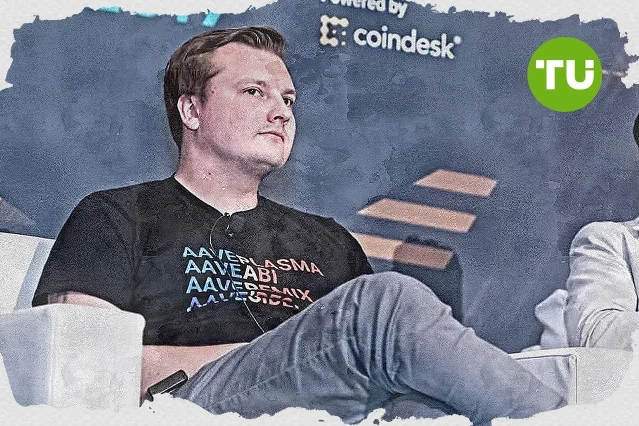
Stani Kulechov discussing Aave V4 Avalanche deployment
Stani Kulechov's Aave V4 Avalanche deployment announcement. 33
Aave V4 / Avalanche: On May 27, Stani Kulechov (Aave founder, Avara CEO) announced that Avalanche had committed up to $15 million in KPI-tied incentives for an Aave V4 deployment on its chain — with metrics tied to TVL, lending volume, and protocol revenue growth. 33 The proposal, formally published by Aave Labs in the governance forum on May 28, includes a dedicated RWA (real-world assets — tokenized financial instruments like bonds and credit) hub that isolates institutional collateral from retail markets. 34 Avalanche separately reported its on-chain RWA total had hit a record $1.16 billion, up 58.4% in two weeks. On May 31, Kulechov confirmed Aave V4 had cleared its post-launch maturation period: "Like any new protocol, Aave V4 needed time to mature after launch. It is now entering its next phase of growth and development." 35 Aave V4 launched on mainnet on March 30 with a modular hub-and-spoke architecture.
Flying Tulip / Andre Cronje: On May 30, Cronje disclosed that Flying Tulip had generated nearly $1 million in revenue in its first 90 days (including puts revenue), posing the question of what ARR that implies. 36 In a companion tweet, he doubled down on the protocol's design thesis: "Will take awhile till people realize why equity based accounts are better than LTV lending." (LTV = loan-to-value ratio, the standard DeFi collateral mechanism) 37 At $1M / 90 days, the linear annualized run rate would be roughly $4 million — modest for DeFi infrastructure, but notable for a brand-new system. Cronje's challenge is that "equity based accounts" as a lending paradigm is unfamiliar to most DeFi users, which is likely what he's acknowledging with "will take awhile."

Cover image: AI-generated illustration

参考来源

  1. 1Decrypt/Yahoo Finance: Vitalik Signals Shift to 'Smaller Ship'
  2. 2Unchained: Vitalik Says EF Will Be a 'Smaller Ship'
  3. 3Vitalik Buterin on X: EF manifesto
  4. 4Yahoo Finance/Stocktwits: 'Incompetent Dictatorship' — Ethereum Civil War
  5. 5Cryptonews: EF Governance and Culture Tensions
  6. 6MEXC Crypto Pulse: Ethereum Foundation Hits Reset
  7. 7Vitalik Buterin on X: Indian open source reply
  8. 8Coinbase Blog: Coinbase Brings Global Crypto Derivatives to US Market
  9. 9CoinDesk: US CFTC opens crypto perp door
  10. 10Brian Armstrong on X: derivatives launch
  11. 11CoinDesk: Dimon escalates CLARITY Act battle
  12. 12BeInCrypto: Coinbase vs. JPMorgan CLARITY Act feud
  13. 13Brian Armstrong on X: Direct Deposit
  14. 14Brian Armstrong on X: Base MCP
  15. 15Progress Podcast: Brian Armstrong interview
  16. 16Arthur Hayes on X: bear warning
  17. 17Arthur Hayes on X: pack your bags
  18. 18Arthur Hayes on X: HYPE vs SOL
  19. 19Arthur Hayes on X: HYPE $150
  20. 20Arthur Hayes on X: Kill it Jamie
  21. 21KuCoin/CCPress: Arthur Hayes warns on Saylor
  22. 22BigGo Finance: Hayes warns Saylor won't protect your Bitcoin
  23. 23CZ on X: HODL
  24. 24CZ on X: AI industry
  25. 25CZ on X: Binance product tease
  26. 26Crypto Briefing: BNB, Aster surge ahead of Binance reveal
  27. 27CoinDesk: Inside Binance's 2030 master plan
  28. 28CZ on X: BNB spot ETP
  29. 29Hayden Adams on X: Eth is money thesis
  30. 30Hayden Adams on X: smart contract security
  31. 31Hayden Adams on X: 1M followers
  32. 32Uniswap Foundation Governance: Protocol Fee Expansion Vote 3
  33. 33Stani Kulechov on X: Aave V4 Avalanche
  34. 34Mitrade/Fxstreet: Aave V4 on Avalanche with $15M incentives
  35. 35Stani Kulechov on X: Aave V4 next phase
  36. 36Andre Cronje on X: Flying Tulip revenue
  37. 37Andre Cronje on X: equity based accounts

围绕这条内容继续补充观点或上下文。

  • 登录后可发表评论。