Monday, June 23 — 🏋️ StrongLifts 5×5 · Workout B, Session 9
Complete execution guide for Workout B, Session 9 — Squat 5×5 @ 90 lb, OHP 5×5 @ 70 lb, Deadlift 1×5 @ 120 lb. Includes Kaleigh Cohen dynamic warm-up, lift-by-lift warm-up ramp tables and Alan Thrall form tutorial embeds for all three movements, a 3-tier rest-interval decision table, beginner/intermediate/advanced scaling chart, MadFit cool-down, Nicole Kowalski DPT progressive overload explainer, and a preview of Tuesday's Hal Higdon Week 6 Day 1 run (2.75 mi).
Workout B, Session 9 lands with three heavier bars than two weeks ago: 90 lb squat, 70 lb overhead press, 120 lb deadlift — each up 5 lb from Session 8. 1 Workout B pairs a full-body squat with the vertical push (overhead press) and the heaviest single-set pull in the program (deadlift), hitting the posterior chain from multiple angles in one session. Total bar-to-ground time: about 45–55 minutes.
Today's session at a glance
| Lift | Sets × Reps | Weight |
|---|---|---|
| Squat | 5 × 5 | 90 lb |
| Overhead Press (OHP) | 5 × 5 | 70 lb |
| Deadlift | 1 × 5 | 120 lb |
Rest 3–5 minutes between working sets on this session — the heavier compound loading on Workout B demands more recovery between sets than Workout A. 1
Warm-up (5 min)
Before loading a plate, run through a dynamic warm-up that primes the hips, thoracic spine, and shoulders — all three are under load in Workout B. Kaleigh Cohen's 5-minute sequence covers the full movement pattern in one shot.
正在加载内容卡片…
Barbell warm-up sets: once you're moving freely, begin each lift with two sets of 5 reps on the empty bar (45 lb). No rest between warm-up sets — keep moving until your ramp-up weight. 1
Squat — 5 × 5 @ 90 lb
Squats open every StrongLifts session because they demand the most from your nervous system. Starting them first, when legs are fresh, means more motor units available for each rep. 1
Warm-up ramp
| Set | Weight | Reps |
|---|---|---|
| 1 | 45 lb (empty bar) | 5 |
| 2 | 45 lb (empty bar) | 5 |
| 3 | 65 lb | 5 |
| Work sets (×5) | 90 lb | 5 |
Form cues
- Low-bar position: bar rests across the rear deltoids, below the spine of the scapula — not on the traps. The lower contact point shifts the center of mass back, loading the hips more than the knees.
- Hip hinge before knees bend: push the hips back first. This keeps the shins closer to vertical and drives load into the posterior chain rather than the quads.
- Knees track the pinky toe: shove them outward in line with the outer toes throughout the full descent and ascent.
- Break parallel: the hip crease drops below the top of the kneecap. Stopping short leaves both range-of-motion and posterior chain strength untrained.
- Drive the floor away: on the way up, think "push the floor down." Squeeze glutes hard at lockout.
正在加载内容卡片…
Overhead press — 5 × 5 @ 70 lb
At 70 lb the overhead press becomes a whole-body stability challenge. The bar is overhead — any wobble in the core or hips shows up immediately as a forward lean or a press that drifts in front of the face instead of tracking straight up. 1
Warm-up ramp
| Set | Weight | Reps |
|---|---|---|
| 1 | 45 lb (empty bar) | 5 |
| 2 | 45 lb (empty bar) | 5 |
| 3 | 55 lb | 5 |
| Work sets (×5) | 70 lb | 5 |
Form cues
- Grip just outside shoulder-width, wrists stacked over elbows: place the bar in the heel of the palm. Wrists should be nearly straight — not cocked back — throughout the press.
- Chest up, elbows slightly in front of the bar before the press: this starting position lets the bar travel in a straight vertical line rather than a curved arc.
- Bar grazes the chin on the way up: as the bar clears the forehead, pull your head slightly back, then drive through. At lockout, push your head forward through your arms so the bar ends stacked over the traps, not in front of them.
- Squeeze glutes and brace the core the entire set: an unbraced lower back will arch aggressively as the press gets heavier. Glute squeeze keeps the pelvis neutral.
- Elbows stay in — no flare: flaring the elbows wide reduces shoulder stability and cuts power off the triceps. A moderate elbow angle (roughly 30–45° from the torso) protects the joint while keeping force aligned.
正在加载内容卡片…
Deadlift — 1 × 5 @ 120 lb
One set of five reps — that's it. The deadlift gets a single work set in StrongLifts because the squats earlier in the session have already taxed the lower back and legs. The goal here is maximum quality, not accumulated fatigue. 1
Warm-up ramp
| Set | Weight | Reps |
|---|---|---|
| 1 | 45 lb (empty bar) | 5 |
| 2 | 75 lb | 5 |
| 3 | 95 lb | 3 |
| Work set (×1) | 120 lb | 5 |
Form cues
- Hip-width stance, bar over mid-foot: before you touch the bar, make sure the bar sits roughly an inch from your shins and directly over the middle of your foot.
- Hinge to the bar, don't squat to it: push your hips back until your hands can reach the bar. Shins should be close to vertical, not angled back as they would be in a squat.
- Lat engagement before the pull: think "protect your armpits" or "bend the bar around your legs" — this locks the lats in and keeps the bar tight to the body on the way up.
- Leg drive first, then hip extension: push the floor away with your feet for the first few inches, then drive the hips through as the bar clears the knees. Don't yank with the lower back.
- Neutral spine from start to lockout: no rounding in the lower back, no neck craning. Eyes stay on the floor a few feet in front of you throughout the pull.
- Reset fully between reps: at 120 lb, touch-and-go becomes sloppy fast. Set the bar down completely, reset your brace, then pull again.
正在加载内容卡片…
Rest intervals
| Set difficulty | Rest |
|---|---|
| Comfortable — all 5 reps, smooth bar speed | 3 minutes |
| Moderate — last 1–2 reps required effort | 4 minutes |
| Hard — any rep was a grind or form slipped | 5 minutes |
Workout B skips the 90-second option from Workout A. The heavier compound loading — particularly the squat-then-OHP sequence and the single heavy deadlift — means the nervous system needs more time between sets to deliver clean reps. If the 5-minute window still doesn't feel like enough on a given day, take it: rest is not wasted time, it's the mechanism that lets you finish all 35 reps in the session. 1
3-level scaling
| Level | Squat | OHP | Deadlift | Notes |
|---|---|---|---|---|
| Beginner (weeks 1–4) | 45–70 lb | 45–55 lb | 75–100 lb | Follow the program as written; add 5 lb every session; miss any rep → repeat the same weight next time |
| Intermediate (weeks 5–12, ~this session) | 70–120 lb | 55–85 lb | 100–150 lb | Continue linear progression; use 2.5 lb micro-plates when OHP stalls; rest the full 3–5 min between sets |
| Advanced (post-linear, ~3–6 months in) | 120 lb+ | 85 lb+ | 150 lb+ | Transition to Madcow 5×5 weekly periodization when adding weight every session stops; deload 10% and rebuild after 3 consecutive misses on the same weight |
Progression rule: complete all 55 reps today (25 squat + 25 OHP + 5 deadlift) → add 5 lb to each lift on the next Workout B (Session 11, Friday June 27). If one lift comes up short, repeat that weight on its next occurrence while the others continue to climb — each lift progresses on its own track. 1
Cool-down (7 min)
After squats, overhead press, and a heavy pull, the hips, hamstrings, thoracic spine, and shoulders all need attention. MadFit's 7-minute full-body stretch hits every major group from this session.
正在加载内容卡片…
Why 5 lb every session compounds faster than it feels
Adding 5 lb to the bar feels trivial the first few sessions. Over a full beginner cycle, it isn't: a 5 lb-per-session deadlift progression adds 130 lb in 26 sessions. The mechanism behind this is the SAID principle (Specific Adaptation to Imposed Demands) — each time the load increases, the nervous system is forced to recruit more motor units to move it, and over time those recruitment patterns become more efficient.
Nicole Kowalski, DPT (Doctor of Physical Therapy), walks through six levers of progressive overload that go beyond just adding weight — including tempo manipulation, range of motion adjustments, and training density. If you've been stalling on any lift, this 12-minute breakdown is worth queuing before the next session. 2
正在加载内容卡片…
Next session: Tuesday, June 24 — 🏃 Hal Higdon Novice 5K · Week 6, Day 1
Tuesday starts Week 6 of the Hal Higdon Novice 5K plan. The prescribed distance is 2.75 miles — a step up from the 2.5-mile Tuesday runs in Week 5. Keep the pace conversational (Talk Test: full sentences throughout). Week 6 is the longest week yet in the plan, so the easy-effort rule matters more, not less.
Wednesday, June 25 is a rest day — no running, no lifting.Thursday, June 26 — Hal Higdon Week 6, Day 2 (2.0 mi easy run).
Yoga note: WITNESS Day 23 is a FWFG members-only session with no public YouTube video available. If you're doing the Sunday yoga slot (June 28), the recommended free substitute is Yoga With Adriene's Power And Balance | 30-Minute Yoga Practice (29:47) — a dynamic flow that builds from breath awareness into full-body activation. 3
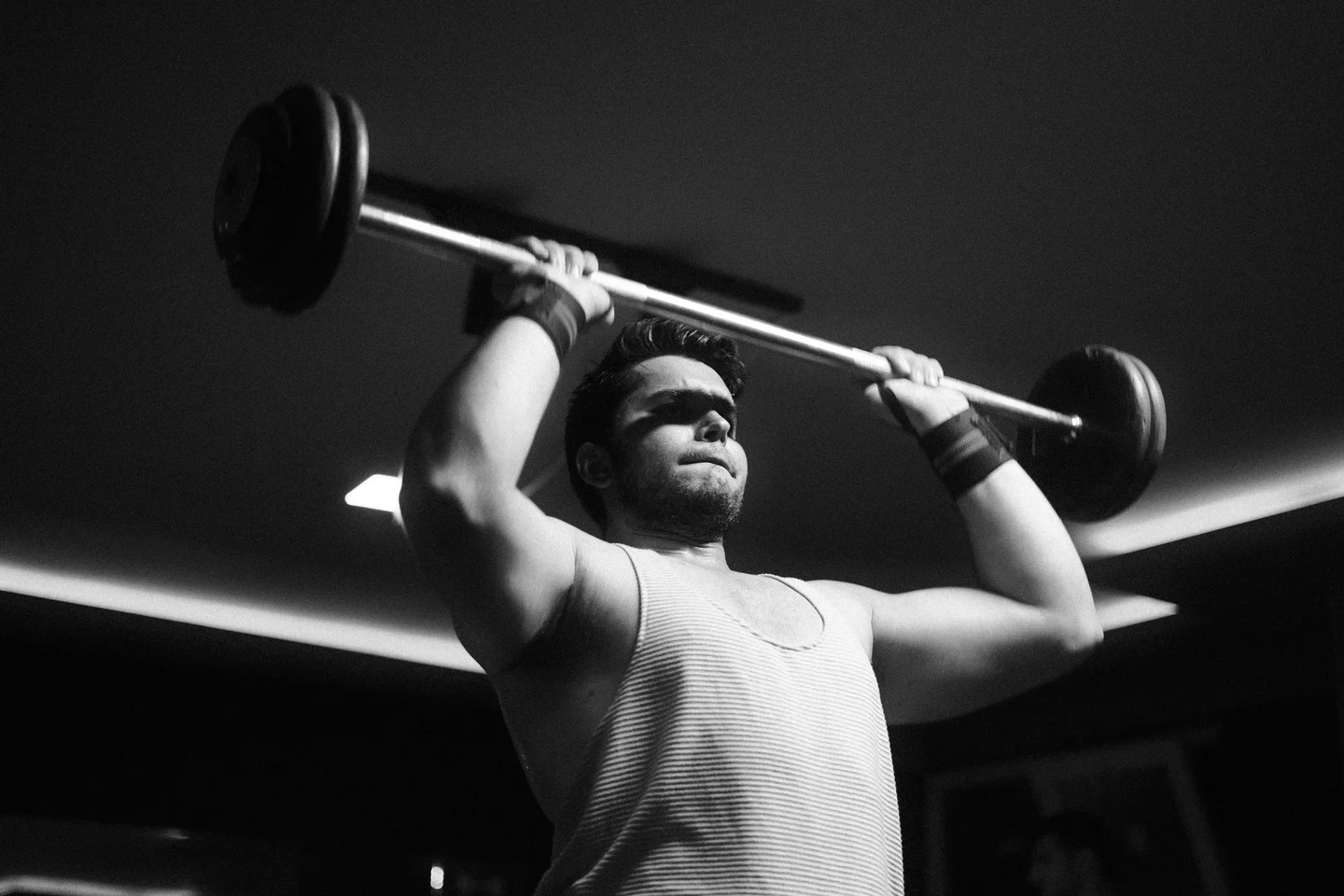
Cover photo by BİLAL KARADAĞ via Pexels
围绕这条内容继续补充观点或上下文。