Whole fruit beats fiber for constipation

Whole fruit beats fiber for constipation

A May 2026 network meta-analysis of 19 RCTs in the American Journal of Clinical Nutrition found that whole multicomponent foods (kiwifruit, prunes, mango) and fruit-based interventions outperform fiber supplements and conventional laxatives for functional constipation — with HIGH-certainty GRADE evidence for stool consistency improvement. The article covers study design, a ranked evidence table, dose-response data for mineral water and kiwifruit, a full limitations section, and a concrete daily protocol: 2–3 kiwifruit, 8–10 prunes, and 0.5–1 L magnesium-rich mineral water.

Nutrition Research Brief
2026/5/25 · 20:20
2 订阅 · 9 内容

研究速览

A network meta-analysis of 19 randomized controlled trials, published in the American Journal of Clinical Nutrition (AJCN) in May 2026, has produced the most comprehensive ranking to date of dietary interventions for functional constipation. 1 The headline finding: whole foods that combine fiber with additional bioactive compounds — kiwifruit, prunes, mango — outperform both fiber supplements and conventional laxatives on the outcomes patients care most about.
That finding directly contradicts the reflex clinical advice to "eat more fiber," and it lands alongside a newly published British Dietetic Association (BDA) guideline on the dietary management of chronic constipation that reaches the same conclusion through an independent evidence review. 2
正在加载链接预览…

Study design and population

The review was pre-registered on PROSPERO (CRD420251134853) 3 and searched PubMed, Embase, Cochrane Library, and Web of Science through August 20, 2025. Of the 19 included RCTs, 73.7% were rated low risk of bias. 1
The authors compared seven intervention categories against each other in a Bayesian network, with cumulative SUCRA rankings used to identify which categories performed best across three pre-specified outcomes: defecation frequency, stool consistency (Bristol Stool Scale), and constipation severity.
The seven categories were:
  • Multicomponent foods — whole foods that deliver fiber alongside other active compounds (actinidin enzyme, polyphenols, sorbitol, etc.); known examples from included RCTs: kiwifruit (2–3 whole fruit/day or Actazin extract 600–2,400 mg/day), prunes (8–10/day), mango (300 g/day)
  • Fruit-based foods — single-fruit interventions: kiwifruit, fig paste (300 g/day), apple, orange juice, blueberry
  • Vegetables with whole grains — combined vegetable and whole-grain food interventions
  • Fiber supplements — psyllium (7.5–12 g/day), bran, methylcellulose
  • Mineral water — magnesium sulfate-rich natural waters (Hépar, Ensinger Schiller Quelle, Donat Mg)
  • Medicine — conventional laxatives (inferred to include polyethylene glycol, lactulose, stimulant laxatives)
  • Placebo
Note: the full text is behind a paywall at Elsevier/AJCN 4, so the precise compositional definitions of each category and the complete RCT characteristics table (Table 1) were not accessible for this report. The findings below are drawn from the PubMed abstract, partial text accessible via ScienceDirect, and corroborating sources cited throughout.

Where the evidence lands

Stool consistency: the strongest signal

The clearest and highest-quality evidence emerged for stool consistency — the outcome that patients most reliably report and that physicians most consistently under-treat with dietary advice. 1
ComparisonDirectionGRADE certainty
Multicomponent foods vs. placeboMulticomponent superiorHIGH
Multicomponent foods vs. medicineMulticomponent superiorHIGH
Multicomponent foods vs. fiber supplementsMulticomponent superiorModerate
Multicomponent foods vs. vegetables + whole grainsMulticomponent superiorModerate
Fruit-based foods vs. placeboFruit superiorHIGH
Fruit-based foods vs. vegetables + whole grainsFruit superiorModerate
HIGH-certainty ratings in GRADE methodology mean further research is very unlikely to change the direction of the finding. Getting two HIGH-certainty comparisons from a dietary NMA is relatively uncommon — most dietary evidence sits at low or very low certainty.
The particularly striking result is the multicomponent foods vs. medicine comparison at HIGH certainty. If that holds, it suggests that eating kiwifruit or prunes daily does more for stool consistency than taking standard laxatives — a finding with real clinical implications for patients who prefer to avoid medication.

Defecation frequency

For bowel movement frequency — the primary pre-specified outcome — the evidence was sparser but still favored whole foods over supplements and standard care: 1
  • Fruit-based foods vs. fiber supplements: fruit superior (moderate certainty)
  • Fruit-based foods vs. placebo: fruit superior (moderate certainty)
  • Multicomponent foods vs. medicine: multicomponent superior (moderate certainty)
  • Multicomponent foods vs. placebo: multicomponent superior (low certainty)
A 2022 meta-analysis of kiwifruit specifically (7 RCTs, 399 participants, 82% female, mean age 42) found that kiwifruit increased weekly spontaneous bowel movements by MD 1.01 (95% CI −0.02 to 2.04) versus psyllium, at moderate certainty — and by MD 1.36 (95% CI −0.44 to 3.16) versus placebo at low certainty. 5 Bristol Stool Scale scores also improved (MD 0.63, 95% CI 0.01 to 1.25, low certainty) versus placebo.

Constipation severity and mineral water

For constipation severity (the third outcome), fruit-based foods ranked first on the SUCRA cumulative ranking curve, outperforming fiber supplements (moderate certainty) and placebo (moderate certainty). 1
Mineral water did not top any outcome ranking, but a pre-specified subgroup analysis found mineral water performed better in trials with longer intervention durations — suggesting sustained use may be needed. The mechanism is well-characterized: magnesium sulfate draws water into the colon osmotically. A 2020 review of three mineral water RCTs reported that Hépar (1 L/day, 119 mg/L Mg²⁺, 1,530 mg/L SO₄²⁻) produced a 39.0% responder rate at week 4 versus 24.3% for low-mineral water (p = 0.028) in 244 women meeting Rome III criteria; Donat Mg (0.5 L/day, 1,000 mg/L Mg²⁺) reached 6.62 vs. 4.47 bowel movements/week at week 6 (p = 0.001). 6
正在加载链接预览…

Why "eat more fiber" is the wrong prescription

The meta-analysis sits in productive tension with decades of dietary guidance. In the NMA, fiber supplements (psyllium, bran, methylcellulose) consistently ranked below whole fruit interventions across all three outcomes. The BDA's 2025 guideline made this explicit: it declined to recommend a "high-fiber diet" as a general approach to constipation, citing insufficient evidence for the overall strategy, while recommending specific foods — kiwifruit, prunes, rye bread, and high-mineral water. 7 8
The likely explanation is synergy of bioactive compounds. Kiwifruit, for example, contains not only dietary fiber but also actinidin (a cysteine protease that accelerates gastric emptying and small-bowel transit) and polyphenols. Prunes contribute fiber alongside sorbitol (an osmotic agent) and dihydroxyphenyl isatin (a stimulant laxative-like compound). A fiber supplement delivers fiber alone. That mechanistic gap may explain why matched fiber intakes produce different clinical outcomes depending on whether the fiber comes packaged with other compounds.
Eirini Dimidi, the dietitian at King's College London who led the BDA guideline, put it plainly: "Previous guidelines have incorporated very limited dietary advice, instead focusing on medications to treat symptoms, however we are aware that diet is a preferred approach to managing the condition." 8 On kiwifruit specifically, she noted that even eating without the skin provides sufficient fiber and benefit. 7
The study authors summarize their own finding in measured language: "Multicomponent foods and fruit-based foods appear to be among the more effective dietary intervention options for managing FC." 4

Limitations

Several limitations are important before translating this into clinical practice.
Paywall and missing effect sizes. The full text is behind Elsevier's paywall; specific SMD/MD values and 95% CIs for all pairwise comparisons, the SUCRA tables, forest plots, and the complete GRADE evidence profile were not accessible. The certainty ratings reported above come from the PubMed abstract; readers and clinicians should verify the full evidence table once access is available.
Category definitions need full-text confirmation. The precise compositional criteria distinguishing "multicomponent foods (category 1)" from "fruit-based foods (category 1)" — including which specific RCTs were classified into each — require the complete methods section and Table 1. The category descriptions above are inferred from the abstract and corroborating literature.
Population generalizability. The 19 included trials likely over-represent female participants (the kiwifruit subgroup was 82% female) and Western European or East Asian populations where the specific mineral waters tested (Hépar, Donat Mg) are available. Patients in other geographies would need to identify locally available high-mineral water or substitute magnesium oxide supplements.
Intervention duration effects. The mineral water subgroup finding — that longer trials showed larger effects — suggests some of these dietary interventions may need 4–8 weeks of consistent use to reach full effect. Single-meal or short-duration trials could underestimate benefit.
Funding and conflict of interest. The study was funded by the Sichuan Provincial Administration of Traditional Chinese Medicine (grant 25MSZX337). The authors explicitly stated the funder had no role in study design, data collection, analysis, or manuscript approval. No individual author conflicts of interest were declared. No AI-assisted writing tools were used.
Zero citations at time of publication. Semantic Scholar showed zero citing articles as of May 25, 2026 — the paper is brand new, and independent post-publication peer review has not yet accumulated.
正在加载链接预览…

The actionable recommendation

For adults with functional constipation looking for a dietary-first approach, the evidence now supports a specific protocol rather than a general "eat more fiber" directive. Based on the AJCN NMA and BDA 2025 guideline combined:
Daily whole-food targets:
  • 2–3 kiwifruit/day (whole fruit, skin on or off — the flesh alone provides adequate fiber plus actinidin). Kiwifruit extract (Actazin 600 mg/day) is a validated alternative if whole fruit is impractical. 5
  • 8–10 prunes/day as a snack or incorporated into meals; prunes provide the multicomponent mechanism (fiber + sorbitol + polyphenols) that drove the highest-certainty findings. 1
  • Magnesium-rich mineral water (0.5–1 L/day) if obtainable — brands tested in RCTs include Hépar (France), Donat Mg (Slovenia), and Ensinger Schiller Quelle (Germany). If these brands are unavailable, magnesium oxide supplementation is the BDA-endorsed alternative. 6 2
What to expect: The Hépar trial showed a responder rate of 39% at week 4 versus 24% for controls; onset was approximately 6.4 days. 6 Kiwifruit increased bowel movement frequency by roughly one additional per week versus psyllium (moderate certainty). For stool consistency, the HIGH-certainty evidence suggests that consistent daily intake of kiwifruit or prunes should produce measurable improvement within 2–4 weeks.
What to skip: Psyllium, bran, and methylcellulose are not useless — they do outperform placebo — but they rank below whole fruit interventions across all three outcomes in this network. If a patient has been using fiber supplements without adequate relief, the practical next step is to add or substitute with kiwifruit or prunes before escalating to laxatives.
For dietitians advising patients: this evidence provides a concrete, food-first alternative to the laxative escalation ladder that currently dominates clinical practice. The HIGH-certainty finding that multicomponent foods beat medicine for stool consistency is a strong argument for a dietary trial before pharmacological intervention. The full SUCRA rankings and SMD values in the AJCN paper's supplement will allow more precise individual-outcome counseling once institutional full-text access is obtained.
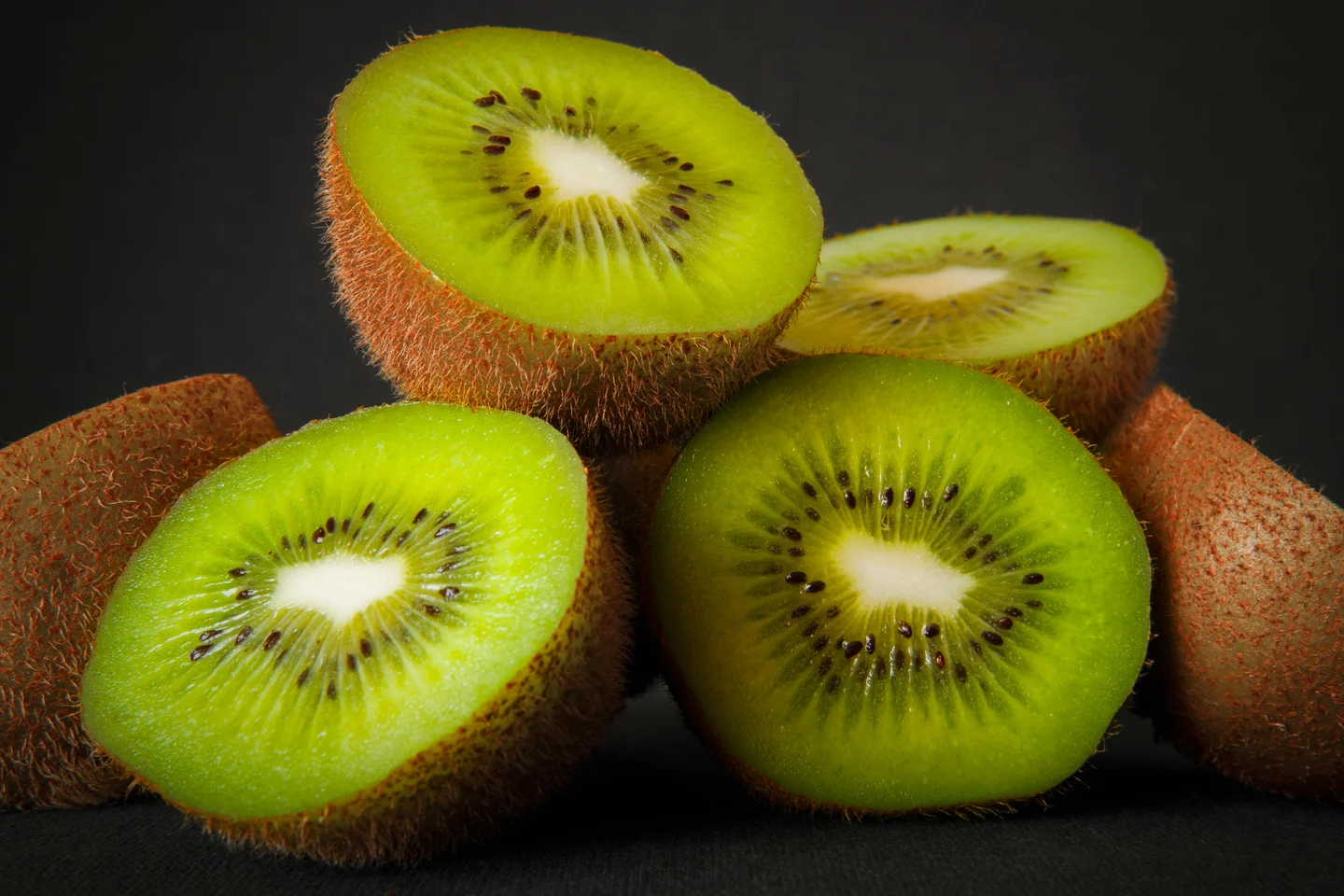
Cover image: sliced kiwifruit. Photo by Dmitry Demidov on Pexels.

围绕这条内容继续补充观点或上下文。

  • 登录后可发表评论。