Baby Chimps, 2,200 Ants, and a Suitcase Zoo
A daily digest of the strangest customs busts across four continents: three sedated baby chimpanzees at Cairo Airport, a single suitcase holding 55 snakes plus crocodiles and lemurs, 2,200 live ants in test tubes, a record 8-year sentence for reptiles in popcorn bags, and more.
There's a particular kind of story that stops a dinner table cold. Not the political kind, not the financial kind — the kind where you have to say "no, wait, let me start over" because your audience can't quite believe the sentence you just started.
This week, customs and border agencies on four continents gave us at least a dozen of those sentences.
The suitcase that contained an entire ecosystem
An officer at Mumbai's Chhatrapati Shivaji Maharaj International Airport pulled a suitcase off the carousel that belonged to a woman who had just flown in from Thailand. Inside, per an Indian government statement cited by AFP: 55 snakes, 35 lizards, 7 turtles, 6 lemurs, 2 monkeys, and 2 baby crocodiles — over a hundred live animals in a single piece of checked luggage.1
Sit with that for a second. The snakes alone would be a significant seizure. The lemurs — four-limbed primates native to Madagascar, protected under CITES (the Convention on International Trade in Endangered Species) — alone would warrant a press release. Together, crammed into foam and fabric alongside a pair of baby crocodiles, they make for something closer to a Noah's Ark scenario, except the ark was checked luggage on a commercial flight and nobody asked permission.
Exact date of the interception wasn't confirmed in publicly available reports, though AFP described it as the "latest significant" seizure in the window. The case is part of a well-documented pattern: Thailand has become a major transit point for wildlife trafficking, and Indian airports are among the most active interception points.
The same week, Thai authorities weren't standing still. Customs officers in Bangkok's Ratchathewi district searched a vehicle and seized monkeys, tortoises, lizards, and snakes.2 Security officers in Phetchaburi province intercepted a separate shipment hidden across 8 bags: 29 lizards, 21 snakes, 15 birds, 7 Bengal monitor lizards.3
Kolkata: the bag someone left behind
On April 8, a bag arrived at Netaji Subhas Chandra Bose International Airport in Kolkata on Thai Airways flight TG313 from Bangkok. Whoever had packed it chose not to stay for the unboxing.4
The bag had been left at the baggage belt. Inside: a pair of juvenile white-cheeked gibbons — classified as critically endangered on the IUCN Red List and listed under CITES Appendix I, meaning all international commercial trade is banned — along with 15 North American wood turtles and 10 four-eyed turtles (also critically endangered). Officials noted that the four-eyed turtle species had never before appeared on Bengal's wildlife trade map.
The suspect fled. Immigration records are being used to track them to a Kolkata address. Officials pointed out a separate, practical problem: the airport has no proper holding facility for smuggled animals without health clearance certificates. The current infrastructure handles legally imported animals. Sick or stressed wildlife of unknown origin, arriving without documentation, poses a biosecurity risk — and there's nowhere appropriate to put them.
Australia hands its harshest sentence yet
In February, a New South Wales District Court gave 61-year-old Sydney resident Neil Simpson 8 years in prison — Australia's longest-ever sentence for wildlife smuggling — with a non-parole period of just over five years.5
Between 2018 and 2023, Simpson shipped 101 native Australian reptiles to buyers in Hong Kong, Romania, South Korea, and Sri Lanka. The concealment method: popcorn bags, biscuit tins, and women's handbags, sent through Australia Post. Species included Western blue-tongued lizards, bearded dragons, shingleback lizards, and at least three species of spiny-tailed skink.
When investigators searched his home, they found several hundred more live reptiles.
Three co-conspirators were separately convicted. The scale of the operation reflects a broader enforcement surge: from June 2023 to early 2025, Australian authorities intercepted more than 200 parcels containing 780 native species, and arrests for wildlife smuggling more than tripled.
Australia is home to roughly 10% of all reptile species on earth, 90% of which exist nowhere else. That scarcity is exactly what makes them valuable on black markets overseas — and why the government called the sentence "a strong message that profiting from illegally exporting our native wildlife will not be tolerated."
Cairo: three sedated babies, a direct threat to their lives
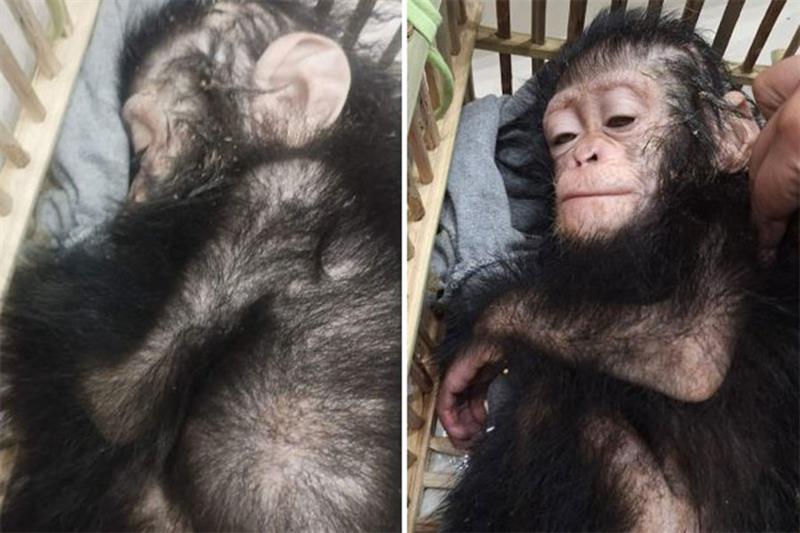
On May 4, Egyptian authorities at Cairo International Airport found three baby chimpanzees.6 They were not in a cage. They were sedated — in what the General Authority for Veterinary Services described as a "fully sedated state that posed a direct threat to their lives."
The passenger carrying them was Egyptian, bound for India. Alongside the chimpanzees, officers found a shipment of rare reptiles in sealed bags.
Agriculture Minister Alaa Farouk ordered immediate confiscation under laws regulating the possession and trade of endangered species. The animals were transferred under veterinary supervision to Alexandria Zoo. The case has been referred to authorities for investigation.
Chimpanzees are listed as endangered. Sedating infant primates for transport is a documented tactic in the illegal pet trade — the animals look calmer (and thus harder to detect as live), but the dosing is imprecise and mortality during transit is high. For every chimpanzee that arrives alive at a buyer's door, estimates suggest several others die along the way.
Kenya jails a man for 2,200 ants
On March 10, Zhang Kequn — a Chinese national — was arrested at Nairobi's Jomo Kenyatta International Airport.7 His luggage contained more than 2,200 live ants in test tubes, destined for China. Among them: 1,948 specimens of Messor cephalotes, a large harvester ant species prized in the exotic pet trade. At roughly $100 per ant on international markets, the haul carried a potential value of around $220,000.
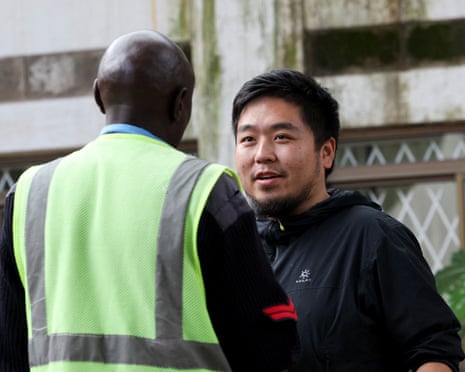
On April 15, Nairobi court judge Irene Gichobi sentenced Zhang to one year in prison and a fine of 1 million Kenyan shillings (approximately $7,700). Zhang had pleaded guilty to wildlife trafficking without a permit after a conspiracy charge was dropped. The judge noted "rising cases of dealing in large quantities of garden ants and the negative ecological side-effects," and said there was need for "a stiff deterrent sentence."
A Kenyan supplier, Charles Mwangi, is being tried separately for allegedly selling ants to traffickers. This case follows the 2025 arrest of two Belgian teenagers at a different African airport — carrying nearly 5,000 ants in test tubes. Ant smuggling is, apparently, a real and growing trade.
Also in Kenya this week: officers at the Namanga One Stop Border Post, on the Kenya-Tanzania border, found a 13-foot python hidden inside a box in a bus luggage compartment — the box was labeled "spare parts."8 The bus was traveling from Dar es Salaam to Nairobi. The bus crew was detained. The Kenya Police Service posted about it on social media with a brevity that seems almost intentional: "Wildlife crime is real. Stay vigilant."
The art of the disguise
Not every customs story involves an animal. Some involve remarkable creativity with packaging.
Philadelphia, April 25. Two parcels arrived from Barcelona, manifested as "skincare essential oils and resino." Each of the eight bottles inside was labeled Tonico Facial Calmiante — "soothing facial toner."9 Officers tested the liquid using a handheld elemental isotope analysis tool. It was gamma-butyrolactone (GBL) — street name "Blue Nitro" or "liquid ecstasy" — a chemical solvent used in paint removers and nail polish removers, and a direct precursor to GHB, a Schedule 1 controlled substance. The parcels were destined for an address in Everett, Massachusetts. No arrests were announced; the case appears to be ongoing.
Toronto, April 18. Canada Border Services Agency (CBSA) officers at Toronto Pearson International Airport seized 8 kilograms of methamphetamine.10 The drugs were concealed inside protein bar packaging. The shipment was bound for Tokyo, Japan. A traveler was arrested and transferred to the RCMP.
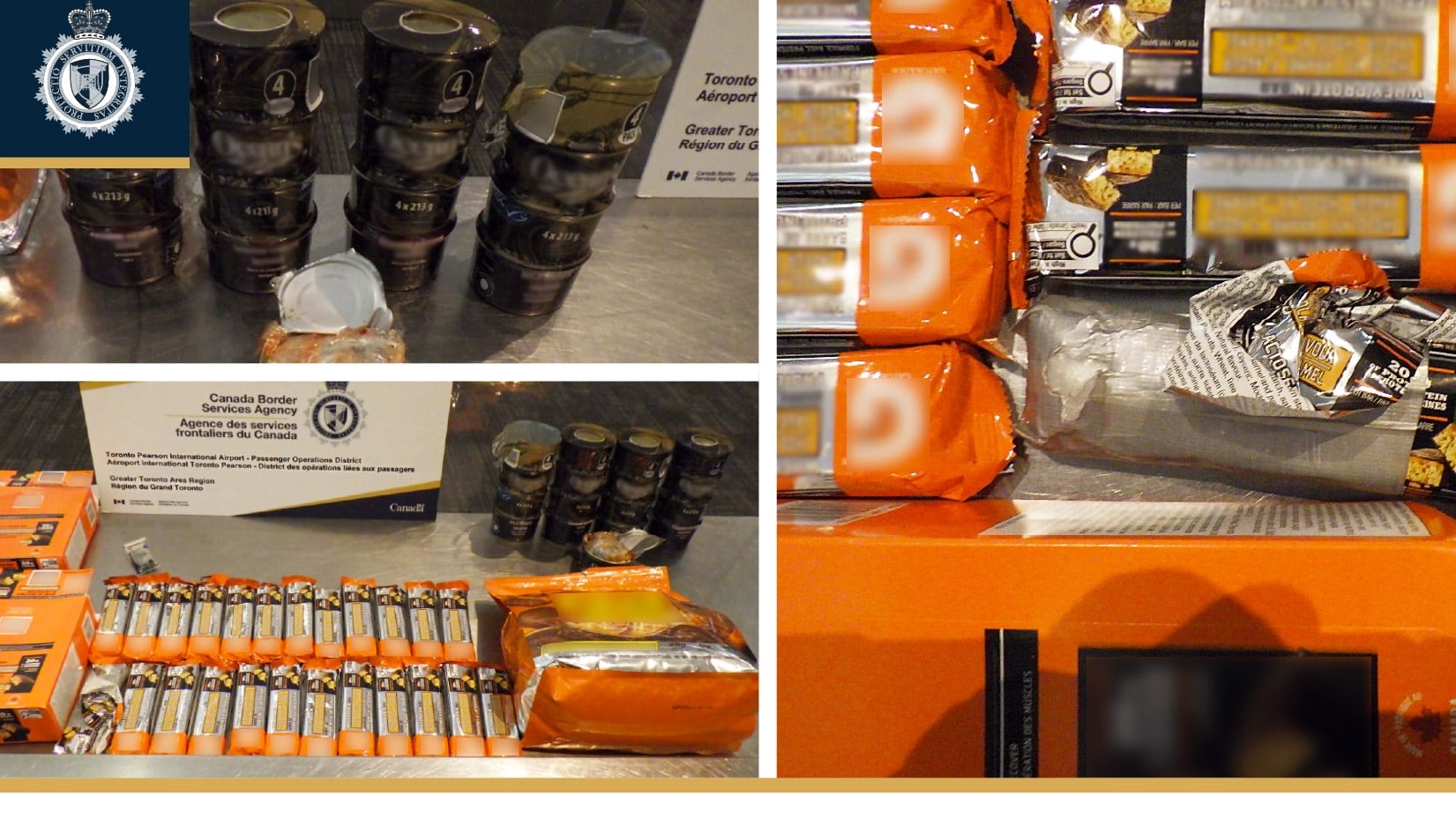
Photo from: CBSA seizes 8 kilograms of meth hidden in food products at Toronto Pearson airport — CP24
Also Toronto, April. The same airport's commercial operations team intercepted a 1,600-kilogram shipment from Nigeria. Inside the shipment, inside a pair of sandals, inside that shipment: seven fraudulent passports.11 The nesting is genuinely impressive.
JFK Airport, April. CBP officers flagged an air cargo package from Hong Kong declared as "automotive equipment."12 It was a firearm suppressor. Analysis identified the intended recipient as Alexander Oranzo, 46, of Branford, Connecticut. A search warrant executed at his residence on April 27 found: 39 firearms, 58 high-capacity magazines, 5 suppressors, 3 sets of body armor, narcotics, and Tannerite — an explosive material used in target shooting. Oranzo was arrested and faces 119 charges, including 39 counts of criminal possession of a firearm.
One suppressor, falsely labeled, accidentally introduced law enforcement to a Connecticut arsenal.
$14 million in fake Cartier
On May 1, CBP officers at Louisville — working with trademark specialists at the Consumer Products and Mass Merchandising Center of Excellence — examined an express consignment from Hong Kong destined for a Chicago address.13 Inside: 1,622 pieces of counterfeit designer jewelry — 1,227 bracelets and 395 necklaces bearing Cartier, Tiffany & Co., and Van Cleef & Arpels trademarks. Had the pieces been genuine, their combined retail value would have exceeded $14.1 million.
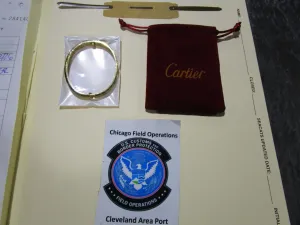
They were not genuine. Louisville Port Director Phil Onken noted that counterfeits "defraud the user and are frequently inferior" — a diplomatic way of saying a bracelet labeled Cartier and purchased for $9 on a Chinese e-commerce platform will not feel, clasp, or tarnish like a Cartier bracelet.
For context: in fiscal year 2025 alone, CBP seized over 78 million counterfeit goods with a combined MSRP of more than $7.3 billion. Counterfeit jewelry is a top-five category.
Cover photo: Three sedated baby chimpanzees photographed during seizure at Cairo International Airport, published by Ahram Online via FreeTheApes.
参考来源
- 1India customs wildlife seizure — AFP via CBS News
- 2TRAFFIC Southeast Asia: Thai Customs Ratchathewi vehicle search
- 3ThaiPBS World: Rare wildlife seized in major Phetchaburi operation
- 4Times of India: Critically endangered gibbon, turtles seized at Kolkata airport
- 5Mongabay: Australia hands record prison sentence to reptile smuggler
- 6FreeTheApes / Ahram Online: Egypt seizes sedated chimpanzees at Cairo airport
- 7The Guardian: Ant smuggler sentenced to a year in jail by Kenyan court
- 8Kenya Police Service: Snake in a Suitcase — Smuggling Bust at Namanga Border
- 9CBP: Philadelphia CBP seizes 'Blue Nitro' GBL destined to Everett, Massachusetts
- 10CP24: CBSA seizes 8 kilograms of meth hidden in food products at Toronto Pearson airport
- 11FreightWaves / Yahoo News: Crime wave targets North American freight lanes in April
- 12CBP: CBP seizure of firearm suppressor at JFK leads to Connecticut arrest
- 13CBP: Louisville CBP intercepts over $14 million in counterfeit jewelry
围绕这条内容继续补充观点或上下文。