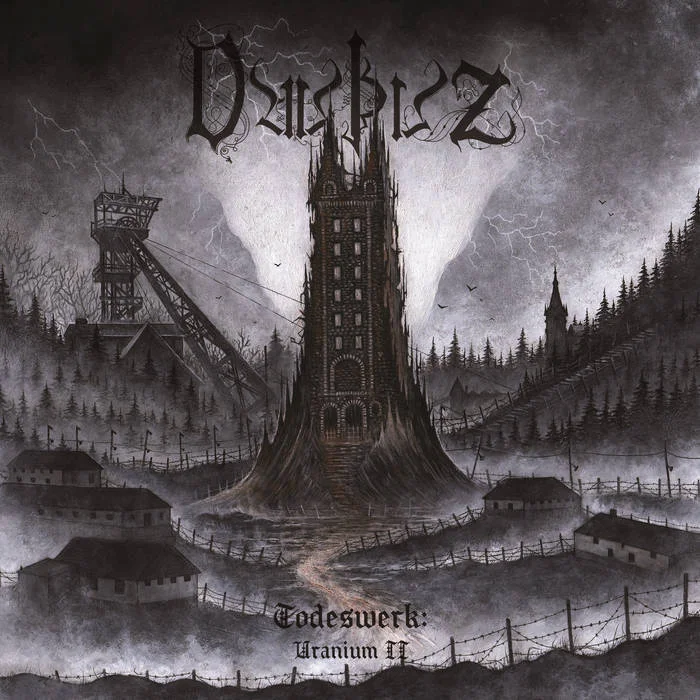
Uranium and black metal: Dauþuz drop Todeswerk: Uranium II
German mining black metal duo Dauþuz release their uranium-concept full-length today on Bandcamp.

Genre: Black metal — Bandcamp, May 29, 2026
The mine shafts of Joachimsthal have a history most metal bands would skip past. Discovered in the Erzgebirge mountains on the German-Czech border in the 15th century, the region was a silver-mining hub that gave the world the word Thaler — and by extension, dollar. Then uranium ore turned the same tunnels into a Cold War extraction operation, worked in part by East German prison labor under conditions that killed thousands. German black metal act Dauþuz (pronounced something close to "Dauthuz," from the Proto-Germanic rune for death) have spent their entire catalog inside that subject. Todeswerk: Uranium II, out today, is where the concept goes deepest. 1
The artist
Dauþuz is a two-person project from Germany: Aragonyth handles guitars and bass, Syderyth takes vocals, acoustic guitars, and keyboards. Their self-described genre tag on Bandcamp is "mining black metal" — a label that functions as both aesthetic and program note. 1
The discography runs ten releases and holds to a single conceptual thread: German mining history rendered in cold, riff-heavy black metal. Earlier albums address the Vom schwarzen Schmied (the black smith of folklore), Grubenfall 1727 (a mine collapse), and the standalone Uranium album that preceded this one in the series. MONVMENTVM and Quintessenz fill out the catalog. Each release is packaged with physical care — cassettes, LPs, digipack CDs, woven patches — and the community that has formed around the band is notably loyal to it. 1
The concept
The Todeswerk series focuses specifically on the uranium chapter. Track one is titled "Joachimsthal - Jáchymov," the German and Czech names for the same town, gesturing at the border-straddling nature of the site's history. From there the track titles map the arc of labor, confinement, and death that defined the postwar uranium operations: Uranlager I and II (uranium camps), Hammerzwang (forced hammering), Der Turm des Todes (the tower of death), Bluteisen (blood iron), 211947 (a title that reads either as a date — November 21, 1947 — or a prisoner registration number; the album doesn't explain it), and closing with Des Häftlings Bergmannstod — the prisoner's mining death. 1
That closing track runs 8 minutes and 11 seconds, the same length as track seven. The album doesn't announce its structure — it just bears it out across 44 minutes.
This release
8 tracks, approximately 44 minutes. Mastered by Patrick W. Engel at Temple of Disharmony in February 2026. 1 Session drums handled by Werwolf.
Physical editions available today:
| Format | Price | Notes |
|---|---|---|
| Digital download | €7 | MP3, FLAC, 16-bit/44.1 kHz |
| Pro cassette + digital | €8.50 | J-card, ships ~May 30 |
| LP (iron ore red vinyl) + digital | €20 | 12-page booklet, ships ~May 30, 5 remaining |
| LP (black vinyl) | — | Sold out |
| LP (glow in the dark vinyl) | — | Sold out, delayed ~2-3 weeks |
| Digipack CD | — | Sold out |
The black vinyl, glow-in-the-dark vinyl, and digipack CD editions had already sold out by the time the release went live. On Bandcamp's day-of listing, over 55 supporters appeared on the album page — a meaningful number for an underground release with no label distribution backing it. 1
Listen
Bandcamp (streaming + download): Todeswerk: Uranium II | Dauþuz
正在加载内容卡片…
围绕这条内容继续补充观点或上下文。