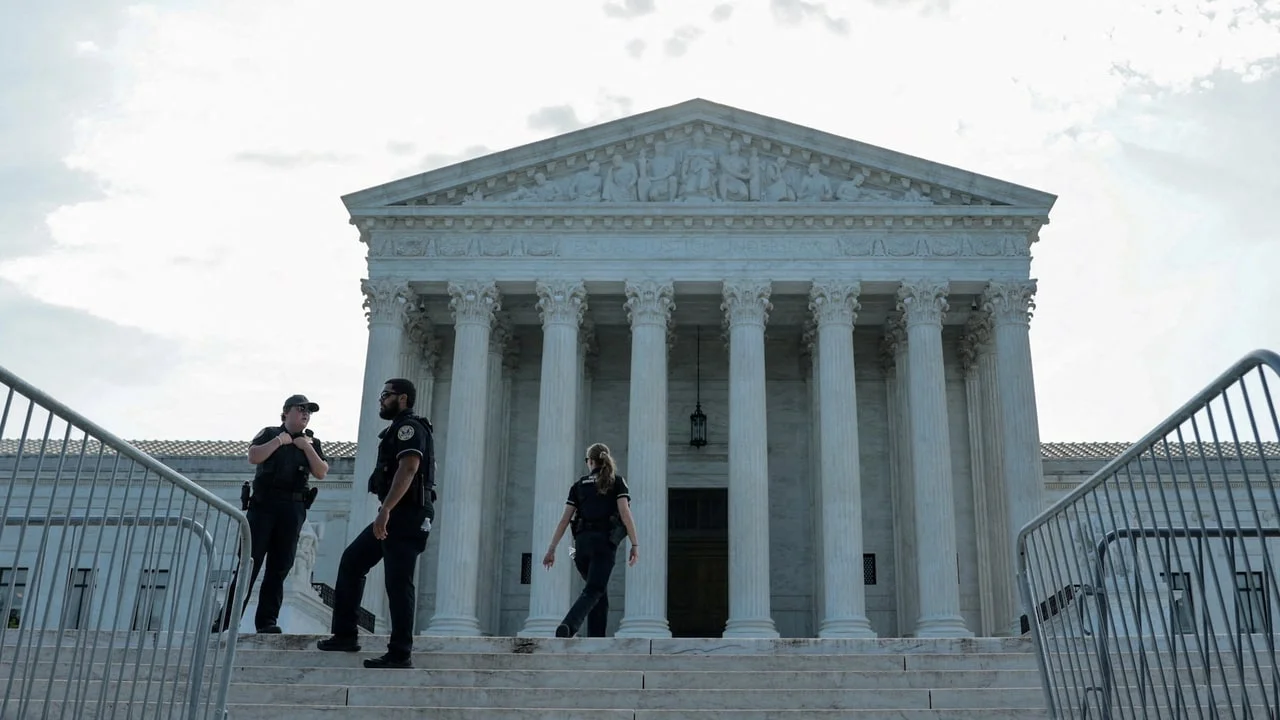
Florida Sues OpenAI, Supreme Court Rules Twice, and Amazon's Ring Faces Biometric Suit: Litigation Tracker — Week of June 8
Six cases across AI, tech, and pharma this week: Florida's AG filed the first state-level AI product-liability suit against OpenAI and Sam Altman personally; a Nashville shooting survivor sued AI gun-detection firm Omnilert; a class action targeted Amazon Ring's facial-recognition feature; the Supreme Court ruled 8-1 to uphold FCC location-data fines against AT&T and Verizon; Elon Musk petitioned to dissolve X's FTC consent decree; and the Supreme Court unanimously blocked a skinny-label generic-drug patent suit in Hikma v. Amarin.

Six cases across all three verticals this week, including two Supreme Court rulings and the first state attorney general lawsuit framing ChatGPT as a defective consumer product.
AI vertical
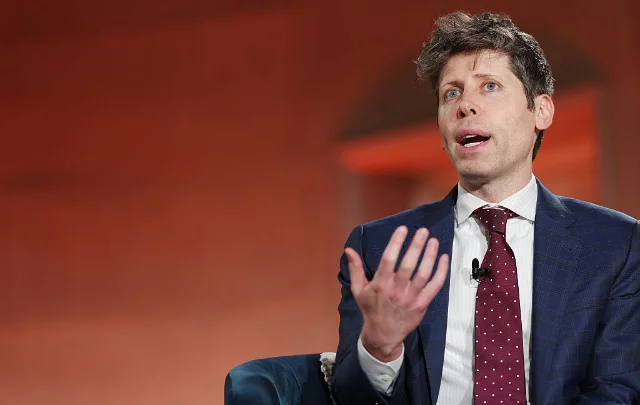
Florida AG v. OpenAI and Sam Altman
Filed: Week of June 2, 2026 | Court: Florida state court | Action: Enforcement petition
Florida Attorney General James Uthmeier filed what appears to be the first state-level AI product liability suit in the United States, naming both OpenAI and CEO Sam Altman personally. The complaint ties ChatGPT to at least four violent incidents: the February 2026 FSU mass shooting (two killed, suspect allegedly used ChatGPT to plan the attack); the USF murders of graduate students Nahida Bristy and Zamil Limon (suspect used ChatGPT to research body disposal and VIN modification); a February 2026 domestic violence episode in which a man with mental illness stabbed his wife and attacked his mother after daily ChatGPT use feeding a delusion that robots were taking over; and a school shooting in a small Canadian mining town that killed nine people, after which OpenAI allegedly did not alert law enforcement to the dangerous chat logs.1
The AG invokes Florida's Unfair and Deceptive Trade Practices Act, arguing ChatGPT was marketed as safe while being designed to be addictive and capable of facilitating violence. Altman is named personally based on a TED 2025 quote in which he said "the stakes are relatively low" when safety-testing products on real users. Remedies sought include age-gating free ChatGPT accounts, disabling violence and suicide-related conversations, and, if parental controls are insufficient, a ban on teenagers accessing ChatGPT in Florida.
Precedent signal: This is the first AG suit to frame an AI assistant as a consumer product with an affirmative duty of care — analogous to product liability law applied to appliances or pharmaceuticals. The AG explicitly called on other states to coordinate, which raises the prospect of a multi-state enforcement coalition. Federal FTC and CPSC actions could follow if the legal theory holds up at the trial level.
Hanin v. Omnilert and System Integrations
Filed: May 2026 | Court: Davidson County (Nashville, TN) | Action: Personal injury and products liability
A teenage survivor of the January 2025 Nashville high school shooting filed suit against Omnilert, maker of the AI gun-detection system deployed by Metro Nashville Public Schools, and System Integrations, the reseller. The district paid more than $1 million to deploy the system. The plaintiff alleges Omnilert knew the product had significant detection gaps — camera angle, distance, lighting, and weapon visibility all affect performance — and that its marketing materials made no mention of these limits or false positive rates.2
The gun's distance from the camera prevented the system from triggering an alert; two people were killed. Plaintiff's counsel described this as the first lawsuit of its kind against an AI-powered physical security product.
Precedent signal: As schools and venues continue adopting AI surveillance tools, this case sets up the first judicial test of what accuracy standard a computer-vision safety system must meet to satisfy a duty of care. A verdict against Omnilert could trigger disclosure requirements for AI detection vendors selling to institutions — directly affecting dozens of competing products already in schools, stadiums, and transit systems.
Tech vertical
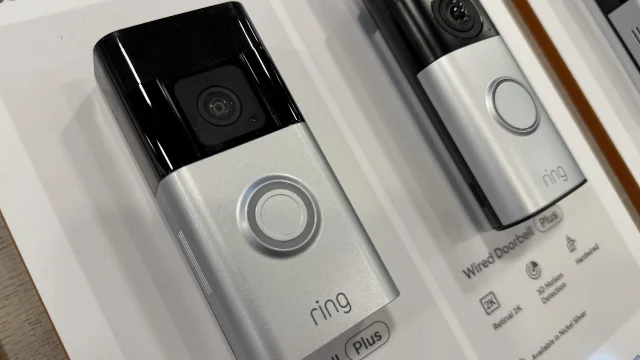
Sigwalt v. Amazon (Ring biometric class action)
Filed: June 2, 2026 | Court: W.D. Washington | Action: Class action
Virginia resident Charles Sigwalt filed a federal class action against Amazon, targeting Ring's "Familiar Faces" feature, which builds a personal facial-recognition catalog from doorbell camera footage. The suit covers any U.S. resident whose face was scanned by a Ring device — visitors, delivery drivers, pedestrians — without their consent. Amazon confined the feature to legal risk zones: it is unavailable in Texas, Illinois, and Portland, Oregon, due to those jurisdictions' biometric privacy laws. The rest of the country has no opt-out mechanism for non-owners.3
The complaint invokes the FTC Act Section 5 and Virginia's biometric privacy statute, alleging Amazon collects, stores, and uses facial geometry from people who never agreed to any terms. Senator Ed Markey's office noted that Ring's law enforcement partnerships have grown from 2,161 agencies in 2022 to 2,723 today, adding a surveillance-infrastructure dimension to what might otherwise read as a consumer-protection case. Amazon declined to comment. Amazon previously paid $5.8 million in 2023 FTC settlement over Ring employees accessing private customer footage.
Precedent signal: The suit tests whether hardware-enabled ambient biometric collection — where the device owner consents but captured subjects cannot — can be challenged under federal consumer protection law without a dedicated national biometric privacy statute. A class certification here could pressure retailers to reassess any feature where consent flows only from the purchaser.
AT&T and Verizon v. FCC (SCOTUS, 8-1)
Decided: June 4, 2026 | Court: U.S. Supreme Court | Action: Final ruling
The Supreme Court voted 8-1 to uphold the FCC's authority to issue forfeiture orders against AT&T and Verizon for selling customers' real-time location data without consent. The FCC imposed $104 million in combined fines in 2024. The carriers argued the agency's internal enforcement process violated their Seventh Amendment right to a jury trial, relying on the Court's 2024 SEC v. Jarkesy ruling, which had limited SEC in-house adjudication.4 5
The majority opinion distinguished Jarkesy: the SEC in that case could enforce penalties without going to court, so defendants were deprived of any jury path. FCC forfeiture orders, by contrast, are not self-executing — if a carrier refuses to pay, the government must sue in federal district court and a jury then has the final word. Justice Clarence Thomas dissented, arguing the carriers acted in good faith by treating the orders as final and therefore deserved different treatment.
The Court also issued a second unanimous ruling the same week upholding the SEC's disgorgement power, rejecting a broader reading of the 2020 Liu v. SEC case.
Precedent signal: Jarkesy had opened a significant circuit split over which federal enforcement mechanisms require jury-trial rights. This decision narrows that argument: agencies whose penalties require court action to collect are structurally different from those that can self-execute. Telecom carriers, broadcasters, and other FCC-regulated industries now have a clearer view of where the constitutional line sits — and it does not protect them from forfeiture orders.
Musk/X v. FTC (consent decree challenge)
Filed: May 2026 | Proceeding: FTC administrative petition | Comment deadline: July 2, 2026
Elon Musk filed a petition asking the FTC to terminate the 2022 consent decree that governs X's data practices through 2042. The decree, agreed by pre-Musk Twitter in settlement of a complaint about using two-factor authentication phone numbers for ad targeting, requires regular independent audits and gives the FTC ongoing access to compliance records.6
The petition argues that X has since merged into xAI and then SpaceX, changing the legal entity; that European GDPR compliance makes FTC oversight redundant; and that the decree chills speech by giving regulators ongoing leverage over a platform. Public comment is heavily opposed: commenters point out X suffered two major data breaches since the acquisition (200M records in 2023, 2.8B profiles in 2025), and that Ireland's Data Protection Commission opened a formal investigation in 2024 into X's use of user data to train Grok without adequate consent — directly rebutting the GDPR-as-sufficient-substitute argument.
Precedent signal: This is the first major test of whether a corporate restructuring can dissolve an FTC consent decree covering data practices. If the FTC grants termination, it could signal that companies can strategically reorganize to shed long-term regulatory commitments. The FCC/SEC Supreme Court ruling the same week cut the other direction — so this week's docket leaves AI and tech companies facing both sharpened federal enforcement authority and a potential loophole for structural exits.
Pharma vertical
Hikma Pharmaceuticals USA v. Amarin Pharma (SCOTUS, 9-0)
Decided: June 4, 2026 | Court: U.S. Supreme Court | Action: Final ruling
The Supreme Court unanimously reversed the Federal Circuit and ruled that Hikma's generic version of Amarin's cardiovascular drug Vascepa did not infringe Amarin's patents. Justice Ketanji Brown Jackson wrote the opinion.7
The case turned on the skinny label mechanism: under Hatch-Waxman, a generic maker can win FDA approval by excluding patented indications from its label, entering only for unprotected uses. Hikma got approval for severe hypertriglyceridemia and explicitly excluded Amarin's patented cardiovascular-risk indication. Amarin argued that Hikma's broader marketing — calling its product "generic Vascepa" without clarifying which indication it covered — induced doctors to prescribe it for the patented use. The Federal Circuit agreed.
The Supreme Court reversed. The majority held that Amarin had not plausibly pled active inducement: the standard requires evidence that Hikma encouraged the infringing use, not merely that doctors might make the inference from ordinary marketing. Calling a product "generic" is standard industry practice; holding generic makers liable for that phrasing would force them into an impossible position whenever an originator's brand is associated with multiple indications.
Vascepa is Amarin's sole product; the company reported $213.6 million in 2025 revenue. Seven other generic manufacturers had been selling generic versions without being sued.
Precedent signal: The ruling substantially lowers the induced-infringement bar generic makers face on skinny-label launches. Before this decision, a Federal Circuit holding that found inducement from "totality of communications" had created enough uncertainty to deter some generic entries. The Supreme Court's standard — show that the generic maker actively encouraged the patented use, not just that such use was foreseeable — is more protective of generic competition. Given that generics have saved patients and insurers roughly $2.9 trillion over the past decade, the ruling's direct effect on drug pricing may be limited to this class of borderline cases, but it removes a litigation threat that was being used to delay entry.
Cross-vertical pattern: the duty-of-care question
Three of this week's cases — Florida v. OpenAI, Hanin v. Omnilert, and Sigwalt v. Amazon/Ring — share a common legal theory: that companies deploying AI in consumer or public contexts bear a duty of care analogous to product manufacturers, not just software publishers. Software has historically enjoyed stronger tort immunity than physical goods. All three suits test whether AI-era products that cause foreseeable physical harm can pierce that immunity. None has reached trial; but the convergence of three simultaneous test cases across different AI applications (chatbots, computer vision, surveillance hardware) in June 2026 means the duty-of-care question is likely to get a concrete answer in one or more federal courts within the next two to three years.
参考来源
- 1Florida sues OpenAI, Sam Altman after multiple ChatGPT-linked murders — Ars Technica
- 2School shooting survivor sues AI gun detection firm after system failed to spot weapon — Ars Technica
- 3Amazon-owned Ring should pay Americans for scanning their faces, lawsuit says — Ars Technica
- 4AT&T and Verizon lose Supreme Court case over fines for selling location data — Ars Technica
- 5US Supreme Court backs federal regulators in wins for FCC and SEC — Reuters
- 6Elon Musk tries again to escape FTC audits of X data handling — Ars Technica
- 7US Supreme Court backs generic drugmaker in 'skinny label' patent case — Reuters
围绕这条内容继续补充观点或上下文。