Why your lunch is making the 3pm crash worse (and exactly how to fix it)

Why your lunch is making the 3pm crash worse (and exactly how to fix it)

The 3pm energy crash has two drivers: a hardwired circadian dip you can't eliminate, and a high-GI lunch that amplifies it. This guide explains the blood sugar and tryptophan-serotonin mechanism behind your afternoon slump, gives you a functional lunch formula to flatten the postprandial glucose curve, and maps out exactly what to eat at 3pm — and when — to get a real second performance window before 5pm.

Daily Fuel for Peak Performance
2026/6/6 · 8:15
1 订阅 · 4 内容
You hit 3pm and your brain checks out. Focus dissolves. Simple emails feel like paperwork. You reach for coffee — again.
Here's the part most productivity advice skips: there are two separate things happening at 3pm, and they have different solutions. Confusing them is why most crash-prevention advice only half-works.

The two-driver problem

Driver 1 is biological and unavoidable. Your body runs on a roughly 12-hour alertness cycle tied to your circadian rhythm. Research published in a peer-reviewed sleep and performance analysis confirmed that the afternoon performance dip — typically hitting between 1–4pm — is a genuine biological event that occurs even when people haven't eaten lunch and don't know what time it is. 1 It's not low motivation. It's a signal from your hypothalamus.
Driver 2 is your lunch, and it's entirely within your control. A high-glycemic lunch — sandwiches on white bread, pasta with no protein, rice bowls, burrito wraps, most fast-casual combos — causes a blood glucose spike followed by a rapid drop. That drop lands squarely on top of the circadian dip. The result is a crash that feels much worse than either driver alone.
Two drivers, one terrible outcome. You can't engineer away the circadian one. You absolutely can stop amplifying it.

What a high-GI lunch actually does to your brain

The mechanism isn't complicated once you see it:
  1. You eat a high-GI lunch (white bread, refined carbs, sugary drinks)
  2. Blood glucose spikes → your pancreas releases insulin
  3. High insulin drives most large neutral amino acids into muscle tissue — but tryptophan stays elevated in the bloodstream because it binds to albumin
  4. The elevated tryptophan-to-other-amino-acid ratio makes it easier for tryptophan to cross the blood-brain barrier
  5. Tryptophan is the precursor to serotonin, and serotonin promotes drowsiness
  6. This tryptophan-serotonin pathway peaks roughly 2–4 hours after a high-carb meal — right at 3pm if you ate at noon 2
The research is clear: low-glycemic-index lunches produce better postprandial cognitive performance than high-GI lunches. In a controlled study, adults eating a low-GI meal (pasta) versus a high-GI meal (white bread) showed better verbal memory, working memory, and executive function in the hours after eating. 3
Your sandwich isn't lunch. It's a scheduled 3pm lobotomy.
正在加载图表…

The functional lunch formula 🥗

The goal is to flatten the blood glucose curve across the afternoon, not spike and crash. Three structural changes to your current lunch do this:
Anchor with protein first. Start eating the protein component of your meal before the carbs. This slows gastric emptying and reduces the glycemic response of everything else on the plate. Target at least 25–30g of protein at lunch: chicken, turkey, eggs, legumes, Greek yogurt, tofu, fish.
Pair every carb with fat or fiber. Refined carbs (bread, white rice, plain pasta) spike blood glucose fast. Adding fat — avocado, olive oil, nuts — or fiber-rich vegetables (spinach, broccoli, mixed greens) to the same bite slows absorption significantly. Half your plate should be non-starchy vegetables.
Watch the liquid calories. Orange juice, sweetened iced tea, sports drinks, and "sparkling water with natural flavors" can easily add 30–50g of fast-dissolving sugar that bypasses your meal's protein-fat buffer entirely. Stick to water or unsweetened sparkling water with lunch.
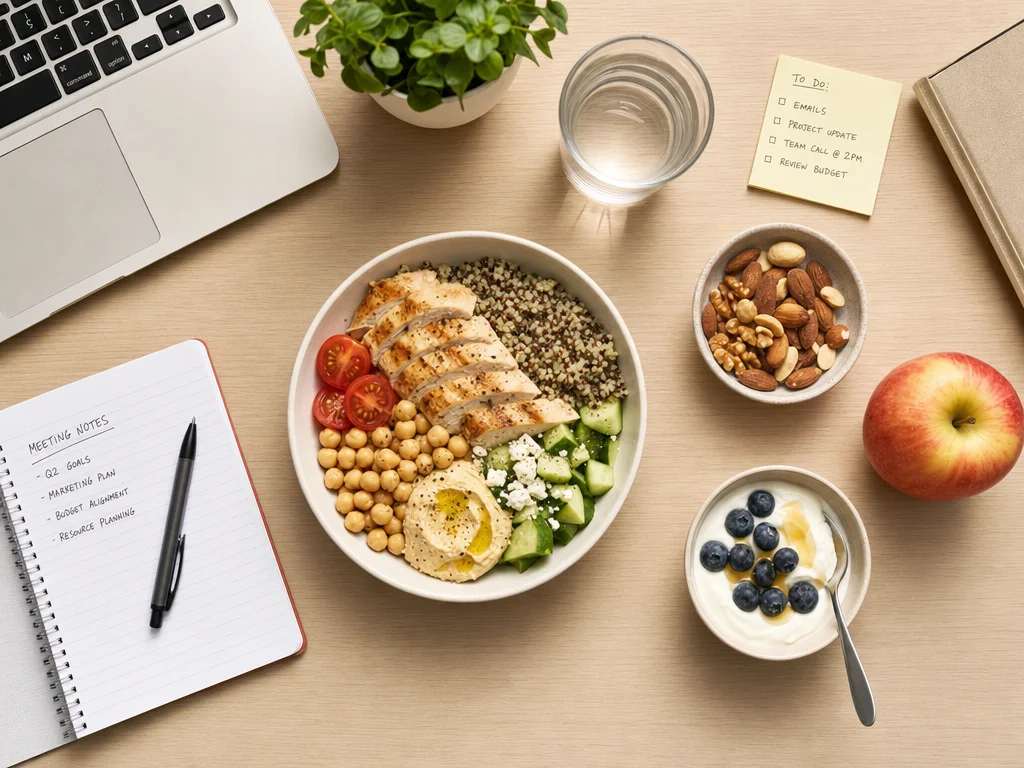
A practical lunch that passes this test: a grain bowl with quinoa (high fiber, lower GI than white rice), grilled chicken, roasted vegetables, olive oil dressing, and half an avocado. Same convenience, completely different afternoon.
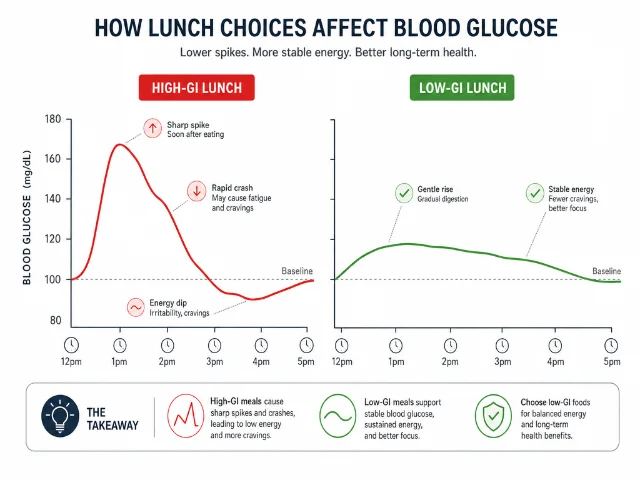
High-GI vs. Low-GI lunch blood glucose curves from 12pm to 5pm — the spike-and-crash pattern vs. stable energy
High-GI lunch (red) causes a sharp spike then drops below baseline by 3pm; low-GI lunch (green) stays stable across the afternoon. AI-generated illustration.

The 3–4pm snack: why timing matters more than most people realize ⚡

Even with an optimized lunch, the circadian dip still arrives. The 3–4pm window is when you want a bridge snack — not because you're hungry (you probably aren't), but because a targeted snack at this window can blunt the dip's impact on cognitive output.
What you want from this snack:
  • Protein to stabilize blood sugar and maintain dopamine/norepinephrine synthesis (neurotransmitters that drive focus)
  • Healthy fats for sustained energy release without a blood glucose spike 4
  • Fiber to slow absorption and extend the energy window
What you don't want: sugar. A candy bar, granola bar, or vending machine pastry will spike your glucose and make the second half of the afternoon worse than the first.

Four desk-ready 3pm snacks (no prep required)

SnackProteinFatFiberNo fridge?
1 oz almonds + apple6g14g5g
2 hard-boiled eggs (pre-made)12g10g0gNeeds fridge
RX Bar or LÄRABAR (minimal ingredient)12g9g3g
2 tbsp almond butter packet + celery sticks7g18g2g
The three shelf-stable options can live in your desk drawer permanently. Remove the decision entirely.

Two micro-habits that compound 🧠

Habit 1 — Restructure your desk snack setup. Replace whatever's in your top desk drawer with a protein + fat combo (a bag of almonds, some individual nut butter packets, a stash of RX Bars). Don't rely on the break room or vending machine. When 3pm hits, decision fatigue is already high — the right snack needs to be the easiest reach.
Habit 2 — Eat your 3pm snack before you feel the crash. Most professionals wait until they're already foggy to eat something. By then, blood glucose has already dropped and your prefrontal cortex is running on fumes. Set a 3:00pm phone alarm for one week and eat the snack proactively. After two weeks, your body clock will make this automatic.
The strategy isn't about eliminating the 3pm dip — that's a biological constant. It's about not voluntarily feeding it.
正在加载统计卡片…

The full afternoon framework

WindowActionWhy it works
12:30–1:30pm 🍽️Protein-first, low-GI lunch, half plate vegetablesFlattens postprandial glucose curve, reduces tryptophan pathway activation
2:45–3:00pm ⚡Proactive protein + fat snackBridges the circadian dip before it fully activates
3:00pm ☕Last acceptable caffeine windowBlocks adenosine at its circadian peak without sabotaging sleep
3:30–5pm 🧠Deep work or complex tasksPost-snack glucose stability = your second peak performance window
The 3pm–5pm block is genuinely recoverable. Most professionals write it off entirely and coast through on autopilot. That's two hours of paid cognitive capacity left on the table every single day.

What does your current 3pm look like? Are you grabbing whatever's in the vending machine, running on caffeine, or have you found a snack combo that actually works? Drop your go-to in the comments — the ones that fit in a desk drawer without refrigeration are especially interesting to me. 👇

围绕这条内容继续补充观点或上下文。

  • 登录后可发表评论。