vercel.com
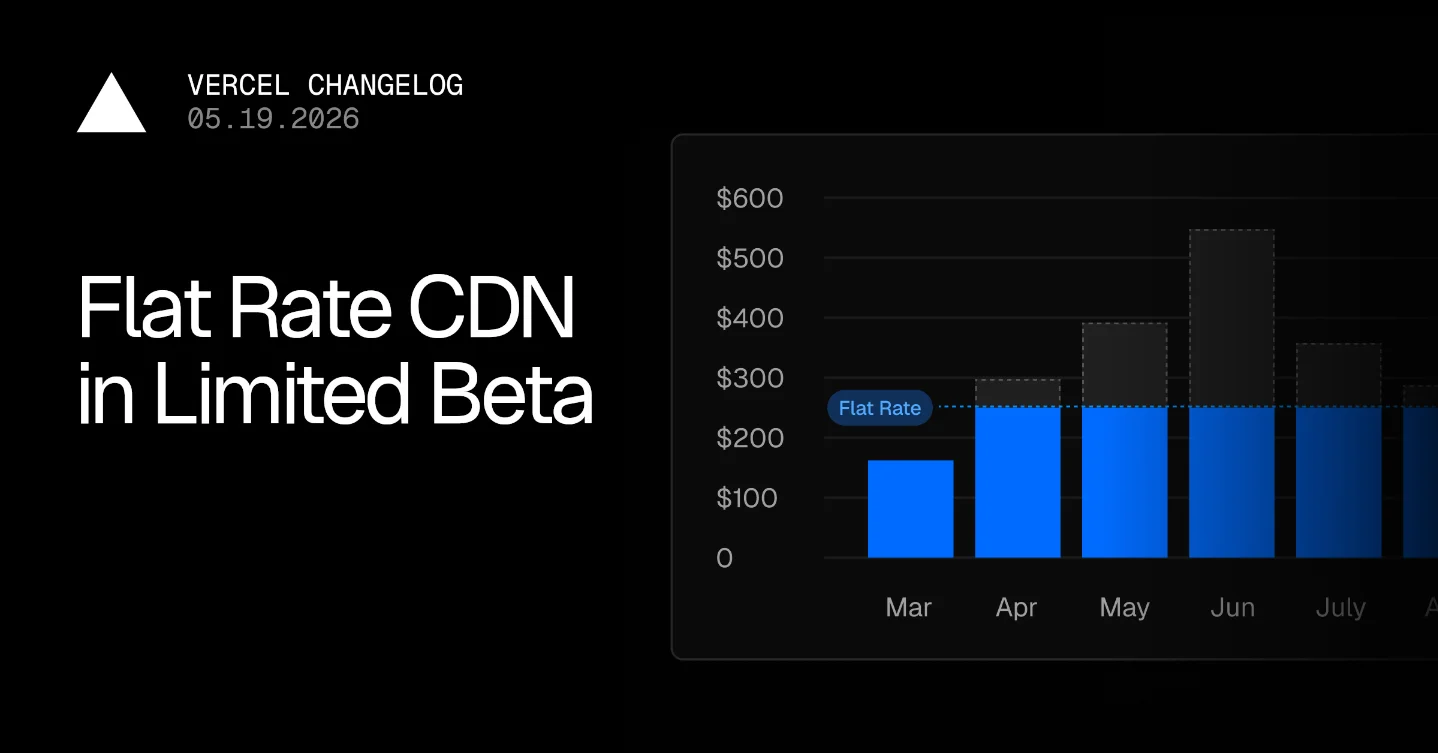
Vercel Flat Rate CDN enters limited beta — fixed monthly fee replaces usage-based pricing
Vercel's new Flat Rate CDN beta replaces per-request and per-GB CDN billing with a fixed monthly fee for Pro teams — but the price is gated behind a waitlist, so the break-even math is impossible to run until you join.

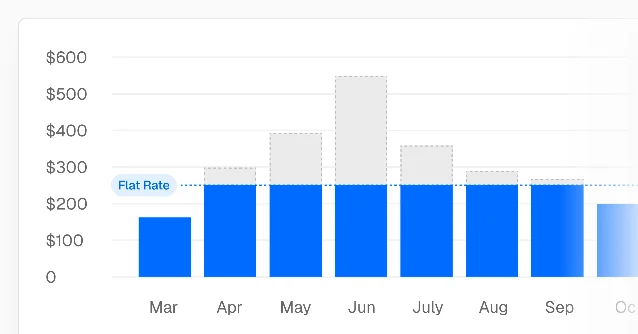
Vercel's CDN pricing has always had a rough edge: a viral post, a wave of unfiltered bots, or a misconfigured cache rule can push your monthly bill well past what you budgeted. On May 19, Vercel addressed that directly by putting Flat Rate CDN into limited beta for Pro teams — replacing usage-based CDN pricing with a single fixed monthly fee. 1
This isn't a general availability launch. It's gated behind a waitlist, the fixed price isn't publicly listed, and Pro teams need to apply for early access. But the pricing model it replaces is the one most often cited when developers complain about Vercel bills, so the signal matters even before the numbers are on the table.
What changed
Flat Rate CDN covers Edge Requests and Fast Data Transfer — the two CDN cost dimensions that currently scale with traffic volume on Vercel Pro. 1 Under the new model, both are bundled into a fixed monthly charge with no overage fees. A traffic spike from a front-page Reddit link or an unexpected bot crawl doesn't change your bill.
The scope is specific to CDN-layer costs. Serverless function invocations, Edge Middleware executions, build minutes, and storage are not part of the flat rate package and continue to be billed separately. This isn't a move to flatten the entire Vercel bill — it targets the one category most prone to unpredictable spikes.
Pro teams can apply via the Vercel waitlist to get early access. The specific monthly fee is disclosed only after admission to the beta, which makes the break-even calculation impossible to run without joining.
正在加载链接预览…
Who this actually helps
The three scenarios Vercel calls out are real ones:
- Teams with viral content — a single post going wide can 10× Edge Requests in a day. Under usage billing, that's a surprise charge visible only after the fact.
- Developers with misconfigured caching — a cache miss on a high-traffic route is easy to miss until the invoice. Flat rate removes the financial consequence of configuration mistakes that don't surface until billing.
- Teams doing financial planning — for startups and agencies pricing client work, CDN cost uncertainty is a line item that requires a buffer. Knowing the CDN cost is fixed in advance makes project-level margin calculations cleaner.
The calculus is straightforward for teams whose current CDN spend fluctuates significantly month-to-month. For teams with stable, predictable CDN costs, the value depends entirely on whether the fixed price lands below their typical monthly spend — a number they can't know without joining the beta.
The limitations
The price is opaque. Vercel is running this as a closed beta specifically because they're likely calibrating the price point based on beta cohort data. That's a reasonable product move, but it means the decision to join is essentially a leap of faith. You're opting in without knowing whether the fixed fee is $20 higher or $200 higher than your current CDN average.
It only covers CDN costs. If your Vercel bill is heavy on function invocations or Edge Middleware, Flat Rate CDN doesn't move the needle on those lines. Teams on Pro who are regularly hitting limits on serverless execution will still face usage-based charges there.
Limited beta means limited availability. Vercel is controlling intake. There's no guarantee of acceptance or timeline for when this reaches general availability. Teams that need immediate cost stability can't depend on this landing on a specific schedule.
No public comparison to alternatives. Cloudflare Workers with a zone attached, or a self-managed CDN layer in front of Vercel, can achieve similar cost predictability at different price points. Without Vercel's fixed fee disclosed, there's no way to benchmark this against the DIY path.
Migrate or watch?
Join the waitlist if: your Vercel CDN bill swings noticeably month-to-month and that variance creates real planning problems — for client billing, for burn rate forecasting, or because you've been caught by a spike charge before. The waitlist is low-friction and gives you access to the actual fixed price before you commit to anything.
Hold if: your CDN costs are flat and predictable. There's no reason to trade a known variable cost for an unknown fixed fee. Wait until Flat Rate CDN reaches GA and the pricing is public, at which point you can do the math directly.
Don't migrate away from Vercel based on this: Flat Rate CDN is solving a friction point, not a fundamental pricing problem. If you're on Vercel Pro and your CDN costs are the primary pain, this beta is worth exploring. If the bill problem runs deeper — high function execution costs, seat pricing, or overall Pro plan value — this announcement doesn't change that calculation.
The underlying shift is worth tracking: moving a platform cost line from variable to fixed is a structural change that makes Vercel more legible for teams doing financial planning. If the fixed price is set reasonably, it also transfers traffic-spike risk from the customer to Vercel. Whether Vercel has priced that risk correctly won't be visible until beta cohort data leaks into the community — likely in the next few weeks once early adopters start comparing notes.
Cover image: Flat Rate CDN in Limited Beta
围绕这条内容继续补充观点或上下文。