github.com
venkatkrishna07/mkdev — GitHub
Trusted localhost HTTPS with LAN sharing. Go TUI, MIT, v0.3.0. 96★ in 12 days.
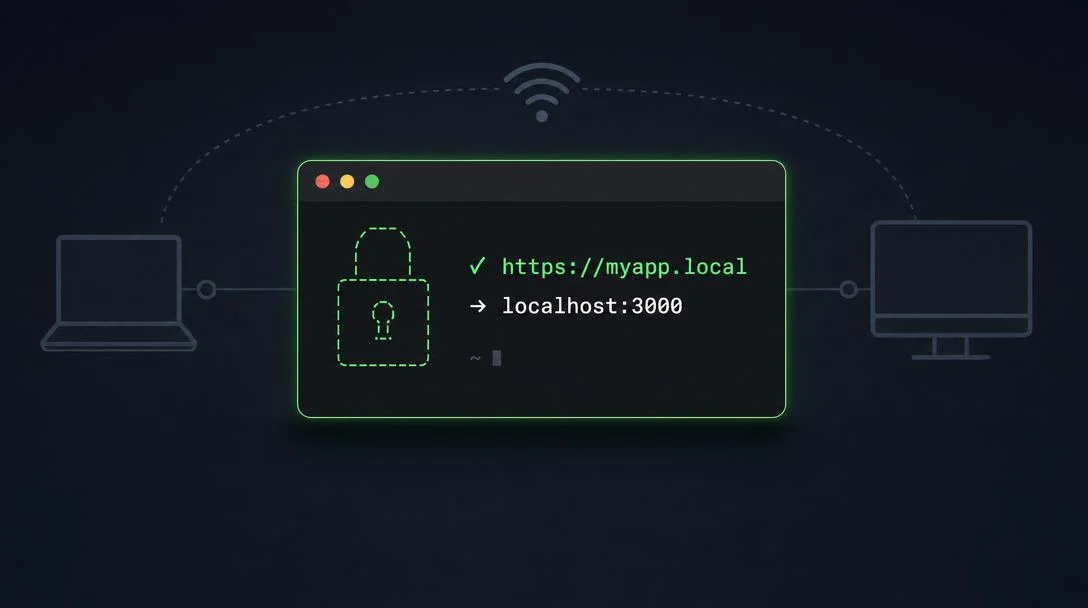
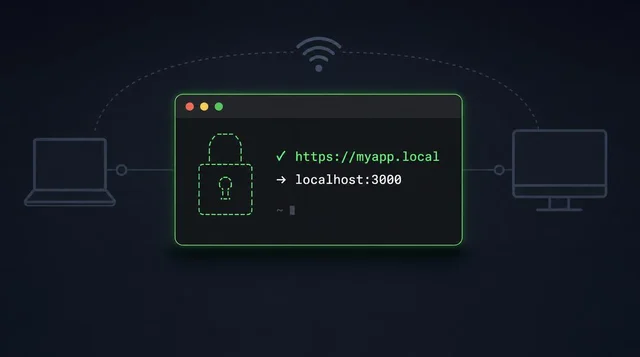
mkdev is a 12-day-old Go TUI tool (MIT, v0.3.0, 96★) that generates a trusted local CA, maps https://name.local to a localhost port, and broadcasts the domain over mDNS — giving every device on your Wi-Fi browser-trusted access to your dev server without tunnels, hosts file edits, or cert warnings.

http://localhost:3000 into your phone's browser and been rewarded with nothing. The dev server is running. Your laptop and phone are on the same Wi-Fi. It still doesn't work, because localhost only routes to the device that ran the server — not to you.ERR_CERT_AUTHORITY_INVALID warning that you can't dismiss on mobile.https://name.local to a local port, and broadcast that domain over mDNS so every device on your Wi-Fi can reach it — browser-trusted, no warning, no tunnel 1.openssl. The difficulty is:/etc/hosts on each one.local domains) handles item 2 without any DNS infrastructure. mkdev handles item 1 by generating a local CA and running the platform-appropriate trust store install — Keychain on macOS, update-ca-trust or update-ca-certificates on Linux, crypt32.dll ROOT store on Windows 1.0o400 permissions. LAN requests to domains you haven't explicitly shared return 403. mkdev has no telemetry, no remote calls, and no update checks 2.| Method | Command |
|---|---|
| Homebrew | brew install venkatkrishna07/mkdev/mkdev |
| go install | go install github.com/venkatkrishna07/mkdev@latest |
| Binary | Download from GitHub Releases |
| Source | git clone + go build ./... |
go install route requires Go 1.25+ (the go.mod declares go 1.25.0 with toolchain go1.26.3 4). The binary download skips the toolchain requirement entirely.# Step 1: one-time setup — installs the local CA into your system trust store
mkdev install
# Step 2: register your app's domain
mkdev add mywiki
# Step 3: start routing
mkdev serve --port 8080serve, https://mywiki.local routes to localhost:8080. On your iPhone (same Wi-Fi), the same URL resolves without warning — mDNS handles the discovery, the CA you installed in step 1 handles the trust 1.mkdev add flow looks like: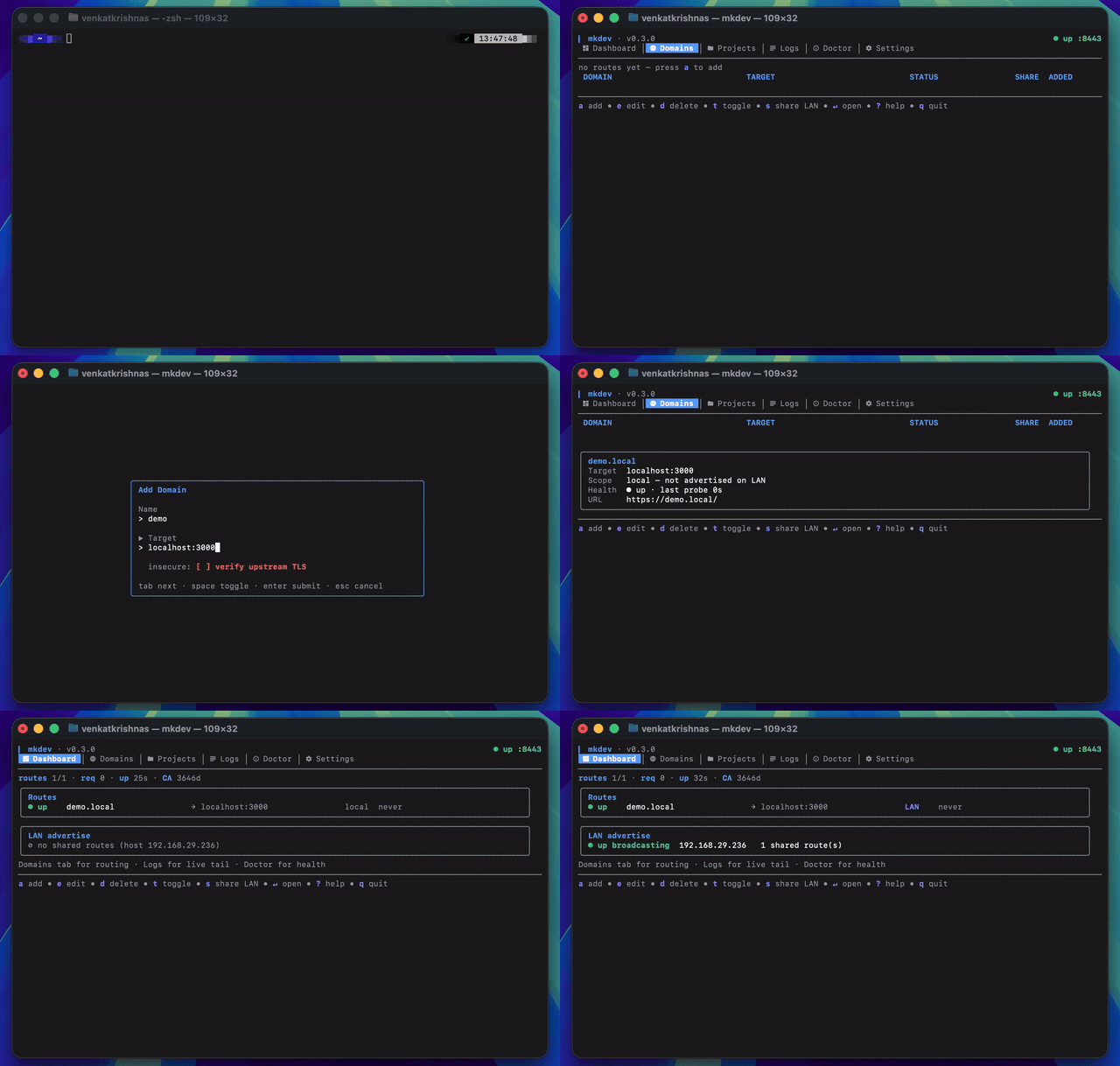
add command flow — TUI domain list and routing status 1"My prob was with mcp servers. I have few setup locally on different devices, atleast for testing across devices this helped a lot. Bring it up on one device and the rest can access it."
"Why would I want an untested, and at least partially vibe coded piece of software to do that?"
govulncheck 7, and releases are signed with cosign keyless attestation 8 — so the engineering discipline is notably higher than most day-12 repos. But "has a good CI pipeline" and "has been used by more than one person" are different bars.localhost dev servers and want to test them from a mobile device or another machine on the same network — without ngrok, without editing /etc/hosts on each device, and without accepting browser cert warnings — mkdev installs in under 2 minutes and the core flow (install → add → serve) is a single three-command sequence.brew install venkatkrishna07/mkdev/mkdev and run mkdev install first. If the CA install completes without errors, you're set. If you hit issues, the GitHub issue tracker is currently empty 1, which means you'd be filing the first one — not necessarily a bad thing, but good to know before you depend on it..local domain resolves on other devices without editing their DNS or hosts files. That's the specific gap mkdev fills — and 96★ in 12 days with no HN post suggests it's already landing with engineers who hit the same wall.Trusted localhost HTTPS with LAN sharing. Go TUI, MIT, v0.3.0. 96★ in 12 days.
Community thread where the author explains the MCP-server motivation and responds to the 'vibe coded' criticism. 6 comments.
围绕这条内容继续补充观点或上下文。