Your newsletter digest — June 3, 2026
One story today: Ben Thompson's case for why Google is becoming the Google Capital Company — an $80B equity raise, a $10B Berkshire Hathaway bet, and a structural shift from asset-light Aggregator to capital-intensive infrastructure player. The See's Candies era of Google may be giving way to its BNSF moment.

One story in the inbox today, and it's a framing shift worth sitting with: Ben Thompson argues that Google is no longer just the world's most beautiful Aggregator. The $80B equity raise — including a quiet $10B check from Berkshire Hathaway — is evidence that Alphabet is becoming something structurally different.
From See's Candies to BNSF: Google's capital turn
For decades, Google was the closest thing to a perfect business. Supply was free (the web). Customers competed against each other to bid up prices (advertisers). Users decided which customers won (search intent). The margins were extraordinary. The capital required was nominal. Warren Buffett famously admitted he saw it happening up close — GEICO was paying $10–11 per click — and still couldn't bring himself to buy the stock.1
Thompson uses a Berkshire Hathaway analogy to explain where Google goes next. See's Candies was Buffett's archetypal asset-light winner: $25M to buy, decade after decade of returns, almost no reinvestment required. The "problem" was that the cash had nowhere to go. So Berkshire deployed See's profits into BNSF Railway — massively capital-intensive, lower margins, but generating $5.5B in net income last year on $23.4B in revenue.1 More absolute profit than See's will ever produce.
The parallel for Google:
- Google Services (search, YouTube, ads) = See's Candies. In Q1 2026: $89.6B revenue, $40.6B operating profit, 45% margins. Beautiful, scalable, capital-light.1
- Google Cloud = BNSF in the making. Q1 2026: $20B revenue, $6.6B profit, 33% margins — and growing faster than Services. It was 6% the size of Services in 2019; it's 22% today.1
Google Cloud's share of Services revenue has been climbing fast — from near-zero to a meaningful fraction in just seven years:
正在加载图表…
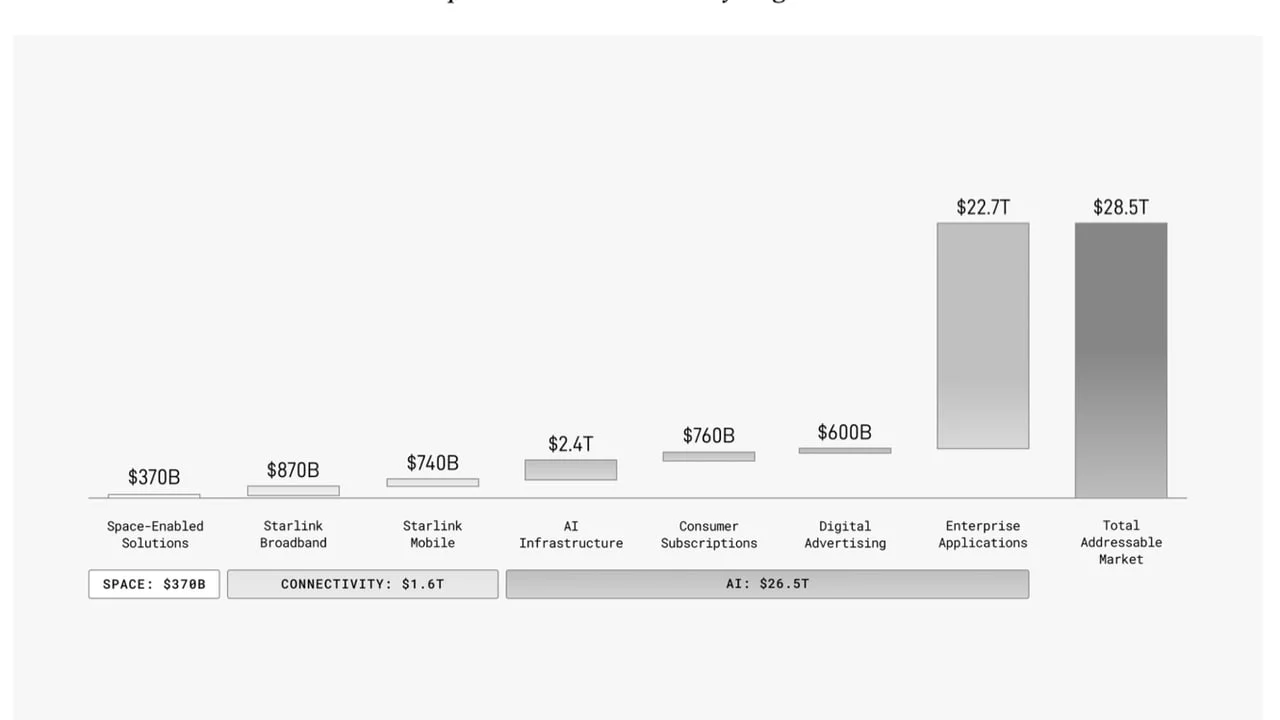
The question Thompson raises: what if Cloud's addressable market isn't advertising (a fraction of GDP) but AI, which could reshape the entire economy?
正在加载内容卡片…
Why equity, and why Berkshire
Alphabet's $80B raise has three pieces: a $40B at-the-market program (partly covering employee equity taxes), $30B in underwritten share/preferred offerings, and a $10B direct investment from Berkshire Hathaway.1
The equity-vs-debt question is worth pausing on. Google has $126B in cash and $81B in debt — it has plenty of borrowing room, and debt is cheaper (interest is tax-deductible). Choosing equity dilutes existing shareholders. Thompson's read: Google is signaling that compute demand will be so large that they'll need debt and equity, and they're starting now rather than explaining the scale later.
The Berkshire investment is the more interesting signal. Greg Abel, Buffett's successor as CEO, is deploying $10B into Google near its all-time high. Thompson frames this as Abel replaying Buffett's own playbook — Berkshire is now See's Candies, sitting on $373B in cash and $25B in annual free cash flow, looking for a BNSF-scale capital project.1 Google fits: it has AI optionality at every layer (Services, model, capacity rental), and its TPU infrastructure gives it a structural cost advantage if compute becomes a commodity.
As a signaling mechanism, the deal works in both directions. For Google: Berkshire's endorsement validates that demand is real and larger than the market thinks. For Berkshire: if the signal is right, they're getting in early on what could be the defining infrastructure investment of the decade.
Cash as the ultimate competitive resource
Thompson extends the argument to the broader AI race. His earlier piece argued that owning demand (compelling products) would beat owning supply (compute). That thesis holds — but it assumes there's compute available to buy.
What if there isn't? If the AI buildout gets large enough that new compute is genuinely scarce, then the battle shifts: whoever can bring the most cash can secure the most compute, and that advantage compounds (more compute → more revenue → more cash → more compute). In that world, the question isn't who has the best model. It's who can deploy the most capital the fastest.1
The footnote Thompson adds is worth keeping: Waymo, which also rejected the asset-light licensing model and built its own capital-intensive robotaxi operation, now looks more aligned with where Google Cloud is heading than with where Google Search came from. The Google Capital Company thesis might extend further than just cloud.
One thread to watch: Google's equity raise lands the same week SpaceX went public at a $2T valuation and Alphabet issued this deal — two separate signals that the appetite for compute infrastructure capital is running well ahead of what Wall Street models currently reflect. Whether the returns justify the spend is still open; what's no longer open is that the spend is happening.
围绕这条内容继续补充观点或上下文。