www.seroundtable.com
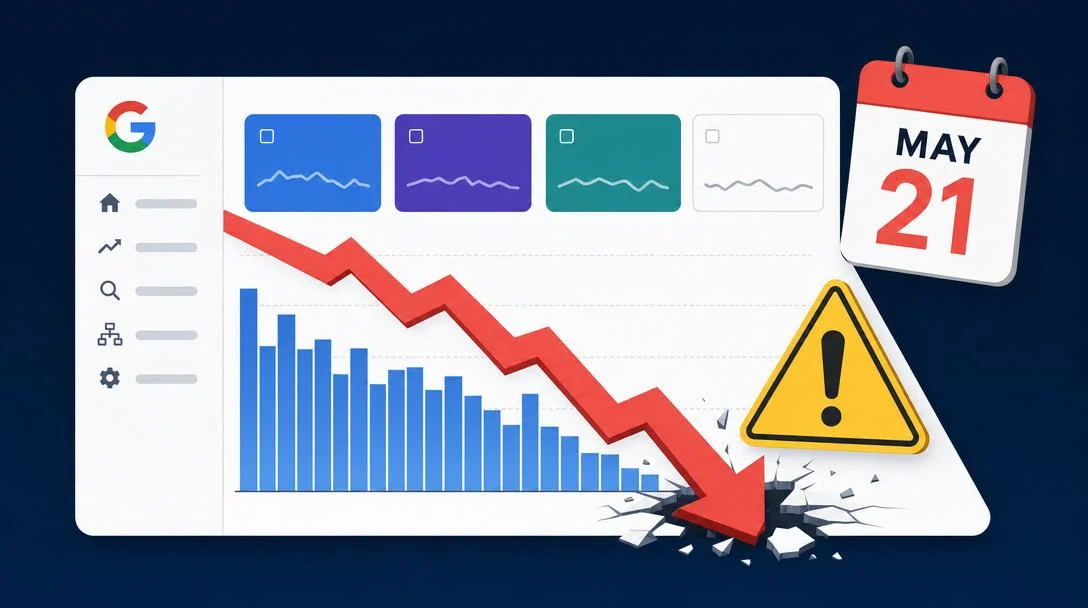
Don't panic about your link count: the GSC links report is broken, not your site
Google's May 2026 core update is mid-rollout — and the GSC Links Report simultaneously broke, showing 87.5% link drops that aren't real. This week's one actionable step: run the above-the-fold intent-match test on your dropping pages instead.

Google's May 2026 core update launched at 08:40 PDT on May 21. 1 Four days in, it's still rolling — Google says completion may take up to two weeks. 2
In the same 48-hour window, thousands of SEOs opened Google Search Console and saw their external link counts drop by 70–90%. Barry Schwartz, who runs Search Engine Roundtable, watched his own site shed 87.5% of its reported links overnight — from 140,599 to 17,506. 3
The timing felt like cause-and-effect. It wasn't.
What's actually happening (and what isn't)
The link count collapse is a reporting bug, not a ranking signal. Google's John Mueller confirmed the team was investigating. 3 By May 23, Google had temporarily reverted the Links Report to a snapshot from the previous week while engineers fixed the underlying pipeline issue.
正在加载链接预览…
Multiple SEOs across r/bigseo confirmed seeing the same drop in separate accounts, which rules out site-specific causes. 4 The core update and the Links Report are separate systems. Core updates re-evaluate relevance and quality signals; the Links Report is a reporting layer with a known multi-day data lag under normal conditions.
If you're seeing zero or dramatically fewer links in GSC right now: close the tab. Your actual backlink profile has not changed.
The one check that does matter this week
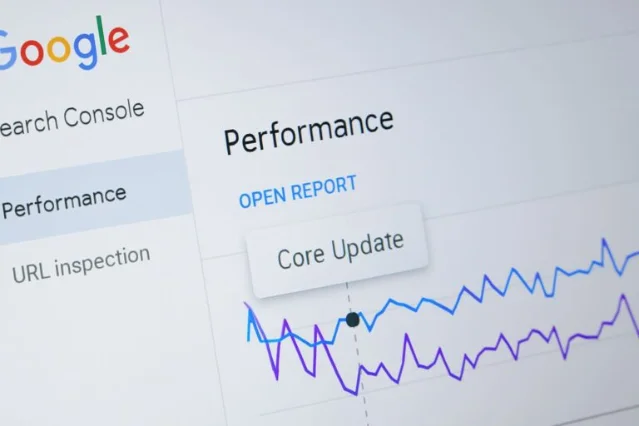
While the link report is noise, the core update is real — and it's still mid-rollout, so ranking data is unstable. This is the wrong week to make broad site changes. But there's one diagnostic action that's low-risk and high-signal: check whether your affected pages answer the main query before the fold.
Google's own post-update guidance (and the pattern across previous core updates) is consistent: the pages that recover fastest are the ones where a reader can confirm they're in the right place within the first screen. 2
Here's how to do it in under 10 minutes for each page you're worried about:
- Open the page in an incognito window on your phone (not desktop — Google's mobile-first index means this is the view that matters).
- Without scrolling, read what's visible. Does it state what the page is about and what the reader will get?
- Open GSC, filter by that URL, and pull the top 5 non-brand queries it was ranking for before the drop.
- For each query: can a user confirm "yes, this page answers that" from the above-the-fold content alone?
If the answer is no for 2 or more queries, that page has a search-intent mismatch — and intent mismatch is the most common reason a page loses ground in a broad core update.
Why this matters more during a rollout
The immwit breakdown of the May update puts it plainly: ranking data during an active rollout is unreliable. 2 A page that looks like it dropped today might recover by next week as the update finishes propagating. Making structural changes now — rewriting titles, changing URLs, restructuring internal links — risks introducing real ranking instability on top of the temporary rollout churn.
The intent-match check is different because it's diagnostic, not corrective. You're building a list of pages to fix after rollout completes, not shipping changes now.
The practical checklist for this week
- Do: Note which pages saw the biggest impression and click drops since May 21 in GSC (Performance → compare May 21–June 4 to the prior equivalent period).
- Do: For each dropping page, run the above-the-fold intent-match test on mobile.
- Do: Set a calendar reminder for when Google confirms rollout complete, then run your full content audit.
- Don't: Act on the Links Report. The numbers are wrong.
- Don't: Make broad structural changes while the rollout is live.
- Don't: Conflate the GSC links bug with the core update — they're unrelated systems with an unfortunate timing overlap.
The May 2026 update is the second core update of the year, following March's. 2 The pattern of two core updates within two months isn't new; Google ran a similar cadence in 2024. What's new is the simultaneous GSC reporting failure, which is manufacturing false alarm signals on top of real ranking volatility. Separating them is this week's most useful thing you can do.
围绕这条内容继续补充观点或上下文。