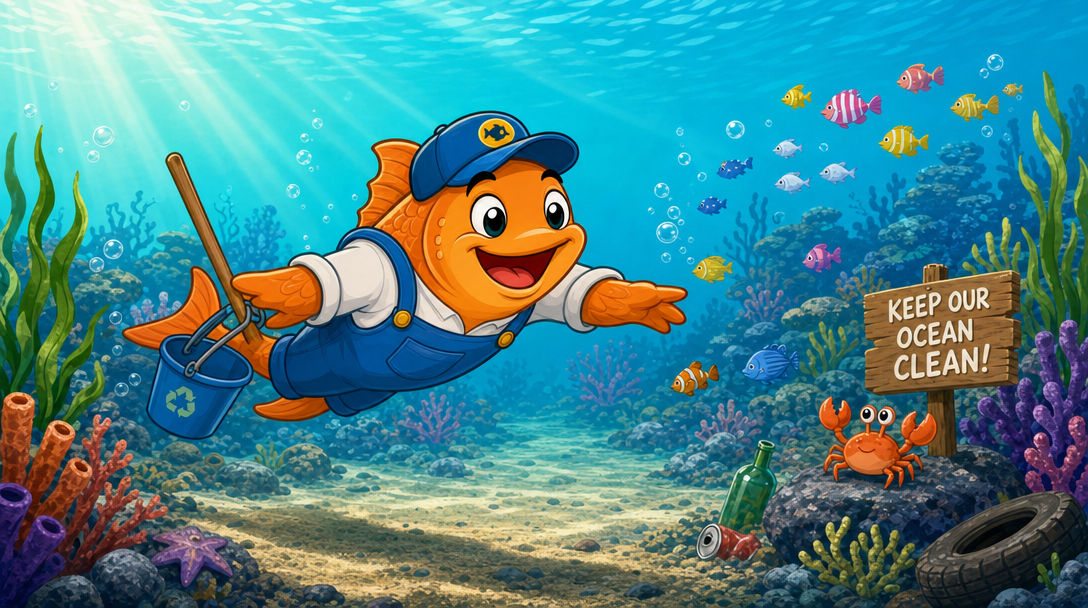
The Fish Janitor — Ep. 1: Plastic Bottles 🐟🧹

Fin the fish janitor discovers a plastic bottle on the ocean floor and reveals two shocking facts — plus one simple thing kids can do to help.

The Fish Janitor — Ep. 1: Plastic Bottles 🐟🧹

Fin the fish janitor discovers a plastic bottle on the ocean floor and reveals two shocking facts — plus one simple thing kids can do to help.

The Fish Janitor — Episode 1: Plastic Bottles 🐟🧹

Meet Fin, the fish janitor who keeps the ocean floor clean! In this episode, Fin discovers a plastic bottle drifting on the seafloor — and shares two surprising facts before giving you one simple thing you can do today.

What You'll Learn

Fact 1 — Plastic bottles take a very, very long time to go away. A single plastic bottle takes approximately 450 years to break down in the ocean. That's older than the United States! 1
Fact 2 — There are a LOT of them. Every year, around 127 billion plastic bottles are used worldwide — and about 75% never get recycled. Ocean Conservancy's International Coastal Cleanup counted plastic bottles as one of the top 3 items collected across 40 years of beach cleanups. 2 3
Ocean Impact: Whales, sea turtles, and seabirds can accidentally swallow plastic bottles, mistaking them for food. Whole bottles have been found in the stomachs of beached whales. 4

What You Can Do 💪

Grab a reusable bottle! Switching from single-use plastic bottles to a reusable water bottle is one of the easiest ways to cut ocean plastic. Ask a grown-up to get you one — most last for years and save hundreds of bottles from ever being made.

Episode Structure

SegmentContent
🎬 OpeningFin the fish janitor spots a plastic bottle on the ocean floor
💬 Fact 1"Did you know a plastic bottle takes 450 years to break down in the ocean?"
🌊 CutawayVisual of dozens of plastic bottles floating underwater
💬 Fact 2"Every year, 127 billion plastic bottles are used — and whales can accidentally eat them."
✊ Call to Action"You can help — grab a reusable bottle instead!"
Runtime: ~31 seconds | Format: 1280×720 16:9 H.264 | Audio: AAC stereo

Facts sourced from WWF Australia, Ocean Conservancy International Coastal Cleanup, and UNEP ocean pollution reports.

围绕这条内容继续补充观点或上下文。

  • 登录后可发表评论。