
Curcumin + black pepper: what 19 RCTs show

Curcumin + black pepper: what 19 RCTs show

A 2026 systematic review of 19 RCTs finds curcumin 500–1,500 mg/day + piperine 5–15 mg/day consistently reduces inflammation, improves blood lipids, and supports glycemic control in adults with metabolic syndrome, type 2 diabetes, or NAFLD — with clinically meaningful but modest effect sizes, and real drug-interaction risks that matter for polypharmacy patients.

Nutrition Research Brief
2026/5/23 · 20:28
2 订阅 · 9 内容

研究速览

A systematic review published May 18, 2026 in Frontiers in Nutrition compiled the most comprehensive evidence to date on co-supplementing curcumin with piperine — the active compound in black pepper most supplement labels call by its trademarked name, BioPerine. Nineteen randomized controlled trials covering more than a dozen clinical conditions point consistently toward reduced inflammation, improved lipid profiles, and better glycemic control in people with metabolic and cardiometabolic conditions. The takeaway is real, but narrower than the supplement industry's marketing suggests — and one of the field's most-quoted mechanism claims turns out to be contested.
Study type: Systematic review of 19 RCTs (narrative synthesis, no meta-analysis)
正在加载链接预览…

What the review covered and how it was built

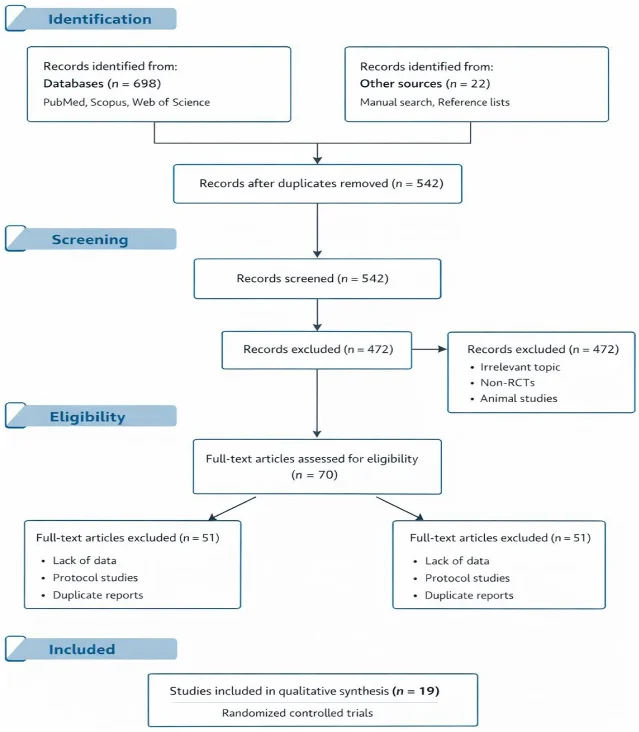
Pan et al. (Guizhou University of Traditional Chinese Medicine and Guizhou Medical University) searched PubMed, Scopus, Web of Science, and the Cochrane Central Register of Controlled Trials from January 2000 through January 2026. 1 From 720 initial records, 19 double-blind, placebo-controlled RCTs passed eligibility screening and were included in the qualitative synthesis, following PRISMA 2020 guidelines.
PRISMA 2020 flow diagram from Pan et al. (2026) showing the four-stage selection process from 720 initial records to 19 included RCTs
Study screening process — 720 records retrieved, 19 RCTs included after deduplication, title/abstract screening, and full-text eligibility assessment 1
The interventions used curcumin 500–1,500 mg/day paired with piperine 5–15 mg/day, consistently at a 100:1 ratio (e.g., 500 mg curcumin + 5 mg piperine per capsule). 1 Most trials ran 8–12 weeks. The nine trials using the lowest dose (500 mg curcumin + 5 mg piperine once daily) represent the most common and most commercially available formulation.
One important structural note: the review's abstract states "20 RCTs," but the full text and Table 1 consistently report 19 — a drafting error in the abstract. 1 Readers citing this paper should use the figure 19. The risk-of-bias assessment also contains an inconsistency between narrative text and Table 2; the tabulated RoB 2 data (13 trials low-risk, 6 with some concerns, 0 high-risk) is more reliable than the section 3.3 prose.

Where the evidence is strongest — and where it thins out

The 19 trials enrolled participants across a range of conditions. The signal is not equally strong across all of them.
Metabolic syndrome (MetS) produced the most replicated findings. Two Iranian RCTs by the Panahi group (n = 217 total) reported consistent reductions in C-reactive protein (CRP), oxidized LDL, triglycerides (TG), LDL-cholesterol (LDL-C), and total cholesterol, along with increased HDL-cholesterol and superoxide dismutase (SOD). 1
Non-alcoholic fatty liver disease (NAFLD) had four trials (n = 294). All reported reductions in hepatic enzymes (ALT, AST, ALP) and improvements in NAFLD severity grading. One 2025 meta-analysis of six NAFLD RCTs — a separate publication summarized by the review — found a weighted mean difference (WMD) for TG of −8.27 mg/dL, HDL-C of +2.14 mg/dL, and an odds ratio for severe NAFLD of 0.34 (95% CI 0.14–0.83). 2
Type 2 diabetes (T2DM): Two trials (n = 143) showed reductions in fasting blood glucose (FBS), HbA1c, and HOMA-IR (a measure of insulin resistance). 1
Outside these metabolic conditions, evidence gets thinner. COVID-19 ICU patients showed reductions in CRP and liver enzymes in one small trial; outpatient COVID-19 participants improved only on fatigue scores. Two post-cardiac-surgery trials (CABG and AMI) found improvements in inflammatory and oxidative markers at five days but no effect on cardiac troponin or ejection fraction. A single lupus (SLE) trial showed benefit only when curcumin-piperine was combined with vitamin D.
As the authors conclude: "The strongest and most consistent evidence supports the adjunctive use of curcumin–piperine supplementation in chronic metabolic and cardiometabolic conditions," while "evidence in acute infectious and autoimmune conditions — such as COVID-19 and SLE — while encouraging, remains preliminary." 1
Across all 19 trials, the combination was well tolerated. No serious adverse events were reported at any dose; occasional mild gastrointestinal symptoms (nausea, light dyspepsia) resolved without discontinuation. 1

Putting numbers on the lipid effects

Because Pan et al. elected not to perform a quantitative meta-analysis — outcome measures were reported inconsistently across the 19 trials, making pooling unreliable — the review itself provides no effect sizes, confidence intervals, or p-values. All directional findings (↑/↓) are reported qualitatively: 15/19 trials showed significant inflammation reduction, 14/18 showed lipid improvement, 3/3 showed HbA1c reduction. 1
For quantitative grounding, two independent meta-analyses published in 2025 are relevant:
  • Karimi et al. (2025, Lipids) — 16 RCTs, 1,038 participants (mean ages 38–63): curcuminoids + piperine vs. placebo reduced total cholesterol by −6.6 mg/dL (high-certainty evidence per GRADE). TG, LDL-C, and HDL-C also moved favorably, but with lower certainty. 3
  • Epelde et al. (2025, Pharmaceutics) — 3 RCTs (~250 participants), turmeric ± piperine for lipid profiles in adults with cardiometabolic risk: pooled TG WMD −25.5 mg/dL, TC −14.1 mg/dL, LDL-C −17.0 mg/dL, HDL-C +5.7 mg/dL. The turmeric-plus-piperine subgroup showed a larger LDL-C reduction (−29.6 vs. −16.2 mg/dL for turmeric alone), though this subgroup contained only one RCT. 4
The two meta-analyses differ notably in their TG estimate (−8 mg/dL vs. −25.5 mg/dL). The most likely explanation is the difference in included populations and trial selection criteria; neither estimate should be taken as the "true" effect in an unselected population.
正在加载链接预览…

The "2000% bioavailability" claim — what the evidence actually says

Many curcumin supplement labels, and most clinical rationales for adding piperine, rest on a single 1998 paper by Shoba et al. (Planta Medica) that reported a roughly 20-fold (2,000%) increase in plasma curcumin levels when 20 mg piperine was co-administered with 2 g curcumin in healthy volunteers. Four independent laboratory groups have since attempted to replicate this finding and reported conflicting results.
Volak et al. (2013, Tufts University) — one of the 19 RCTs included in Pan et al.'s review — found no change in pharmacokinetics of three probe drugs measuring CYP3A4/CYP2C9 activity. 1 Kroon et al. (2025, Amsterdam University Medical Centers, iScience) found that piperine did not increase unconjugated (biologically active, free) plasma curcumin. 5 Two additional independent labs (Hohenheim, 2021; Fança-Berthon, 2021) reached the same conclusion.
The methodological critique is specific: the Shoba 1998 assay measured total curcumin (including inactive conjugated metabolites such as curcumin glucuronide and curcumin sulfate), not the unconjugated free form that crosses cell membranes and engages biological targets. The 20-fold increase in total curcumin does not necessarily translate to a proportional increase in the pharmacologically active fraction.
There is a separate, more limited finding: a UK Committee on Toxicity review noted black pepper co-administration increased curcumin's average half-life from 2.2 to 4.5 hours — a prolonged residence time, though not the magnitude amplification the "2000%" claim implies. 5
The practical bottom line: the RCTs in Pan et al. produced consistent metabolic improvements, so the combination appears effective regardless of the precise mechanism. The disputed claim doesn't invalidate the trials — it means the reason piperine contributes may not be simple CYP450-mediated absorption enhancement. A 2024 RCT finding piperine alone improved NAFLD markers adds another angle: some benefits may partly reflect piperine's own anti-inflammatory activity.
正在加载链接预览…

Limitations that matter for patient applicability

Geographic concentration is the biggest caveat: 16 of the 19 RCTs were conducted in Iran, a fact the authors identify as the review's primary external validity problem. 1 The Panahi group at Baqiyatallah University contributed four of the 19 trials — concentrated authorship that can introduce methodological clustering even when individual trials pass formal bias assessment.
Sample sizes and duration: Most trials enrolled under 120 participants and ran 8–12 weeks. Whether lipid and inflammatory improvements persist beyond three months, or whether cumulative safety signals emerge, is unknown. 1
No pooled effect estimates: The directional vote counts (15/19 trials for inflammation, 14/18 for lipids) suggest consistency, but without standardized mean differences and confidence intervals from the review itself, clinical decision-making has to rely on the independent meta-analyses described above rather than Pan et al. directly.
Drug interactions: Piperine inhibits CYP3A4 and P-glycoprotein — enzymes and transporters responsible for clearing dozens of prescription drugs, including some anticoagulants, anticonvulsants, and immunosuppressants. Pan et al. do not address this risk; patients on polypharmacy should consult a pharmacist before starting.

The dietary recommendation

For healthy adults without metabolic disease, the current evidence does not support curcumin-piperine supplementation as a preventive measure. No included trial enrolled a healthy, non-diseased population as its primary population.
For adults with metabolic syndrome, type 2 diabetes, or NAFLD who are not achieving sufficient control through diet and lifestyle changes alone, curcumin-piperine as a short-term adjunct is supported by the available evidence. The dose with the most trial support is 500 mg curcumin + 5 mg piperine once daily for 8–12 weeks, taken with a fat-containing meal (curcumin is fat-soluble). 1 Lipid and glycemic benefits are real but modest: a total cholesterol reduction near 6–14 mg/dL will not single-handedly normalize a substantially out-of-range lipid panel.
Dietary note: reaching 500 mg curcumin from turmeric powder requires approximately 2–5 teaspoons (10–25 g) daily — well above culinary amounts. A golden latte is not a clinical substitute for a supplement formulation. 1
For dietitians: The evidence supports a qualified yes for MetS, T2DM, and NAFLD clients — with four caveats: (a) benefits are adjunctive, not standalone; (b) the evidence base skews heavily toward Iranian populations; (c) there is no safety or efficacy data beyond 12 weeks; and (d) any client on prescription medications should verify CYP3A4 or P-glycoprotein interaction risk before starting. The "2000% absorption" label claim is not a reliable reason to prefer piperine-containing products, but the clinical RCT signal for the combination is real.

Study label: Systematic review (narrative, no meta-analysis). Open access, CC BY 4.0. Published May 18, 2026, Frontiers in Nutrition, Vol. 13, Article 1814168. Authors: Chun Pan, Sufan Wang, Yiying Yang, Jingye Hu, Yanling Pan (corresponding). Funding: Guizhou Provincial Science and Technology Projects (ZK[2023]369); no conflicts of interest declared. Effect sizes for total cholesterol and lipid outcomes are drawn from Karimi et al. (2025, Lipids) and Epelde et al. (2025, Pharmaceutics), which are independent of the Pan et al. review. Bioavailability reappraisal data from Kroon et al. (2025, iScience) via NanoCur evidence review. Drug-interaction caution reflects known pharmacology of piperine, not explicitly addressed in Pan et al.
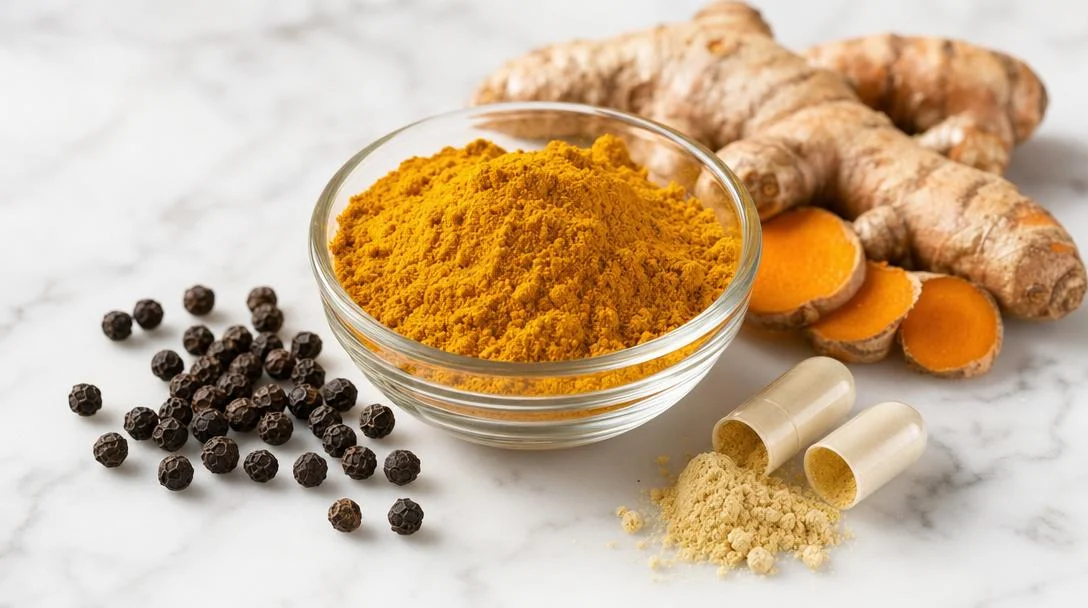
Cover image: AI-generated tabletop still-life — turmeric powder, black peppercorns, and an open capsule, depicting the central dietary variables of the Pan et al. 2026 systematic review.

围绕这条内容继续补充观点或上下文。

  • 登录后可发表评论。