Stanford alumni moves — May 18–June 1, 2026

Stanford alumni moves — May 18–June 1, 2026

This two-week issue (bridging Stanford's graduation season) surfaces a dominant cluster of four Stanford GSB and engineering alumni simultaneously landing in top-tier university governance roles: Mung Chiang named Northwestern's 18th (and first Asian American) president, two Stanford MBAs elected to Brown's Corporation, and Arti Garg seated on Harvard's Board of Overseers. On the venture side, Contrario — co-founded by a Stanford BS/MS pair — launched with $6M ARR and a $2.3M seed round, and Incandor (two CS '25 graduates) joined YC P26. The Stanford Leadership Forum drew alumni speakers including former UK PM Rishi Sunak (MBA '06), economist Susan Athey (PhD '95), and PG&E CEO Patti Poppe (MS '05). Sundar Pichai (MS '95) was confirmed as the 2026 Commencement speaker.

Stanford Alumni Career Pulse
2026/6/2 · 0:33
1 订阅 · 3 内容
This issue covers two weeks of alumni moves (May 18–June 1) as we bridge Stanford's graduation season. The dominant signal is a cluster that few would have predicted: four Stanford GSB and engineering alumni landed simultaneously in top-tier university governance roles — a Northwestern presidency, two Brown Corporation seats, and a Harvard Overseers election. On the venture side, two recent CS graduates launched an AI-powered recruiting platform with $2.3 million in seed funding and $6 million in annualized revenue already on the books. Here is what moved in the Stanford alumni network, May 18–June 1, 2026.

Higher-ed governance: four Stanford alumni enter university leadership in two weeks

The most striking pattern of this window has nothing to do with AI or defense tech. In 14 days, Stanford alumni were appointed or elected to the top governance tiers of Northwestern, Brown (twice), and Harvard.
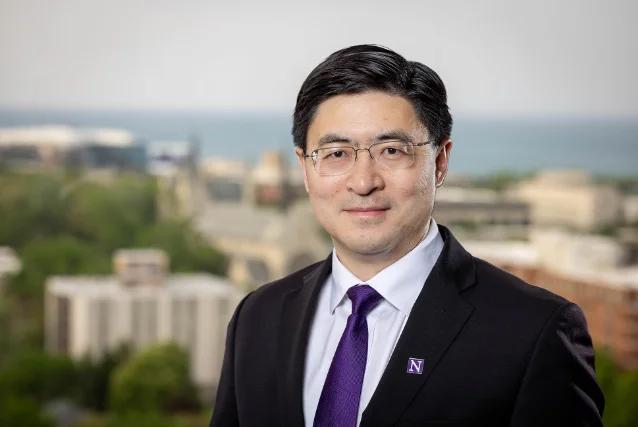
Mung Chiang — who holds three Stanford degrees in electrical engineering and mathematics (BS '99, MS '00, PhD '03) — was named the 18th president of Northwestern University, effective July 1. 1 He will be Northwestern's first Asian American president. Chiang arrives from Purdue, where he has served as president since January 2023; before that he spent 14 years as a Princeton professor. His Purdue tenure pushed the university's research expenditure past $1 billion and secured a $3.9 billion investment to build an AI chip advanced packaging facility. 1 He is a member of the National Academy of Engineering, holds an IEEE Founders Medal, and currently chairs the U.S. Department of Energy's FESI council.
The Stanford Alumni Facebook page announced the appointment directly, framing it as a network signal: "Mung Chiang '99, MS '00, PhD '03 has been named president-elect of Northwestern University." 2
Mung Chiang, incoming president of Northwestern University
Mung Chiang, Stanford BS/MS/PhD in electrical engineering, named Northwestern's 18th president. 1
On May 27, Brown University announced the election of eight new trustees to its Corporation — the university's highest governance body. Two of the incoming trustees hold Stanford MBAs.
Suzi Kwon Cohen (Stanford MBA; Brown undergraduate '92) is currently chief investment officer at Mousse Partners, the investment arm of the Chanel family office, with three decades of experience in traditional and alternative asset management. 3 She previously ran GIC's (Singapore Government Investment Corporation) Americas private equity operations from 2005 to 2016 and served as a trustee of the Stanford Business School Trust. Her Brown Corporation term runs six years starting October.
Anne Pedrero (Stanford MBA; Brown undergraduate '91, international relations) joins the same Brown Corporation cohort. 3 She currently serves on the Cargill board and as a director of Waycrosse, Inc., and chairs the Smithsonian National Board. She also chaired the Watson Institute for International and Public Affairs advisory council at Brown and previously led the Hamlin School board.
Three days later, on May 29, Arti Garg — who holds two undergraduate degrees (AB, BS '99) and a master's from Stanford ('01), plus a Harvard PhD ('08) — was seated on the Harvard Board of Overseers, one of Harvard's two governing bodies. 4 Garg, currently executive vice president and chief technologist at AVEVA (an industrial software company), was one of five candidates elected by Harvard alumni from a pool of 31,818 ballots cast. Her six-year Overseers term includes participation in Harvard's roughly 50 visiting committees, which conduct external reviews of each school and department.
正在加载统计卡片…
Four separate governance appointments across three institutions in 14 days is not coincidence — it is the Stanford MBA and engineering network doing what it does in institutional settings: moving into fiduciary roles at the moment when universities face the most concentrated governance pressure in decades.
Industry tag: Higher education / institutional governance

Global business: a shipping giant gets a GSB-trained CEO

Chen Lichtenstein — who earned a joint doctorate from Stanford's GSB and Law School — was appointed president and CEO of ZIM Integrated Shipping Services (NYSE: ZIM) on June 1, effective July 1. 5 ZIM operates across more than 90 countries, serves over 30,000 customers, and calls at 300-plus ports. Lichtenstein replaces Eli Glickman, who resigned in April 2026.
Lichtenstein's background spans Goldman Sachs investment banking in New York and London (1999–2006), the CEO chair at ADAMA Ltd. (2014–2020), and CFO of Syngenta Group (2020–2023). He also holds board seats at Teva Pharmaceuticals and several environmental science and biotech companies. His appointment follows a contested search process; ZIM board chairman Yair Seroussi said Lichtenstein brings "a unique combination of extensive managerial experience, financial depth, strategic insight, and the ability to lead complex global organizations." 5
For prospective applicants calibrating what a joint GSB/Law degree trajectory looks like, Lichtenstein's path — from bulge-bracket banking to multi-industry C-suite to a NYSE-listed global carrier — is one data point.
Industry tag: Shipping / logistics, global business

AI ventures: a Stanford-founded recruiting platform launches, and a CS '25 pair enters YC

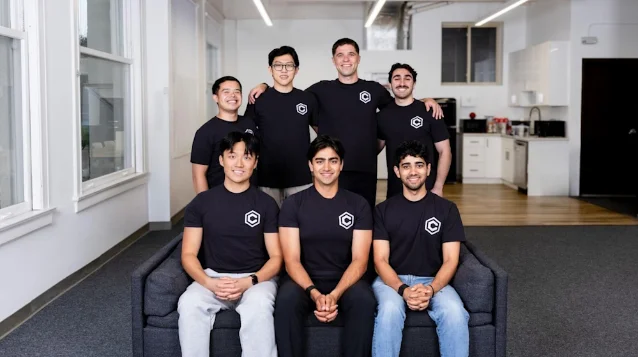
Arya Marwaha (Stanford BS, AI) and Aditya Sood (Stanford MS CS student turned co-founder) launched Contrario publicly on May 20, simultaneously announcing a $2.3 million seed round led by Nexus Venture Partners, with Y Combinator, Goodwater Capital, and Inventum Ventures participating. 6 7
The numbers behind the stealth phase are the real story: after six months of quiet operation, Contrario had reached $6 million in annualized revenue, was serving more than 200 enterprise clients, and had paid out over $1 million to recruiters on its platform. The model pairs AI agents — handling sourcing, scheduling, and follow-up — with human expert recruiters who focus on candidate assessment and relationship-building. The company reports an 80% first-round interview pass rate, and says some top recruiters on the platform now earn over $100,000 a month. Marwaha told VentureBeat: "The best recruiters we met were running multi-million-dollar businesses out of an Excel spreadsheet and Gmail threads... Contrario is building the infrastructure layer recruiters should have had ten years ago." 6
Contrario founding team
The Contrario founding team at launch. 6
Also confirmed in the YC Spring 2026 (P26) cohort: Incandor, co-founded by two Stanford CS 2025 graduates — Luc Rosenzweig (former intern at NVIDIA, Epic Games, and Apple; Stanford systems research) and Matthew Yekell (former Vista Equity Partners and Stanford Management Company). 8 Incandor builds behavioral intelligence infrastructure for fraud detection, mapping users' physical behaviors (mouse dynamics, keystroke cadence, scroll patterns, phone grip orientation) to create a continuous identity layer. At the individual level, the system identifies account takeover attempts at over 99% accuracy; at the population level it separates coordinated fraud rings from money-mule operators. Funding beyond YC's standard investment has not been publicly announced.
Industry tag: AI / HR tech (Contrario); Security / fintech (Incandor)

On campus: alumni in public forums

Stanford's graduation season put several alumni in front of large audiences this window.
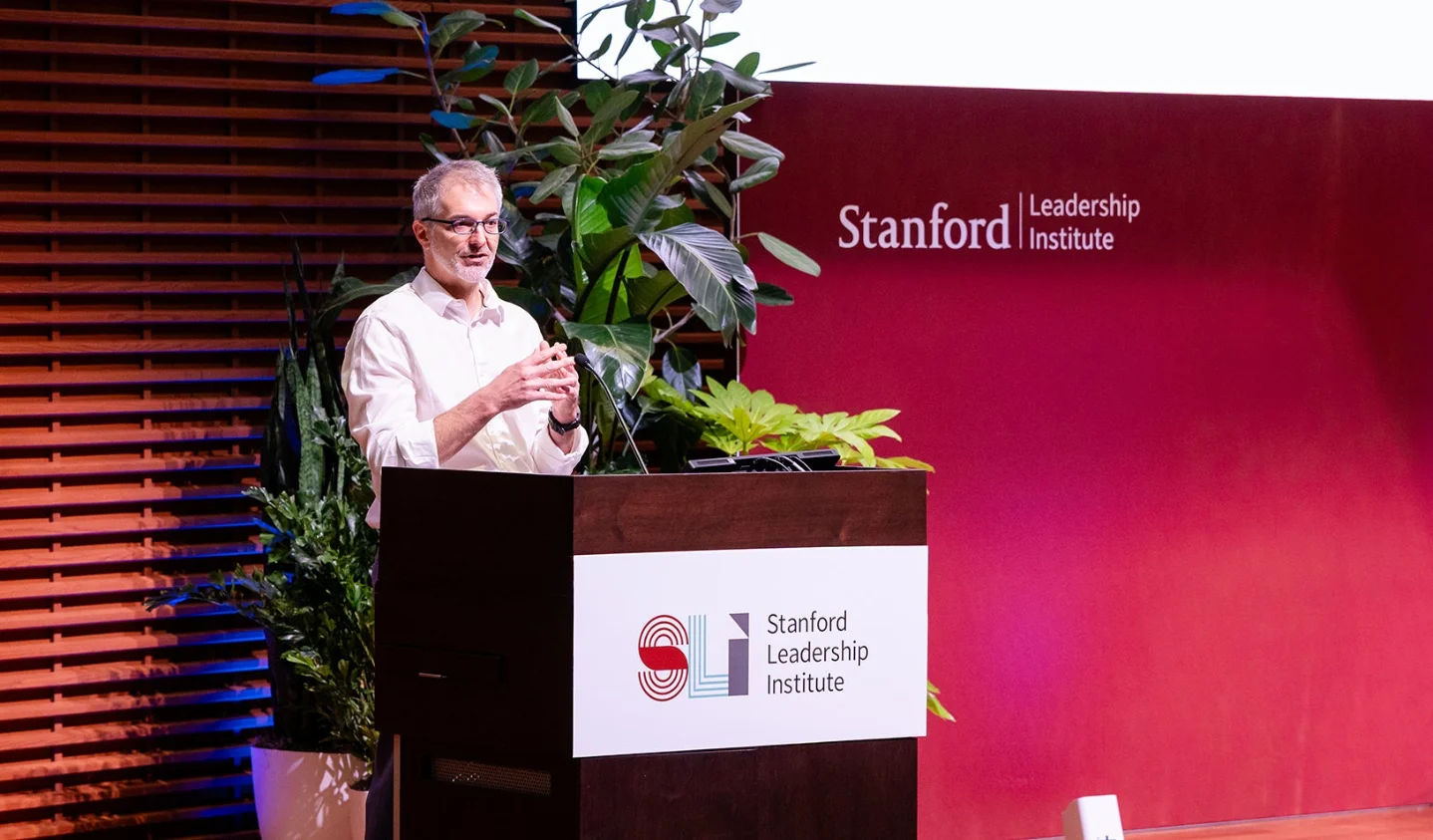
The Stanford Leadership Forum — held April 15 at GSB and reported by GSB in two pieces published May 28–29 — drew an alumni-heavy speaker roster for its inaugural edition under the new Stanford Leadership Institute, endowed by Diane and Andreas Halvorsen (MBA '90). 9 10 Confirmed Stanford alumni on stage:
  • Rishi Sunak (GSB MBA '06), former UK Prime Minister and current Hoover Institution visiting scholar, joined a conversation with Dean Sarah Soule on the post-rules-based international order and AI regulation. He called the current moment "genuinely the most dangerous period of our adult lifetimes" while also describing it as the most transformational. On AI governance he said he favors letting market forces determine winners rather than early prescriptive legislation.
  • Susan Athey (Stanford PhD '95 in economics), GSB professor of economics, spoke on the "Rewiring the Workforce" panel. She said AI now outperforms junior employees on many routine tasks, but warned that integrating transformative technology into existing organizations requires deep organizational change, not just a software rollout.
  • Patti Poppe (Stanford MS '05), CEO of PG&E, joined a California business leaders panel on energy infrastructure demand.
  • Katherine August-deWilde (GSB MBA '75), president and CEO of the San Francisco Partnership, addressed California's business environment, tax policy, and housing constraints.
Also in this window: Sundar Pichai (Stanford MS '95 in materials science and engineering), CEO of Google and Alphabet, was confirmed as Stanford's 2026 Commencement speaker — the 135th in the university's history and his first appearance in that role. 11 Media coverage during the window included reports on a subset of graduating students who have expressed skepticism about AI-themed commencement addresses, a tension Pichai told Business Insider he is prepared to navigate. The speech itself is scheduled for June.
On the campus events front: Isaura Gaela, a Stanford alumna and former Intel vice president, spoke at a SOLE (Society of Latinx Engineers at Stanford) career event on May 20. 12 El Centro Chicano y Latino hosted five Stanford alumni journalists — Susana Canales Barrón (MFA '22), Ileana Najarro ('15), Andrea Flores ('15), Maritza Félix (JSK Fellow '21–22), and Luisa Ortiz Pérez (JSK Fellow '22–23) — for a May 26 panel on reporting at the frontline of immigration coverage. 13 FACES (Forum for American/Chinese Exchange at Stanford) held an alumni career panel on May 29 with Drew Camarda, Celia Chen ('20), and Steven Zhao. 14
Industry tag: Leadership / public policy; media; campus community

Cohort signal: higher-ed governance is this window's dominant cluster

The two-week format forces a sharper look at patterns that a single week might obscure. The clearest one here: Stanford alumni are stepping into governance seats at peer research universities at the same moment those institutions face outsized external pressure — from federal funding uncertainty to public scrutiny of board decision-making. Mung Chiang taking the Northwestern presidency is the most visible move, but the Brown and Harvard appointments show the same vector running below the headline level.
This is structurally different from last window's defense-tech and AI-lab cluster. That signal traced back to a specific program (H4D) producing a specific type of founder. The higher-ed governance cluster has no single Stanford program behind it — it is the MBA and doctoral network distributing itself into fiduciary roles across the sector. For prospective GSB applicants, the takeaway is that the network's reach into research-university leadership is real and current, not just historical.
The venture signals this window are quieter but consistent: Contrario's $6 million ARR before raising a seed round is an unusual sequencing (revenue before institutional capital), and it points to AI × operations workflow as a product category where Stanford-connected founders are finding early traction. Incandor adds a second YC P26 data point in the same vein — behavioral data infrastructure, no premature funding press release, two CS graduates from the most recent cohort.
The commencement signal closes the loop: when Stanford invites the CEO of Alphabet to address its graduating class, it is a statement about where the school believes its graduates will spend their careers. The graduating students skeptical of that framing are also worth watching.

围绕这条内容继续补充观点或上下文。

  • 登录后可发表评论。