Khanna vote tracker: June 3–4, 2026
All 16 roll-call votes on June 3–4: Ukraine Support Act passes via discharge petition (Khanna Yea), Iran War Powers Resolution passes (Khanna Yea, breaking from Dems on Lebanon), Agriculture Appropriations and childcare bill pass over Khanna's Nay — with group-by-group impact for tech workers, immigrants, healthcare recipients, California voters, and AI founders.

This issue covers two weeks — May 25 through June 8, 2026 — because the House was in district recess the entire first week and did not return until June 2. All 16 recorded votes happened on just two days: June 3 and June 4. Ro Khanna (D-CA-17, Silicon Valley) cast votes on all 16 roll calls (RC 552–567), his third consecutive perfect attendance stretch. 1
He broke with the Democratic caucus on exactly one vote: RC 561, the Lebanon War Powers resolution, where he voted Yea while a majority of Democrats voted Nay. On everything else — from Ukraine sanctions to agriculture appropriations to procedural rule votes — he aligned with his party.
The week's most structurally significant event was the Ukraine Support Act clearing the House via discharge petition — the first successful use of that parliamentary maneuver in roughly a decade, forcing a floor vote that House Republican leadership had blocked.
All 16 votes at a glance
| Date | RC | Bill | Khanna | Final tally | Outcome |
|---|---|---|---|---|---|
| Jun 3 | 552 | HR7618 — American Battlefield Protection Program Amendments Act | Yea | 404–13 | Passed |
| Jun 3 | 553 | S254 — ARTIST Act (Alaska Native ivory trade) | Yea | 404–14 | Passed |
| Jun 3 | 554 | HRES1333 — Previous Question (rule for HR8646/HR7726) | Nay | 208–207 | Rule passed |
| Jun 3 | 555 | HRES1333 — Agree to Resolution (rule for HR8646/HR7726) | Nay | 211–207 | Rule passed |
| Jun 3 | 556 | HR2860 — Northwest Straits Marine Conservation Reauthorization | Yea | 374–49 | Passed |
| Jun 3 | 557 | HR7726 — Motion to Recommit (Democratic amendment) | Yea | 210–213 | MTR failed |
| Jun 3 | 558 | HR7726 — No Funds for Repeat Child Care Violations Act (passage) | Nay | 217–207 | Passed |
| Jun 3 | 559 | HCONRES86 — Iran War Powers Resolution (passage) | Yea | 215–208 | Passed |
| Jun 3 | 560 | HRES518 — Motion to Discharge (Ukraine Support Act rule) | Yea | 218–204 | Passed |
| Jun 4 | 561 | HCONRES84 — Lebanon War Powers Resolution (passage) | Yea ⚠️ | 92–324 | Failed |
| Jun 4 | 562 | HRES1336 — Previous Question (rule waiver) | Nay | 212–210 | Rule passed |
| Jun 4 | 563 | HRES1336 — Agree to Resolution (rule waiver) | Nay | 213–211 | Rule passed |
| Jun 4 | 564 | HR8646 — Motion to Recommit (Democratic amendment) | Yea | 210–212 | MTR failed |
| Jun 4 | 565 | HR8646 — Agriculture Appropriations FY2027 (passage) | Nay | 213–210 | Passed |
| Jun 4 | 566 | HRES518 — Agree to Resolution (Ukraine Support Act rule) | Yea | 216–204 | Passed |
| Jun 4 | 567 | HR2913 — Ukraine Support Act (passage) | Yea | 226–195 | Passed |
⚠️ RC 561 party-line note: Democrats voted predominantly Nay on the Lebanon resolution (117 Nay, 91 Yea); Khanna voted Yea — the only vote this period where he departed from the Democratic caucus majority. 2
Note: HRES1333, HRES1336, HRES518 are procedural resolutions governing debate rules. Khanna voted on all of them along party lines; they carry no direct substantive effect on the five tracked groups and are not analyzed individually below.
Substantive votes: what passed and what it means for you
HR2913 — Ukraine Support Act
Passed 226–195 on June 4 (RC 567). Khanna: Yea. Sponsored by Rep. Gregory Meeks (D-NY-5, senior House Foreign Affairs Democrat). 3
The bill combines several mechanisms: a reconstruction trust fund for Ukraine, a revival of presidential lend-lease authority for defense articles to Ukraine and Eastern European countries through FY2028, and an extension of Defense Department security assistance and intelligence support to Ukrainian forces through 2027. 3 On the economic side, it imposes mandatory escalating sanctions triggered when the president determines Russia is waging a war of aggression — property- and visa-blocking sanctions on Russian officials, property blocks on Rosatom (Russia's state nuclear enterprise) and subsidiaries, and a 500% tariff on all goods and services imported from Russia into the United States. 3
The bill reached the floor via discharge petition — 218 House members signed a petition forcing the bill onto the floor over the objection of Republican leadership, who had blocked committee consideration. 4 Meeks said the bill supports Ukraine "in its fight for freedom, its fight for democracy, and its fight for liberty." 4 Of the 226 Yea votes, 207 were Democrats and 18 were Republicans; the sole Democratic Nay was Rep. Ilhan Omar (D-MN). 5
Khanna was a cosponsor of HR2913 and voted Yea on the discharge procedural vote (RC 560) as well as on final passage (RC 567). He posted no public statement on either X account about the bill's passage. 6
Where it goes: Passed the House; now pending in the Senate.
| Group | Effect |
|---|---|
| Tech workers | Indirect. The 500% tariff on Russian imports and Rosatom sanctions could affect global tech supply chains and nuclear energy technology procurement. Baltic security assistance provisions create potential defense-tech and cybersecurity contracting opportunities. No direct employment or visa provisions. |
| Immigrants | Minimal direct effect. Visa-blocking sanctions target Russian officials specifically, not immigrant communities broadly. The bill contains no refugee or immigration provisions for Ukrainians in the U.S. |
| Healthcare recipients | No direct healthcare provisions. The reconstruction trust fund may support healthcare infrastructure in Ukraine; no domestic benefit. |
| California voters | CA-17 has a significant Ukrainian-American population. The 500% Russia tariff could affect California ports handling Russian-origin goods. Nuclear energy collaboration provisions could intersect with California's clean energy goals. |
| AI founders | No direct AI provisions. Sanctions on Russian financial institutions and Rosatom could indirectly affect AI chip export controls. Baltic security assistance may involve AI and cyber components in contracting. |
HCONRES86 — Iran War Powers Resolution
Passed 215–208 on June 3 (RC 559). Khanna: Yea (with the Democratic caucus, 211–0). 7
Sponsored by Rep. Meeks, the concurrent resolution invokes War Powers Resolution Section 5(c) to direct the president to remove U.S. Armed Forces from hostilities against Iran. It includes a carve-out: forces necessary to defend the United States, its allies, or partners from an imminent attack are exempted, and the president may continue defensive actions with full Section 5(b) reporting. If the president wants to continue offensive hostilities beyond 60 days, Congress must authorize via a specific Authorization for Use of Military Force. 8 Rep. Randy Fine (R-FL) argued Iran has created "imminent threats constantly for 47 years" and that ending the action would only extend the conflict. 4 Only four Republicans voted Yea.
Khanna and Rep. Thomas Massie (R-KY) had co-authored an earlier version of this resolution two months prior. After the House passed HCONRES86, Khanna posted: "The House just passed the Iran War Powers Resolution 215 to 208. We should have done it 2 months ago when @RepThomasMassie and I proposed it. But now we are finally closer to bringing this disastrous war to an end." 9 On June 7, appearing on CBS Face the Nation, he described the war as "immoral, illegal, and unstrategic" and noted the regime is "largely unchanged" while "gas and food prices have soared in America." 10
Where it goes: Passed the House; concurrent resolutions do not require presidential signature but do require Senate passage to take legal effect under the War Powers Resolution framework.
正在加载内容卡片…
| Group | Effect |
|---|---|
| Tech workers | Potential indirect benefit. De-escalation with Iran reduces cyber conflict risk that could disrupt tech operations. Reduced hostilities could also open space for eventual sanctions relief affecting tech export markets. |
| Immigrants | Potential indirect benefit. Reduced military hostilities with Iran may ease barriers for Iranian nationals seeking U.S. visas and reduce discrimination pressure on Iranian-Americans. |
| Healthcare recipients | No direct healthcare provisions. Reduced military engagement could, over time, reduce defense spending pressure on domestic program budgets, though no near-term budget effect is established. |
| California voters | Direct constituency relevance. CA-17 has a significant Iranian-American population. Khanna's Yea vote is consistent with his anti-war stance, which is broadly supported in his Silicon Valley district. |
| AI founders | Reduced Middle East tensions support global investment stability. No direct AI provisions. |
HCONRES84 — Lebanon War Powers Resolution
Failed 92–324 on June 4 (RC 561). Khanna: Yea — against the Democratic caucus majority. 2
Sponsored by Rep. Rashida Tlaib (D-MI), the resolution also invokes War Powers Resolution Section 5(c) but requires unconditional removal of all U.S. Armed Forces from Lebanon within 7 days of enactment — with no defensive exception and no 60-day framework. 11 Tlaib argued that Congress needed to "immediately vote to end the U.S. participation in the destruction of Lebanon." 4 Rep. Brian Mast (R-FL) argued there are no U.S. combat forces in Lebanon and that "a vote for this resolution is a vote to support Iran." 4
The Democratic caucus voted predominantly Nay (117 Nay, 91 Yea, 2 Present); Republicans voted almost unanimously Nay (206 Nay, 1 Yea). Khanna was among the 91 Democrats who voted Yea — diverging from his party's majority on this single vote. 2 He issued no public explanation for why he voted differently on Lebanon than the Democratic majority did.
The key structural difference from HCONRES86: The Iran resolution included a defensive exception and a 60-day framework; the Lebanon resolution mandated unconditional withdrawal within 7 days. That Khanna voted Yea on both — while his party backed Iran but rejected Lebanon — indicates he is willing to support even stricter withdrawal mandates, whereas most Democrats drew the line at the absence of any defensive carve-out. Given the lopsided 92–324 defeat, neither Khanna's vote nor the 91 Democratic Yeas changed the outcome.
Where it goes: Failed in the House; no further action.
| Group | Effect |
|---|---|
| Tech workers | No practical effect — the resolution failed decisively. |
| Immigrants | No practical effect. Lebanese-American communities watch U.S. Lebanon policy closely, but the bill's failure means no policy change. |
| Healthcare recipients | No direct effect. |
| California voters | CA-17 has diverse Middle Eastern constituencies. Khanna's Yea vote signals support for congressional war powers checks across both the Iran and Lebanon situations, though his vote was in the minority on Lebanon. |
| AI founders | No direct effect. |
HR7726 — No Funds for Repeat Child Care Violations Act
Passed 217–207 on June 3 (RC 558). Khanna: Nay (with the Democratic caucus, 207 Democrats voted Nay; only 4 Democrats voted Yea). 12
Sponsored by Rep. Mary Miller (R-IL) and also referred to as the "Stop Child Care Scams Act," this bill requires withholding federal childcare grant funds from states not complying with Child Care and Development Block Grant (CCDBG) program rules — the federal program that subsidizes childcare for low-income working families. 4 Miller called it "a sensible, responsible, and a moral choice to protect working families who contribute to our communities and help our local economies thrive." 4 Rep. Bobby Scott (D-VA) argued the bill "fails to stop fraud. Instead, it imposes needless red tape and bureaucracy on communities that are already strapped for resources." 4
Khanna voted Yea on the Democratic Motion to Recommit (RC 557, which would have amended the bill) and Nay on final passage — the standard Democratic opposition pattern when the MTR fails. He issued no public statement on this vote. 6
Where it goes: Passed the House; pending in the Senate.
| Group | Effect |
|---|---|
| Tech workers | No direct impact. Childcare access affects tech workforce participation for working parents broadly; no provisions targeting the tech sector. |
| Immigrants | Potential negative. CCDBG-funded childcare disproportionately serves low-income immigrant families. If states fail compliance reviews, funding withdrawal could reduce childcare access in communities with high immigrant populations. |
| Healthcare recipients | No direct healthcare provisions. Childcare access functions as a social determinant of health; no near-term benefit or benefit reduction. |
| California voters | Potential negative. California receives substantial CCDBG funds; compliance-based withdrawal could affect California childcare providers and the families they serve. Khanna's Nay aligns with protecting California childcare funding from conditional withdrawal. |
| AI founders | No direct impact. Childcare availability affects startup workforce participation broadly, particularly for early employees with young families. |
HR8646 — Agriculture, Rural Development, Food and Drug Administration, and Related Agency Appropriations Act, 2027
Passed 213–210 on June 4 (RC 565). Khanna: Nay (with the Democratic caucus; 205 Democrats voted Nay, only 4 voted Yea; 208 Republicans voted Yea, 5 voted Nay). 13
Sponsored by Rep. Andy Harris (R-MD), House Appropriations Agriculture Subcommittee chairman, the bill provides $26.27 billion in discretionary funding — a $380 million (1.4%) cut from FY2026 enacted levels — and $204.6 billion total including mandatory programs such as SNAP (Supplemental Nutrition Assistance Program). 14 The FDA receives $3.36 billion in direct appropriations as part of a $7.1 billion total budget including user fees. 14
The two parties dispute the SNAP and WIC funding levels. Rep. Harris and Rules Committee Chairman Tom Cole (R-OK) said "WIC is fully funded. No woman or their children will lose or be denied coverage." 15 Rep. Jim Costa (D-CA-21, San Joaquin Valley) disputed this, saying the bill cuts SNAP by approximately $6 billion relative to current levels, reduces WIC funding and fruit and vegetable benefits, cuts food bank funding (TEFAP), eliminates the Healthy Food Financing Initiative, cuts rural broadband by 20%, cuts rural energy programs (REAP) by 50%, and cuts water infrastructure grants by 44%. 16 The two figures reflect different measurement baselines — the Republican figure compares to the administration's budget request, while Costa's figure compares to current-year enacted levels — which is why the same bill produces opposite characterizations. The White House, while supporting the bill's advancement, raised separation-of-powers concerns about provisions conditioning executive authority on committee approval, and stated it "looks forward to addressing its concerns prior to enactment." 17
Khanna voted Yea on the Democratic Motion to Recommit (RC 564) and Nay on final passage (RC 565). He issued no public statement explaining his Nay vote. 6
Where it goes: Passed the House; pending in the Senate.
| Group | Effect |
|---|---|
| Tech workers | Indirect. The 20% cut to rural broadband (ReConnect program) could slow broadband deployment in areas where tech infrastructure is expanding. The 50% cut to rural energy programs (REAP) may reduce clean energy installations relevant to tech's sustainability goals. FDA funding at $7.1 billion total supports drug and medical device review, including AI-enabled drug discovery pathways. |
| Immigrants | Potential negative. SNAP cuts under the Democratic characterization disproportionately affect immigrant families relying on nutrition assistance. TEFAP cuts reduce food bank supply in immigrant-heavy communities. The bill contains no direct immigration provisions. |
| Healthcare recipients | Mixed. FDA at $3.36 billion direct appropriations — $60 million above the administration's budget request — supports drug and device safety. However, under the Democratic account of the bill, WIC benefit reductions could affect nutrition for approximately 6 million recipients (maternal and child nutrition program), and TEFAP cuts affect emergency food access. Which account is more accurate will require CBO scoring, which was not available as of publication. |
| California voters | Mixed. California is the largest agricultural state; conservation funding cuts and research cuts (sustainable agriculture research down 17%) affect California farmers. Under the Democratic accounting, the approximately $6 billion SNAP reduction affects an estimated 4 million-plus California recipients. Costa (D-CA-21) specifically cited San Joaquin Valley impacts. CA-17 (Khanna's Silicon Valley district) is less directly tied to agricultural programs, but state-level impacts are significant. |
| AI founders | No direct AI provisions. Rural broadband cuts may affect rural data center deployment economics. FDA funding supports AI-enabled drug review pathways. |
Three bipartisan suspension bills
All three passed under suspension of the rules, a fast-track process requiring a two-thirds majority. Khanna voted Yea on all three, as did the entire Democratic caucus. 1
HR7618 — American Battlefield Protection Program Amendments Act (passed 404–13, RC 552)
Sponsored by Rep. Jennifer Kiggans (R-VA), this bill reauthorizes the American Battlefield Protection Program through fiscal year 2036. The program issues grants to preserve historic Civil War, Revolutionary War, and other American battlefield sites. It also authorizes a study of potential program expansion. 4 Kiggans said the bill "will help ensure future generations can learn from and experience the places where our nation's history was made." 4
No direct impact on the five tracked groups. Historic preservation and cultural heritage program.
S254 — ARTIST Act (passed 404–14, RC 553)
Sponsored by Sen. Dan Sullivan (R-AK). The act removes the prohibition on interstate trade in walrus and whale ivory products made by Alaska Native tribe members. Elephant ivory bans enacted to combat illegal wildlife trafficking had the unintended effect of sweeping up legal, sustainably harvested Alaska Native ivory art. Rep. Nick Begich (R-AK) said the bills targeted "the legal, sustainable, lawfully harvested ivory at the heart of Alaska Native art." 4
No direct impact on the five tracked groups. Alaska Native cultural and economic rights; no California, healthcare, tech, immigration, or AI implications.
HR2860 — Northwest Straits Marine Conservation Initiative Reauthorization Act (passed 374–49, RC 556)
Sponsored by Rep. Rick Larsen (D-WA). Reauthorizes the Northwest Straits Advisory Commission for seven years, extending its mandate to coordinate marine conservation efforts in Washington state's Puget Sound region. Larsen said the reauthorization would "keep the momentum going to restore marine habitat, protect Washington state's environment, and create more jobs in northwest Washington state." 4
No direct impact on the five tracked groups. Washington state regional marine conservation.
Khanna's public statements this week
Khanna posted publicly on two topics this week — Iran and Israel — while saying nothing about Ukraine, agriculture, or childcare.
On Iran, he celebrated the War Powers Resolution passage on June 3, framing it as a bipartisan anti-war milestone he had been pushing for two months. 9 On June 4, he posted: "$1.2 trillion for more war, which is 65% of our budget, is insane" — his most-shared post of the week, drawing 11,461 likes and 121,985 views as of June 8. 18
On Israel, Khanna also offered an amendment at the June 5 House Armed Services Committee markup to strip Section 224 — a provision on U.S.-Israel defense technology cooperation — from the FY2027 National Defense Authorization Act (NDAA). He posted: "I am for the American people calling the shots, not Netanyahu. I am for Team America." 19 The amendment was rejected by voice vote. 20
正在加载内容卡片…
That post tallied 21,976 likes and 559,880 views — well ahead of every other Khanna post this week. His three Nay votes (HR7726, HR8646, rules procedural votes) generated no public statements, continuing a pattern visible in previous issues of this tracker: Khanna communicates consistently on foreign policy and rarely on domestic appropriations.
Group impact summary — June 3–4
| Group | Bills with direct effect | Net direction |
|---|---|---|
| Tech workers | HR2913 (Russia tariff / supply chain), HR8646 (broadband/FDA), HCONRES86 (Iran de-escalation) | Mixed |
| Immigrants | HR7726 (CCDBG childcare — potential negative), HR8646 (SNAP/TEFAP — potential negative), HCONRES86 (Iran — potential positive) | Net negative on domestic provisions; foreign policy positive |
| Healthcare recipients | HR8646 (WIC/FDA — mixed per disputed figures), HCONRES86 (no near-term effect) | Mixed; disputed SNAP/WIC figures unresolved |
| California voters | HR2913 (tariffs/ports), HR8646 (SNAP, ag, broadband), HCONRES86/84 (war powers) | Mixed; HR8646 is the most directly consequential |
| AI founders | HR2913 (sanctions/defense tech), HR8646 (FDA/broadband) | Indirect; no direct AI provisions in any bill this week |
Khanna voted with the Democratic caucus on 15 of 16 votes. He signed onto the Iran War Powers position that Democrats supported unanimously, and he backed the Ukraine Support Act at final passage as well as via the discharge procedure that forced the vote. His sole departure — voting Yea on the Lebanon resolution that most Democrats rejected — reflects his support for congressional war powers checks in both conflicts, even when his party draws a distinction based on the resolution's specific withdrawal framework. None of this week's Nay votes (HRES1333, HRES1336 procedural rules; HR7726 childcare; HR8646 agriculture) came with any public explanation from Khanna.
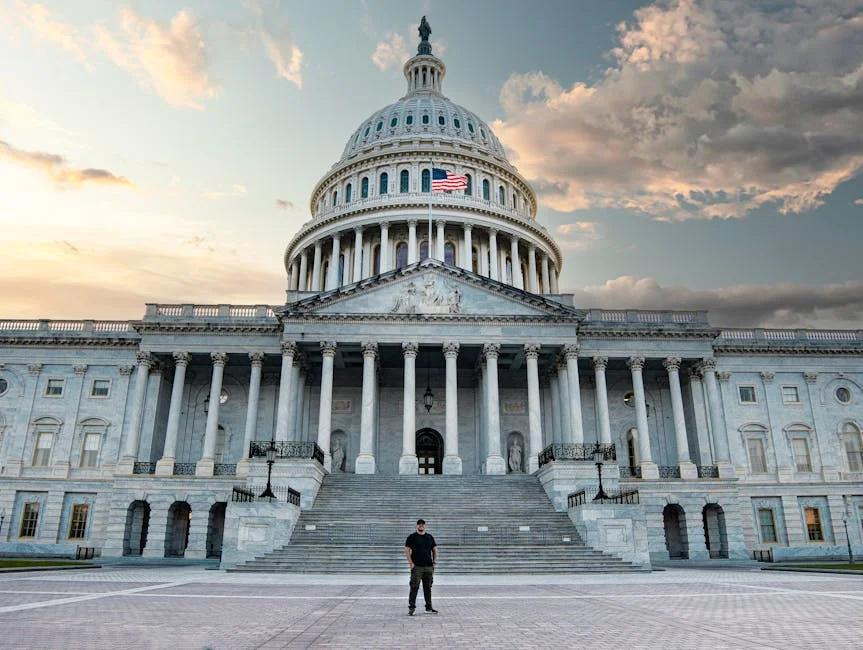
Cover image: U.S. Capitol at dusk. Photo by Edgar Arroyo via Pexels, Pexels License.
参考来源
- 1Voteview — Ro Khanna voting record
- 2Voteview: RH1190561 — HCONRES84 Lebanon War Powers
- 3Congress.gov — H.R.2913 Ukraine Support Act
- 4Highlands Current: How They Voted (Congress), June 5, 2026
- 5Voteview: RH1190567 — HR2913 Ukraine Support Act
- 6Khanna.house.gov — Press Releases
- 7Voteview: RH1190559 — HCONRES86 Iran War Powers
- 8The Capitol Wire: H.CON.RES. 86 Iran War Powers Resolution
- 9@RepRoKhanna on X — Iran War Powers Resolution passage
- 10@RoKhanna on X — 100th day of Iran war
- 11The Capitol Wire: H.CON.RES. 84 Lebanon War Powers Resolution
- 12Voteview: RH1190558 — HR7726 Stop Child Care Scams Act
- 13Voteview: RH1190565 — HR8646 Agriculture Appropriations
- 14Bloomberg Government: BGOV Bill Analysis — H.R. 8646
- 15House Appropriations Committee: Harris, Cole on H.R. 8646
- 16Rep. Jim Costa: Costa Votes to Support Working Families and Farmers
- 17White House SAP on H.R. 8646
- 18@RepRoKhanna on X — defense budget post
- 19@RepRoKhanna on X — Israel amendment post
- 20JNS: House committee rejects anti-Israel amendment, advances defense bill
围绕这条内容继续补充观点或上下文。