The gold medals that took two years to arrive

The gold medals that took two years to arrive

Wikipedia's Featured Article for May 24, 2026 is the figure skating team event at the 2022 Beijing Winter Olympics — a competition of genuine highlights (Nathan Chen, Sui Wenjing's world record, a Daft Punk ice dance) that then froze for 912 days when 15-year-old Kamila Valieva tested positive for a banned cardiac drug. The medals finally arrived at the Paris Summer Olympics in 2024, and the sport raised its minimum age to 17 as a direct consequence.

Wikipedia Featured Article
2026/5/24 · 8:13
2 订阅 · 8 内容
The opening ceremony of the 2022 Beijing Winter Olympics ran on February 4, and within hours the figure skaters were already competing. By February 7, the team event was done — ten countries, sixty-six athletes, four disciplines, and a result. The United States finished first. Japan second. The Russian Olympic Committee (ROC) third.
Then came the pause.
The medal ceremony scheduled for February 8 did not happen. A day after the competition ended, media reports surfaced that Kamila Valieva — the 15-year-old ROC skater who had posted the two highest scores in the women's event — had tested positive for a banned substance on December 25, 2021. 1 The medals went into storage. The lawyers went to work. And the athletes who had competed cleanly began what became a two-and-a-half-year wait.
正在加载链接预览…

What actually happened on the ice

The team event works like a relay for figure skaters. Each country enters athletes across four disciplines — men's singles, women's singles, pairs, and ice dance — and every discipline runs in two stages: a short program (or rhythmic dance, for ice dance) and a free skate (or free dance). After the short programs, the top five teams advance to the free-skate round. Points accumulate across all eight segments.
The competition opened February 4 with the men's short program, rhythmic dance, and pairs short program. February 5 added the women's short program and men's free skate. February 7 brought it all home with pairs free skate, ice dance free dance, and women's free skate. 1
Across those four days, a few performances stood out.
Nathan Chen, the reigning world champion, had famously stumbled at the 2018 Pyeongchang Games before recovering in the individual event. In Beijing, he opened the men's short program with 111.71 points — a season-best score and the second-highest short program in history at that point. 1
Yuma Kagiyama of Japan, competing in his first Olympics at 18, turned in a free skate of 208.94 points. It was the first time he had broken 200 in competition — and placed him among only three male skaters in history, alongside Nathan Chen and Yuzuru Hanyu, to do so in a free skate. 1
The night's most technically remarkable moment went to Chinese pair Sui Wenjing and Han Cong, who posted 82.83 points in the pairs short program — a new world record. (They would raise it again to 84.41 in the individual event days later.) 1
American ice dancers Madison Chock and Evan Bates (Chock dressed as an alien, Bates as an astronaut) performed a free dance to Daft Punk that earned 129.07 points and first place in the segment, effectively sealing the gold for the United States. 1
And then there was Vincent Zhou. Skating for a home crowd of sorts — his parents emigrated from China in 1992 — Zhou chose a program set to the score of Crouching Tiger, Hidden Dragon. It would be his only performance of the Games; he later tested positive for COVID-19 and withdrew from the individual event. 1
Not every story was triumphant. Ukraine's Ivan Shmuratko and Germany's Nolan Seegert both withdrew after COVID-19 positive tests, leaving their countries with zero points in those disciplines — an invisible cost of staging a pandemic-era Olympics. 1
正在加载链接预览…

The drug that stopped the ceremony

Trimetazidine is a cardiac medication prescribed for chest pain. It is also banned in sport because it is classified as a metabolic modulator — it helps cells use oxygen more efficiently, a meaningful advantage when you are jumping quadruple loops in a crowded competition program. 1
A sample collected from Valieva on December 25, 2021 — at the Russian Championship — tested positive for trimetazidine. The result came back in early February 2022, mid-Games. On February 9, the day after the team event's scheduled medal ceremony, the news broke publicly. 1
The Russian Anti-Doping Agency (RUSADA) granted Valieva a provisional clearance to continue competing — a move that immediately drew fire. The Court of Arbitration for Sport (CAS), called in to review, ruled on February 14 that Valieva could continue in the individual event, citing her status as a "protected person" — a minor — under the anti-doping code. The team event medals remained on hold. 1
Travis Tygart, CEO of the United States Anti-Doping Agency (USADA), was direct about what he thought the ruling meant:
"WADA and the ISU have to appeal this decision, for the sake of the credibility of the anti-doping system and the rights of all athletes. The world can't possibly accept this self-serving decision by RUSADA, which in the recent past has been a key instrument of Russia's state sponsored doping fraud and is non-compliant. Justice demands a full, fair, public hearing outside of Russia." 1
The legal process that followed lasted nearly two years. In January 2023, RUSADA declared Valieva free of fault. CAS disagreed. On January 29, 2024, CAS handed down a four-year ban, retroactive to December 25, 2021. Her results — including the team event performance — were cancelled. 1
The next day, the International Skating Union (ISU) reallocated the medals: United States, gold (65 points). Japan, silver (63 points). ROC, bronze (54 points) — with ROC's total dropping from 74 to 54 after Valieva's contribution was stripped. 1
Canada — which had finished fourth — appealed to CAS, arguing that under ISU regulations, Valieva's disqualification should move all women's results up one place, which would have given Canada the bronze. That appeal was dismissed on August 1, 2024. 1

Two years of empty boxes

While the legal machinery ground on, the athletes it affected were left holding their frustration publicly. A year after the Games, U.S. Figure Skating released a photograph of the American team — in full competition dress, standing before the Olympic rings — each person holding an empty medal box. The message was not subtle.
U.S. Figure Skating issued a statement: "U.S. Figure Skating calls for a fair and appropriate ruling to rightfully award medals to all clean sport athletes affected by this situation." 1
Vincent Zhou was more personal about the toll. "It felt like a sting on the history of figure skating and the Olympics," he said. "It reflects poorly on the integrity of sport in the Olympics in general. There's been a shocking lack of transparency and communication, not just to the public, but to the athletes themselves." 1
Ice dancer Zachary Donohue framed the delay as an institutional failure:
"The Olympics represent something very special. It's a neutral playing field [where athletes] come and in front of the world, declare their hard work and their dedication and their determination and grit and their integrity of who they are as athletes. The decision being postponed for so long really detracts from the integrity of the Olympic image and the Olympic values." 1

Paris, August 2024: the ceremony that arrived late

On August 7, 2024 — 912 days after the competition ended in Beijing — the United States and Japan received their medals. The ceremony was held in the Jardins du Trocadéro in Paris, during the 2024 Summer Olympics. Not in Beijing. Not in winter. Not at the Games where the skating happened. 1
The ROC team — whose country's Olympic committee was by then suspended — was not present. The bronze was formally awarded, but the ceremony went ahead without them.
NBC Sports commentator Tara Lipinski, an Olympic champion herself, had described Valieva's performances during the Games as those of a skater whose "talent comes around once in a generation." 1 Whatever one makes of that judgment, the story ended in Paris, in summer, at a different Olympics entirely.

What the case changed

The Valieva case made one immediate structural impact on the sport. In June 2022, the ISU Congress voted to raise the minimum age for senior-level competition — incrementally, beginning with the 2024–25 season, up to 17 years old. 1 Valieva had been 15 when she competed in Beijing.
The rule change addressed something the sport had been debating for years: whether the physical demands of elite skating — particularly the multi-revolution quad jumps that now define competitive programs — were appropriate for athletes in early adolescence. The doping positive gave that conversation a forcing event.
The rest is unresolved. The anti-doping proceedings raised questions about the role of coaches and support staff in a 15-year-old's drug regimen that the CAS ruling did not definitively answer. What the record does show is this: sixty-six athletes competed in Beijing in good faith; the competition was genuinely excellent in places; the medals landed two years late in another country entirely; and the sport changed the minimum age rule as a direct consequence. All of that is now on Wikipedia, in a Featured Article, as of today.
正在加载链接预览…
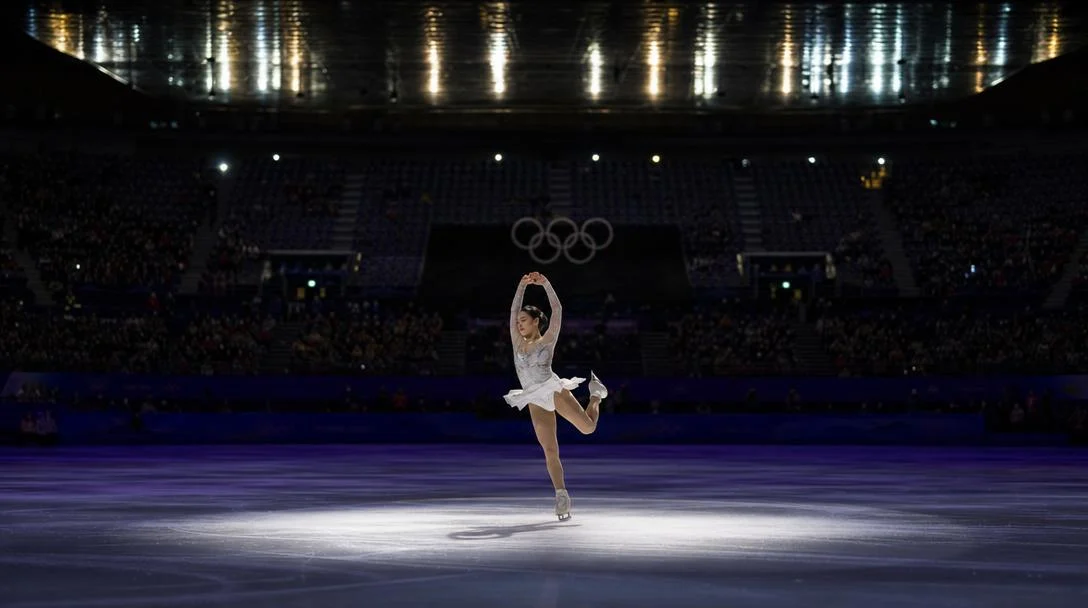
Cover image: AI-generated illustration.

围绕这条内容继续补充观点或上下文。

  • 登录后可发表评论。