Granola's growth playbook: $0 to $1.5B without a single meeting bot
How Granola grew from a quiet London Mac app to a $1.5B unicorn in under three years — using VCs as its first distribution channel, a no-bot architecture as its 10x differentiator, shared notes as a passive acquisition loop, and an archive-to-team expansion motion that converts individual habit into per-seat enterprise revenue.

Granola went from a quiet Mac app to a $1.5B unicorn in under three years. No meeting bots. No enterprise sales team at launch. Almost no paid acquisition. The growth came from a deliberate sequencing decision: start with the most meeting-dense, most networked humans on earth — VCs and startup founders — let product quality do the talking, then convert the organizational spread into a per-seat enterprise motion. Here's how each layer works.
Acquisition: the beachhead strategy executed cleanly
Granola launched in May 2024 with a single bet: build the best AI meeting notes on the market and seed it with people who (a) sit in back-to-back meetings all day, (b) are obsessed with quality tools, and (c) have the most influential networks in the startup ecosystem.1
VCs hit all three criteria. Lightspeed, Lux Capital, Benchmark, Sequoia, Accel, USV — the app spread through these firms not through outbound sales but through the one thing early-stage founders know how to exploit: getting your product in the hands of people who tweet.2 The result was a sustained wave of founder and operator endorsements from accounts with real reach:
正在加载内容卡片…
正在加载内容卡片…
The ICP then cascaded downward. Granola says over 50% of users are in a leadership role — and leaders sit in back-to-back meetings, context-switch constantly, and can unilaterally put a new tool on their team's desktops.2
正在加载内容卡片…
2 When a founder at Brex or Vercel starts using Granola, it's only a few weeks before their direct reports do too.
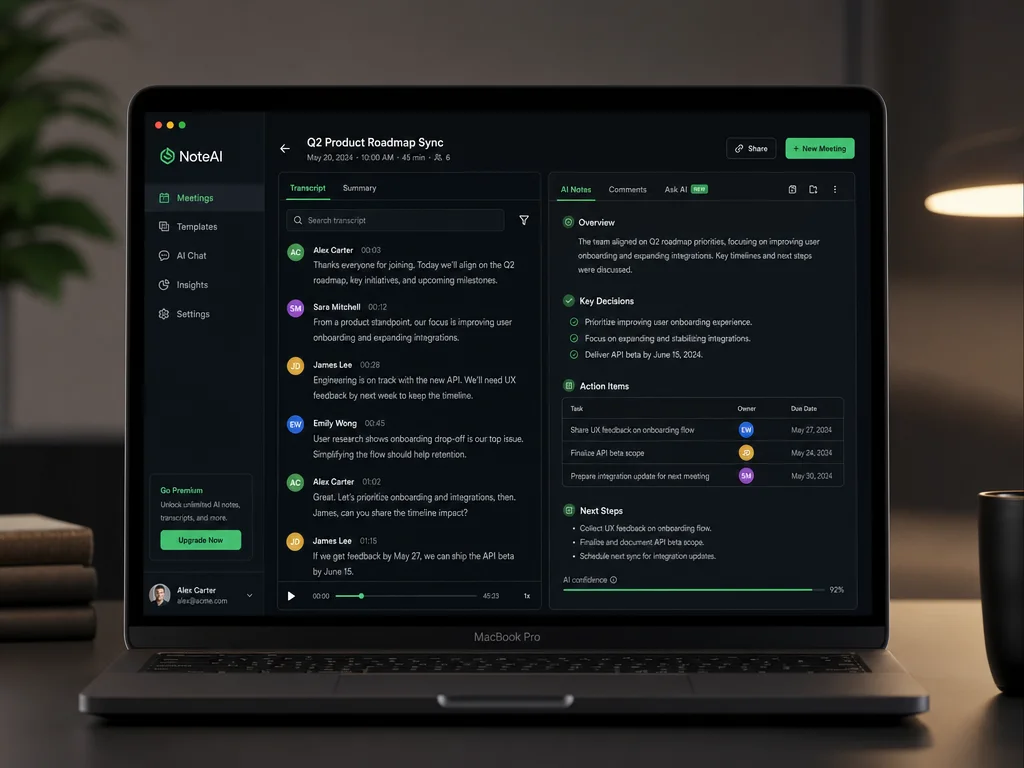
The word-of-mouth loop has a structural accelerant baked in: whenever a user shares notes with a non-user — one click, defaults to "anyone can view" — the recipient sees a polished AI-enhanced summary and a "Chat with this transcript" link. That link lands on a live product demo showing the core value proposition with zero installation required.2 Every shared note is an acquisition surface.
By the time Granola raised its $20M Series A in October 2024, the note said essentially the same thing: all the investors who gave them term sheets had been using the product.1 A year later, the $43M Series B announced Granola 2.0. By March 2026, the company raised $125M at a $1.5B valuation — led by Index Ventures and Kleiner Perkins, with re-participation from Lightspeed, Spark, and NFDG.3 Total capital raised: ~$192M in under three years.
The angel cap table is the VC spread made explicit: Guillermo Rauch (Vercel), Amjad Masad (Replit), Tobi Lutke (Shopify), Karri Saarinen (Linear), Des Traynor (Intercom), Karim Atiyeh (Ramp), Lenny Rachitsky.4 These are the same names that tweet product recommendations to 50,000+ followers.
Retention: three overlapping habit locks
Layer 1: the environmental habit loop
The mechanism that set Granola apart from every bot-based transcription tool is simpler than it sounds. Granola runs as a local Mac app. It intercepts your computer's audio output directly — no bot joins the call, no external integration required. The user just opens their calendar, starts the meeting, and Granola is already there.2
The "Quit" function in the menu doesn't actually quit — it leaves the toolbar icon in place, watching for the next calendar event. Quitting completely requires a separate "Quit Completely" option.2 This is a deliberate friction asymmetry: getting value is zero-click, stopping is slightly annoying. Every meeting becomes a reinforcement event.
The other habit mechanics compound the environmental layer. Notes are ready within seconds of the meeting ending — not minutes. The AI enhancement fixes holes, typos, and distraction gaps while preserving the user's own phrasing. Users can toggle between their raw notes and the AI-enhanced version, which creates trust: you can see exactly what you wrote versus what the AI added.
Layer 2: accumulated conversation archive
After a few months of use, Granola becomes a searchable record of every meeting you've had. This is the switching cost. You can ask it "what did our board say about international expansion in Q3?" and get a cited, linked answer from actual transcripts. Moving to a competitor means abandoning that archive — or doing a painful export.4
The Granola 2.0 launch in May 2025 deepened this by adding shared team folders with AI chat. Sales teams can query "Why are we losing deals this quarter?" across all sales call transcripts. PMs can surface recurring UX complaints across user research calls. Every answer comes with inline citations and jump-to-source links — which makes the analysis credible enough to put in a board deck.4
Layer 3: enterprise infrastructure lock-in
The Series C (March 2026) launched Spaces, team-wide APIs, MCP integration, SSO/SCIM, and admin controls that put Granola on the approved vendor list at larger companies.3 Enterprise customers now include Vanta, Gusto, Asana, Mistral AI, and Brex.
The Brex case study is instructive. Brex discovered that employees were already using Granola organically before IT formalized it — Lloyd Cilliers, Head of IT, said it was "one of the fastest tools the business has adopted organically." After formalizing rollout on the Enterprise plan: 50%+ adoption across knowledge workers within 6 months, 427 hours saved per week, and 25,000+ hours saved since launch.5 The CEO, Pedro Franceschi, cited accuracy and "written culture" as the deciding factors.
Granola is also now an official connector in Claude, ChatGPT, Lovable, Figma Make, Replit, Manus, v0, and Bolt.new.3 That's a distribution moat masquerading as an integration: every AI tool that pulls Granola context in the background is a place where the product's value is re-demonstrated without requiring the user to open Granola directly.
Monetization: the Superhuman pricing structure
| Plan | Price | Key limits / features |
|---|---|---|
| Basic | $0/user/mo | Limited meeting history; AI notes and chat |
| Business | $14/user/mo | Unlimited meetings; advanced models; Attio/Notion/Slack/HubSpot/Affinity/Zapier integrations; API access; MCP |
| Enterprise | $35/user/mo | Everything in Business + SSO, SCIM, admin controls, org-wide auto-deletion, training opt-out |
The free tier is deliberate. Granola gives away 25 meetings per month — enough for most moderate users to get hooked without converting. The friction-free onboarding accelerates the word-of-mouth loop: when a VC tells a founder to try it, the founder doesn't need a credit card.
The individual pricing ($14/mo Business) is positioned at a slight premium above alternatives like Otter.ai. The framing difference matters: Otter sells "1,200 transcription minutes," Granola sells "unlimited meetings." One is a utility bucket; the other is an identity product for people who are in back-to-back meetings as a lifestyle. Premium pricing attracts the people who are already loudest about their tools.2
The expansion motion is individual-to-team. When a senior leader joins on Business, Granola's shared folder and Spaces features push them to bring their team on — same price, same plan, but billing now converts to per-seat. At $35/user/mo for Enterprise, a 200-person knowledge worker org is $84,000/year. No ARR figures have been publicly disclosed, but the Series C at $1.5B — roughly 6x the Series B valuation of $250M from less than a year prior — implies investor conviction that the per-seat motion is compounding.7
The company also reports 10% weekly user growth since launch, which they have maintained through the Series A, B, and C.7
Takeaways
1. Your beachhead ICP should be both extremely high-need and extremely networked. VCs aren't just power users — they're referral engines. Most products pick a beachhead ICP based on pain intensity. Granola's insight was picking one where pain intensity and network effect size both max out.
2. Invisible infrastructure beats visible bots. Meeting bots created a race to the middle — every tool added a bot, and every user got annoyed. Granola's no-bot architecture was a deliberate constraint that became a moat: users who care about discretion won't go back to a product that drops a bot into every call.
3. The free tier is an acquisition surface, not a charity. Granola's shared notes — each one viewable by non-users with a "Chat with this transcript" demo — convert every power user into a passive sales channel. Shared notes don't just spread the product; they demonstrate the exact value proposition the next user needs to see.
4. Archive lock-in is the enterprise play in disguise. The personal archive (months of transcripts, queryable with AI) is the individual switching cost. Team folders, Spaces, and cross-meeting AI analysis are the organizational switching cost. Granola didn't build enterprise features to acquire enterprise customers — it built them to retain individual users who'd already gotten their whole team onto the product.
围绕这条内容继续补充观点或上下文。