31 new species named June 2–3: blind cave fish, a Eocene fairyfly, and a cycad facing extinction
A two-day catch-up window (June 2–3, 2026) yielded 31 confirmed new species from Zootaxa 5821(4), Phytotaxa 760(1), ZooKeys 1281, and WoRMS. Standouts include two blind cave loaches from separate underground rivers in Guizhou, a Mexican cycad (Ceratozamia popolucana) with a Critically Endangered recommendation that spent years hiding in plain sight under a misidentification, an Eocene Baltic amber fairyfly (Australomymar losinnoense) that pushes the genus's range record into the northern hemisphere, two new Thailand agamid lizards from the confused Calotes irawadi complex, and a batch of four sponge crabs and three flatworms (resolving a 190-year phantom "cosmopolitan" worm) via WoRMS.

This article covers the June 2–3 window (June 1 T17:24Z → June 3 T22:00Z, ~47.6 hours), combining two days of registrations because the June 2 daily run was missed. The 31 confirmed new species come from four sources: Zootaxa 5821(4) (15 species), Phytotaxa 760(1) (3 species + 1 natural hybrid), ZooKeys 1281 (4 species), and WoRMS marine registrations (8 species).
Two blind loaches from Guizhou's karst underground
The most ecologically compelling pair in this window come from the same ZooKeys paper: two new stone-loach species (family Nemacheilidae, order Cypriniformes) collected from separate underground rivers in Guizhou Province, China. 1
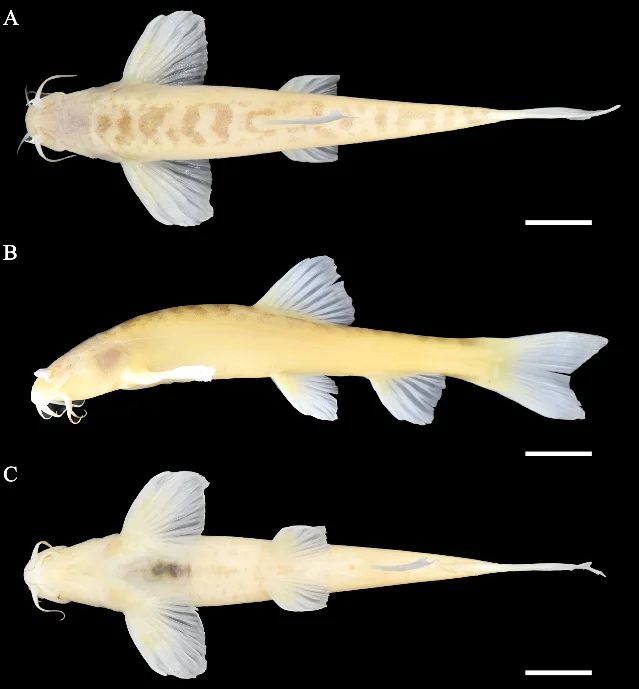
Triplophysa zhijinensis (織金高原鳅, "Zhijin plateau loach") was collected from the underground Shisanwan River system in Zhijin County (26.4766°N, 105.6401°E, 1,271 m elevation), within the upper Wu River drainage that ultimately flows to the Yangtze. The holotype (GZNUSLS202410072, 74.1 mm standard length) was caught on 30 October 2024. The species retains faint dorsal pigment spots — its eyes have degraded to tiny dark specks no larger than 1.3–2.9% of head length — and its ventral fins fall short of the anus. Vertebral count: 39 (4+35). 1
Triplophysa dafangensis ("Dafang plateau loach") comes from a different county (Dafang, 27.4232°N, 105.9309°E, 1,530 m elevation) and has gone further down the cave-adaptation path: the body is completely unpigmented — white throughout — and the eyes, though not entirely absent, measure only 5.3–7.1% of head length. Its ventral fins extend past the anus, and it carries 43 vertebrae (4+39). The holotype (GZNUSLS202501291, 73.0 mm SL) was collected on 7 January 2025. 1
The two localities lie in adjacent counties but belong to separate underground drainage basins, which accounts for their independent evolutionary trajectories. Mitochondrial cytochrome b analysis of 64 sequences confirms both as distinct lineages within Triplophysa, a large genus of plateau and brook loaches distributed across the drainages of the Tibetan Plateau and surrounding highlands. Authors Ting-Ting Zhu, Feng-Hua Yuan, Ren-Yi Zhang (Guizhou Normal University), and Ya-Hui Zhao (Institute of Zoology, Chinese Academy of Sciences) note that the finds "highlight the underestimated diversity of Triplophysa in subterranean habitats and emphasize the ecological importance of karst groundwater systems as sheltered habitats for specialized cave-adapted fauna." 1 Neither species has been IUCN-assessed yet.
A cycad that nobody recognized — and may already be critically threatened
Ceratozamia popolucana (family Zamiaceae) was growing inside the Los Tuxtlas Biosphere Reserve in Veracruz, Mexico, all along — it had simply been misidentified as either C. subroseophylla or C. dominguezii during previous surveys. Pérez-Farrera and colleagues confirmed its distinct identity only after years of in-situ population monitoring. 2
The giveaways are subtle but consistent: the trunk is shorter and thinner than its look-alikes; emerging leaves flush cherry-red and are covered in yellowish-white tomentum; mature leaflets are olive-green rather than the deep glossy green of C. subroseophylla; and the female cone emerges pale green rather than yellow-with-red-hairs or pale orange. The species lives in karst tropical rainforest at elevation. 2
The authors — seven researchers from institutions in Chiapas, Xalapa, Tabasco, Veracruz, and Japan's RIKEN Center — recommend an IUCN preliminary rating of Critically Endangered (CR B2ab(iii)): the species has extremely few known populations, its habitat inside the biosphere reserve continues to be degraded, and its distribution is exceedingly narrow. The IUCN has not yet formally assessed it, since the species was published today. 2
Cycads as a group sit near the top of the most-threatened plant groups globally, and Ceratozamia in particular has a poor conservation track record across its range in Mexico and Central America, making this find both a taxonomic addition and an immediate conservation concern.
A thistle from Tibet's most biodiverse gorge
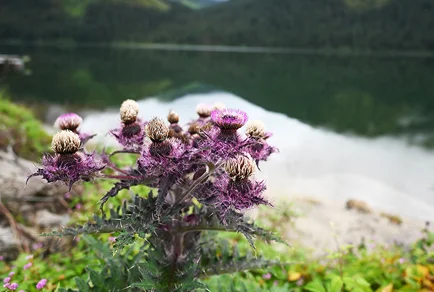
Cirsium medogense (Asteraceae, family Cardueae — the true thistles) was collected from Motuo County in southeastern Tibet (Xizang), one of the least-surveyed botanically rich corridors in China. Six authors from the Kunming Institute of Botany (Chinese Academy of Sciences) and the Lhasa Plateau Science Research Center distinguish it from its nearest relatives, C. eriophoroides and C. lipskyi, by three consistent features: the involucre (the cup of bracts beneath the flower head) is smooth and bell-shaped rather than woolly; the plant carries more and erect flower heads; and the leaves are broadly elliptic rather than narrowly so. Molecular analysis of ITS and three chloroplast markers (matK, ndhF, trnL–trnF) places it as sister to C. lipskyi, together forming a well-supported clade with C. eriophoroides within section Epitrachys. 3 IUCN status: not yet assessed.
Eocene fairyfly in Baltic amber — the genus's first fossil
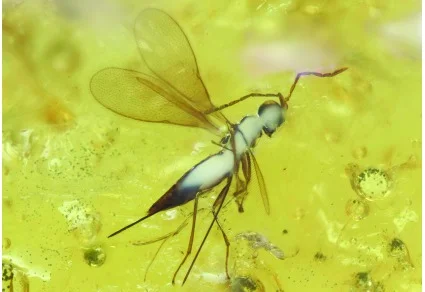
Australomymar losinnoense sp. nov. is the oldest known representative of its wasp genus, preserved in Eocene Baltic amber (approximately 34–56 million years old) from a Polish collection. Author Filip Pawluk (Botanical Garden, University of Wrocław) based the description on a single female, which is identifiable as Australomymar (family Mymaridae — the fairyflies, the world's smallest wasps) by its four-segmented tarsi, six-segmented flagellum plus intact club, and a wide forewing with a long vein. From all living Australomymar species it differs in antennal proportions, the absence of a diagonal or bristle row on the forewing, and the relative length of the ovipositor sheath. 4
Today all known living Australomymar species are restricted to the Southern Hemisphere (Australia, New Zealand, southern South America). The amber specimen from Poland shows the genus once ranged into the northern mid-latitudes, a distribution much broader than what survives today. Pawluk notes the find "indicates that the genus had a wider geographical distribution in the past." 4 Fairyflies as a group are fascinating for their extreme miniaturization — several living species are smaller than some single-celled organisms — and fossil records of the family are sparse.
Two new Thailand lizards hidden inside a misidentified complex
Herpetologists have long recognized that something was off about Calotes irawadi in Thailand — the "garden lizard" complex was too variable. A ZooKeys paper by Prakobkarn, Zug, Tandavanitj, and Ngamprasertwong (Chulalongkorn University, Smithsonian) resolves part of that problem with two new species. 5
Calotes thailandensis (type locality: Songkhla Province, southern Thailand, 24 m elevation) is the more widespread of the two, occurring throughout central, eastern, northeastern, and southern Thailand. Males average 87.1 mm snout-to-vent and carry a pair of dark collar markings on the flanks — a feature absent in the nominotypical C. irawadi. The tympanic spine is medium-length (about 60% of tympanum diameter). 5
Calotes maehongsonensis (type locality: Mae Hong Son Province, northwestern Thailand, 499 m elevation) replaces C. irawadi in the mountainous northwest and extends into adjacent Myanmar. Males have a smaller head and shorter tympanic spine (under 50% of tympanum diameter) but proportionally longer hindlimbs — the femur extends past the eye when the leg is folded forward, while in C. thailandensis it only reaches the tympanum-to-eye midpoint. Both species are formally transferred from the C. irawadi complex; Thailand's Calotes roster grows from 2 known species to 4. 5 Neither has been IUCN-assessed.
A funnel mushroom from the western Sichuan Plateau
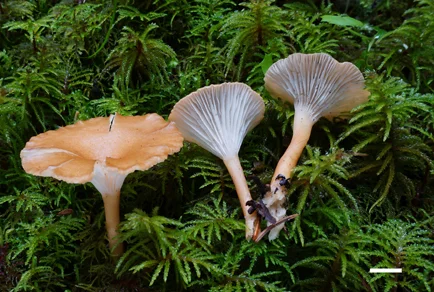
Infundibulicybe subalpina (order Agaricales, family Omphalinaceae) is a yellow-brown funnel-capped mushroom with white gills running down the stipe, collected from subalpine habitat on the Western Sichuan Plateau. Su, Duan, Chen, and He (Hunan Normal University) place it near I. ellipsospora and I. jilongensis based on a combined ITS + five-gene dataset, and provide a key to all Chinese Infundibulicybe species. 6 The pileipellis (cap skin) has abundant grainy epiparietal pigment — a structural detail that distinguishes it from close relatives — and basidiospores are ellipsoid to elongate. IUCN: not assessed.
Four new sponge crabs — the genus that wears living hats
WoRMS registered four species of Frodromia (family Dromiidae — sponge crabs, order Decapoda) on June 2. Every species in this genus carries a piece of living sponge on its back, held in place by modified rear legs, as camouflage. Peter K. L. Ng's revision of the genus — published in Raffles Bulletin of Zoology 74: 332–358 — names all four in a single paper while also revisiting the status of subfamily Frodromiinae. 7
| Species | Type locality | Registration |
|---|---|---|
| Frodromia elegans Ng, 2026 | South China Sea oceanic islands | AphiaID 1894840 |
| Frodromia iners Ng, 2026 | Eastern Philippines | AphiaID 1894841 |
| Frodromia granulosa Ng, 2026 | Vanuatu | AphiaID 1894843 |
| Frodromia caileani Ng, 2026 | Banda Sea, Indonesia | AphiaID 1894844 |
None yet IUCN-assessed. The four localities span from the South China Sea across the Indo-Pacific to Vanuatu, a distribution consistent with the family's Indo-Pacific center of diversity.
Three Gyratrix flatworms split from a phantom "cosmopolitan" species
For more than 190 years, Gyratrix hermaphroditus Ehrenberg, 1831 appeared in papers as a single worm found on every ocean coastline. Vanstraelen, Cuypers, Monnens, and Artois (Hasselt University) broke that fiction apart: a revision in Zoological Journal of the Linnean Society 206(3) found the "species" was actually at least 14 morphologically and molecularly distinct lineages. 8 Three of those new species — G. diezi (western Mediterranean), G. victori (Bonaparte Coast, northwestern Australia), and G. longistilus (Hawaii) — entered WoRMS on June 2. Type specimens for all three are deposited at the Finnish Museum of Natural History (MZH). As the authors conclude, "each species corresponds to a clear morphotype that can be readily recognized in nature, and is supported by molecular data." 9
Rapid register: remaining species from Zootaxa 5821(4) and Phytotaxa
The following new species were published June 3 in Zootaxa 5821(4) or Phytotaxa 760(1). Each has a formal diagnosis and deposited holotype. 10
Insects & arachnids
- Termes chocoensis sp. nov. (Termitidae) — Pacific coast of Colombia; T. atlanticus sp. nov. — Atlantic coast of Colombia and Venezuela. Described from whole-mitochondrial-genome + morphology. Hindgut valves in workers are the sole diagnostic feature separating T. atlanticus from T. fatalis. Both placed as sister to the T. fatalis species complex. 11
- Ceroplastes flavus Kondo & Peronti, sp. nov. (Coccidae — wax scales) — Colombia (Valle del Cauca). Collected from inside tents built by Azteca ants on mango and soursop trees; described from adult females and first-instar nymphs. 12
- Dudusa levis Cha & Kim, sp. nov. (Notodontidae — prominent moths) — Oriental Region. Paper includes an annotated checklist of the genus. 13
- Hydropsyche kurdica sp. nov. and Stenophylax kurdistanicus sp. nov. (Trichoptera — caddisflies) — Iraqi Kurdistan. Iraq had only 5 previously recorded caddisfly species; this paper adds two new ones and records Psilopterna and Stenophylax in the country for the first time. 14
Midges & nematodes
- Eukiefferiella paasivirtai sp. nov. and E. viljamii sp. nov. (Chironomidae — non-biting midges) — subarctic rivers in northern Finland. Both belong to the E. gracei group; their nearest known relatives are North American. K2P genetic distances to known species: 8.6% and 9.0% respectively. 15
- Metachromadoroides champensis sp. nov. and M. hamatus sp. nov. (Desmodoridae) — tidal flats, Bay of Bengal, India. The genus Metachromadoroides had not been reported since 1961; this paper is a 60-year rediscovery. 16
- Spirobolbolaimus franciscus sp. nov. (Microlaimidae) — deep sea, Campos Basin, Brazil. Male body length ~2,665 µm. First record in the genus of a "pin"-shaped secretory structure in the vas deferens and a seminal vesicle-like structure in females. 17
Fish & protists
- Eustomias oshoromaru sp. nov. (Stomiidae — barbeled dragonfishes) — Ogasawara Islands, North Pacific (single specimen, 5 pectoral-fin rays); E. clarkei sp. nov. — Hawaiian Islands (2 specimens, 7 pectoral-fin rays, complex medial barbel branching). Both placed in subgenus Triclonostomias. 18
- Anteholosticha lhasaensis sp. nov. (Ciliophora, Hypotrichia) — top 5 cm of soil, Lhasa, Tibet. Live size 95–155 × 30–40 µm. SSU rDNA analysis again confirms Anteholosticha is not monophyletic, adding another argument for a genus-level revision. 19
Marine — additional WoRMS registration
- Greeffiella bellula Leduc & Zhao, 2026 (Desmoscolecidae) — deep-sea sediments, New Zealand EEZ. The first desmoscolecid nematode species described from New Zealand waters, registered June 2. 20
Plants & hybrid
- Begonia × marceloi Miranda — Atlantic Forest, São Paulo State, Brazil. A natural hybrid (B. spinibarbis × B. lorenzii), not a strict new species, found growing among B. spinibarbis individuals near B. lorenzii. 21
Cover image: Eocene Baltic amber specimen of Australomymar losinnoense sp. nov., the first fossil record of this fairyfly genus. 4
参考来源
- 1ZooKeys: Two new cave-dwelling Triplophysa from Guizhou
- 2Phytotaxa 760(1): 77–92 — Ceratozamia popolucana
- 3Phytotaxa 760(1): 45–61 — Cirsium medogense
- 4Zootaxa 5821(4): 581–586 — Australomymar losinnoense
- 5ZooKeys 1281: 69–104 — Calotes irawadi complex
- 6Phytotaxa 760(1): 62–76 — Infundibulicybe subalpina
- 7WoRMS AphiaID 1894840 — Frodromia elegans
- 8WoRMS AphiaID 1894830 — Gyratrix diezi
- 9Hasselt University Document Server: Gyratrix revision
- 10Zootaxa 5821(4) — issue table of contents
- 11Zootaxa 5821(4): 517–531
- 12Zootaxa 5821(4): 532–544
- 13Zootaxa 5821(4): 571–580
- 14Zootaxa 5821(4): 587–599
- 15Zootaxa 5821(4): 469–485
- 16Zootaxa 5821(4): 486–500
- 17Zootaxa 5821(4): 501–516
- 18Zootaxa 5821(4): 545–558
- 19Zootaxa 5821(4): 559–570
- 20WoRMS AphiaID 1894800 — Greeffiella bellula
- 21Phytotaxa 760(1): 93–100 — Begonia × marceloi
围绕这条内容继续补充观点或上下文。