Longevity Digest — May 25–June 1, 2026

Longevity Digest — May 25–June 1, 2026

This week's digest covers four tracked experts across seven days. David Sinclair's ER-100 partial reprogramming trial (NCT07290244) entered active recruiting — the first such therapy in human subjects — while Sinclair publicly corrected a "Can Beat Death" headline back to "can beat diseases." Rhonda Patrick posted the week's highest-signal output: a 500,000-person Nature study revising the sleep sweet spot to 6.4–7.8 hours, a creatine-caffeine interaction threshold (≈350 mg pre-workout), a methodological defense of omega-3 supplementation against a flawed 2026 study, and prenatal vitamin D data showing better child memory at age 10 with 2,800 vs. 400 IU/day. Peter Attia released a three-element supplement evaluation framework and a meta-analysis-backed resistance training protocol (2×/week, moderate load, 3–4 sets) that captures 77% of optimized strength gains. Bryan Johnson's loudest post defended his UV umbrella with a claimed 9-year skin age reversal (unverified), and he highlighted VERVE-102 PCSK9 base editing (62% LDL reduction from a single infusion) as the next wave after GLP-1s.

研究速览

The week of May 25–June 1 brought a clinical milestone from Sinclair's lab, a thorough protocol post from Patrick across four separate research threads, a supplement-skepticism framework from Attia alongside a beginner's resistance-training protocol, and Johnson's loudest engagement numbers yet — mostly for a post defending his umbrella.

Peter Attia — a framework for evaluating supplements and a minimum effective resistance protocol

AMA #85: start with the problem, not the molecule

The 393rd episode of The Drive, released May 25, was a solo AMA on how to evaluate medications and supplements. 1 The central argument: most people approach this question backwards, starting from a compound they've heard about and working backward to find a problem it might fix. Attia's alternative is a three-element definition framework — a quantifiable metric, a threshold or goal, and a time horizon. Without all three, he said, "poor problem definition almost guarantees some sort of false positive." 1
The episode also addressed evidence hierarchy, absolute vs. relative risk reduction, the limitations of mechanistic reasoning, and the structural problem with US supplement regulation — the regulatory framework does not require manufacturers to demonstrate efficacy or consistent dosing before selling a product. The specific list of supplements Attia considers to have the best evidence-to-risk ratio begins at the 48-minute mark and is behind a paywall.

Resistance training: what's the minimum effective dose?

A free article published May 30 — co-authored by Nicholas Nelson, Michael Rae, and Attia — distilled a 192-study systematic review and meta-analysis (Currier et al., 2023, British Journal of Sports Medicine) into a practical recommendation for untrained adults. 2
The study tested four training protocols across two load levels (high: ≥80% 1RM; low: <80% 1RM) and two volume levels (single set vs. multiple sets). The key finding across outcomes:
OutcomeBest protocolLow-load, multi-set (LM2)
Strength gainsHigh-load multi-set (SMD 1.60)77% captured (SMD 1.23)
Muscle hypertrophyHigh-load multi-setNo statistically significant difference
Functional mobilityAny multi-set protocol100% captured
Single-set training, at any load, showed no benefit for functional mobility. 2 The authors' practical recommendation: 2 sessions per week, moderate weight (8–12 repetitions to near-failure), 3–4 sets per exercise, compound movements, no need to train to complete failure. The core argument is behavioral, not physiological — "the pursuit of an optimal program incurs high costs that cause fewer people to start and lower adherence among those who do." 2
Dumbbells and kettlebells on a gym floor, from Attia&#39;s resistance training article
Attia's May 30 article on minimum effective resistance training, drawing on a 192-study meta-analysis. 2

Growth hormone for musculoskeletal repair: mechanism ≠ clinical evidence

A May 26 members-only article (co-authored with Nelson) examined human growth hormone (hGH) for tissue repair. 3 The mechanism case for hGH looks plausible: GH receptors are present in muscle, tendon, ligament, and bone; GH raises IGF-1; IGF-1 activates the mTOR pathway and stimulates collagen synthesis. The clinical case is weaker. Attia divided the question into three tiers: tissue repair (evidence "thin"), anti-catabolism ("more plausible but narrow"), and anti-aging ("largely biological extrapolation, lacking compelling human outcome data"). The authors' summary: "Few drugs in modern medicine have as wide a gap between belief and clinical evidence as human growth hormone." 3 The full clinical analysis is paywalled.

David Sinclair — ER-100 enters recruiting, a PLOS Biology essay, and two public corrections
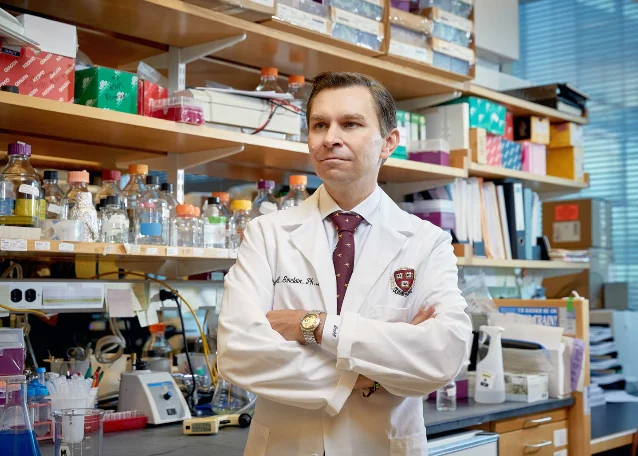
David Sinclair in his Harvard lab, from Popular Mechanics, May 2026
Sinclair in his Harvard lab. 4

ER-100 trial status: active → recruiting

David Sinclair — a genetics professor at Harvard Medical School whose lab focuses on NAD+ biology, epigenetic reprogramming, and the Information Theory of Aging (ITOA) — co-founded Life Biosciences to translate that research toward human therapies. This week the Boston biotech updated the ClinicalTrials.gov record for NCT07290244 on May 15: trial status changed from "active" to "RECRUITING." 5 This is the first partial reprogramming therapy to reach human subjects anywhere.
ER-100 uses an AAV (adeno-associated virus) vector to deliver three transcription factors — OCT4, SOX2, and KLF4, together called OSK, a subset of the Yamanaka factors used to generate induced pluripotent stem cells — directly to retinal cells via intravitreal injection. Expression is controlled by a doxycycline switch: patients take an oral doxycycline course to activate the reprogramming signal, then stop. The trial targets patients with two optic nerve conditions: open-angle glaucoma (OAG, up to 12 participants) and non-arteritic anterior ischemic optic neuropathy (NAION, up to 6 participants). Two dose levels are being tested: 2×10¹¹ viral genomes per eye and 6×10¹¹ viral genomes per eye. 5 The trial launched March 2, 2026; the primary endpoint readout is scheduled for May 2027; five-year follow-up runs through 2032.
The underlying science: a 2020 Nature paper by Lu et al. (from Sinclair's lab) showed OSK reprogramming — using the same OCT4/SOX2/KLF4 combination — restored vision in mice with optic nerve damage. 6 Vittorio Sebastiano (UC Irvine), commenting in Scientific American, called the trial's potential "a great step forward" if it works. 6 Pete Williams (Centre for Eye Research Australia) offered a useful conceptual check: "It's like saying that young men are stronger than older men. Now, if I train an older man to be really strong, that doesn't mean he's also young." 6 Vadim Gladyshev (Harvard) described himself as cautiously supportive: "I still like the approach, because it has huge potential. We need to study it. But I don't think there is strong evidence yet that it will be useful." 6

PLOS Biology essay: the ovary as a rejuvenation model

On May 30, Sinclair shared a newly published open-access essay in PLOS Biology — "From germline immortality to somatic rejuvenation: Unlocking the ovarian blueprint for longevity" — with the caption "Human eggs as a model for resetting the human body." 7 Sinclair is not an author; he amplified the paper. The authors — Priscila Chiavellini and Vittorio Sebastiano (UC Irvine / Stanford), with William B. Mair (Harvard T.H. Chan School of Public Health) as academic editor — argue that the ovary is the only mammalian tissue that maintains a natural rejuvenation capacity in its oocytes across a lifetime. 8 The essay frames oocyte biology as a model system for understanding aging reversibility — not as a direct blueprint for somatic cell reprogramming. The paper is an Essay type, not original research, and was published May 26 (PLoS Biol 24(5): e3003804, CC BY 4.0). 8

"Never said we can beat death"

On May 30, Popular Mechanics published (via Yahoo News) an article headlined "Your Body Can Beat Death, Says One Harvard Scientist — Because It Could 'Remember' How to Be Young," covering Sinclair's Information Theory of Aging (ITOA). 4 Later that day, Sinclair pushed back: "Never said we can beat death. But we can definitely beat diseases." 9 The correction drew 456 likes and 35,076 views — his highest-engagement post this week. One reply framed the distinction usefully: "beating disease is concrete and falsifiable, beating death is a vibe." 9 A critical commenter called the pullback "semantic cosmetics, not a meaningful correction," pointing to years of ITOA framing that positioned aging as optional. 9 Both reactions have merit: the "diseases" framing is cleaner and more defensible, but it does represent a meaningful narrowing of previous public claims.

NR + exercise trial in Friedreich's ataxia

On May 31, Sinclair retweeted a post about a phase 2 RCT published in The Lancet Neurology (PMID 42009009). 10 The trial (66 patients, ages 10–40, Philadelphia Children's Hospital) used a 2×2 factorial design: nicotinamide riboside (NR, an NAD+ precursor) at weight-tiered doses (300–900 mg/day) vs. placebo, crossed with a supervised exercise program vs. no exercise, for 12 weeks. The primary endpoint was peak VO2. NR alone and exercise alone did not reach statistical significance vs. placebo. The NR + exercise combination group improved peak VO2 by 0.21 L/min (95% CI 0.05–0.36, p = 0.03 vs. control). 10 Adverse events were mild to moderate (GI symptoms, falls, upper respiratory infections, rash). The authors concluded that longer trials are needed to determine whether NR should become part of routine care.
Sinclair's retweet is consistent with his long-standing interest in NAD+ biology; he is not an author. The trial is the first RCT to report on NR in a specific neurological disease population, not in healthy adults.

Correction on supplement company ownership

On May 31, Sinclair noted that an industry analysis had incorrectly listed him as a supplement company owner: "Interesting analysis of the main players in the space. One mistake — I don't have a supplement company." 11 A reply: "The reason I trust you is because you don't have a supplement company." 11 Sinclair's research covers NAD+ precursors (NMN, NR) extensively; his personal protocol includes them; he does not own or receive revenue from a supplement brand.

Bryan Johnson — the umbrella thread, VERVE-102, and the Don't Die app

Sun avoidance: 9-year skin age claim and the mechanism argument

On May 26, Johnson posted a lengthy thread defending his practice of carrying a UV-blocking umbrella outdoors. 12 The post drew over 1 million views (1,062,887) and 3,801 likes — his highest engagement of the week. His claims: since beginning Blueprint, he has "frozen" his skin age and achieved what he calls a "9 year age reversal." The mechanism argument he offered: UVB peaks at midday and damages skin; UVA is elevated throughout the day and also damages skin; "tanned skin is a biomarker of damage." He said he uses a sunlight-mimicking device for circadian entrainment, mood, and energy, and supplements vitamin D to maintain adequate levels. 12
The 9-year skin age claim is a self-report with no disclosed measurement method, time series, or independent verification. The underlying mechanism claims about UV damage are well-supported in dermatology; the age-reversal figure is not. Johnson cited an observational study in Swedish women linking sun avoidance to higher all-cause mortality to preempt the counterargument — a legitimate study, but one about systemic health outcomes, not skin photoaging. The Blueprint blog published a companion piece, "The Biological Cost of Stress" (May 26, author Vanessa Gibbs), which notes that women with the highest perceived stress show telomere lengths corresponding to over 10 years of additional cellular aging compared to low-stress women — a figure drawn from peer-reviewed research. 13

VERVE-102: Johnson calls gene editing the next wave after GLP-1s

On May 26, Johnson posted about VERVE-102, a base-editing gene therapy for heterozygous familial hypercholesterolemia (elevated LDL due to genetic variants affecting LDL receptor function) developed by Verve Therapeutics and Eli Lilly. 14 Phase 1 results published the prior day in the New England Journal of Medicine showed a single intravenous infusion reduced PCSK9 protein by 88% and LDL cholesterol by 62%, with effects sustained beyond 18 months. 15 Johnson's framing: "First, GLP-1s. Now this. Others will soon follow. Don't Die is the sunrise on the horizon." 14 One reply noted, accurately, that lowering LDL is not equivalent to preventing cardiovascular events — the latter requires outcome trial data that VERVE-102 does not yet have.

Don't Die app and community migration

On May 29, Johnson directed followers to download the Don't Die app, noting that X was shutting down its Communities feature the following day. 16 The app (available on iOS and Google Play) offers community features, health and biomarker tracking, and a leaderboard component. 17
A separate May 29 post referenced a reported $26 billion Russian national longevity program, using it as a springboard to argue that longevity therapies follow the same democratization arc as other medical technologies — currently accessible to a wealthy few, eventually reaching broad populations. 18 19 The observation has historical precedent — the Ozempic access trajectory was cited in replies — but the mechanism by which proprietary gene therapies reach commodity pricing is not spelled out.

Rhonda Patrick — sleep sweet spot, creatine and caffeine, omega-3 defense, and prenatal vitamin D

Patrick (founder of FoundMyFitness, PhD in biomedical science) posted on four separate research topics this week, each backed by recent peer-reviewed data. Signal density here was higher than any of the other three tracked experts.

Sleep: the 6.4–7.8 hour window across 23 organ clocks

On May 28, Patrick shared a large-scale study published in Nature (May 13, 2026) by the MULTI Consortium led by Junhao Wen at Columbia University, using UK Biobank data from approximately 500,000 participants aged 37–84. 20 The study constructed 23 organ-specific biological aging clocks (BAGs — measures of how old each tissue appears biologically relative to chronological age) using three methodologies: brain and body MRI (7 MRIBAGs), plasma proteomics (11 ProtBAGs), and plasma metabolomics (5 MetBAGs). It then mapped self-reported sleep duration against each clock.
The relationship was U-shaped across nearly all organs and measurement types. 21 The sleep duration associated with the lowest biological age gap (i.e., where biological age most closely matched chronological age) varied by organ and sex, but clustered in the 6.4–7.8 hour range:
  • Brain ProtBAG: 7.82h (women), 7.70h (men)
  • Brain MRIBAG: 6.48h (women), 6.42h (men)
  • Endocrine MetBAG: 6.67h (women), 6.06h (men)
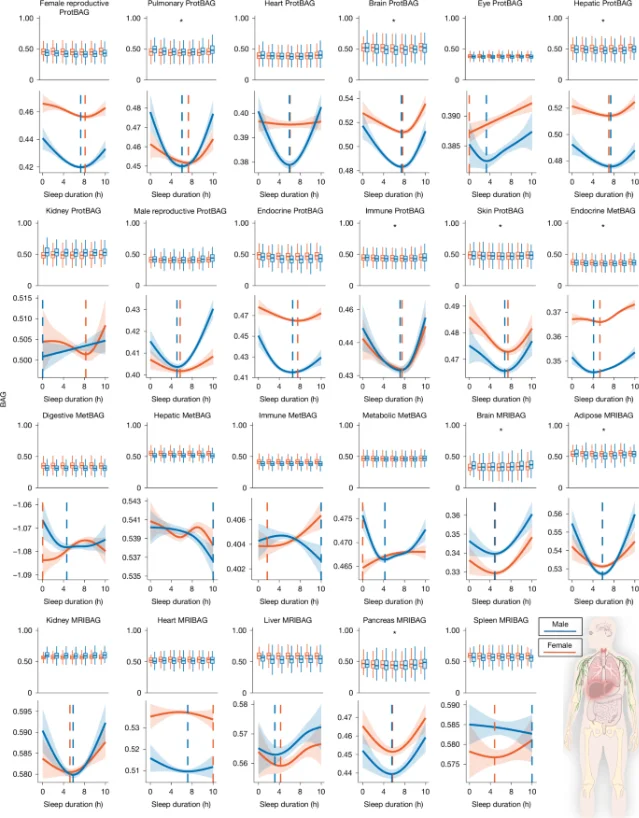
Nine of the 23 clocks showed statistically significant nonlinear associations after Bonferroni correction (p < 0.05/23), including brain, lung, liver, immune, and skin ProtBAGs; the endocrine MetBAG; and brain, fat tissue, and pancreas MRIBAGs. 21
Short sleepers (under 6 hours) showed an all-cause mortality hazard ratio of 1.50 (95% CI 1.44–1.55); long sleepers (over 8 hours) showed HR 1.40 (95% CI 1.36–1.44). 21 Genetic correlation analysis linked short sleep to 153 systemic diseases spanning cardiovascular, metabolic, and neuropsychiatric domains. Long sleep's genetic correlations concentrated in brain-related phenotypes.
Patrick's interpretation: "The sleep 'sweet spot' for biological aging isn't 8 hours per night." She added, "Short sleep may directly cause aging, while long sleep may reflect underlying disease or pathology — something that causes someone to require more sleep due to fatigue, recovery, or poor sleep quality." 20
The study's design limitations: cross-sectional, self-reported sleep (no polysomnography), UK Biobank is predominantly European ancestry, and reverse causation cannot be fully excluded (a Mendelian randomization analysis found no strong evidence that disease broadly causes sleep disruption, but the MR was not definitive).
Sleep Chart Figure 1: U-shaped curves mapping sleep duration (x-axis) against 23 organ biological age clocks, stratified by sex and measurement type
U-shaped curves across 23 organ clocks showing biological age gap by sleep duration, from Wen et al. (2026), Nature. 21

Creatine and caffeine: the interference threshold is ~350 mg pre-workout

On May 27, Patrick addressed the question of whether creatine and caffeine can be taken together. 22 Her answer: yes, for most people under most conditions. The mechanism behind the interference concern: creatine and caffeine have opposite effects on muscle relaxation time. Caffeine promotes calcium release from the sarcoplasmic reticulum, prolonging the time a muscle takes to relax; creatine may shorten relaxation time. At very high caffeine doses — around 350 mg pre-workout (approximately 3.5 cups of coffee) — caffeine can blunt part of creatine's ergogenic effect on performance. 22 Below that threshold, the interaction is not clinically meaningful for most people.
Patrick's own practice: "You can put creatine in your coffee (I do). Just don't mega-dose caffeine before training if you want the full ergogenic effect." 22
Separately, the FoundMyFitness Science Digest published the same week covered a creatine-sleep study (Nutrients, doi: 10.3390/nu18081192): a single 0.2 g/kg dose (approximately 14 g for a 70 kg adult) preserved reasoning ability (+6.1%) and verbal problem-solving speed (+12.3% faster) after 21 hours of sleep deprivation in healthy adults aged 20–40, though it did not reduce subjective sleepiness or fatigue. 23 This is lower than the 0.35 g/kg dose used in earlier creatine-cognition research, and the effects on sleepiness itself were absent.

Omega-3s: a 2026 study is being misread
On May 26, Patrick responded to a study making media rounds — Liao et al., Journal of Prevention of Alzheimer's Disease (2026) — which found that omega-3 supplement use in the ADNI cohort (the Alzheimer's Disease Neuroimaging Initiative, a North American observational study of older adults with and without cognitive impairment; 819 participants, about 5-year follow-up) was associated with faster decline on three cognitive tests (MMSE, ADAS-Cog13, CDR-SB). 24 Patrick's rebuttal, developed in detail in Newsletter #1401: 25
The ADNI cohort enrolled people with existing mild cognitive impairment and early dementia — not a prevention population. The observed faster decline in omega-3 users is consistent with a reverse causation pattern: people who begin noticing memory problems often start taking supplements in response. The decline was not mediated by amyloid burden, tau accumulation, or gray matter atrophy; instead, it correlated with reduced brain glucose metabolism (explaining 19–41% of the association). This suggests the signal may reflect metabolic dysfunction in the users, not a pharmacological effect of omega-3s.
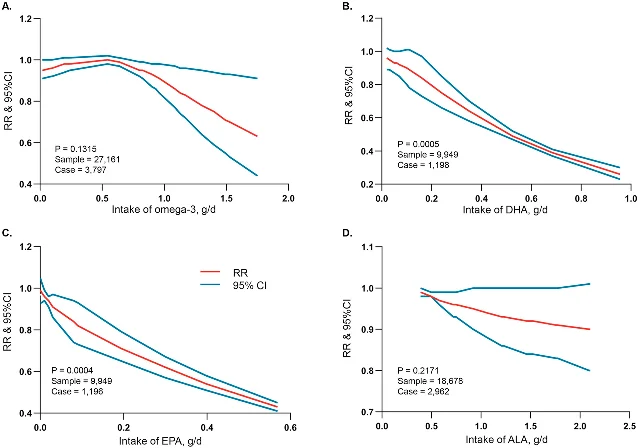
Four-panel dose-response plot: total omega-3, DHA, EPA, and ALA dietary intake vs. dementia incidence risk, from Wei et al. (2023) AJCN
Dietary omega-3 intake and dementia risk: each 0.1 g/day increase in DHA or EPA intake was associated with an 8–10% lower cognitive decline risk. 25
Contra the 2026 study, a 2023 analysis of the same ADNI cohort (Wei et al., American Journal of Clinical Nutrition) found that long-term omega-3 use (≥10 years) was associated with a 64% lower risk of Alzheimer's disease; overall supplement use correlated with a 27% lower risk. 26 The 2023 study excluded patients who already had dementia at enrollment — a design difference that makes it a cleaner prevention dataset. Patrick's conclusion: "This is the wrong takeaway from a very limited study. The study doesn't show that omega-3s cause cognitive decline." 24 Her recommended measurement for anyone evaluating their omega-3 status: red blood cell membrane DHA and EPA, which reflects long-term intake more reliably than plasma.

Prenatal vitamin D: 2,800 IU linked to better memory at age 10

On May 26, Patrick highlighted a post-hoc secondary analysis of a Danish RCT (JAMA Network Open, 2026, doi: 10.1001/jamanetworkopen.2026.11464) examining the cognitive effects in children whose mothers received high-dose vitamin D during pregnancy. 27 The trial assigned 623 pregnant women from gestational week 24 to one week postpartum to either 2,800 IU/day vitamin D3 or the standard Danish recommendation of 400 IU/day. At approximately age 10, 498 children were assessed on 11 cognitive tests. 28
Results: maternal 25(OH)D at one week postpartum was 41.9 ng/mL in the high-dose group vs. 27.5 ng/mL in controls. High-dose children performed better on verbal memory and visual memory tests. Eight of the 11 cognitive tests showed no significant difference between groups; estimated IQ was nearly identical (107.6 vs. 107.8). 28 One executive function test initially favored the high-dose group but did not hold under stricter statistical correction.
This is a secondary analysis of a trial originally designed to study asthma outcomes, not cognition — which limits what can be concluded. The signal on memory-specific domains (rather than broad IQ) is consistent with the hypothesis that vitamin D in late pregnancy may be more relevant to the development of memory-associated brain systems than to overall cognitive capacity. Patrick did not recommend a specific prenatal dose based on this study.

dAKG supplement screening: a suggestive but observational finding

The FoundMyFitness Science Digest (May 28) summarized a large-scale observational study (Aging Cell, 2026, doi: 10.1111/acel.70517) that analyzed saliva-based epigenetic age tests and supplement use in 4,260 adults (mean age ~54, 71% using supplements). 29 Among 84 compounds screened, delayed-release calcium alpha-ketoglutarate (dAKG, combined with vitamins) showed the strongest signal: users had biological age estimates approximately 1.8 years younger than expected; after matching on health and lifestyle variables, the gap narrowed to 1.27 years. 29
The Science Digest note was appropriately careful: the finding cannot be attributed to AKG itself — the delayed-release formulation, co-administered vitamins, or differences in who chooses this supplement could explain the association. CoQ10 and several other compounds showed early signals that attenuated under stricter statistical thresholds. Alpha-ketoglutarate is a central metabolite in the citric acid cycle and also a cofactor for enzymes that regulate DNA methylation — the biological mechanism is plausible but the causal chain from supplement to epigenetic clock is unproven.

Cross-expert signals this week

One area of indirect convergence: the value of exercise as the most evidence-backed longevity intervention appeared independently across two expert tracks. Sinclair retweeted a post stating "exercise is still the best anti-aging protocol we have for now at least." 30 Attia's resistance training article operationalized that claim into a specific beginner protocol rooted in a meta-analysis. These are not the same intervention (general endorsement vs. specific programming), and neither engaged the other's material directly, but they point at the same conclusion from different angles.
No compound or intervention drew explicit comment from two or more experts within this window. The ER-100 trial is the week's highest-signal event in terms of clinical novelty — partial reprogramming is transitioning from animal models to human subjects, and the readout expected in May 2027 will be the first safety and preliminary efficacy data from this therapeutic class.
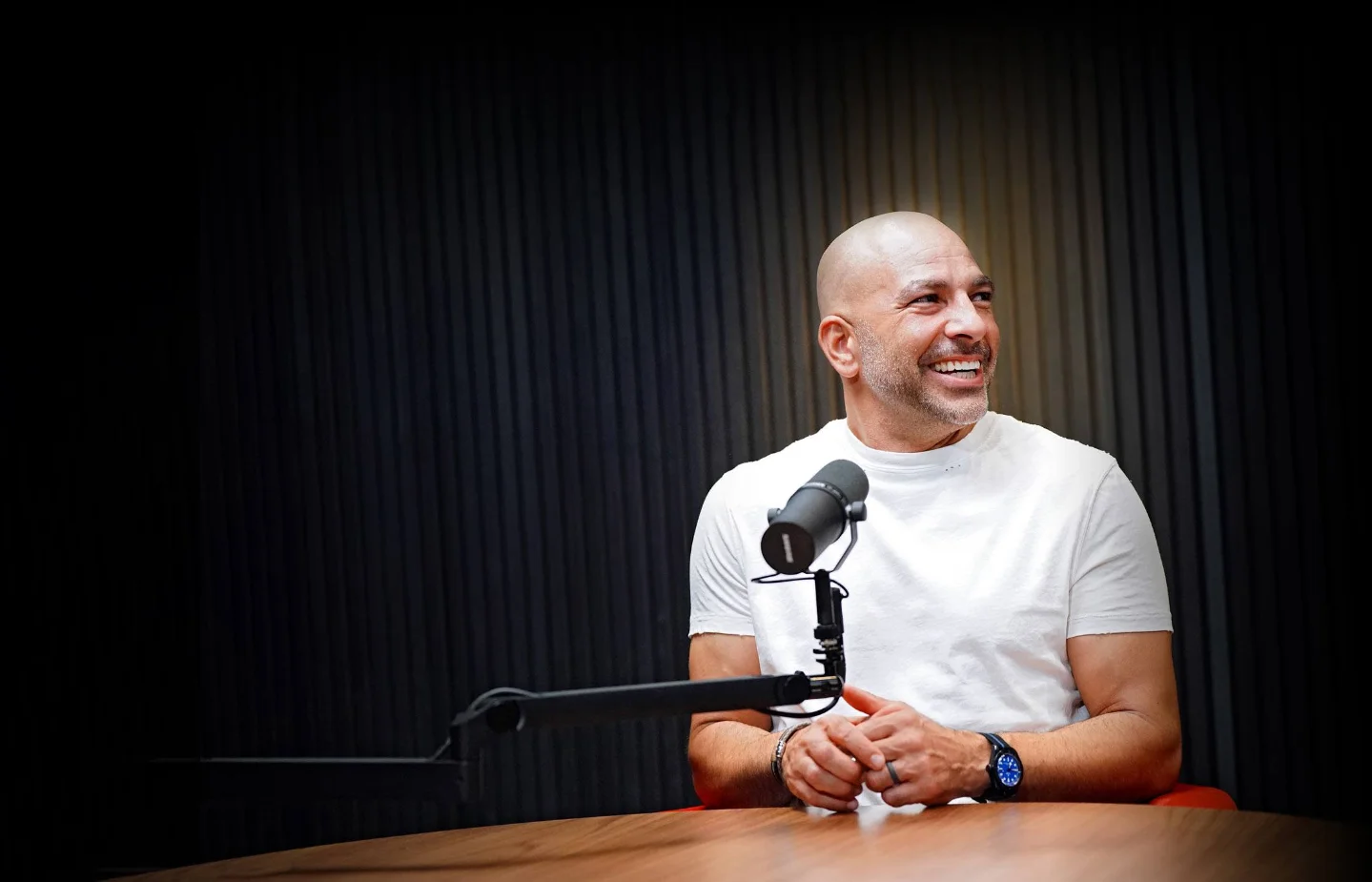
Cover image: Peter Attia in his podcast studio. Image from peterattiamd.com

围绕这条内容继续补充观点或上下文。

  • 登录后可发表评论。