
老板能知道你将来会得什么病吗?基因预测技术正在逼近法律边界
美国一项名为「多基因风险评分」的新型基因技术,能预测你未来患心脏病、糖尿病的概率。但当这份风险报告送到雇主面前,2008 年制定的联邦基因歧视法已无力保护你。本期精选《纽约时报》深度报道,附完整中英对照译文、10 个核心词汇及两段长难句语法拆解。
① 标题导读
英文原标题:Genetic Scores Are Booming. But Will Anti-Discrimination Laws Cover Your DNA?
中文「标题党」式译名:老板能知道你将来会得什么病吗?基因预测技术正在逼近法律边界
背景简介:想象一下:你去做了一个常规基因检测,结果显示你未来心脏病发作的概率极高。你目前身体健康,感觉良好,但这个风险已经写在了你的 DNA 里。你去告诉雇主,希望调换一个体力消耗较少的岗位——雇主可以拒绝吗?根据现行美国法律,答案是「可以」。《纽约时报》2026 年 5 月 28 日刊发这篇深度报道,作者 Emily Baumgaertner Nunn 聚焦一种叫做「多基因风险评分」(polygenic risk scores)的新型医疗技术,以及这项技术与几十年前制定的就业歧视法律之间正在形成的碰撞。1
② 原文与参考译文
Paragraph 1
Imagine this scenario: At a routine visit, your doctor administers a new genetic test that shows you have a hugely elevated risk of a heart attack in the future. You're in shape; you feel fine. But the prediction is in your DNA.
译文:想象这样一个场景:在一次例行检查中,你的医生为你做了一项新型基因检测,结果显示你将来发生心脏病的风险极高。你身材不错,感觉良好。但这个预测已经藏在你的 DNA 里了。
Paragraph 2
The next day, you tell your employer that your doctor wants you to make some adjustments — switch to a less physically taxing role, or maybe lower your stress levels in an effort to save your life. Can your boss legally deny you these accommodations? Under current law, yes.
译文:第二天,你告诉雇主:医生建议你做一些调整——换到体力负担较轻的岗位,或者减少工作压力,以延长寿命。你的老板能合法拒绝这些要求吗?按照现行法律,答案是:可以。
Paragraph 3
That's because the federal rules designed to protect against employment and insurance discrimination based on genetics were not written with this technology in mind. While the Genetic Information Nondiscrimination Act of 2008, or GINA, protects workers from being fired over their genetic test results, and the Americans With Disabilities Act protects those with active disabilities, neither law compels an employer to provide accommodations to help mitigate a person's future health risk.
译文:原因在于,那些旨在防范基因就业歧视与保险歧视的联邦法规,并不是为这种技术设计的。2008 年出台的《基因信息非歧视法》(GINA)保护员工不因基因检测结果被解雇,《美国残疾人法》则保护已患残疾的群体——但这两部法律都没有要求雇主为员工「降低未来健康风险」提供便利措施。
Paragraph 4
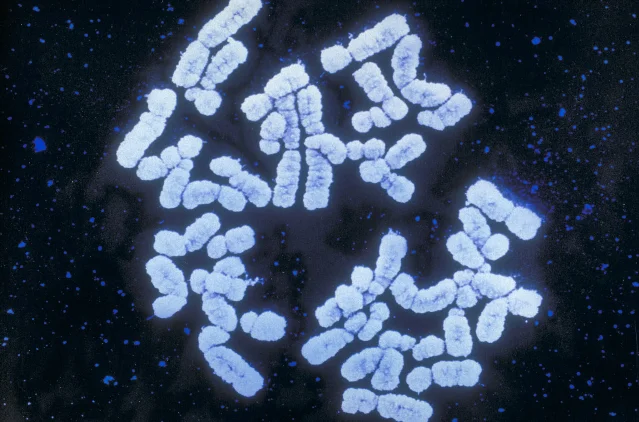
This could become a problem, as a new type of personalized medicine called polygenic risk scoring becomes increasingly popular. The technology uses DNA to estimate a person's likelihood of developing a specific disease. Legal and public health scholars worry that as genomic tools advance quickly, our legal frameworks are falling behind — in some cases leaving those who use genetic tests vulnerable to outright firings.
译文:随着一种名为「多基因风险评分」的个性化医疗技术日益普及,这一空白正在成为隐患。这项技术通过分析 DNA 来估算一个人患某种特定疾病的概率。法律和公共卫生学者担忧,基因组工具的发展速度远超法律更新的步伐,在某些情况下,使用了基因检测的员工反而可能更容易遭到解雇。1
Paragraph 5
"These polygenic risk scores are going to become an increasing part of your life," said I. Glenn Cohen, a Harvard Law School professor who specializes in the intersection of bioethics and the law and has co-written a report on the issue. "To me, it's a great opportunity to reopen questions about what the rules should be — questions that, from a policy perspective, are legitimately hard."
译文:「多基因风险评分将越来越多地进入你的日常生活,」哈佛法学院专攻生命伦理与法律交叉领域的教授 I. Glenn Cohen 说,他曾联合撰写过一份关于这一问题的研究报告。「在我看来,这是重新审视规则应当如何制定的好机会——而从政策角度来讲,这些问题确实很难回答。」
Paragraph 6
To understand the legal lag, it helps to first consider how the science of risk prediction has evolved. Many people thinking of genetic testing envision monogenic tests, which search for specific gene mutations that cause specific disorders, like Huntington's disease or cystic fibrosis. But polygenic risk scores scan for an array of variants throughout a person's genome, synthesizing the information into a cumulative estimate of their risk of developing a disease like diabetes or cancer. If a monogenic test is like finding one severed wire that cuts off sound to a speaker, a polygenic risk score is like a soundboard, with dozens of switches that can combine to produce a dangerous frequency.
译文:要理解为什么法律跟不上技术,先得搞清楚风险预测科学是如何演变的。很多人想到基因检测,脑海中浮现的是单基因检测——针对亨廷顿舞蹈病、囊性纤维化这类遗传病,寻找特定的致病基因突变。而多基因风险评分则不同:它扫描一个人基因组中大量的变异位点,将这些信息综合为患上某种疾病(如糖尿病或癌症)的累积风险估算。如果说单基因检测是找出那根断了、导致音箱没有声音的电线,那么多基因风险评分就像一块调音台——上面有几十个旋钮,不同组合可能制造出危险的频率。1
③ 核心词汇
| 单词 / 短语 | 音标 | 词性 | 中文释义 | 语境说明 |
|---|---|---|---|---|
| polygenic risk score | /ˌpɒliˈdʒenɪk rɪsk skɔː/ | n. phr. | 多基因风险评分 | 通过分析基因组中多个变异位点,综合估算患病概率的技术,是本文核心概念 |
| accommodate | /əˈkɒmədeɪt/ | v. | 为……提供便利;适应 | accommodation(名词形式)在法律语境中指「合理便利措施」,如调岗、减压,是美国残疾人法中的关键术语 |
| discrimination | /dɪˌskrɪmɪˈneɪʃn/ | n. | 歧视;区别对待 | employment discrimination(就业歧视)是贯穿本文的法律主题 |
| compel | /kəmˈpel/ | v. | 强制;迫使 | 文中指「法律是否强制要求」雇主采取某种行动,与 require 相比语气更强 |
| mitigate | /ˈmɪtɪɡeɪt/ | v. | 减轻;缓和 | mitigate a person's future health risk,减轻未来健康风险 |
| genomic | /dʒɪˈnɒmɪk/ | adj. | 基因组的 | genomic tools 指基因组层面的检测与分析工具,是精准医疗的基础 |
| lag | /læɡ/ | n./v. | 滞后;落后 | legal lag,法律滞后,指法律更新速度跟不上技术发展 |
| monogenic | /ˌmɒnəˈdʒenɪk/ | adj. | 单基因的 | 与 polygenic 相对,指由单一基因突变引发的疾病类型 |
| variant | /ˈveərɪənt/ | n. | 变异(位点);变体 | gene variant,基因变异位点,是多基因风险评分扫描的基本单位 |
| bioethics | /ˌbaɪəʊˈeθɪks/ | n. | 生命伦理学 | 研究医疗、生物技术中道德问题的学科,文中用于描述 Cohen 教授的专业方向 |
④ 长难句语法拆解
句子一
While the Genetic Information Nondiscrimination Act of 2008, or GINA, protects workers from being fired over their genetic test results, and the Americans With Disabilities Act protects those with active disabilities, neither law compels an employer to provide accommodations to help mitigate a person's future health risk.
结构标注
- 主干(主谓宾 SVO):neither law(S)compels(V)an employer(O)to provide accommodations(宾补不定式)
- 让步状语从句:While... and...,由两个并列分句构成,表示「尽管……」的让步关系
- 分句一:GINA protects workers from being fired over their genetic test results
- protects sb. from doing 固定搭配:保护某人免于……
- being fired:动名词被动式,做 from 的宾语
- 分句二:the Americans With Disabilities Act protects those with active disabilities
- those with active disabilities:those + 介词短语作定语,指「已患残疾的人」
- 分句一:GINA protects workers from being fired over their genetic test results
- 宾补不定式:to provide accommodations to help mitigate...
- to provide 是宾语补足语,说明 compel 的结果
- to help mitigate 是目的状语不定式
- a person's future health risk 是 mitigate 的宾语
语法要点:让步状语从句(while)+ 主语对比(neither...)是英文论证文章的高频结构,表示「虽然 A 和 B 都保护了某些权利,但二者均未涵盖 C」。这种「列举已有保护 → 指出空白」的逻辑链在法律、政策类文章中极为常见。
句子二
If a monogenic test is like finding one severed wire that cuts off sound to a speaker, a polygenic risk score is like a soundboard, with dozens of switches that can combine to produce a dangerous frequency.
结构标注
- 条件句主从结构:If...(条件从句),...(主句)
- 条件从句:a monogenic test(S)is(V)like finding one severed wire(比喻表语)
- that cuts off sound to a speaker:定语从句,修饰 wire(severed wire 是断了的电线)
- 主句:a polygenic risk score(S)is(V)like a soundboard(比喻表语)
- with dozens of switches:介词短语,修饰 soundboard(调音台)
- that can combine to produce a dangerous frequency:定语从句,修饰 switches
语法要点:双重类比(A is like X,B is like Y)是科普文章解释复杂概念的经典手法。定语从句 that cuts off...和 that can combine... 分别为两个比喻的核心所在,说明「断线」和「旋钮组合」各自代表什么机制。注意 severed(被切断的)是过去分词作形容词,修饰 wire。
正在加载内容卡片…
本期文章来源:The New York Times,2026 年 5 月 28 日,作者 Emily Baumgaertner Nunn。
围绕这条内容继续补充观点或上下文。