Anthropic Watch: Week of May 19–29, 2026
Five stories in ten days: Anthropic's $65B Series H at a $965B valuation, Claude Opus 4.8 with honest-AI improvements and Dynamic Workflows, the $300M Stainless SDK acquisition that stripped a key shared tool from OpenAI and Google, Andrej Karpathy joining as pre-training lead, and Mythos-level cybersecurity models inching toward general release.
Anthropic Watch — Weekly Roundup · May 19–29, 2026
Five stories in ten days: a near-trillion-dollar raise, a new flagship model, the SDK acquisition that hurt OpenAI and Google, Andrej Karpathy walking in the door, and Mythos creeping toward general release.
$65 billion Series H pushes valuation to $965 billion
Anthropic closed a $65 billion Series H on May 28, landing a $965 billion post-money valuation that briefly made it the most valuable private AI company in the world, ahead of OpenAI's $852 billion mark set in March.1
The round was co-led by Altimeter Capital, Dragoneer, Greenoaks, and Sequoia Capital, with Capital Group, Coatue, D1 Capital Partners, GIC, ICONIQ, and XN also participating. Infrastructure partners Samsung, SK Hynix, and Micron joined as strategic investors. Of the $65 billion total, $15 billion represents previously committed investments from hyperscalers — including the $5 billion Amazon pledged in April in exchange for Anthropic promising $100 billion in AWS cloud spending.2
Anthropic says its annualized run-rate revenue reached $47 billion by early May — up from $10 billion at the end of 2025 and $30 billion in early April.3 The Wall Street Journal has separately reported that the company expects a 130% revenue surge to bring it to its first profitable quarter.
CFO Krishna Rao said the new capital will help Anthropic meet "historical demand" it has been unable to fully serve, including signing new compute agreements — among them, reportedly, a deal in which xAI owes Anthropic $1.25 billion per month for compute access through May 2029.
The round is widely read as a pre-IPO move. Anthropic and OpenAI are both expected to go public later in 2026.
正在加载内容卡片…
Claude Opus 4.8: more honest, faster agents
The same day as the funding announcement, Anthropic released Claude Opus 4.8 — the fourth update to its flagship Opus 4 line in under six months.4
Two changes stand out. First, the model is substantially less deceptive: Anthropic's internal evaluation found Opus 4.8 four times less likely than Opus 4.7 to miss a code flaw without flagging it, and "far lower" rates of deceptive or sycophantic behavior overall.5 Second, a new Dynamic Workflows tool lets Opus 4.8 spin up hundreds of subagents in parallel, which Anthropic says makes large code migrations and similar high-parallelism tasks tractable where they previously were not.
A separate Effort Control parameter lets API customers dial how much compute Claude applies to a response. More effort costs more; the new Fast mode for Opus 4.8 is three times cheaper than the equivalent Opus 4.7 configuration, which matters for teams running the model at scale.
The model is available on AWS, Azure, and Google Cloud — making it the first frontier model with simultaneous availability across all three major hyperscalers.
Pricing holds at $5 per million input tokens and $25 per million output tokens. Not everyone has been impressed with the honesty push: Andon Labs found Opus 4.8 underperformed Opus 4.7 on some adversarial benchmarks, and some users have complained the model is now "too cautious" — refusing benign requests it would previously have handled.3
Stainless acquisition: Anthropic buys the SDK factory, shuts it for rivals
On May 19, Anthropic closed its acquisition of Stainless, a New York developer-tools startup, for more than $300 million — this despite Stainless having raised its Series A at a $25 million valuation in December 2024.6
Stainless generated production SDKs in TypeScript, Python, Go, Java, Kotlin, and more from an OpenAPI spec — and it did so for Anthropic, OpenAI, Google, and Cloudflare, among others. By Stainless's own estimate, roughly a quarter of the world's professional developers had used an SDK or docs site it generated.
The catch: Anthropic immediately announced it would wind down the hosted generator for all third-party customers. Existing SDKs remain legally owned by their original builders, but the ongoing ability to regenerate and update them as APIs change is gone. OpenAI and Google now need to rebuild that capability in-house, migrate to a competing generator, or maintain their SDKs manually — none of which is painless.
This is the third acquisition in a six-month pattern: Anthropic bought the JavaScript runtime Bun in December 2025, and OpenAI acquired the Python toolchain company Astral in March 2026. Both companies are moving from model layer down into the developer toolchain, converting temporary model leads into stickier distribution advantages.
正在加载内容卡片…
Andrej Karpathy joins as pre-training lead
Anthropic announced on May 19 that Andrej Karpathy — OpenAI co-founder, former Tesla Autopilot AI director, and coiner of "vibe coding" — has joined its pre-training team.7
Karpathy will report to Nicholas Joseph, Anthropic's pre-training team lead (also a former OpenAI researcher). His charter is to build a new sub-team focused on using Claude itself to accelerate pre-training research. "I think the next few years at the frontier of LLMs will be especially formative," Karpathy said in his personal announcement. "I am very excited to join the team here and get back to R&D."
He is the most prominent of several recent OpenAI alumni to land at Anthropic; security researcher Chris Rohlf joined Anthropic's frontier red team around the same time to focus on AI cybersecurity vulnerabilities.
Mythos: a dangerous model about to get wider
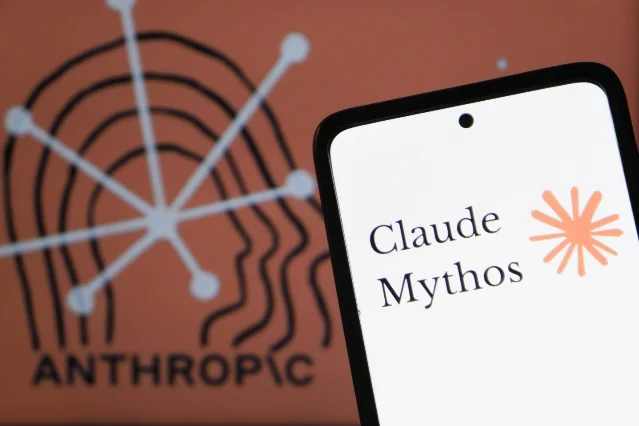
Anthropic's Mythos — a coding and cybersecurity model described as capable of finding vulnerabilities in critical infrastructure and chaining them into complex attacks — has been available only to a small set of vetted security researchers since early 2026.4
Alongside the Opus 4.8 announcement, Anthropic said it has made "swift progress" on safety guardrails that would allow it to release Mythos-level capabilities broadly. The company expects to begin wider distribution "in coming weeks." Notably, it said Opus 4.8's misaligned-behavior rate is already on par with the Mythos preview — meaning the new safety floor the company describes is being met by a model now in full commercial release.3
What to watch next
- IPO timing: Both Anthropic and OpenAI have described their current fundraises as potentially their last before going public. Watch for S-1 filings; Anthropic's near-$1T valuation would make it one of the largest tech IPOs on record.
- Mythos general availability: The safety guardrails described for Mythos have no public benchmark. When (and if) it releases broadly, scrutiny will fall on how Anthropic's self-certification measures up to independent red-team findings.
- Stainless fallout: OpenAI's SDK migration timeline is unannounced. Developer tooling shifts take months; watch for signs that Claude Code's integration advantages from Bun and Stainless begin showing in enterprise adoption metrics.
- Karpathy's research agenda: Pre-training leads at frontier labs shape model capability ceilings for years. Karpathy's bet on "using Claude to accelerate pre-training research" is essentially a self-improving research loop. Results won't surface for months, but the hire itself signals where Anthropic thinks its next capability edge comes from.
参考来源
- 1TechCrunch — Anthropic raises $65 billion, nears $1T valuation ahead of IPO
- 2Sherwood News — Anthropic raises $65 billion at a $965 billion valuation
- 3Fortune — Anthropic leapfrogs OpenAI with a record $965 billion valuation
- 4TechCrunch — Anthropic releases Opus 4.8 with new dynamic workflow tool
- 5The Next Web — Claude Opus 4.8 is four times more honest
- 6The New Stack — Anthropic's $300M Stainless deal lands hardest on OpenAI and Google
- 7The New Stack — Anthropic hires OpenAI co-founder Andrej Karpathy to lead Claude pre-training research
围绕这条内容继续补充观点或上下文。