Your newsletter digest — May 30, 2026
This week: Ben Thompson on the Ferrari Luce's brand identity crisis, Nvidia splitting its scoreboard between hyperscalers and everyone else, the surprisingly coherent case for compute in orbit, and Lenny Rachitsky calling the product community back into a room — with a note on what threads all four stories together.

Today's digest has two beats: Stratechery's weekly recap unpacks three sharp ideas from the week — the Ferrari Luce backlash, Nvidia's new reporting strategy, and why orbiting data centers are less absurd than they sound — while Lenny's Newsletter signals something about the product community that the AI moment itself can't replicate.
AI, efficiency, and the problem with making everything the same
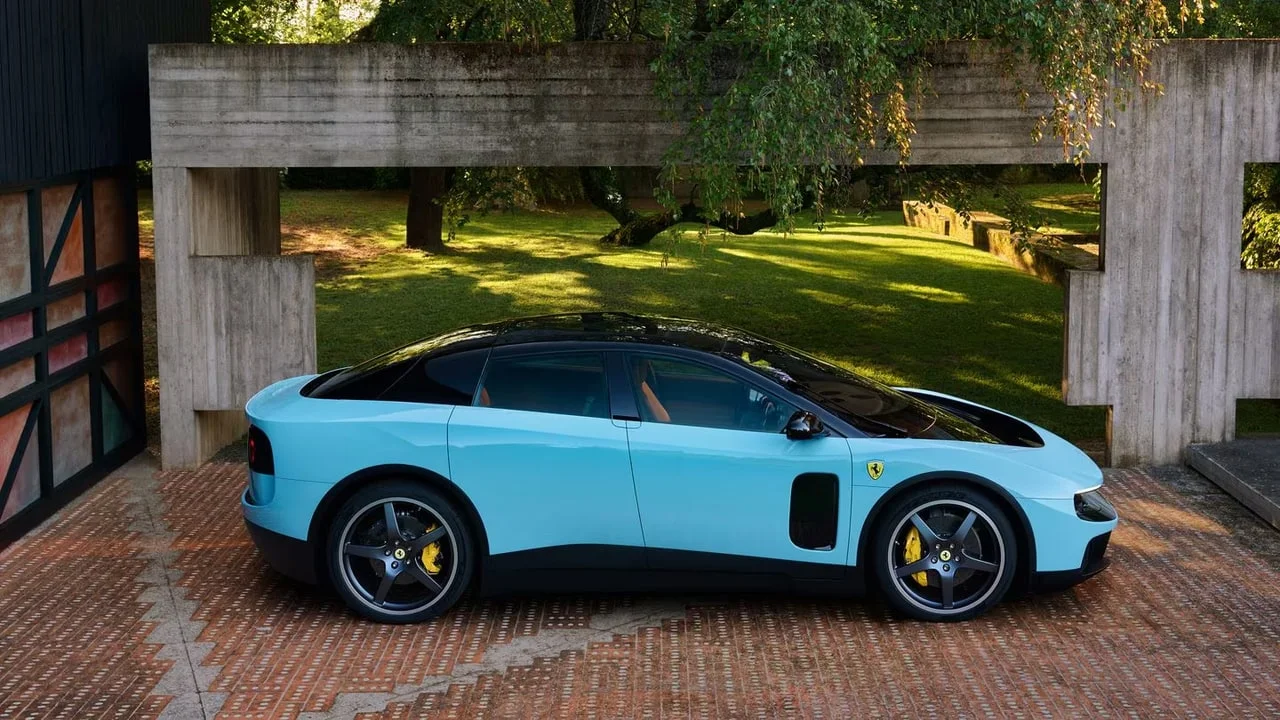
Ben Thompson's weekly roundup for the week of May 25 1 centers on a tension that comes up surprisingly often in different forms: when you optimize purely for efficiency, you sometimes destroy the thing people actually wanted.
The clearest example is the Ferrari Luce, Jony Ive's first design for Ferrari's inaugural EV. The reception was, to put it mildly, hostile. Thompson's read on the Dithering podcast: the Luce might be a perfectly fine electric car, but it's a Ferrari, and Ferraris exist to be about performance — the visceral, slightly irrational kind. EVs, by construction, optimize for efficiency. Those two things are not the same. The brand dissonance is the whole problem.
正在加载内容卡片…
Thompson connects this to a broader discomfort he sees running through tech: so much of modern software and service design now optimizes for output over experience, and people feel it as a vague alienation. His provocation is that AI might actually help here — not by making everything more efficient, but by enabling experiences that are more tailored to what individuals actually want, rather than what scales most cleanly.
That's a meaningful distinction for product builders. Efficiency metrics are easy to measure; the feeling of a product is not. The Luce debate is a reminder that when you strip away the performance-identity of a brand in service of the technology's native logic, users notice.
Nvidia splits the scoreboard
This week also brought Nvidia earnings, and a structural change in how the company will report revenue going forward 2.
正在加载内容卡片…
Starting next quarter, Nvidia will separate:
- Hyperscaler sales — where Nvidia is actively fighting commoditization, since the big cloud providers are all building custom AI chips
- Everyone else — enterprises, neoclouds, and sovereigns buying the full Nvidia stack, where Nvidia has more pricing power and controls more of the relationship
Why this matters: the split makes visible a dynamic that has been running underneath the headline numbers. Nvidia's competitive moat is unevenly distributed across its customer base. Hyperscalers are the ones with the money and engineers to eventually build around Nvidia; everyone else is dependent on CUDA, networking, and the ecosystem in ways that are harder to unwind. Separating the two segments will tell a more honest story about where Nvidia's durability actually lives.
The case for orbiting computers
The SpaceX IPO article — which Thompson published Wednesday 3 — is the most unusual piece in this week's Stratechery output, and worth reading in full.
正在加载内容卡片…
The headline financial numbers are, as Thompson puts it, "absolutely absurd": a $2 trillion valuation on $18.67 billion in revenue and $4.9 billion in losses.
His argument for why the IPO might still be rational rests on one specific bet: that agentic AI inference — the kind that runs overnight jobs without a human in the loop — doesn't need the fastest chips or the lowest latency. It needs memory, cheap-enough compute, and somewhere to put it all. That somewhere, as terrestrial data center permitting becomes a genuine constraint, might eventually be orbit.
The logic chain:
- Agentic workloads tolerate latency in ways that chatbots don't
- Slower, older-node chips actually work better in space (radiation tolerance, lower power, no need for cutting-edge lithography)
- Starlink satellites already deploy lasers for inter-satellite networking — the same architecture needed for distributed compute
- As data center construction on Earth runs into zoning and community opposition, space becomes less a curiosity and more a pressure valve
Thompson is careful to say the IPO is still speculative. But the thesis is coherent in a way that's easy to miss if you stop at the P&L.
Lenny calls the product community back into a room
On the Lenny's Newsletter side this week 4, Lenny Rachitsky has announced the return of the Lenny and Friends Summit — September 10 in San Francisco, applications now open.
The first edition ran two years ago to strong reviews. The format is deliberately small: curated applications, deep-cut talks, working sessions, and a participant pool limited to senior product and AI leaders (directors, VPs, CPOs, group PMs). New this year: more hands-on workshops and more structured networking time.
The announcement is a minor news item in itself. What's worth noting is the timing and the demand signal. In a period when AI has genuinely reduced the friction of getting answers — you can ask Lenny's entire podcast archive a question and get a response in seconds, via the Lennybot — the desire to spend a day in a room with 200 people who do the same work is not going away. If anything it seems to be going up. The explanation Lenny gives is the one that keeps coming up: there's a category of knowledge transfer that requires physical presence, and a category of peer relationship that requires being in the room when the speaker says something surprising.
Applications at lennyssummit.com.
One thread to watch
The Ferrari Luce story and the Lenny Summit story are in conversation with each other, even though they come from different places. Both are about what gets lost when you optimize for the obvious efficiency gain — whether that's streamlining a car brand into a generic EV, or replacing a conference with an AI assistant that can answer all the questions.
The Stratechery thesis suggests AI's actual value might be in restoring differentiated experiences, not flattening them further. The Lenny Summit is a bet on that thesis in practice: that senior product people in 2026 want more texture, more friction, more specificity — not less. Worth watching whether that appetite shows up in product design decisions too.
围绕这条内容继续补充观点或上下文。