India's Fastest-Growing Startups: Issue #1 — Five Builders Rewriting India's Playbook
A deep-dive digest profiling five of India's fastest-rising startups — Zepto, Jar, Spinny, EMotorad, and GoKwik — unpacking how they grow, what makes them defensible, and where they're headed.

India's startup ecosystem has a new growth logic. The companies gaining ground today aren't chasing unicorn valuations as a destination — they're building around structural moats, unit economics, and markets the incumbents ignored. In 2025, India's startup funds crossed $9 billion in commitments, with a noticeable shift: capital is getting more selective, and the startups absorbing the most of it are those that can show path to profitability, not just top-line momentum.1
This first issue profiles five companies that stood out across multiple indicators: verified revenue growth, meaningful competitive differentiation, and structural tailwinds that make their positions defensible. The selection spans quick commerce, used-car retail, fintech, electric bikes, and B2B e-commerce infrastructure.
正在加载内容卡片…
Zepto — dark stores as infrastructure, not just delivery
Founded: 2021 · Headquarters: Mumbai · Funding: $2.4B · Sector: Quick Commerce
Zepto built its 10-minute grocery delivery model on a simple physical bet: density of dark stores determines speed, and speed is the product. The company doubled its dark store count from roughly 350 in early 2024 to over 700 by mid-2025, specifically concentrating in top-tier urban markets before expanding outward.2 Revenue reached ₹11,110 crore with 1,113 active dark stores, putting it in striking distance of Blinkit's market leadership.3
What separates Zepto from the broader quick commerce field is where it competes on margin. While delivery cost is unavoidable, Zepto has shifted its gross margin expansion toward private labels, premium category listings, and advertising inventory on its own platform. Quick commerce in India grew from roughly $1.5 billion in 2022 to $6–7 billion in 2024 — and Zepto has grown within that window faster than its store density alone would suggest.4
The risk is concentration. With Blinkit at roughly 45–46% market share and Zepto at 21–30%, the market is a two-and-a-half player race in most cities.5 IPO speculation is now mainstream; Zepto's challenge before listing is proving that its operating leverage actually kicks in at current store counts.
Growth driver to watch: advertising revenue from brand partners booking placements on Zepto's in-app inventory — a business that has zero marginal fulfillment cost and has started to appear in profitability disclosures.
正在加载内容卡片…
Jar — 35 million users who never saved before
Founded: 2021 · Headquarters: Bengaluru · Funding: $111.7M · Sector: Fintech / Wealthtech
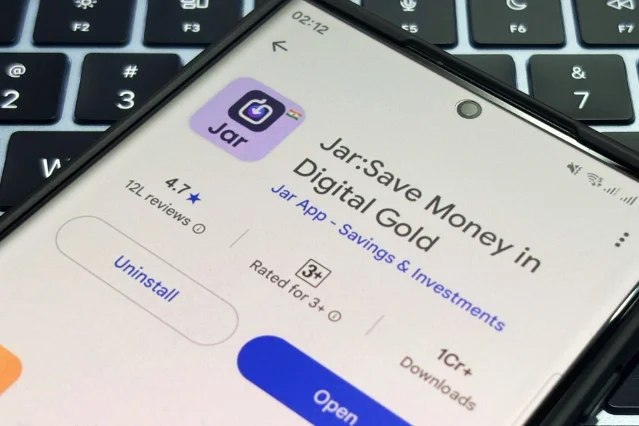
Jar built its user base by starting where no other fintech wanted to: daily savings of ₹10. That is not a typo. The minimum daily amount is 10 rupees — roughly $0.11 — deposited automatically into digital gold through UPI AutoPay. Jar now has 35 million registered users across 12,000 pin codes, with roughly 60% from Tier-2 and Tier-3 towns and more than 95% being first-time participants in any structured savings product.6
The commercial picture became clearer in 2025. Jar's operating revenue from its core gold-savings app grew ninefold in FY2024 to ₹208 crore ($23.6 million). Total revenue across all business lines — including its zero-inventory jewellery platform Nek and UPI transaction fees — reached ₹2,450 crore ($279 million), a 49x jump over FY2023.7 The company reported profitability in Q4 FY2025 and Q1 FY2026 — two consecutive profitable quarters, following vertical integration of its gold stack.
The integration detail matters more than it sounds. Previously, Jar acted as a distributor for third-party digital gold. After bringing the gold custody and pricing stack in-house (with Brinks as custodian and BDO as auditor), the company captures the full margin on each gram sold — and can now supply digital gold to external platforms like PhonePe, turning a cost centre into a revenue line.
Jar's moat is in the distribution depth, not the product itself. Gold is culturally familiar to users who have never owned a mutual fund or opened a formal bank savings account. Digital gold served through a vernacular mobile app in nine languages, costing less per day than a cup of tea, is not a product replacement — it's a gateway.
Spinny — owning the car's full lifetime
Founded: 2015 · Headquarters: Gurugram · Funding: $683.5M · Valuation: $1.8B · Sector: Used-car retail
India sells around 4.4 million used cars annually — more than new car sales — but only about 18% of those transactions happen through organized, certified channels. Spinny built its business on that gap: buy cars directly, run them through a 200-point inspection, set a fixed price, and sell to consumers with financing, insurance, and extended warranties bundled in. The model is capital-intensive (holding inventory is expensive) but it removes the opacity that makes used-car buying stressful for Indian consumers.8
Revenue tripled in two years: from ₹590 crore in FY2022 to ₹1,680 crore in FY2024, while net losses narrowed from ₹830 crore to ₹478 crore.8 The shrinking loss-to-revenue ratio suggests the unit economics are improving as scale grows — but the real strategic play arrived in December 2025.
Spinny acquired GoMechanic for approximately ₹450 crore ($52 million), folding in 4,500+ partner garages across 26 cities.9 GoMechanic's background is complicated — it collapsed in 2023 amid financial fraud allegations before being restructured under a new consortium — but the asset Spinny acquired is operational and has the largest independent garage network in India.
The combined entity now touches a car buyer at the point of purchase, at financing, at insurance, and at every service visit for the next five to seven years. That recurring post-sale revenue stream is structurally different from the one-time margin on a used-car sale. Spinny's $160 million Series G raise, announced alongside the acquisition to fund NBFC lending operations, signals the company is positioning itself as a financial-services business that also sells cars, rather than the reverse.10
EMotorad — building India's e-bike category from scratch
Founded: 2020 · Headquarters: Pune · Funding raised: Multiple rounds · Sector: Electric vehicles (e-bikes)
EMotorad does not compete in the two-wheeler EV race for delivery or commuter scooters. It builds electric bicycles — adventure, commuter, and youth-category e-bikes — a product category that did not meaningfully exist in India before the company entered the market. The distinction matters: e-bikes (pedal-assist bicycles) face different regulatory treatment, different buyer motivations, and a completely different price tier than e-scooters.1
In 2025, EMotorad launched what it called India's first 24T e-cycle aimed at younger riders at a retail price of ₹19,999 — roughly $240. That price point is significant: it puts an electric bicycle within range of the same consumer who would otherwise buy a mid-range analog cycle. EMotorad's 235-person team spans engineering, sales, and operations, with Pune as its manufacturing base.
The company's competitive angle is category creation before any of the large two-wheeler OEMs pay serious attention. Ather, Ola Electric, and TVS are all fighting over the high-volume EV scooter segment. EMotorad is building its brand and distribution in a space where it has effectively no direct Indian competitor at scale. Global e-bike markets in Europe and the US are already mature; India's urban infrastructure, rising fuel costs, and government EV subsidies make a structural case for e-bike adoption. Whether the company can convert category curiosity into repeat purchase volume is the question its current growth rate hasn't yet answered.
GoKwik — fixing the checkout for 1,000 D2C brands
Founded: 2020 · Headquarters: Delhi · Funding: $68.5M · Sector: E-commerce infrastructure / B2B SaaS
India's D2C e-commerce ecosystem has a dirty secret: cart abandonment rates on brand-owned checkout pages routinely exceed 70–80%. Payment friction, lack of saved address data, and clunky authentication are the reasons. GoKwik exists to fix that specific problem. It offers a full-stack checkout suite — optimized checkout flows, return-to-revenue solutions, and growth financing — and operates as a shared network layer across the D2C brands it serves.1
The model works through a network effect that isn't often discussed: every brand that runs on GoKwik's checkout contributes data to a shared buyer-identity layer. When a customer who bought from Brand A tries to check out at Brand B — both running GoKwik — their address and payment preferences are already populated. The network becomes more valuable as it grows.
GoKwik's 500-person team and $68.5 million in total funding reflect the B2B SaaS dynamics of the business: high implementation cost upfront, but sticky once integrated. Its client base spans fashion, electronics, FMCG, and beauty — the same categories driving India's D2C wave. The company added growth-financing products, letting brands access working capital backed by their GoKwik-tracked transaction data. That move turns a payments tool into a lending product — and the margin profile changes accordingly.
The tailwind is structural. India has roughly 140,000 registered D2C brands, most of which have neither the engineering team nor the scale to build proprietary checkout infrastructure. GoKwik's sell is effectively: you handle the product, we handle the transaction.
Patterns across the five
These five companies share a few things worth naming explicitly:
| Company | Core moat | Where the margin is hiding |
|---|---|---|
| Zepto | Dark store density + platform ads | Advertising yield, private label |
| Jar | Distribution reach to first-time savers | Gold vertical integration, jewellery, UPI fees |
| Spinny | Full car-lifecycle ownership | Post-sale services, NBFC lending |
| EMotorad | Category creation before incumbents arrive | Early brand equity, youth pricing |
| GoKwik | Cross-brand buyer identity network | B2B SaaS retention + financing |
Three specific patterns repeat:
Serving users traditional players underpriced. Jar targets Tier-2/3 households that banks wrote off as unprofitable. GoKwik targets D2C brands too small for Razorpay's enterprise tier. EMotorad targets young buyers the EV scooter brands consider too low-AOV. All three found their customers by looking at who wasn't being served.
Vertical integration as a second revenue layer. Spinny's GoMechanic acquisition and Jar's gold stack integration follow the same playbook: own more of the value chain, capture margin that previously went to intermediaries, and convert one-time transactions into recurring relationships.
The India ecosystem funding context. The first nine months of 2025 saw over $9 billion in new fund commitments for Indian startups, surpassing 2024's $8.7 billion — yet individual deal selectivity increased.1 Spinny's Series G and Jar's path to profitability both reflect a market asking harder questions about when losses stop. The companies that got funded were the ones with a coherent answer.
Next issue will profile a new cohort — sectors under consideration include B2B agritech, climate tech, and India-born AI infrastructure startups. Each issue covers 3–5 companies in depth.
参考来源
- 1LinkedIn News India — Top Startups 2025
- 2Zepto Growth Strategy — Business Model Canvas
- 3Quick commerce dark store race — Instagram/Inc42 data
- 4MMA Global India — Quick Commerce Playbook 2025
- 510 Quick Commerce Trends — Mukund Mohan Blog
- 6TechCrunch — Jar turns profitable
- 7Asia Business Outlook — Jar 49x Revenue Jump
- 8Value for Startups — Spinny Business Model
- 9LinkedIn — Spinny acquires GoMechanic
- 10Yahoo Finance — Spinny Series G
围绕这条内容继续补充观点或上下文。