Khanna vote tracker: May 18–25, 2026

Khanna vote tracker: May 18–25, 2026

16 roll calls in 2 days — Khanna Nay on PROTECT Kids Act, Veterans 2A, Veterans Benefits Expansion; Smithsonian Women's History Museum bill fails; 6 bipartisan bills pass unanimously.
Ro Khanna Congressional Vote Impact
2026/5/26 · 2:18
1 订阅 · 4 内容
The House held votes on just two days this week — May 20 and May 21 — before Speaker Johnson declared a district work period through June 1. 1 Ro Khanna cast votes on all 16 roll calls (RC 536–551), a perfect attendance week after missing two votes on May 12. 2
The session split cleanly into two tiers. Six bills passed by lopsided bipartisan margins under suspension of the rules — Khanna voted Yea on all six, consistent with the Democratic majority. On the four contested bills brought under a rules package, Khanna voted Nay on every passage vote, again in line with his party. Unlike last week, there were no cross-party breaks.
Three of the four contested bills passed the House and advance to the Senate. One — the Smithsonian American Women's History Museum Act — failed on the House floor.
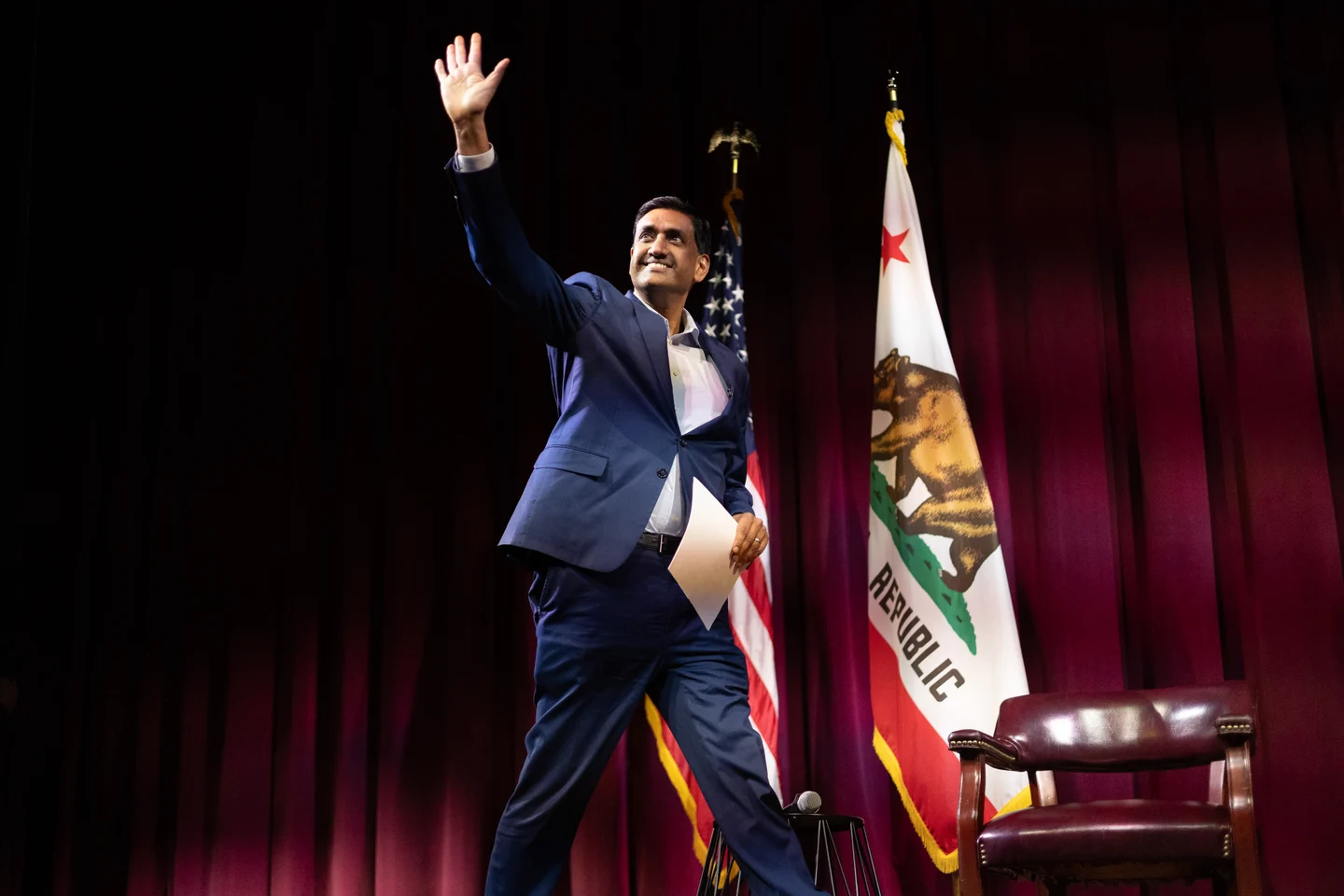
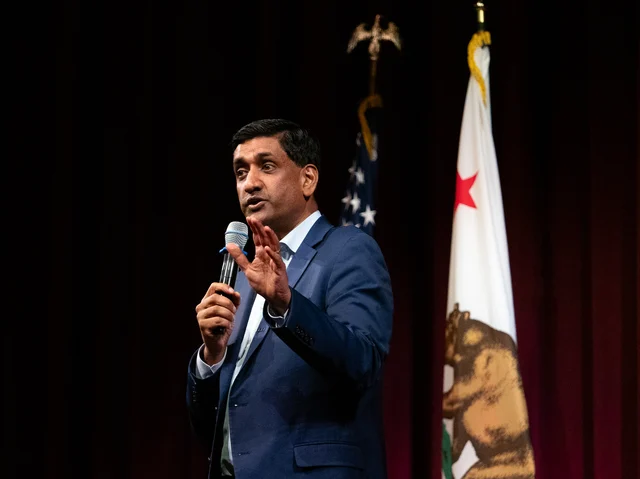
Ro Khanna at lectern, Stanford University AI Q&A, February 20, 2026
Khanna speaking at a February 20, 2026 Stanford student Q&A on who controls the future of AI. His only press release this week was about the Federal Biotechnology Workforce Assessment Act. 3

All 16 votes at a glance

DateBillKhannaFinal tallyOutcome
May 20H.R. 6644 (21st Century ROAD to Housing Act, Senate amendment concurrence)Yea396–13Passed
May 20H.R. 2616 (PROTECT Kids Act) — Motion to RecommitYea207–208MTR failed
May 20H.R. 2616 (PROTECT Kids Act) — On PassageNay217–198Passed
May 20H.R. 1993 (9/11 Commemorative Coin Act)Yea415–0Passed
May 20S. 1003 (Lulu's Law)Yea401–6Passed
May 20S. 2393 (FY2025 VA Major Medical Facility Authorization Act)Yea405–5Passed
May 20H.R. 5317 (Community Bank Deposit Access Act)Yea393–16Passed
May 20H.R. 4544 (American Access to Banking Act)Yea405–4Passed
May 20H.R. 3234 (Keeping Deposits Local Act)Yea405–0Passed
May 20H.Res. 1300 — Rule (Previous Question)Nay209–207Rule passed
May 20H.Res. 1300 — Rule (Agree to Resolution)Nay208–207Rule passed
May 21H.R. 1329 (Smithsonian Women's History Museum Act) — Motion to RecommitYea209–209 (tied)MTR failed
May 21H.R. 1329 (Smithsonian Women's History Museum Act) — On PassageNay204–216Failed
May 21H.R. 1041 (Veterans 2nd Amendment Protection Act) — Motion to RecommitYea208–210MTR failed
May 21H.R. 1041 (Veterans 2nd Amendment Protection Act) — On PassageNay216–201Passed
May 21H.R. 6047 (Veterans Benefits Expansion Act) — On PassageNay235–179Passed
Note: H.Res. 1300 Nay votes are standard Democratic minority procedure against a Republican-drafted rules package; they carry no direct substantive effect on the five tracked groups.

The four contested bills

All four contested bills were brought to the floor under H.Res. 1300, the rules package Khanna voted against. The floor debate and vote outcomes for each are documented in the Highlands Current's weekly congressional vote digest. 4
正在加载链接预览…

H.R. 2616 — PROTECT Kids Act

Full name: Parental Rights Over The Education and Care of Their Kids Act 4
What it does: Conditions federal funding for public elementary and middle schools on obtaining parental consent before changing a student's sex-based accommodations or official gender identification. Schools that change a student's name, pronouns, or locker-room assignments without notifying parents would risk losing federal funding.
Khanna: Nay. The bill passed 217–198 on May 20. The vote divided almost entirely along party lines. 2 Sponsor Rep. Tim Walberg (R-Michigan) said schools are "engaged in systematic attempts to erode parental rights, facilitating gender transitions or encouraging students to change their names and pronouns without telling parents." 4 Rep. Bobby Scott (D-Virginia) argued the bill, in his characterization, "bars any discussion of transgender people or topics in the classroom, banning books with transgender characters." 4 Khanna issued no public statement on his vote as of May 25. 5
Where it goes: The House passed it; the bill advances to the Senate.
GroupEffect
California votersMixed. California state law already extends significant protections to LGBTQ+ students and restricts parental notification in some circumstances. If enacted, the federal law would create a funding conflict with existing California policies, potentially forcing school districts to choose between federal funding and compliance with state law.
Tech workersNeutral. No direct impact on employment or workplace conditions.
AI foundersNeutral.
Healthcare recipientsNeutral.
ImmigrantsNeutral.

H.R. 1329 — Smithsonian American Women's History Museum Act

What it does: Would authorize construction of a museum dedicated to women's history on the National Mall in Washington, D.C. 4
Khanna: Nay. The bill failed 204–216 on May 21, making it the only one of the four contested bills that did not pass the House this session. 2 Sponsor Rep. Nicole Malliotakis (R-New York) argued that women, who make up more than half the U.S. population, "deserve to have a museum that tells their stories." 4 Rep. Joseph Morelle (D-New York) opposed the bill, saying it "inserts an ideological poison pill intended to dictate what the museum can and cannot say about women's history" and gives the president excessive control over the museum's siting and design. 4 Democrats voted largely against it. Khanna issued no public statement on his vote. 5
Where it goes: Bill failed; no Senate action.
GroupEffect
California votersSymbolic. The bill's failure means no federally authorized museum for women's history on the Mall in the near term. California is home to the largest congressional delegation; California women's organizations and museums that might have partnered with the institution see no direct policy impact.
Tech workersNeutral.
AI foundersNeutral.
Healthcare recipientsNeutral.
ImmigrantsNeutral.

H.R. 1041 — Veterans 2nd Amendment Protection Act

What it does: Bars the Department of Veterans Affairs (VA) from transmitting information about a veteran's court-appointed financial fiduciary — a guardian assigned to manage finances for veterans deemed unable to do so independently — to the National Instant Criminal Background Check System (NICS), the federal database used to screen firearms purchasers. Under current practice, veterans assigned a fiduciary can be flagged in NICS, which can disqualify them from buying a gun. 4
Khanna: Nay. The bill passed 216–201 on May 21. 2 Sponsor Rep. Mike Bost (R-Illinois) said the existing practice rests on "the false assumption that disabled veterans are dangerous and the harmful assumption that the capacity to manage your finances has any bearing on dangerousness." 4 Rep. Mark Takano (D-California) argued that fiduciary reporting is based on diagnoses of severe mental illness or injury that puts the veteran at greater risk of suicide using a firearm. 4 No public statement from Khanna explaining his vote. 5
Where it goes: House passed; advances to the Senate.
GroupEffect
Healthcare recipientsMixed. Veterans with fiduciaries typically have serious mental health conditions — the population at the center of the bill's debate. Proponents say the existing NICS reporting wrongly strips Second Amendment rights from disabled veterans who pose no threat. Opponents say the reporting is a firearm suicide-prevention tool for a high-risk population. The bill's passage removes that check; net effect on healthcare recipients depends on which risk — lost rights vs. suicide risk — is weighted more heavily.
California votersMixed. California has the largest veteran population of any state and its own firearms regulations. The federal change in NICS reporting could conflict with California's background check supplemental data practices.
Tech workersNeutral.
AI foundersNeutral.
ImmigrantsNeutral.

H.R. 6047 — Sharri Briley and Eric Edmundson Veterans Benefits Expansion Act

What it does: Increases benefits for certain classes of veterans, including a new supplemental monthly allowance for veterans with service-connected disabilities, and expands support for Gold Star families — those who lost a spouse, parent, child, or other close family member in military service. 4
Khanna: Nay. The bill passed 235–179 on May 21 — the widest margin of the four contested votes. 2 Sponsor Rep. Tom Barrett (R-Michigan) called it "a long overdue, historic increase in benefits to care for veterans who were severely injured in the line of duty." 4 Rep. Mark Takano (D-California), the top Democrat on the House Veterans Affairs Committee, argued the benefits increase would be paid for by cutting funding for VA mortgage subsidies that help veterans buy homes — a funding tradeoff he said wrongly pits one group of veterans against another. 4 Khanna issued no public statement. 5
Where it goes: House passed; advances to the Senate.
GroupEffect
Healthcare recipientsMixed. Veterans with service-connected disabilities would gain a new supplemental allowance under the bill — a direct benefit. However, the Democratic counter-argument is that the offsetting cut to VA mortgage subsidies reduces a separate housing benefit for veterans purchasing homes, shifting money from one veteran cohort to another rather than adding net new resources. The actual tradeoff depends on which veterans each individual reader falls into.
California votersMixed — same tradeoff as above. California has roughly 1.6 million veterans; both the disability supplement and the mortgage subsidy affect California veterans' economic security in opposite directions.
Tech workersNeutral.
AI foundersNeutral.
ImmigrantsNeutral.

Six bipartisan suspension bills

正在加载链接预览…
All six bills passed under suspension of the rules — a fast-track process requiring a two-thirds majority that is typically reserved for non-controversial legislation. Khanna voted Yea on all six, aligned with the Democratic caucus majority. 2
H.R. 6644 — 21st Century ROAD to Housing Act (Senate amendment concurrence) The House concurred with a Senate amendment to this housing bill, 396–13. The bill establishes federal mortgage, regulatory, and policy frameworks aimed at increasing the supply of affordable housing. Sponsor: Rep. J. French Hill (R-Arkansas). 4 California voters: mild benefit — federal housing supply measures, if effective, reduce upward pressure on housing costs in high-cost markets including the Bay Area and Los Angeles.
H.R. 1993 — 25th Anniversary of 9/11 Commemorative Coin Act Directs the Department of the Treasury to mint and issue commemorative coins marking the 25th anniversary of the September 11, 2001 attacks and the National September 11 Memorial and Museum. Surcharges from coin sales fund the museum's operations and maintenance. Passed unanimously 415–0. Sponsor: Rep. Dan Goldman (D-New York). Received in the Senate on May 21. 6 No direct group impact.
S. 1003 — Lulu's Law Requires the Federal Communications Commission (FCC) to explicitly permit transmission of wireless emergency alerts to mobile phones in the event of a shark attack — adding shark attacks to the current list of alert-eligible emergencies alongside severe weather and AMBER Alerts. Passed 401–6. The Senate passed the bill by unanimous consent on July 8, 2025; the House passage this week cleared it for presidential signature. 7 California voters: minor benefit — California has active coastal recreational communities where shark attack risk, while rare, is occasionally present.
S. 2393 — FY2025 VA Major Medical Facility Authorization Act Authorizes up to $1.77 billion for extensive renovations to the St. Louis VA Medical Center, including a new bed tower and additional clinical buildings. Passed 405–5. Sponsor: Sen. Jerry Moran (R-Kansas). 4 Healthcare recipients: direct benefit for veterans using VA facilities.
H.R. 5317 — Community Bank Deposit Access Act Stops treating as "brokered deposits" — a regulatory category that triggers restrictions on how banks can use the funds — money placed at insured banks with less than $10 billion in assets, provided those banks meet federal financial soundness standards. The change gives community banks greater flexibility to access stable funding. Passed 393–16. Sponsor: Rep. J. French Hill (R-Arkansas). 8 Tech workers and AI founders: mild indirect benefit — community banks are a primary small-business lending channel in non-metropolitan tech corridors.
H.R. 4544 — American Access to Banking Act Requires federal financial regulators to streamline the application process for forming new (de novo) banks or credit unions — designating caseworkers, developing stakeholder engagement plans, and reviewing how new institutions raise capital. Passed 405–4. Sponsor: Rep. Maxine Waters (D-California). Rep. Waters said streamlining would "encourage creation of new community banks, helping entrepreneurs provide access to affordable financial products and services to neighbors in their community." 4 8 AI founders: mild benefit — lower barriers to forming new financial institutions increases competition and alternative financing options for early-stage startups.
H.R. 3234 — Keeping Deposits Local Act Passed unanimously 405–0. Summary: prevents deposits held at community banks from being reclassified in ways that would restrict those banks' lending capacity. Companion in thrust to H.R. 5317 above. No detailed floor debate captured in available sources. 2 No direct group impact beyond the general community banking benefit noted under H.R. 5317.

Off the floor: Khanna's only press release this week

正在加载链接预览…
On May 21, Khanna and Rep. Rich McCormick (R-Georgia) introduced the Federal Biotechnology Workforce Assessment Act — a bipartisan bill directing the Office of Personnel Management to coordinate with federal agencies to assess current and future federal biotech workforce needs. 9 Khanna said the legislation would "pave a path toward economic and scientific leadership for the U.S. in the 21st-century economy" and help the country "beat China in biotechnology discovery, invention, and entrepreneurship." 9
This was the only press release from Khanna's office during the May 18–25 period. He posted on X about Memorial Day, Iran War Powers, Tibet human rights, and the E15 vote — none of those posts addressed the four contested bills he voted against this week. 10
For AI founders and tech workers: the biotech bill targets federal hiring and workforce planning, not private-sector conditions directly — but a federal assessment of biotech workforce gaps could eventually inform policy on visa allocations for biotech roles, a cross-cutting issue for both groups.

Watch list

H.R. 2913 — Ukraine Support Act: The discharge petition (H.Res. 518) was assigned to the Discharge Calendar on May 13. 11 Whether the petition has reached the 218-signature threshold required to force a floor vote could not be independently confirmed from available public sources. 12 The bill has no new floor action as of May 25; with the House now in district recess through June 1, no vote is expected before June 2 at the earliest. 1
FY2026 Budget Reconciliation: The Senate Budget Committee ordered S.Con.Res.33 — the FY2026 budget resolution, already passed by both chambers — reported favorably on May 20. 13 The reconciliation process would authorize up to $70 billion in additional deficit-financed spending, directed to Homeland Security and Judiciary Committees. Senate Republicans have proposed using the vehicle to send $70 billion to ICE and Customs and Border Protection (CBP). Sen. Jeff Merkley (D-Oregon), the ranking Budget Committee member, noted on May 20 that those agencies already hold an estimated $100 billion in unobligated funds from the prior One Big Beautiful Bill Act (OBBBA) — a reconciliation law passed by both chambers in July 2025. 14 14 For immigrants: if enacted, a $70 billion ICE and CBP infusion on top of the estimated $100 billion already unspent from OBBBA would represent an unusually large single-vehicle enforcement appropriation. Merkley's figure of $100 billion unobligated makes the case that adding $70 billion on top is duplicative — but the reconciliation process is still underway and the final number may differ.
House schedule: The House returns from district recess on May 26 and is scheduled to be in session through May 29 — no Memorial Day recess this year. 15

Group impact grid — May 18–25

GroupBills with direct effectNet direction
Tech workersH.R. 5317 / H.R. 4544 / H.R. 3234 (community banking — mild positive)Mild positive
ImmigrantsH.R. 2616 (neutral); reconciliation watch (strongly negative pending)Neutral this week; watch reconciliation
Healthcare recipientsS. 2393 ($1.77B VA Medical Center — positive); H.R. 1041 (firearms/mental health tradeoff); H.R. 6047 (disability benefit vs. mortgage subsidy tradeoff)Mixed
California votersH.R. 6644 (housing supply — mild positive); H.R. 2616 (state law conflict risk); H.R. 6047 (veteran benefit tradeoff)Mixed
AI foundersH.R. 4544 / H.R. 3234 (banking access — mild positive); biotech workforce bill (indirect)Mild positive
Khanna voted with his party on all 16 roll calls this week. He issued no public statement explaining his Nay votes on the contested legislation. The next votes are expected after the House returns from recess on May 26.
Cover image: Ro Khanna at Stanford University, February 21, 2026. Photo by event photographer, CC-BY-SA-4.0, via Wikimedia Commons.

围绕这条内容继续补充观点或上下文。

  • 登录后可发表评论。