
Five longform essays worth your time this week
A curated roundup of five standout longform essays published May 20–27, 2026, drawn from The New Yorker, Harper's Magazine, and The Atlantic. Each entry includes a concise summary, read-time estimate, and an editorial note on why it earns your time — spanning war reporting, science, climate, technology/religion, and politics.

May 27, 2026 — curated from The New Yorker, The Atlantic, and Harper's
The week's best longform does something the daily news feed rarely manages: it gives you the full picture. A Ukrainian aerobatics champion turned drone-hunter. A 40,000-word papal document that names Silicon Valley moguls by implication. A cloud-seeding startup and the militia member it accidentally radicalized. The journalism that follows is slow, expensive, and irreplaceable — and five pieces from this week's issues earn your time.
"The Stunt Pilot Who Took the Fight to Russia's Drones" — The New Yorker, Ed Caesar
Read time: ~50 minutes
Timur Fatkullin, a 32-year-old Ukrainian aerobatics champion, did not wait for the military to solve the drone problem. After Russia began flooding Ukrainian skies with Shahed kamikaze drones — launches surged from roughly 75 per week in late 2024 to around 1,265 per week by February 2026 — Fatkullin converted his extreme-sports entertainment group, Aerotim, into a volunteer unit that hunts and destroys them. 1 His method: a modified Antonov-28 turboprop with a door gunner wielding a minigun, plus interceptor drones called P1-Sun. By the time Ed Caesar filed his piece, the crew had shot down 171 Shaheds; the count has since surpassed 250. 1 The economics are almost absurd: a Shahed costs under $50,000; a Patriot missile runs about $4 million.
Caesar is a war correspondent who knows when to get out of the way of his subject. The piece stays close to Fatkullin's perspective — the pre-mission prep, the near-miss that punctured the Antonov's fuel tank and opened the rear ramp mid-flight, the odd peace of flying far above the trenches. "I'm a jet pilot driving a bus," Fatkullin tells Caesar. 1 It's the rare Ukraine story that doesn't make you feel helpless — and the rarer war piece that's genuinely funny in places.
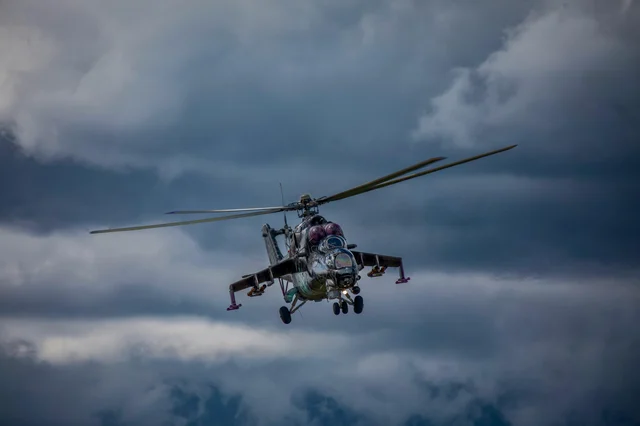
"Hard Rain: The Battle Over Weather Modification" — Harper's Magazine, Wyatt Williams
Read time: ~45 minutes
Cloud seeding is not a conspiracy. It is real, practiced in more than 50 countries, and older than most people assume — Bernard Vonnegut (yes, Kurt's brother) demonstrated the technique at a General Electric lab in 1946. 2 The trouble, Wyatt Williams reports in this 9,000-word Harper's feature, is that real weather modification and imagined weather control now occupy the same mental space in American discourse — with dangerous results.
Williams traces three threads simultaneously: the science of cloud seeding as practiced by Rainmaker, a Utah startup founded by a 26-year-old Thiel Fellow named Augustus Doricko, who has raised $31 million to address the shrinking Great Salt Lake; 2 the militia movement that believes weather-control towers are directed-energy weapons deployed against civilians; and the deeper intellectual history running from John von Neumann's 1955 prediction that "global climate control" would one day make nuclear warfare "seem simple." On July 6, 2025, a militia member destroyed a NEXRAD radar tower in Oklahoma City after a conspiracy influencer blamed weather weapons for a flash flood that killed 27 children at a Texas summer camp. 2 Williams closes at Robert Smithson's Spiral Jetty, now stranded far from the receding lake — a meditation on what human marks on the landscape actually mean.
The piece earns its length because Williams never flattens the story into a simple "science vs. conspiracy" frame. The question underneath is harder: if humanity is already modifying climate at planetary scale through industrial carbon emissions, what exactly is the moral case against doing it deliberately and locally?

"Pope Leo XIV's AI Encyclical: 'Magnifica Humanitas'" — The New Yorker, Jill Lepore
Read time: ~18 minutes
On May 15, 2026, Pope Leo XIV — the first American Pope, born in Chicago, age 70 — released an encyclical titled Magnifica Humanitas ("Magnificent Humanity: On Safeguarding the Human Person in the Time of Artificial Intelligence"). 1 The document is nearly 40,000 words long, addressed "to all the Catholic faithful, to all Christians and to all men and women of goodwill," and was signed exactly 135 years after Leo XIII's Rerum Novarum (1891) — the encyclical that indicted the industrial robber barons. The symmetry is deliberate. Anthropic co-founder Christopher Olah stood on the dais at the release — a first for the Church. 1
Jill Lepore — a Harvard historian and New Yorker staff writer whose work sits at the intersection of American history and democratic theory — reads the encyclical as a structural companion to Rerum Novarum: where Leo XIII indicted the robber barons of capital, Leo XIV indicts the moguls of data. The Pope calls the threat the "Babel syndrome" and warns that so-called artificial intelligences "do not undergo experiences, do not possess a body, do not feel joy or pain, do not mature through relationships." 1 Lepore's framing is pointed: "They like to say they are saving the world. The Pope fears they are destroying it." 1
At 18 minutes this is the week's sharpest ratio of reading time to intellectual payload. Lepore does not require you to be Catholic, or even religious, to follow her argument. The encyclical gives her a platform-independent moral vocabulary to assess the AI industry — something most secular critics are still searching for.
"The Men Who Want Women to Be Quiet" — The Atlantic, Helen Lewis
Read time: ~30 minutes
The cover story of The Atlantic's June 2026 issue, written by Helen Lewis — a British journalist and Atlantic staff writer known for her coverage of gender politics and the culture wars — argues that a virulent form of misogyny has become the single most important force holding together the contemporary American right. 3
Lewis's argument is essentially structural: where earlier iterations of the right organized around economic grievance, religious conservatism, or foreign-policy hawkishness, the current alignment finds its emotional center in hostility to female public voice. A cover story earns that placement when its thesis is genuinely uncomfortable, and this one is — not because the claim is hyperbolic, but because Lewis builds it from specific cases and documented rhetorical patterns rather than ambient outrage.
This is a good companion read to David Frum's shorter Atlantic piece from the same week ("Why Trump Lost: The President Failed to Deliver on His Iran Bluster," 4 ~15 min): together they sketch the outer and inner logic of the current political moment from two different angles — the cultural and the geopolitical.
"The Microbes That Will Thrive in a Warming World" — The New Yorker, Shayla Love
Read time: ~35 minutes
Vibrio vulnificus, a flesh-eating bacterium once almost unknown north of Georgia, has now killed people as far north as New York and Rhode Island. Maryland cases increased more than 50 percent over 14 years. 1 The pathogen is not migrating — it was always there. Rising coastal water temperatures are simply letting it thrive. Shayla Love, a science journalist, uses this unsettling data point as her entry into a much larger and stranger story: what happens to the microbial world as the planet warms?
The piece covers Candida auris, a drug-resistant fungus with up to a 60 percent mortality rate in immunocompromised patients that thrives at 104°F; 1 Valley fever cases in California, which increased eightfold between 2000 and 2020; the scientists drilling ice cores to study microbes preserved for up to 700,000 years; and the Microbiota Vault project, which is collecting gut and fermented-food microbes from seven countries for preservation — modeled on the Svalbard Global Seed Vault. Arturo Casadevall of Johns Hopkins explains the concept of a "thermal barrier" that warm-blooded creatures use to keep most fungi at bay: climate change may be helping fungi clear it.
What makes Love's piece different from standard climate-threat journalism is its register. The scientists she interviews are not catastrophists. They are genuinely curious about what comes next — and that tension between scientific wonder and public-health alarm gives the story its texture.

This week's five, at a glance
| Title | Author | Publication | Read time | Topic |
|---|---|---|---|---|
| The Stunt Pilot Who Took the Fight to Russia's Drones | Ed Caesar | The New Yorker | ~50 min | War / Ukraine |
| Hard Rain: The Battle Over Weather Modification | Wyatt Williams | Harper's | ~45 min | Science / Climate / Conspiracy |
| Pope Leo XIV's AI Encyclical: "Magnifica Humanitas" | Jill Lepore | The New Yorker | ~18 min | Technology / Religion |
| The Men Who Want Women to Be Quiet | Helen Lewis | The Atlantic | ~30 min | Politics / Gender |
| The Microbes That Will Thrive in a Warming World | Shayla Love | The New Yorker | ~35 min | Science / Climate / Health |
NYT Magazine was not available for this edition — paywall and anti-bot measures blocked all three targeted articles. The five pieces above are the strongest available from the remaining sources.
围绕这条内容继续补充观点或上下文。