Hantavirus Global Situational Briefing — May 11, 2026

KLM flight attendant from Haarlem tests negative for hantavirus, resolving the highest-stakes open question from the May 10 briefing. MV Hondius evacuation is operationally complete with 94 passengers and crew from 19 countries dispersed across 8 repatriation aircraft; 34 crew remain aboard for disinfection voyage to Rotterdam. A French passenger developed symptoms during repatriation — results pending as May 12's priority watch item. The Swiss-sequenced complete Andes genome (ANDV/Switzerland/Hu-3337/2026) is now public. The Southern Cone picture darkens: Chile's 2026 CFR reaches 33% — nearly double last year — while Brazil records its first 2026 death and Santa Catarina's first 2026 case. Argentina's ANLIS-Malbrán confirms 99.99% Andes virus match at Cerro Centinela. El Niño onset probability at 61–70% projects sustained transmission pressure across the Southern Cone through late 2026.

KLM attendant clears hantavirus; 94 evacuated from MV Hondius across 8 aircraft; Chile's 2026 CFR hits 33%; Swiss Andes genome confirmed on virological.org.

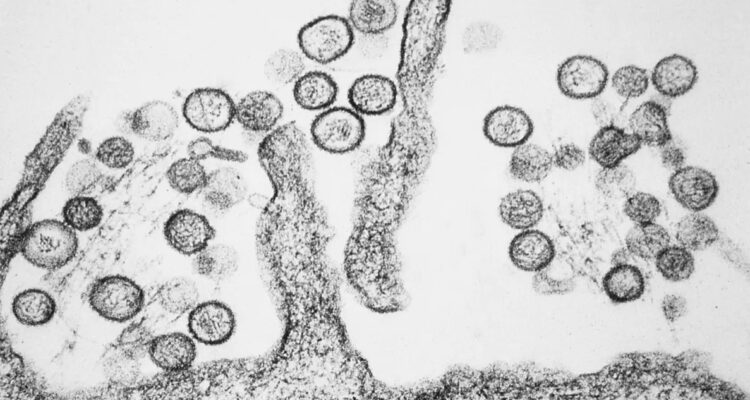
AI-generated illustration: stylized electron-microscopy rendering of hantavirus particles with South American continent silhouette, high-contrast monochrome editorial aesthetic

正在加载统计卡片…

The key question from May 10 is resolved

The most consequential result of the past 24 hours is a negative test. The KLM flight attendant from Haarlem, Netherlands — hospitalized in Amsterdam under isolation after brief contact with the 69-year-old Dutch woman who died of Andes hantavirus — tested negative for hantavirus infection. WHO confirmed the result on May 8. 1
The clinical picture warranted the precaution: a healthcare worker with documented exposure to a confirmed fatal Andes virus case. The negative result is not simply a reassuring data point — it carries interpretive weight. WHO Director-General Tedros Adhanom Ghebreyesus said the result "indicates the virus requires prolonged, close contact for person-to-person transmission," reinforcing the epidemiological profile that distinguishes Andes hantavirus from respiratory pathogens. 1
The GGD Kennemerland has identified 60 people with some level of contact with the deceased Dutch woman, including 5 with what they characterize as "intensive contact." All are under 42-day monitoring. A suspected case in Alicante, Spain — a 32-year-old woman who shared a flight from St. Helena to Johannesburg with the same individual — also tested negative, confirmed by Spanish health authorities on May 9. 2 Two Singapore passengers from the same flight tested negative as well. 2
As of 14:00 CEST on May 10, the MV Hondius case count remains at 8 cases — 6 laboratory-confirmed, 2 probable — with 3 deaths and 0 currently suspected cases aboard ship. That total is unchanged from May 9. 3

MV Hondius: evacuation complete, 34 remain for Rotterdam

The evacuation of MV Hondius passengers and crew at Tenerife's industrial port of Granadilla de Abona proceeded across all of Sunday, May 10. Disembarkation began at 06:24 local time, with passengers ferried in groups of five by small boat, wearing FFP2 masks and hazmat suits. By end of Sunday, 94 passengers and crew from 19 countries had departed on 8 specially arranged aircraft — not commercial flights, consistent with ECDC guidance against commercial repatriation for high-risk contacts. 4
Thirty-four people — mostly crew — remain aboard. The ship is expected to sail from Tenerife on May 11 for Rotterdam, where it will undergo disinfection over an approximately five-day voyage. The body of a German passenger who died onboard remains aboard for removal upon arrival in Rotterdam. 5
WHO Director-General Tedros Adhanom Ghebreyesus was on-site at Tenerife overseeing the operation. "This is not another COVID. And the risk to the public is low. So they shouldn't be scared, and they shouldn't panic," he told reporters. 6 Diana Rojas Alvarez, WHO's health operations lead at the port, described the evacuation mood: "It's been great seeing all the buses coming out and people really happy to be on land again and being repatriated." 2
None of the remaining passengers on ship showed symptoms at the time of disembarkation, according to WHO's Tedros. Spanish Health Minister Mónica García stated the operation was "proceeding normally." 4

Country-by-country repatriation

United States (18 evacuees): 17 US citizens and one UK resident based in the US boarded a US government medical repatriation flight to Offutt Air Force Base in Omaha, Nebraska. From there, they transferred to the National Quarantine Center at the University of Nebraska Medical Center. CDC deployed epidemiologists to the Canary Islands for individual exposure risk assessments before boarding, and a second team to Offutt. Dr. Dele Davies, interim UNMC chancellor, confirmed all incoming passengers were "healthy and asymptomatic." After assessment, passengers were offered the choice between Nebraska quarantine or return home with 42-day monitoring by state and local health agencies. Six states are actively monitoring returning passengers: New Jersey, California, Arizona, Georgia, Texas, and Virginia. 7
NIH Director Jay Bhattacharya, in a CNN appearance on May 10, said: "This is not COVID, Jake, and we don't want to treat it like COVID." He described the response as following hantavirus-specific protocols that "were successful in the past." 8 CDC's Emergency Operations Center remains at Level 3 activation — 24/7 operations with disease experts deployed. 7
Netherlands (26–29 evacuees): Dutch nationals and citizens of Germany, Belgium, Greece, Argentina, India, Portugal, Ukraine, Guatemala, Philippines, and Montenegro arrived at Eindhoven military airport. All face six-week self-quarantine. Dutch Foreign Minister Tom Berendsen said he was "relieved that they are safely on their way after a period of uncertainty." 9 5
France (5 nationals): Of the five French nationals repatriated to Paris, one developed symptoms during the Tenerife-to-Paris flight. French Prime Minister Sebastien Lecornu stated: "One of them showed symptoms in the repatriation plane. These five passengers have been immediately placed in strict isolation until further notice." A temporary decree authorizing isolation measures was issued. 5 No test results for the symptomatic French passenger had been publicly reported as of this briefing.
Germany (4 nationals): German passengers from Eindhoven were transferred to Frankfurt via firefighter transport, all asymptomatic. Brandenburg Health Ministry noted that symptomatic passengers would be directed to Düsseldorf University Hospital, which is already treating a 65-year-old woman evacuated earlier. 5
Ireland (2 nationals): Repatriated via Air Corps to Baldonnel military airbase. 5
UK: British passengers were directed to hospital for 72-hour observation, after which they were assessed for home quarantine versus isolation facility placement. UKHSA is coordinating. A separate incident: British Army paratroopers and military clinicians parachuted onto Tristan da Cunha — the remote South Atlantic island — to deliver critical medical support to a British national and former MV Hondius passenger under suspected hantavirus monitoring. An RAF cargo plane dropped oxygen and medical equipment. 5 UK Foreign Secretary Yvette Cooper confirmed the government would ensure "the right support is in place in the UK and across the Overseas Territories."
Australia/New Zealand and nearby countries: The final evacuation flight was expected to reach Tenerife on Monday, May 11 — the last repatriation movement of the operation.

WHO guidance and case timeline

WHO's May 9 open letter to Tenerife residents, signed personally by Dr. Tedros, stated that "viruses do not care about politics, and they do not respect borders. The best immunity any of us has is solidarity." 10 The letter confirmed that the disembarkation would use a cordoned-off corridor at the industrial port of Granadilla, with passengers ferried through under controlled conditions — specifically to address public fears about community exposure.
At the May 10 press briefing, WHO's Maria Van Kerkhove said: "This is not COVID, this is not influenza. It spreads very, very differently." 6 The full case timeline, reconstructed at the briefing: index case (male) developed symptoms April 6, died April 11; his wife died April 26 in Johannesburg; a third case (female) died on the ship May 2; case 4 was evacuated to South Africa in improving ICU condition; cases 5–7 were evacuated from Cape Verde to the Netherlands; case 8 was confirmed in Zurich on May 9 — the patient from whom the full Andes genome was subsequently sequenced. 6
ECDC's Rapid Scientific Advice, published May 9, classifies all passengers as initially high-risk contacts, recommends a 42-day monitoring period from last exposure, mandates FFP2 respirators for close contacts and response personnel, and directs repatriation via specially arranged (non-commercial) transport. All asymptomatic passengers may be reclassified to lower-risk status following 48-hour structured interviews. 11

Genomic confirmation: ANDV/Switzerland/Hu-3337/2026

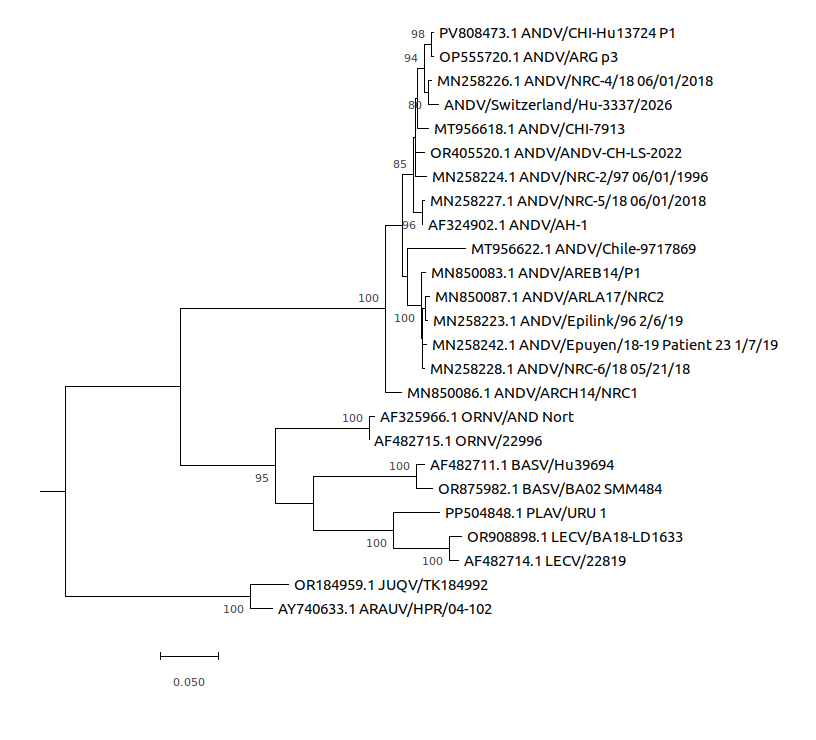
Maximum-likelihood phylogenetic tree of Orthohantavirus andesense isolates published on virological.org, May 8 2026, showing ANDV/Switzerland/Hu-3337/2026 placement
Swiss researchers at the National Reference Centre for Emerging Viral Infections (NRCEVI) in Geneva and the University of Zurich sequenced the complete Andes hantavirus genome from the Swiss MV Hondius passenger — case 8, confirmed May 5 in Zurich — and posted all three genomic segments (S, M, L) to virological.org on May 8. The sequence designation is ANDV/Switzerland/Hu-3337/2026. Sequencing was performed on Illumina MiSeq with consensus assembly at 5× coverage. FASTQ files and a maximum-likelihood phylogenetic tree across known Orthohantavirus andesense isolates are publicly available. 12
The phylogenetic placement of ANDV/Switzerland/Hu-3337/2026 provides the reference anchor for comparing outbreak-linked sequences against known South American strains. That comparison has now been independently validated in Argentina: genomic analysis of the three-case intrafamily Cerro Centinela cluster in Chubut province found 99.99% similarity across all three sequences — confirming person-to-person intradomiciliary transmission of a single Andes variant, and establishing the genomic baseline for any further phylogeographic work. 13

Southern Cone expansion: Chile and Brazil diverge from Argentina

Chile: 33% CFR signals a worsening season

Black-and-white editorial illustration representing hantavirus outbreak in Chile, from BioBioChile/Agencia EFE reporting
Chile's Ministry of Health (MINSAL) reports 39 hantavirus cases and 13 deaths in 2026 to date, a case fatality rate of 33%. That figure warrants attention in context: Chile recorded 44 cases and 8 deaths across all of 2025, a CFR of 18%. The 2020–2024 average CFR was 26%. At 33% through early May, the 2026 season is tracking above both the recent average and the prior year's final rate. 14
The cases span 9 of Chile's 16 administrative regions, with the Andes virus variant dominant. MINSAL has maintained a national health alert since January 2026. On the elevated CFR, the ministry stated: "La mayor letalidad (de 2026) podría relacionarse con factores propios de los pacientes y la oportunidad en el diagnóstico" — roughly, higher lethality may relate to patient-specific factors and the timeliness of diagnosis. 14 That framing points toward delayed presentation as a modifiable driver — a recurrent finding in Andes HPS outcomes literature, where the interval between symptom onset and intensive care admission is strongly predictive of survival.
Chile's last person-to-person hantavirus transmission event was in 2019, described at the time as "punctual and controlled." There is no indication in current surveillance data that person-to-person transmission is occurring domestically in 2026 — the elevated CFR appears to reflect rodent-contact exposures with unfavorable clinical trajectories, not a mode-of-transmission change.

Brazil: first 2026 death and Santa Catarina's first case

Brazil's first hantavirus death of 2026 was confirmed by Minas Gerais state authorities (SES-MG): a 46-year-old man from Carmo do Paranaíba who developed symptoms on February 2 and died on February 8. The diagnosis was confirmed by IgM serology via Fundação Ezequiel Dias. Epidemiological investigation identified rodent contact in a cornfield as the probable exposure. 15
Santa Catarina (SES-SC) confirmed the state's first 2026 hantavirus case in the municipality of Seara, western SC, announced May 8. SES-SC explicitly noted that the viral lineage involved is distinct from the Andes variant on MV Hondius: "A linhagem do vírus associada ao surto no navio é diferente da identificada em Santa Catarina. Essa variante possui característica de transmissão entre pessoas, o que não ocorre com a linhagem registrada no estado." — The lineage recorded in Santa Catarina does not have person-to-person transmission capability. 15
Brazil's national 2026 tally stands at 7–8 confirmed cases across at least five states (Minas Gerais, Rio Grande do Sul, Santa Catarina, Paraná, and one unidentified state), with 1 confirmed death. Brazil's Ministry of Health has confirmed no circulation of the Andes genotype in Brazil; the country's nine endemic strains cause HFRS-type illness and do not carry the person-to-person transmission capability seen with Andes virus. 15 For comparison, Brazil recorded 35 cases and 15 deaths across all of 2025 — its lowest annual total on record since surveillance began in 1993.

Argentina HPS season: 101 cases, genomic confirmation, climate context

Argentina's Ministry of Health published BEN (Boletín Epidemiológico Nacional) for epidemiological week 16 on May 5. The 2025–26 HPS season stands at 101 confirmed cases and 32 deaths, a CFR above 31%. National mortality of 0.87 deaths per million is the highest recorded since Argentina began systematic surveillance — and approximately triple the prior season rate. The season has remained above outbreak threshold for nearly its entire duration. 13
Buenos Aires province leads the 2026 year-to-date count with 42 cases; the northern Andean region (NOA) carries the highest incidence rate at 0.60 per 100,000. Since epidemiological week 13, nine new cases have been recorded: Buenos Aires province (4), Salta (3), Jujuy (1), and Chubut (1). 13
Argentine infectious disease expert Hugo Pizzi attributes the geographic northward shift partly to climate change: "Climate change has made Argentina more tropical." 16 Raul González Ittig of CONICET has documented how climate variability — including intense rainfall events and drought cycles disrupting seed availability — creates the conditions for Oligoryzomys longicaudatus population booms, which drive spillover risk into human populations. 16 83% of Argentina's hantavirus cases now originate in the northern provinces — a marked departure from the historical Patagonian endemic zone.
The Cerro Centinela (Chubut) intrafamily cluster — three family members infected sequentially — was confirmed as Andes hantavirus with 99.99% genomic similarity between all three sequences, establishing person-to-person transmission as the transmission route within that household. One seropositive rodent was captured at the site; genomic sequencing of that isolate is pending. 13 ANLIS-Malbrán provided diagnostic support to the MV Hondius response and shipped 2,500 diagnostic kits to five countries, according to the May 10 WHO briefing. 6

Asia-Pacific and Europe surveillance

Indonesia: Seoul virus across 9 provinces, ecology question sharpens

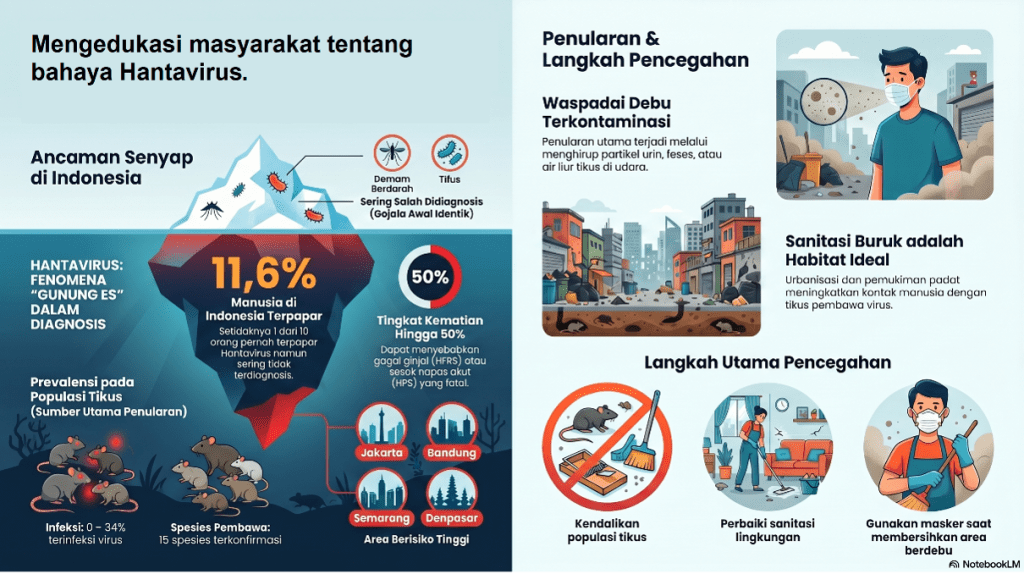
Indonesia's Ministry of Health (Kemenkes) confirms a total of 23 Seoul virus cases since 2024 through epidemiological Week 16 of 2026, spanning 9 of 34 provinces. Twenty patients have recovered; 3 have died (CFR 13%). Of 251 suspected cases screened, 225 tested negative, 3 returned inconclusive results. 17
Annual case counts show rapid growth: 1 case in 2024, 17 in 2025, 5 through Week 16 of 2026. Jakarta (6 cases), Yogyakarta (6), and West Java (5) account for 17 of the 23 confirmed cases — the dense urban corridor of Java bearing the clear majority of burden. The remaining six cases are in Banten, West Sumatra, East Nusa Tenggara, North Sulawesi, West Kalimantan, and East Java. 17
All confirmed Indonesian cases involve Seoul virus, spread exclusively via Rattus norvegicus and Rattus rattus — no human-to-human transmission. The Kemenkes BKPK policy brief frames the surveillance question plainly: "The question is no longer: does hantavirus exist in Indonesia? But rather: how much of it are we not seeing?" The Salatiga Health Research Center has previously detected hantavirus in rats across 29 Indonesian provinces; 23 human cases against that rodent distribution implies substantial underascertainment. 17
Indonesia Ministry of Health (Kemenkes) public health infographic on hantavirus surveillance, transmission routes, and risk areas, May 2026

Taiwan: 2 Seoul virus cases in 2026, consistent with baseline

Taiwan CDC reports two hantavirus cases in 2026, consistent with the 2022–2025 baseline. Case 1 (January): a man in his 70s in Taipei Da'an district who died after sepsis and multiple organ failure; hantavirus was confirmed posthumously. Case 2 (March): a man in his 70s in New Taipei presenting with fever, muscle aches, and GI symptoms, discharged March 30. Both cases involve Seoul virus; neither had documented rodent contact. 18

Korea: 373 HFRS cases in 2024, vaccine modernization urged

Korea Disease Control and Prevention Agency (KDCA) data, confirmed via Korean media, shows 373 HFRS cases in 2024 — consistent with the country's 400–500 case-per-year baseline since the 2000s. 19 Korea's hantavirus burden involves four viral types — Hantaan, Seoul, Imjin, and Jeju — with HFRS classified as a Class 3 notifiable infectious disease. The existing vaccine, Hantavax, has a complex three-dose schedule with short protection duration and does not cover HPS-causing strains.
Prof. Jung Jae-hoon of Korea University's Department of Preventive Medicine stated: "한국에서 한타바이러스는 남의 이야기가 아니다" — in Korea, hantavirus is not someone else's problem. CFR exceeds 5%, deaths continue, and diagnosis is often delayed. 19 Korea University's Vaccine Innovation Center is developing a next-generation mRNA hantavirus vaccine; the timeline and partnership with Moderna's preclinical program (see research pipeline, below) places Korea at the center of global vaccine development efforts.

China: HFRS declining trend, Andes absent

China CDC confirmed on May 8 that HFRS incidence is declining year-over-year and maintained at low-level endemicity. Andes virus has no natural reservoir hosts in China and has never caused confirmed human infection there. China's endemic hantavirus strains — primarily Hantaan and Seoul viruses — cause HFRS, not the pulmonary syndrome (HPS) seen with Andes. Zhang Wenhong of Fudan University's Huashan Hospital stated: "流行性出血热在我国维持低水平流行" — hemorrhagic fever with renal syndrome in China is maintained at low-level endemic prevalence. 20

Europe: 3 Puumala cases in Bavaria, FLI confirms no Andes risk

Germany's Bavarian State Office for Health (LGL) reports only 3 Puumala hantavirus cases in Bavaria for all of 2026 — notably low compared to some recent years, with no cases in historically affected areas of Main-Spessart and Aschaffenburg. 21
Germany's Friedrich-Loeffler-Institut (FLI), the national hantavirus reference laboratory, has confirmed that Andes virus has no natural reservoir hosts in Europe — Oligoryzomys longicaudatus is restricted to South America. European hantaviruses (Puumala, Dobrava-Belgrad, Tula, Seoul) carry no person-to-person transmission capability. Frank Hanses of University Hospital Regensburg described the probability of Andes strain establishment in Germany as "extremely unlikely." 22
ECDC's Communicable Disease Threats Report (CDTR) for Week 19 (covering May 2–8) was published on May 8, covering hantavirus alongside mpox, MERS-CoV, and Salmonella Stanley. The Week 20 report is pending publication. Finland's THL is preparing a regulatory change to classify Andes virus as a generally dangerous infectious disease — a legal step that would expand quarantine powers — though its rationale is precautionary rather than based on any domestic Andes cases. 23

Research pipeline

ANDV/Switzerland/Hu-3337/2026 genome: public and open

The deposition of the complete Swiss Andes genome on virological.org on May 8 represents the first publicly accessible, fully assembled outbreak-linked sequence. The availability of all three segments (S, M, L) with accompanying phylogenetic tree enables independent verification of strain identity and comparison with historical South American isolates and the Cerro Centinela domestic cluster. This is meaningful for outbreak genomic epidemiology: the Swiss case is 6,000 km from the Southern Cone endemic zone, making phylogenetic placement the primary tool for reconstructing transmission chains. 12

ANLIS-Malbrán: carrageenan shows in vitro efficacy against Andes virus

ANLIS-Malbrán researchers demonstrated that carrageenan — a sulfated polysaccharide derived from red algae — reduces Andes virus (Epuyén strain) viral load in respiratory epithelial cell cultures, with no cytotoxicity. The proposed mechanism is electrostatic attraction preventing viral attachment to host cells. The same compound was previously shown to reduce COVID-19 infection rates by approximately 80% in a multicenter hospital staff study. 24
This is the first carrageenan study using Andes virus in respiratory epithelial cells; a 2016 study used Vero cells and Old World strains. The research team is preparing for presentation at the Congreso Argentino de Virología and seeking funding for clinical trials in Patagonian high-incidence zones. The gap from in vitro efficacy to clinical trial remains substantial, and the researchers have acknowledged that the regulatory pathway to testing during the current outbreak — while theoretically ideal for a rapid trial — is constrained by standard bureaucratic timelines. 24

Publication drought: zero new primary research in May 9–11 window

PubMed, bioRxiv, and medRxiv returned no new hantavirus or Andes virus primary research publications in the May 9–11 window. The most recent publications in the pipeline are news and commentary pieces responding to the MV Hondius outbreak (BMJ, Nature, May 6–8) and a May 7 EcoHealth paper on rodent virus co-circulation. Primary research papers — including any clinical case series from the current outbreak — are expected in the coming weeks as clinical teams complete documentation and genomic analyses are finalized. 25

Risk outlook and ENSO context

The WMO's April 24 El Niño update — still the most recent as of May 11, with the next bulletin expected in late May — puts the probability of El Niño onset at 61–70% for the May–July 2026 window. WMO Chief of Climate Prediction Wilfran Moufouma Okia stated: "Models indicate that this may be a strong event — but the so-called spring predictability barrier is a challenge." 26 NOAA CPC independently estimates 62% probability for El Niño by June–August; the IRI model puts it at 70% for April–June.
Southern South America typically experiences above-normal precipitation during El Niño events — conditions that favor O. longicaudatus seed-resource booms, which in turn drive rodent population spikes that increase the probability of human-rodent contact and spillover. A confirmed El Niño arriving in May–July would overlap with the tail of Argentina's current HPS season and the lead-up to the 2026–27 season beginning in approximately epidemiological week 27 (late June). Chile's current 33% CFR already suggests an unusually severe 2026 season is underway before El Niño onset.
Argentina's north-south geographic reorientation — 83% of cases now in northern provinces historically outside the Patagonian endemic belt — is consistent with the climate-driven range expansion of O. longicaudatus documented by CONICET researchers. If El Niño consolidates, the combination of reservoir range expansion and precipitation-driven population dynamics in the NOA region would project elevated transmission pressure through at least the 2026–27 Southern Hemisphere autumn.
Monitoring priorities for the May 12 briefing:
  • French symptomatic passenger: test results pending — this is the highest-priority data gap
  • German 65F evacuee at Düsseldorf University Hospital: no condition update as of May 11
  • MV Hondius Rotterdam arrival and disinfection status
  • Final Australia/NZ repatriation flight completion (expected May 11)
  • Chile weekly MINSAL bulletin: any new cases or CFR update
  • WMO ENSO update (expected late May): watch for confirmation of El Niño onset timing
  • ECDC CDTR Week 20: expected mid-week; will include hantavirus surveillance
  • China NHC weekly bulletin: remains inaccessible — alternate data pathways under assessment

Briefing covers the window 2026-05-10T00:00Z → 2026-05-11T00:00Z. Previous briefing: May 10, 2026. Next scheduled publication: May 12, 2026.

参考来源

  1. 1NL Times: KLM flight attendant tests negative for hantavirus
  2. 2AP via ABC10: Passengers evacuated from hantavirus-stricken cruise ship
  3. 3ECDC: Andes Hantavirus outbreak in cruise ship, May 2026
  4. 4BBC News: Countries airlift nationals evacuated from virus-hit cruise ship
  5. 5DW: Hantavirus — Passengers leave Tenerife on evacuation flights (Live Blog)
  6. 6Rev.com: WHO Briefing on Hantavirus Outbreak (May 10 transcript)
  7. 7CDC: CDC Provides Update on Hantavirus Outbreak Linked to M/V Hondius
  8. 8Forbes: NIH Director Says Hantavirus 'Is Not COVID'
  9. 9NL Times: Netherlands evacuates 29 Hondius passengers to Eindhoven
  10. 10WHO: Message by the WHO Director-General to the people of Tenerife, 9 May 2026
  11. 11ECDC: Guidance for the management of passengers linked to Andes hantavirus outbreak
  12. 12Virological.org: Complete sequence of Orthohantavirus andesense virus — Swiss resident 2026
  13. 13Argentina MoH: Boletín Epidemiológico Nacional SE 16
  14. 14BioBioChile / Agencia EFE: Chile registra 39 casos de hantavirus en lo que va de 2026
  15. 15ND Mais: Brasil registra 1ª morte por hantavírus em 2026
  16. 16AP News: Hantavirus is on the rise in Argentina
  17. 17CNBC Indonesia: 23 Kasus Hantavirus di Indonesia
  18. 18Focus Taiwan: Taiwan records 2nd hantavirus case of 2026
  19. 19ChosunBiz: 한타바이러스… 한국서 매년 수백명 감염
  20. 20第一财经 (Yicai): 我国也曾有汉坦病毒致死病例
  21. 21BR24: Hantavirus: Warum manche Regionen häufiger betroffen sind
  22. 22FLI: WHO-Meldung zu Hantavirus-Fällen
  23. 23ECDC: CDTR Week 19
  24. 24Contexto Tucumán (citing Clarín): Droga usada para otra enfermedad sirve contra el hantavirus
  25. 25PubMed: hantavirus search
  26. 26WMO: Likelihood increases of El Niño, 24 April 2026

围绕这条内容继续补充观点或上下文。

  • 登录后可发表评论。