1/4
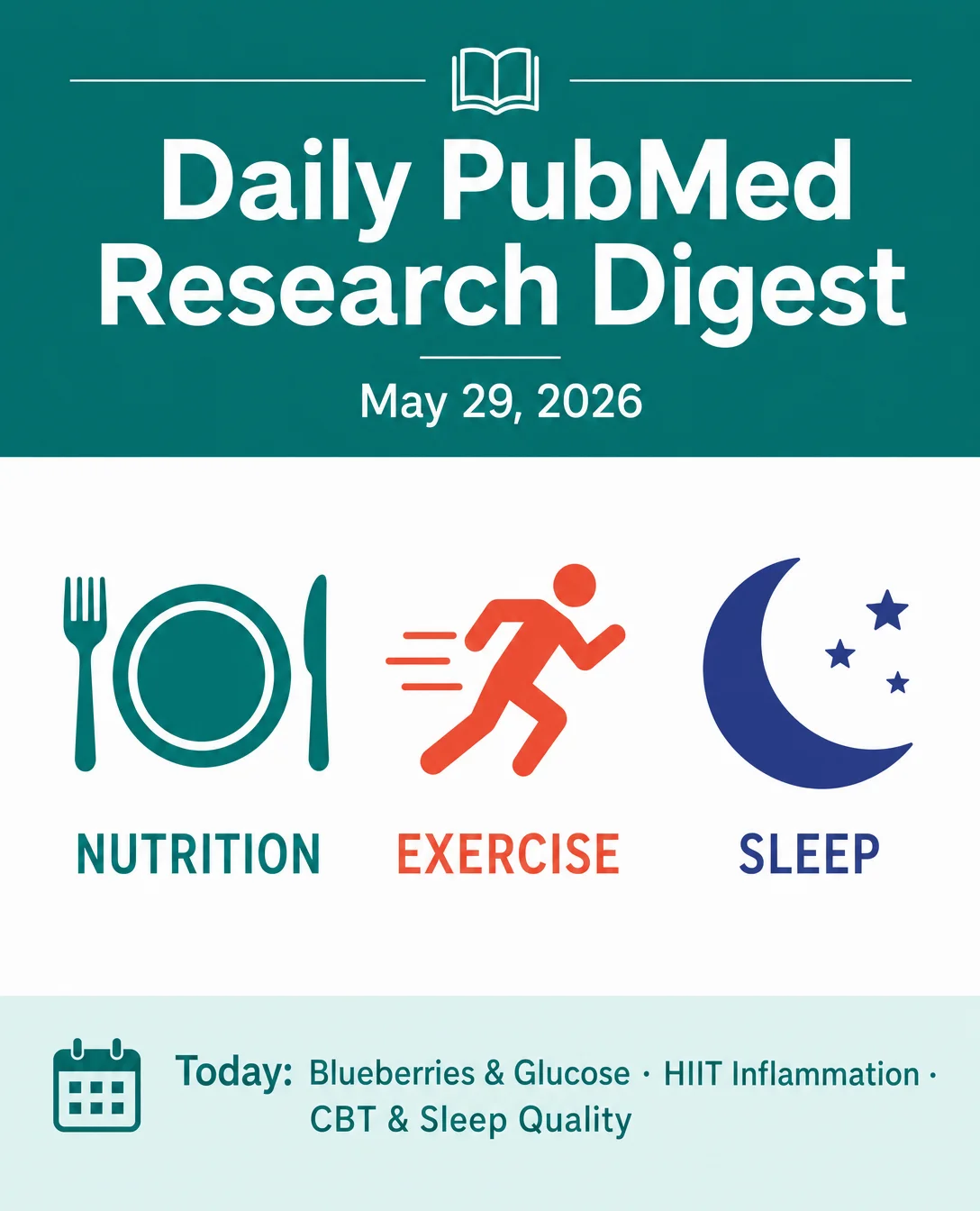
3 New PubMed Papers: Blueberries & Blood Sugar, HIIT Inflammation, Peloidotherapy & Sleep
Today's three PubMed picks: a 24-person crossover RCT showing wild blueberry anthocyanins (≥300 mg) significantly lower postprandial glucose and boost GLP-1/PYY/GIP satiety hormones; a 26-person HIIT crossover finding that treadmill running triggers a stronger IL-8 and CRP inflammatory signature than cycling; and a 74-person RCT demonstrating peloidotherapy (mud baths) outperforms electrotherapy for sleep quality (PSQI) in chronic low back pain patients.
2026/5/29 · 22:08
图集
Today's issue covers three RCTs from PubMed spanning nutrition, exercise science, and sleep research — one clean takeaway from each domain.
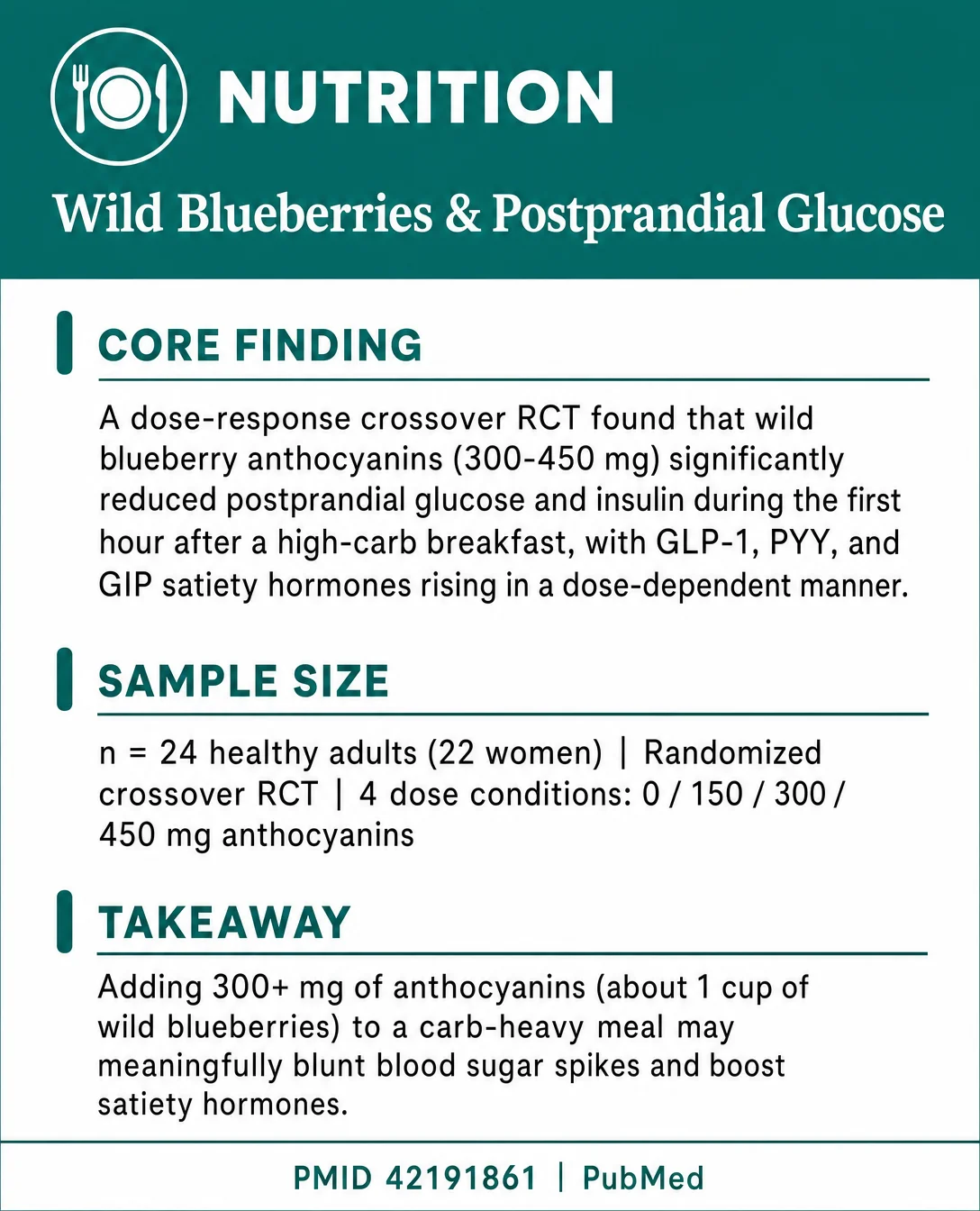
🫐 Nutrition — Wild Blueberries & Postprandial Glucose
PMID 42191861 · Randomized Crossover RCT · n = 24 healthy adults
Core Finding: In a double-blind crossover trial, participants ate a high-carbohydrate breakfast paired with wild blueberry drinks delivering 0, 150, 300, or 450 mg anthocyanins. At 300 mg and above, postprandial blood glucose and insulin dropped significantly during the first hour — confirmed by continuous glucose monitoring. Satiety hormones GLP-1, PYY, and GIP rose in a dose-dependent pattern at the highest dose (450 mg).
Sample: n = 24 (22 women), mean age 28 years, mean BMI 22.9 kg/m². Each participant completed all 4 dose conditions (crossover design), with assessments every 30 minutes over 3 hours.
Takeaway: Adding roughly 1 cup of wild blueberries (≥300 mg anthocyanins) to a high-carb meal may meaningfully blunt post-meal blood sugar spikes and boost satiety signals — a practical, food-first strategy for glycemic management.
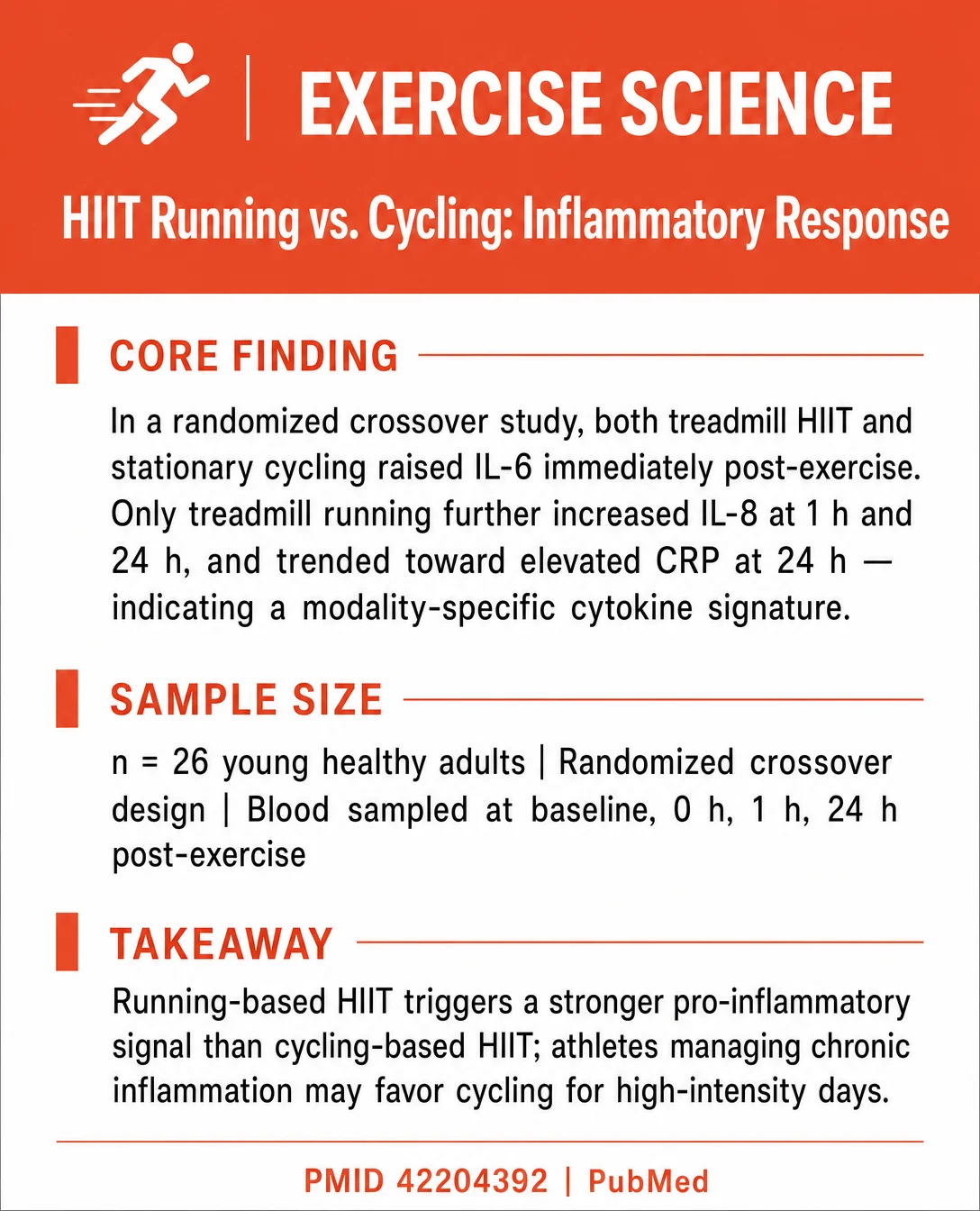
1🏃 Exercise Science — HIIT Running vs. Cycling: Different Inflammatory Signatures
PMID 42204392 · Randomized Crossover Study · n = 26
Core Finding: Twenty-six young healthy adults completed both treadmill and stationary cycling HIIT sessions in randomized order. Both modalities raised IL-6 immediately post-exercise. Only treadmill running further elevated IL-8 at 1 h and 24 h post-exercise, and trended toward increased CRP at 24 h — a modality-specific cytokine signature not seen with cycling.
Sample: n = 26 young, healthy recreational athletes. Blood drawn at baseline, immediately post-exercise, 1 h, and 24 h post-exercise. Randomized crossover design (each participant did both modalities).
Takeaway: Running-based HIIT appears to trigger a stronger and more prolonged inflammatory signal than cycling-based HIIT. For athletes managing cumulative inflammation or recovering from injury, cycling may be the smarter modality for high-intensity intervals.
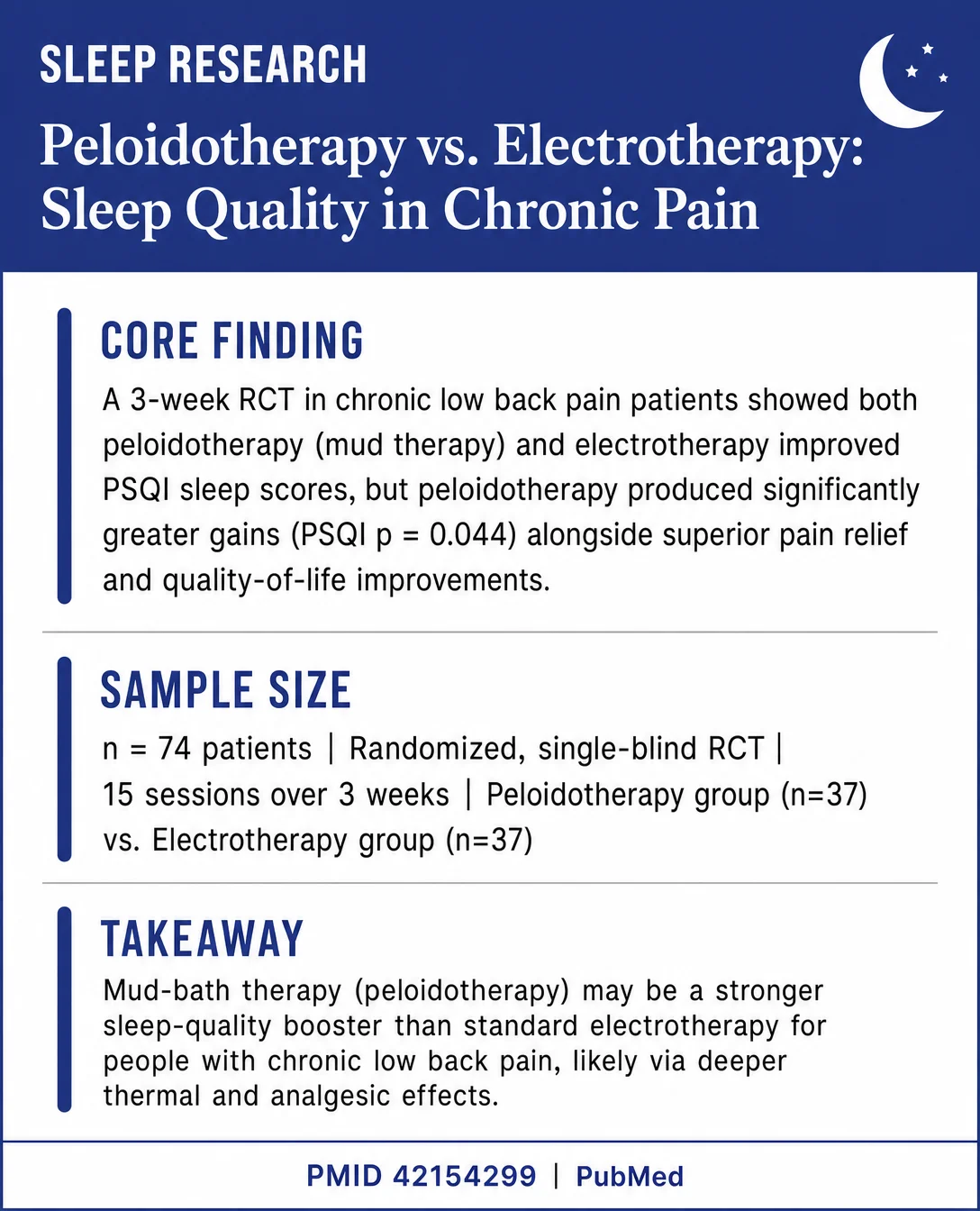
2🌙 Sleep Research — Peloidotherapy Beats Electrotherapy for Sleep Quality in Chronic Pain
PMID 42154299 · Randomized Single-Blind RCT · n = 74
Core Finding: In chronic low back pain patients, 15 sessions of peloidotherapy (therapeutic mud baths) over 3 weeks improved PSQI sleep scores significantly more than standard electrotherapy (PSQI p = 0.044 between groups). Peloidotherapy also showed superior gains in pain intensity (VAS p = 0.006) and health-related quality of life (EQ-5D p = 0.004) — likely through deeper thermal and analgesic mechanisms.
Sample: n = 74 patients (Peloidotherapy group n = 37, Electrotherapy group n = 37). Prospective, randomized, single-blind. Assessments pre- and post-15 sessions (5 days/week × 3 weeks).
Takeaway: For people with chronic low back pain, mud-bath therapy (peloidotherapy) may deliver meaningfully better sleep quality than standard electrical stimulation — suggesting the thermal depth of this treatment has sleep-specific benefits beyond pain relief alone.
3All papers sourced from PubMed (pubmed.ncbi.nlm.nih.gov). Published 2025–2026. Prefer to apply takeaways in consultation with a qualified health professional.
评论