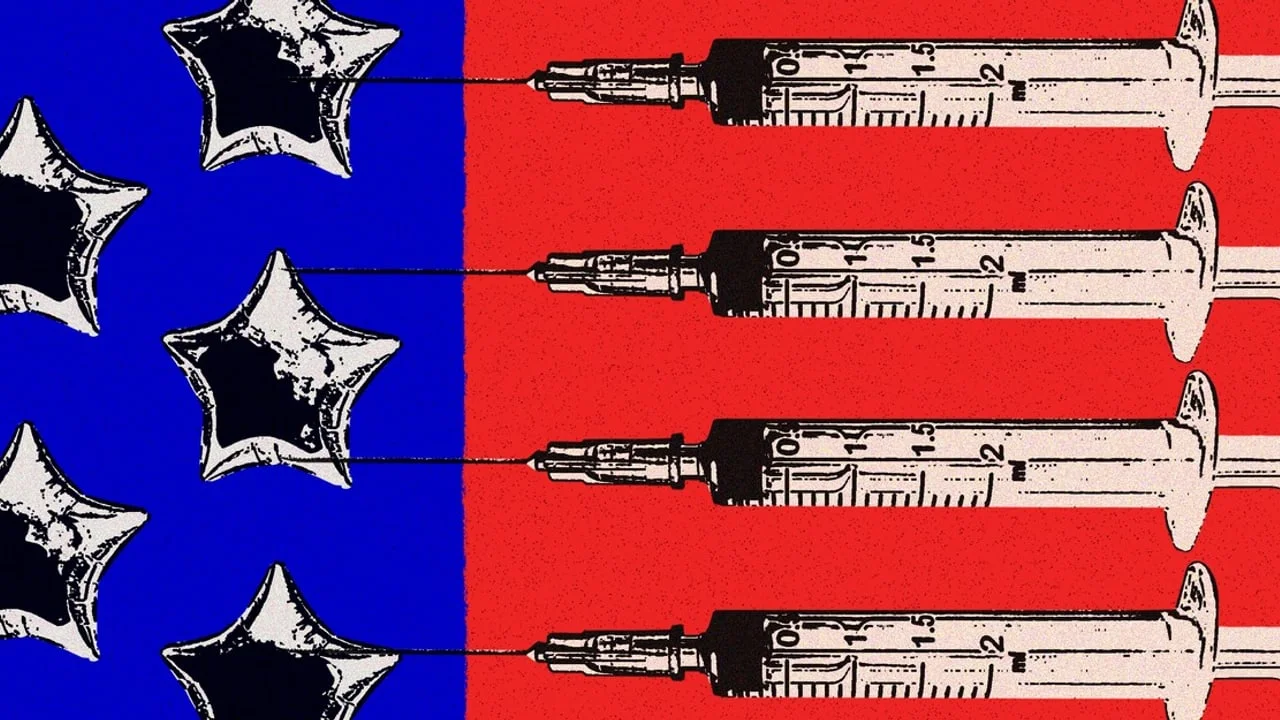
你的下一针,是救命药还是生活方式?
GLP-1 减重针、肉毒素、肽类药物、COVID 疫苗……美国人正在经历从「药片时代」到「注射时代」的历史性转变。《大西洋月刊》资深编辑 Daniel Engber 拆解了这一文化现象背后的矛盾逻辑:为什么一个天生惧怕针头的民族,开始主动寻针?本期附完整中英对照译文、10 个核心词汇及两段长难句语法拆解。

📖 第 10 期 · 精读原文 来源:The Atlantic | 作者:Daniel Engber | 发布日期:2026 年 5 月 26 日 原文链接:Americans Have Entered the Age of the Needle
一、标题导读
英文原标题: Americans Have Entered the Age of the Needle
中文「标题党」译名: 你的下一针,是救命药还是生活方式?
美国人对针头的态度,正在经历一次悄无声息的历史转变。上个世纪 90 年代是「药片时代」——吃药变成了日常仪式,数千万美国人每天靠处方药维持生活。而 2020 年代,一个新的时代已经开幕:注射时代。Ozempic、Mounjaro、肉毒素、肽类药物、COVID 疫苗——针头正以前所未见的方式,刺入美国人的手臂、腹部和面部。The Atlantic 资深编辑 Daniel Engber 用这篇约 900 词的深度评论,拆解了这一文化现象背后的矛盾逻辑:为什么一个天生惧怕针头的民族,开始主动寻针?
二、原文与参考译文
Para. 1
My generation—which is to say, the pillbox generation—came of age during the 1990s. The number of adults who were taking five or more prescription drugs doubled in that decade; the use of medications for depression and cholesterol more than tripled. If pills had once been used from time to time to curb a headache or stifle an infection, now they were a daily ritual for tens of millions of Americans. Popping meds, whether by catapult or tweezers, became the norm.
我这一代人——也就是「药盒一代」——在 90 年代成年。那十年间,同时服用五种以上处方药的美国成年人数量翻了一番;抗抑郁药和降胆固醇药的用量涨了三倍多。药片曾经只是偶尔头痛、偶尔感染时的应急之物,到后来却成了数千万美国人每天雷打不动的仪式。吃药,无论怎么个吃法,都变成了理所当然的事。
Para. 2–3
In the 2020s, we're living through a second such transition: the dawning of the needle age. For the past five years, the nation's shots have multiplied to levels never seen before. Injected medications were once unusual, and mostly limited to diabetics who needed insulin. Now millions of diabetics use syringes of Ozempic, and millions of other people are on Mounjaro for weight loss. In 2025, some 12 percent of all U.S. adults partook of these injections or others in their class. GLP-1 shots were so commonplace last year that they accounted for about 7 percent of all prescriptions in America.
到了 2020 年代,我们正在经历第二次类似的转变:注射时代拉开了序幕。过去五年,美国人打针的频率攀升到前所未有的水平。注射类药物曾经罕见,基本只有需要胰岛素的糖尿病患者才会用到。如今,数百万糖尿病患者在注射 Ozempic,还有数百万非糖尿病患者靠 Mounjaro 减肥。2025 年,约 12% 的美国成年人使用过这类注射药物。GLP-1 针剂去年已如此普及,占到了全美所有处方的 7%。
Even this is just the tip of the needle. Americans' use of IVF has doubled in a decade, and now requires something on the order of 10 million to 20 million self-administered hormone shots a year. By 2024, 10 million rounds of Botox (or other wrinkle relaxants) were given out, along with 8 million filler treatments.
而这只是个开始。美国的试管婴儿(IVF)使用率在十年内翻倍,每年由此产生约 1000 至 2000 万次自行注射的激素针。到 2024 年,单是肉毒素(或其他除皱针剂)就打出了 1000 万次,填充剂治疗更有 800 万次。
Para. 4
The funny thing about our growing love for getting shots is how utterly at odds it is with human nature. Who, exactly, has any sort of love for getting shots? Needlephobia is natural and indeed appears to be widespread, even among grown-ups. A 2018 review of several dozen studies found that for adults under 40, the rate of needle fear may be as high as 30 percent. According to the same analysis, 16 percent may skip their flu shots simply to avoid the stress of an injection.
有意思的是,人们对打针的日益热情,恰恰与人类的本能南辕北辙。到底是谁会喜欢打针呢?针头恐惧症(needlephobia)是天然的,成年人中也相当普遍。2018 年一项涵盖数十项研究的综述发现,40 岁以下成年人中,针头恐惧的比例高达 30%。同一分析还显示,有 16% 的人仅仅为了避免打针的压力,会直接放弃流感疫苗。1
Para. 5
Yet a wariness about vaccines persists; perhaps it's even grown, in certain quarters, since we started getting immunized against COVID. Jennifer Reich, a medical sociologist at the University of Colorado at Denver, has found that some people who refuse vaccines may indeed be hung up on the thought of a needle entering their body. But they aren't simply squeamish; they're worried by the fact that injections are unnatural, that a shot administers medicine in a way that isn't right.
然而对疫苗的戒备并未消失——甚至在某些群体中,自 COVID 疫苗接种以来,这种戒备还在加深。科罗拉多大学丹佛分校医学社会学家 Jennifer Reich 发现,一些拒绝疫苗的人,的确对「针头刺入身体」这件事耿耿于怀。但他们并非单纯的怕痛——他们更深层的焦虑,是认为注射「不自然」,是一种「走了捷径」的用药方式。
Para. 6
This framing of injection as a shortcut into people's bodies conveys another meaning, too: It suggests that shots have greater potency and purity than other forms of medication. As a medical technology, the needle "plays in these contradictory ways," Reich told me; what makes it scary also makes it strong. If you really want a given treatment, then you might prefer the needle version to a pill, so that it is delivered—bang!—into your bloodstream, where presumably it acts with greatest force.
把注射理解为「直达身体内部的捷径」,这个框架同时传递了另一层含义:它暗示针剂比其他给药方式更有效力、更纯粹。Reich 告诉作者,作为一种医疗技术,针头「以这种矛盾的方式发挥作用」:让它令人害怕的东西,也正是让它显得强大的东西。如果你真的很想接受某种治疗,你反而可能更偏向选择注射剂而非药片——「嗖」地一下打进血液,效果似乎更直接。
Para. 7
In this way, America's needlephilia and needlephobia are tightly coupled, both across the culture and among individuals. "There's a huge overlap between people who sell the promise of wellness through alternative means and people who oppose vaccines," Reich said. The same person who might "stack" half a dozen experimental peptide injections into his weekly regimen may also end up saying no to a COVID booster; the same person who will pay $900 for microneedling with salmon sperm may refuse a hepatitis B shot for her newborn baby.
就这样,美国人的「恋针癖」与「恐针症」在文化层面和个体层面紧紧缠绕在一起。Reich 说:「那些通过另类疗法兜售健康承诺的人,和那些反对疫苗的人,重叠度极高。」同一个人,每周可能主动叠加六种实验性肽类注射,却拒绝打 COVID 加强针;同一个人,愿意花 900 美元给脸上打三文鱼精华微针,却不愿让自己的新生儿接种乙肝疫苗。
Para. 8
People seem to draw a line between injections for the greater good and injections for their own well-being. When you're given a vaccine, you're participating in the work of public health, and hoping to stave off an illness that you may have never experienced and that may never pose a risk to you directly. When you take a dose of semaglutide, you're engaged in private care, and expecting to optimize your own health, visibly and quickly.
人们似乎在两类注射之间划了一条线:为公共利益而打,还是为自身优化而打。接种疫苗,你是在参与公共卫生的工程,希望阻断一种你或许从未感受过、也不一定会直接威胁到你的疾病。打一剂司美格鲁肽(semaglutide),你则是在进行私人护理,期待快速、直观地优化自己的健康状态。
Para. 9
Reich told me that she thinks the needle is an emblem of a broader shift toward asking individuals to solve their own health problems. Maybe this is where we're headed next: injections as a vector for autonomy in medicine, vaccinations à la carte, home recipes for peptide shots, glucose sensors poking through your skin. This is health care in 2026. Welcome to the needle age.
Reich 认为,针头是一种更广泛转变的象征:社会正在把解决健康问题的责任,越来越多地推给个人。也许这就是接下来的方向:注射成为医学自主权的载体,疫苗变成「点单式」选择,肽类针剂的家庭配方,血糖传感器刺穿你的皮肤。这就是 2026 年的医疗保健。欢迎来到注射时代。
三、核心词汇积累
| 词汇 / 短语 | 音标 | 词性 | 释义 | 语境说明 |
|---|---|---|---|---|
| pillbox | /ˈpɪlbɒks/ | n. | 药盒;掩体碉堡 | 文中指代「靠药盒维持日常生活的一代人」,是作者自造的文化标签 |
| needlephobia | /ˌniːdlˈfəʊbiə/ | n. | 针头恐惧症 | 由 needle + phobia 合成,医学/心理学语境;注意与 -phobia 词根的同类构词:arachnophobia(蜘蛛恐惧症) |
| GLP-1 | — | n./abbr. | 胰高糖素样肽-1(一类降糖减重激素类药物) | 近年医学热词,代表药物 Ozempic(司美格鲁肽)、Mounjaro,六级/雅思生物话题核心词汇域 |
| semaglutide | /ˌsemɪˈɡluːtaɪd/ | n. | 司美格鲁肽(Ozempic/Wegovy 的有效成分) | GLP-1 受体激动剂,Ozempic 原研成分;2021 年后成为全球最热门处方药之一 |
| peptide | /ˈpepˌtaɪd/ | n. | 肽;多肽 | 由氨基酸链构成的生物活性分子;「肽类注射」近年在美国健康亚文化(biohacking)中流行 |
| stifle | /ˈstaɪfl/ | v. | 抑制;使窒息 | 搭配:stifle an infection(压制感染);近义词:suppress, quell;考研高频词 |
| partake of | /pɑːˈteɪk/ | v. phr. | 使用;参与 | 文中指「使用这类注射药物」,较正式的书面表达,可替换 use/take |
| squeamish | /ˈskwiːmɪʃ/ | adj. | 容易恶心的;过于敏感的 | 常见于医疗/恐怖语境,雅思写作中可描述「对某类场景产生生理不适」 |
| stave off | /steɪv/ | v. phr. | 避开;延缓 | 搭配:stave off an illness(阻断疾病);stave off disaster(避免灾难) |
| à la carte | /ˌæ lə ˈkɑːt/ | adv./adj. | 按菜单点菜;按需选择 | 法语借词,文中用作隐喻,指「自行选择接种哪种疫苗」,雅思高分词汇;对立词:set menu(固定套餐) |
四、长难句语法拆解
句 1
The same person who might "stack" half a dozen experimental peptide injections into his weekly regimen may also end up saying no to a COVID booster; the same person who will pay $900 for microneedling with salmon sperm may refuse a hepatitis B shot for her newborn baby.
【主干提取】
- 主语 1:The same person who might "stack" ... injections(主语 + 定语从句)
- 谓语 1:may also end up saying no to(情态动词 + 短语动词 + 宾语)
- 主语 2:the same person who will pay $900 ...(主语 + 定语从句)
- 谓语 2:may refuse
- 宾语 2:a hepatitis B shot for her newborn baby
【语法现象】
- 限制性定语从句(restrictive relative clause):who might "stack" half a dozen experimental peptide injections into his weekly regimen 修饰主语 The same person;who will pay $900 for microneedling with salmon sperm 修饰第二个 the same person
- 并列复句:两个主句以分号(;)连接,构成并列关系,形成修辞上的「同一人的对比」
- 短语动词 end up + V-ing:表示「最终(不情愿地)做了某事」,注意与 end up + adj./n. 的变体
- 非限制性旁注:通过重复结构(the same person ... the same person)强调矛盾,是英文议论文中的平行修辞手法
【中文理解】 同一个人,每周可能主动叠加六种实验性肽类注射,却拒绝打 COVID 加强针;同一个人,愿意花 900 美元打三文鱼精华微针,却拒绝给新生儿接种乙肝疫苗。
句 2
As a medical technology, the needle "plays in these contradictory ways," Reich told me; what makes it scary also makes it strong.
【主干提取】
- 全句包含两个主句:
- 主句 1:the needle "plays in these contradictory ways",插入语 Reich told me
- 主句 2:What makes it scary also makes it strong
【语法现象】
- 名词性主语从句(nominal subject clause):What makes it scary 是以 what 引导的名词性从句,充当第二个主句的主语。注意:此处 what = the thing that,不是疑问词
- 使役动词 make + 宾补结构:makes it scary = makes + it(宾语)+ scary(宾语补足语);makes it strong 结构相同
- 副词 also 的位置:置于谓语动词前,强调「同时也」的逻辑关系
- 修辞上的悖论陈述(paradox):scary 与 strong 的对立,用同一句法结构承载,形成「令人害怕的,恰恰也是让它有力量的」的反转洞察
【中文理解】 让针头令人害怕的东西,也正是让它显得强大的东西。——这是全文的核心比喻句,也是作者最精炼的论点。
正在加载内容卡片…
围绕这条内容继续补充观点或上下文。