Issue #1: Free Trial Converts — Find the Charges You Forgot to Cancel

Issue #1: Free Trial Converts — Find the Charges You Forgot to Cancel

The average person underestimates their subscription spending by $133/month. This issue covers the most common zombie subscription category — free trials that silently converted to paid — with the exact bank-statement audit method to find them and precise cancellation paths through each platform's dark-pattern maze.

Zombie Subscription Autopsy
2026/6/10 · 20:19
1 订阅 · 1 内容
You agreed to a free trial. You entered a card number. You told yourself you'd cancel before it charged. You didn't. Now it's been 14 months.
According to a 2024 C+R Research survey of 1,000 U.S. consumers, the average person estimates they spend $86/month on subscriptions. After an itemized statement review, the actual figure is $219/month — nearly 2.5× higher.1 A 2025 CNET survey found that U.S. adults spend an average of $1,080/year on subscriptions, with close to $200 of that going to services they're not actively using.2
正在加载统计卡片…
This issue is about one specific category: the free trial that quietly converted to paid. The services you signed up for with a "14-day trial," handed over a card, and never looked at again.
Here's how to find them, and exactly how to kill each one.

Why this category is the worst

Every zombie subscription type has its mechanics. Free-trial converts are uniquely predatory because the design is intentional: charge-on-conversion requires you to give payment info before you've decided you want the product. The moment you forget to cancel, the company wins.
Week-long trials (common with AI tools, PDF editors, and meditation apps) are the most dangerous — a 7-day window expires over a weekend and you're billed Monday morning. Some services further bury the auto-conversion in a phrase like "your free trial includes membership benefits that begin on day 1," which courts have interpreted as adequate disclosure.
The FTC's Negative Option Rule (finalized October 2024) requires that cancellation be as easy as sign-up, and that sellers clearly disclose the charge date and amount before billing. In practice: good news long-term, incomplete enforcement short-term. Meanwhile, your $12.99/month keeps clearing.3

Step 1: The statement audit — finding them

Don't try to remember what you signed up for. Your memory is wrong. The statement is right.
What you need: 12 months of statements from every account that's ever touched a subscription — primary checking, every credit card, PayPal. Twelve months, not three: annual renewals (domain registrations, antivirus, professional memberships) show up once a year and vanish from a 90-day view.4
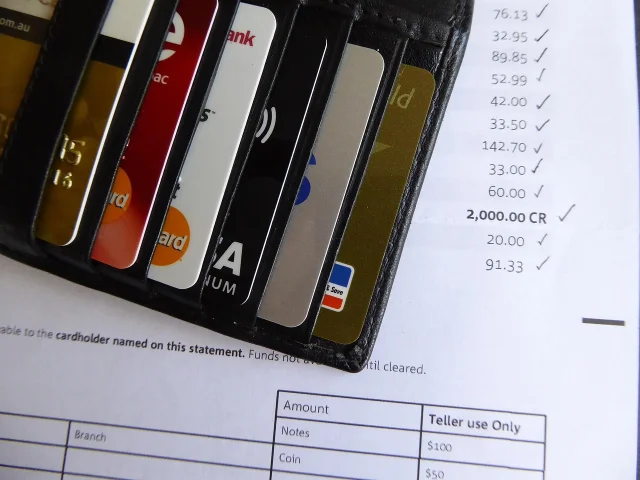
Bank and credit card statements spread out for subscription audit review
Download 12 months of statements — not 3. Annual renewals only appear once and vanish from a 90-day window. Photo: Pixabay
Keyword sweep (use Ctrl+F on downloaded CSVs or PDFs):
Search termWhat it catches
TRIAL / FREE TRIALTrial-converted subscriptions in the descriptor
APPLE.COM/BILLAny App Store subscription billed via Apple
GOOGLE *Google Play and Google One charges
PAYPAL *Subscriptions authorized through PayPal
AMZNAmazon Prime, Audible, Kindle Unlimited, Prime Video channels
STRIPEDirect SaaS billings via Stripe (often use the brand name)
PADDLESoftware/SaaS subscriptions using Paddle as payment processor
RECURRING / SUBSCRIPTIONAnything the processor explicitly labels
The same-amount scan: If an identical dollar amount appears on the same date across two or more months — $9.99 on the 14th, $14.99 on the 1st — it's a subscription. Flag every match you can't immediately name.
App stores are separate: Your bank statement won't tell you which apps are bundled inside "APPLE.COM/BILL $34.97." You need to check directly:
  • iPhone/iPad: Settings → your name → Subscriptions
  • Android: Google Play app → profile icon → Payments & subscriptions → Subscriptions
  • Amazon: Account & Lists → Memberships & Subscriptions
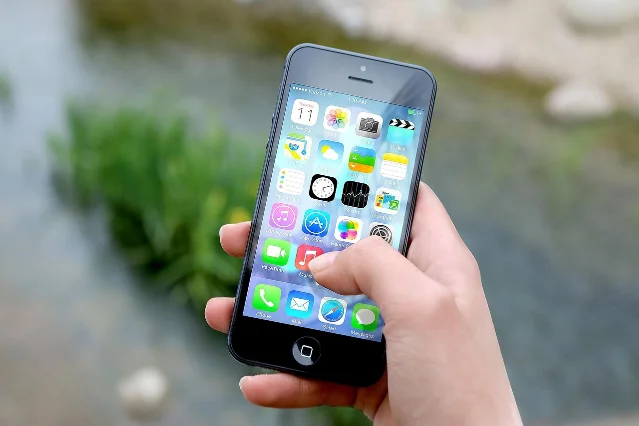
Hands holding smartphone checking apps and subscriptions on screen
App store subscriptions don't show the service name on your bank statement — "APPLE.COM/BILL" could be 6 different apps. Always check the source. Photo: Pixabay
Uninstalling an Android app does not cancel its subscription. Google Play states this explicitly.5
Time investment: 30–50 minutes for a full 12-month sweep across 2–3 accounts and both app stores.6

Step 2: The kill list — exact cancellation paths

Before you touch anything, identify who bills you. Canceling on the wrong platform does nothing. If the charge says "APPLE.COM/BILL," cancel via Apple Settings — not the app, not the company's website.
If the statement shows…Cancel here
Apple / APPLE.COM/BILLiPhone Settings → your name → Subscriptions
Google / Google Playplay.google.com/store/account/subscriptions
AMZN / Amazonamazon.com → Account & Lists → Memberships & Subscriptions
PayPal * (merchant name)PayPal → Settings → Payments → Manage automatic payments
The brand name directlyThe merchant's account → Billing or Subscription page

Major platforms, step by step

Apple (all App Store subscriptions, Apple Music, iCloud+, Apple TV+): Settings → your name → Subscriptions → select → Cancel Subscription → confirm. Access continues through the current billing period. Family-shared subscriptions require the account organizer to cancel.
Google Play (Android apps, YouTube Premium, Google One): On Android: Play Store → profile icon → Payments & subscriptions → Subscriptions → Cancel. On desktop: play.google.com/store/account/subscriptions. Watch for the "Pause subscription" button — pausing is not canceling, and charges resume automatically.
Amazon Prime: amazon.com/prime → Update, cancel and more → End membership. Amazon will cycle through 4–5 retention screens offering discounts and pauses. Click past each one. The confirmation screen says "Your Prime membership will end on [date]" — that's the finish line.
Amazon Prime Video channels (HBO, Paramount+, etc.): These are separate from Prime. Cancel via Account & Lists → Memberships & Subscriptions → find the channel → Cancel subscription.
Spotify Premium: Must use a web browser — the app doesn't let you cancel. Go to spotify.com/account → Your plan → Change plan → Cancel Premium. Account reverts to free with ads; playlists stay.
Netflix: netflix.com → profile icon → Account → Cancel Membership → Finish Cancellation. Relatively clean process, no aggressive retention screen.
Adobe Creative Cloud: The most friction-heavy cancellation in common software. account.adobe.com → Plans → Manage plan → Cancel plan. If you're on an annual plan billed monthly, Adobe charges an early termination fee of 50% of remaining months. On 6 months remaining at $54.99/month, that's ~$165 in fees. Monthly-only plans have no termination fee but cost more per month.5
New York Times: Phone-only cancellation: 1-800-591-9233. Say "cancel subscription" to the automated system. They will offer 50% off — decline and repeat your intent to cancel. Estimated call time: 5–10 minutes if you're firm.
SiriusXM: Online cancellation has been reported as non-functional by many users. Call 1-866-635-2349. They will offer deep discounts ($5/month or less). If you don't want the service, say "I don't use the service at all." The FTC continues to receive complaints about their cancellation process.7

Step 3: Getting through the dark-pattern maze

Companies run predictable retention scripts. Here's what you'll hit and how to get past each one.
The guilt trip: "You'll lose all your saved progress / your watchlist / your streaks." Reality: most platforms retain your data for 10–12 months after cancellation, and you can re-subscribe. Say: "I understand. Please proceed with cancellation."
The "pause" offer: Presented as an alternative to canceling, pausing delays charges but doesn't end the subscription. Only accept a pause if you genuinely plan to return within the pause period. Otherwise: "No thank you, I'd like to cancel permanently."
The discount counter: "We can offer you 50% off for the next 3 months." Do the math before you answer — 3 months at 50% of $12.99 = $19.49 saved, then full price resumes. If you haven't used the product in months, even a discounted subscription is wasted money.
The retention survey: "Can you tell us why you're leaving?" You're not obligated to explain. "I no longer need this service" ends it.
The hidden phone requirement: For services that insist on phone-only cancellation (NY Times, gym memberships, SiriusXM), use gethuman.com to find the direct number and estimated wait times.

Your rights and the nuclear option

If a company keeps charging after you've canceled:
  1. Document everything — screenshots of cancellation confirmation, email confirmations, dates
  2. Dispute the charge with your card issuer as an unauthorized recurring transaction
  3. File a complaint at reportfraud.ftc.gov — the FTC tracks these patterns and uses complaint data to build enforcement cases
California residents have additional protections under state law: if you subscribed online, the company must let you cancel online.5

Preventing the next batch

The simplest countermeasure: use a virtual card number for every free trial. Privacy.com (US, free tier available) lets you create single-use or merchant-locked virtual card numbers. Set a spending limit of $1 on a trial card — the charge fails at conversion, and you're automatically "canceled" without a call or a dark-pattern maze.
The second countermeasure: cancel the same day you sign up for a trial. Most services let you cancel immediately while still using the service through the trial end date. Cancel first, use the trial, never worry about conversion.

What you should find

Based on SubBuddy's user data, the first statement audit typically surfaces 3–5 completely forgotten subscriptions and 2–3 duplicates (e.g., both Spotify and Apple Music, or multiple cloud storage plans).6 At the C+R Research estimate of $86/month in perceived spending vs $219/month actual, the gap alone exceeds $1,500/year.1
Put one hour into the audit this week. The math works.

Next issue: gym and fitness memberships — the category purpose-built to survive cancellation attempts.

围绕这条内容继续补充观点或上下文。

  • 登录后可发表评论。