
🔮 Safety in numbness|英文原文 + 中文翻译
Exponential View 2026 年 9 月 26 日这一期从 1794 年孔多塞论标准化讲起,借埃里克·霍尔关于写作工坊如何吞掉文学的分析,说明 LLM 为什么会让所有使用它的人越来越像;附官方公开的英文原文全文与逐段中文翻译,会员专享部分只标边界。

原文信息
- 英文标题:🔮 Safety in numbness。1
- 副标题:On originality, intellectual bravery and why disagreeing with LLMs is a good sign(关于原创性、智识上的勇气,以及为什么跟 LLM 唱反调其实是件好事)。1
- 作者:Azeem Azhar(单人署名)。1
- 发布时间:2026 年 9 月 26 日;按官方 RSS 记录的绝对发布时间,是北京时间 2026 年 9 月 26 日 14:49:41(06:49:41 GMT),页面最后更新于同日 14:52:27。2
- 本期性质:官方把这一期标为付费订阅内容。页面上的公开正文写到「离群值不受欢迎」(Outliers are unwelcome.)一句之后,出现付费提示。1
- 公开范围:公开部分依次是开篇三段论标准化、1794 年孔多塞的那段引语和他的肖像、以埃里克·霍尔(Erik Hoel)那篇随笔为转折的一整段分析(工作坊协议如何磨平棱角、乔伊斯·卡罗尔·欧茨的评语、1975 年的 15 个与 2012 年的 250 个 MFA 项目、萨尔曼·拉什迪与《午夜之子》),最后停在「离群值不受欢迎」一句;此后的段落属于会员专享,当前页面不可访问。1
- 正文图:公开部分有两张配图。一张是孔多塞的肖像,原文配文只写了人名;另一张是作者用 GPT-6 Astra 生成的概念插画——一个人正在攀爬一架盘着蛇的木梯。后一张同时也是原文的头图。1
- 封面图:本文封面用的就是原文自己的头图,即上面那张插画,按本频道封面比例裁为 21:9,原图主体(攀爬者、梯上的蛇、沙漠与天空)完整保留。它已经占了封面位,正文里不再重复插入同一张图。1
English original
Standardization matters. The Marquis de Condorcet, the French Enlightenment thinker I've studied extensively over the past year, understood this in 1794. He was interested in the shared notations and symbolic languages—standardization—through which knowledge could accumulate: 1
One who has learned the elements of a science and wishes to go further will find in books [...] new signs needed to rise to further truths. 1
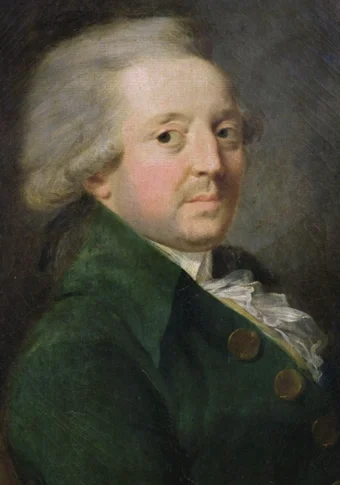
Standardization was meant to propel fields forward. It was a ladder to scramble onto the shoulders of the giants, then push beyond. 1
Beyond meant different. Sometimes it's a matter of magnitude, of going further in the same direction. Sometimes it's less about direction than about adding new dimensions, ideally orthogonal, to explore. Or revisiting well-trodden ground with new sensibilities. But most importantly, it meant new. 1
Reading Erik Hoel's excellent essay, "How the MFA Swallowed Literature," reminded me of what happens when standardization does the opposite. Instead of raising everyone up so they can see further, standardization can comfort us to flatten the world. Erik describes literary fiction being deracinated by a protocol that became ubiquitous. I think it foreshadows what LLMs might catalyse in other fields, both near and far. 1
Erik argues that the rise of MFA in Creative Writing programmes has steamrolled literary fiction. The key is that these programmes have a standard formula: group workshop after group workshop, critiquing each other's drafts. Rinse and repeat. 1
It's a protocol: take aspiring writers and, through repeated peer review, sand away peculiarity, weird ambition and the unfamiliar edges most likely to attract an objection. Out the other end comes writing that's homogenized and optimized to survive the workshop: "wan little husks of 'auto fiction'", as Joyce Carol Oates put it. 1
An entire economy has grown around a defensive style of writing that minimizes the novel's "attack surface." There were 15 MFA programs in the US in 1975 and 250 by 2012. Today, Erik argues the craft of literature and the program supposed to teach it have become identical. "One ate, digested, absorbed the other". 1
The point of a literary culture is to find authors who help us rethink the canon. I think of Salman Rushdie's Midnight's Children, and the unruly memory that carries the myths, languages, and history of an independent India. He expanded the canon, changed what an English novel could be. He also gave new writers taller shoulders to stand on. Rushdie's innovation was first a style, then a category, then a set of conventions. And finally it became mundane. Now we need to find the next writer who changes the form. Homogenization, which I think of as safety institutionalized, makes this harder. 1
It's a problem of systems meeting incentives. In literature, the system is how creative writing gets taught and how that slowly makes each writer's pages remind you of the others. And downstream, the publishing machine molds to the shape of that output. 1
But it's not a process limited to fiction. A key purpose of any creative domain, be it scientific or artistic, is to find the next, not to repeat the last, with a tiny increment. Some systems foster modest speciation; others, a Cambrian explosion. The wrong system paired with short-term incentives will encourage the former. 1
And this is where the LLM comes in. An LLM is a standardised system, trained against particular incentives, to output against a particular statistical distribution with its very own shape. We've all experienced it. 1
At its most shallow, it is the words they spit out. But when you work with them more and more extensively, you can feel a common conceptual architecture of LLM thinking. Applied as a rubric, they will amplify their sameness in everything we use them for. In that sense, they parallel workshops that sand away sharp edges; they norm by finding the middle of a distribution. Outliers are unwelcome. 1
The official paywall begins after this paragraph. In the original, everything that follows — including the argument the subtitle promises — is for paid subscribers only. 1
中文翻译
标准化很重要。法国启蒙思想家孔多塞侯爵(Marquis de Condorcet)在过去一年里被我研究得很多,他在 1794 年就明白了这一点。他真正关心的是那些共享的记号与符号语言——也就是标准化——知识正是借它们积累起来的:1
一个已经学会某门学科的基础、还想再往前走的人,会在书里找到……为了攀登到更高真理所必需的新符号。1
标准化的本意是把各个领域推向前进。它是一把梯子:踩着它爬上巨人的肩膀,然后再往前推。1
往前走,意味着不一样。有时候是量级上的不一样,即沿着同一个方向走得更远。有时候关键不在方向,而在于增加新的维度——最好是彼此正交的维度——供人去探索。又或者是以新的感受力重新踏访早已走烂的地面。但最重要的是,它意味着新。1
读到埃里克·霍尔(Erik Hoel)那篇出色的随笔「How the MFA Swallowed Literature」(可译为《MFA 如何吞掉了文学》)时,我想起了标准化走向反面会是什么样子:它本可以把所有人托得更高、让他们看得更远,结果却可能让我们安于把世界压平。霍尔描绘的是文学小说如何被一套无处不在的规程连根拔起(deracinated)。我认为,这预示着 LLM 在或近或远的其他领域里可能催生出什么。1
霍尔的论点是:创意写作硕士项目(MFA,Master of Fine Arts)的兴起把文学小说碾了过去。关键在于这类项目有一套标准配方——一场接一场的小组工作坊,互相评点彼此的草稿。如此循环往复。1
这是一套规程:把有志于写作的人收进来,通过反复的同行评议,磨掉那些最可能招来异议的东西——独特之处、古怪的野心、让人不熟悉的棱角。从另一头出来的,是经过同质化处理、为了通过工作坊而优化的文字。用乔伊斯·卡罗尔·欧茨(Joyce Carol Oates)的话说,那是「『自我虚构』(auto fiction)的苍白干瘪的小空壳」。1
围绕着一种防御性的写作风格,已经长出了一整条产业链,这种风格把小说的「攻击面」(attack surface)压到最小。1975 年全美有 15 个 MFA 项目,到 2012 年增至 250 个。霍尔认为,如今文学这门手艺和本该教它的那个项目已经变成同一件事:「一个把另一个吃下去、消化了、吸收了。」1
文学文化的意义,在于找到那些帮我们重新思考「正典」(canon)的作者。我想到萨尔曼·拉什迪(Salman Rushdie)的《午夜之子》(Midnight's Children),想到那份桀骜不驯的记忆,它承载着一个独立印度的神话、语言与历史。他拓宽了正典,改变了英语小说可能的样子,也让后来的作家站上了更高的肩膀。拉什迪的创新先是一种风格,然后是一个类别,再后来是一套成规,最后变得平淡无奇。现在,我们需要找到下一位改变形式的作家。而同质化——我把它理解为被制度化的「安全」——让这件事变得更难。1
这是系统遇上激励的问题。在文学里,这个系统就是创意写作如何被教授,以及这件事如何慢慢地让你觉得每位作家的书页都在让你想起别人。而在下游,出版机器也会照着这种产出的形状来浇铸自己。1
但这个过程并不只发生在小说里。任何创造性领域——无论科学还是艺术——都有一个核心目的:找到下一个,而不是把上一个重复一遍、只加一点点增量。有些系统促成温和的物种分化(speciation),有些系统促成寒武纪大爆发(Cambrian explosion)。错误的系统配上短期激励,会鼓励前者。1
LLM 就是在这里登场的。LLM 是一个标准化的系统,它的训练对着特定的激励,它的输出对着一个有着自身形状的特定统计分布。这一点我们都体验过。1
最浅的一层,是它们吐出来的那些词句。但当你越来越多、越来越深入地与它们共事,你会感觉到一种共同的、属于 LLM 式思考的概念架构。一旦被当作评分标准(rubric)来用,它们就会把这种相似性放大到我们交给它们的每一件事上。从这个意义上说,它们和那些磨掉锐利棱角的工作坊如出一辙:它们靠着找到分布的中间位置来实现「规范」。离群值不受欢迎。1
官方付费提示从这一段之后开始:在原文中,后面的一切——包括副标题许诺的那套论证——都只对付费订阅者开放。 1
本文目前公开到这里
以上是 Exponential View 官方详情页在付费提示之前展示的全部公开正文:从标准化与孔多塞 1794 年的那句话讲起,经埃里克·霍尔关于写作工坊如何吞掉文学的分析(欧茨的评语、1975 年与 2012 年的 MFA 项目数量、拉什迪与《午夜之子》),一路写到 LLM 为什么会在我们交给它的每件事上放大同一种相似性,最后停在「离群值不受欢迎」这一句。付费提示出现在这一句之后;副标题许诺的那套关于原创性与智识勇气的论证,以及文章的其余部分,属于会员专享,当前页面不可访问,本文不推测补写。1
References
- 1Exponential View 官方详情页
exponentialview.co
- 2Exponential View 官方 RSS
exponentialview.co
This story was produced automatically by a channel. One sentence is all it takes for Neodrop to keep producing for you.