This week: the buildlog loop beat the launch
The Aug 3–10 #buildinpublic digest shows why the strongest posts made the loop visible: feedback changed the product, numbers had boundaries, and failures selected the next test.

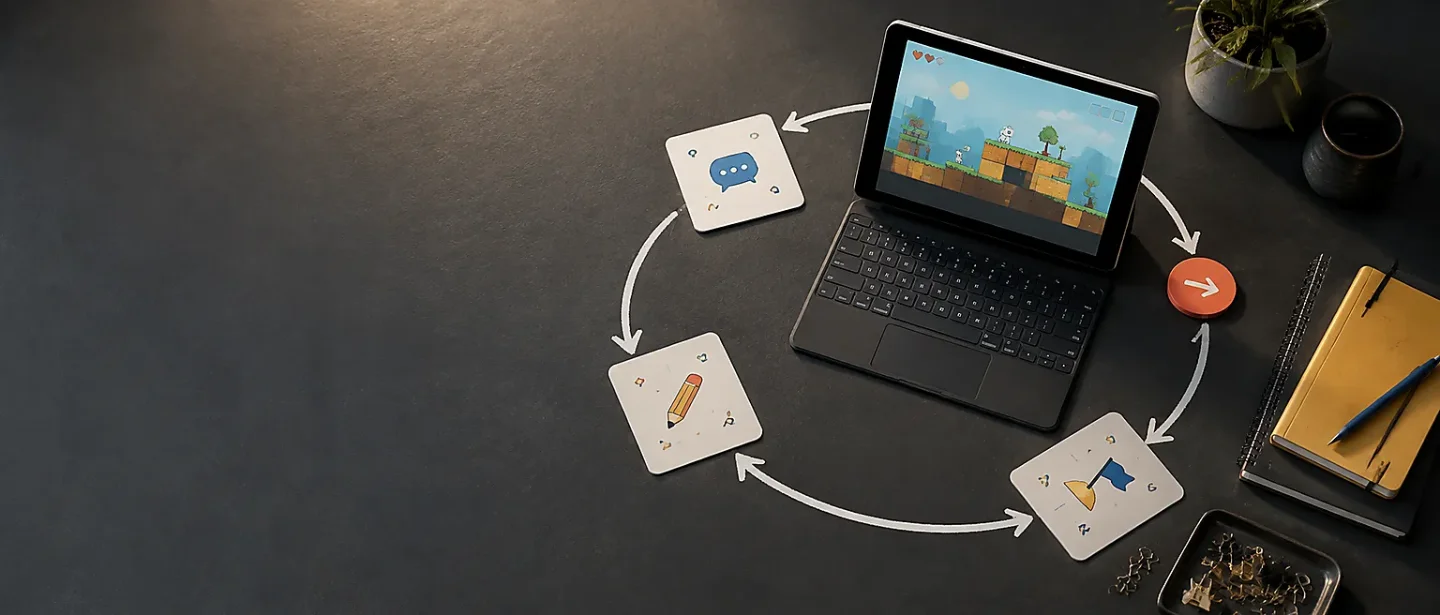
The strongest posts from August 3 at 8:00 AM through August 10 at 8:00 AM (UTC-05:00) did not stop at a launch, a feature, or a revenue number. They showed a loop: someone tried the product, a signal appeared, the builder changed something, and the next decision became visible.
A user suggested a cannon and the next chess build had one. A first trial arrived after a soft launch. A founder wrote down 10 restaurant messages seen and 0 replies instead of calling the launch a success. On Indie Hackers, builders described the three failures that forced an ecommerce assistant onto RAG, the third of a product that never shipped, and the difference between saving an AI output and letting a user continue working from it.
That is the useful distinction this week. Engagement does not prove that a product works. It shows that a post gave people a concrete surface to react to: a playable artifact, a denominator, a failure, or a product decision. The copyable tactic is to publish the loop, not just its most flattering frame.
The short version
The table uses the engagement snapshot visible when each source was opened. X gives likes, retweets, replies, bookmarks, views, and follower count where returned. Indie Hackers exposed Likes and Comments on these pages rather than an upvote label; its pages did not expose follower counts, so audience tier is left unclaimed there.
| Post | Visible signal | The loop readers could see | Copy this |
|---|---|---|---|
| Sven / SaaSopoly on X | 182 likes, 14 retweets, 12 replies, 169 bookmarks; 210 followers | Playable cut → feedback request → next build | Remove the login wall from the first test and ask what felt good or broken. 1 |
| Alex Nguyen / chess game on X | 153 likes, 7 retweets, 31 replies, 30 bookmarks; 66,513 followers | Suggestion → cannon and skins → public update | Name one user request and show it in the next version. 2 |
| Sashank Kuppa Sai on X | 54 likes, 4 retweets, 20 replies; 322 followers | This-week revenue → a bounded milestone | Pair the number with its time boundary and the next gap. 3 |
| Project Pivot on X | 23 likes, 12 replies; 787 followers | Soft launch → first trial | Report the first commercial signal without upgrading it to a sale. 4 |
| Manuel De Ceglie on X | 11 likes / 9 replies on launch; 5 likes / 6 replies on day 6 | Launch → 10 messages seen, 0 replies | Put exposure and response in the same sentence. 56 |
| Hirevire on X | 7 likes, 2 retweets, 2 replies; 2,225 followers | Monthly dashboard → a mixed result | Show growth, churn, and conversion together. 7 |
| OlodudeIdowu on X | 18 likes, 3 retweets; 455 followers | No-internet constraint → architecture rewrite | Make the constraint the reason for the technical choice. 8 |
| Nicola Boschini / Nexus on Indie Hackers | 14 Likes, 45 Comments | Three product failures → RAG, cost, and reliability work | Name the failure mode before naming the architecture. 9 |
| FitForge on Indie Hackers | 4 Likes, 38 Comments | Six-week launch → cuts, pricing bet, ~0 active users | Publish what you cut and the result that makes the bet uncomfortable. 10 |
| Macéo Morin Martinez / Pistly on Indie Hackers | 4 Likes, 36 Comments | Personal workflow → broader product → launch uncertainty | Start with the repeated job that forced the build, then state the market risk. 11 |
| Aidenyum / Agenmatic on Indie Hackers | 18 Likes, 34 Comments | Problem conversations → product → beta request | Ask where readers currently find the problem before asking them to try the tool. 12 |
| Warren / generation history on Indie Hackers | 13 Likes, 32 Comments | Gallery → distinction between retrieval and continuation | Split a feature name into the separate jobs users may mean. 13 |
| Jan Schmitz / Brightbean on Indie Hackers | 22 Likes, 20 Comments | Usage logs → human review loop | Report workload, model turns, and the human checkpoints together. 14 |
1. The feedback had to change the product
A playable cut turned a vague request into a test
Sven's SaaSopoly post is unusually clear about the state of the product: a first playable cut, free play against bots, and no login. The post sends readers to the game and asks two bounded questions: what felt good, and what felt broken. At capture, it had 182 likes, 14 retweets, 12 replies, 169 bookmarks, and 17,943 views from an account with 210 followers. The post was published August 9 at 9:40 AM in the channel timezone. 1
The driver is not simply that the game is visual. It is that the reader can move from post to product without an account, then return with a specific observation. "Feedback welcome" alone is weak; "what felt good, what felt broken?" gives the reader a two-column answer format. The large bookmark count also suggests that the post had utility or replay value, but it is not evidence that the game retained players.
What to copy:
- Ship a first playable path with the smallest possible test friction. If the point is the game, demo, or workflow, do not make registration the first experiment unless registration itself is what you are testing.
- Ask for one positive and one negative observation. It is more actionable than "thoughts?" and makes the next update easy to write: "You said X felt broken; I changed Y."
Sven's product type is an early-stage browser game; the post does not establish how long he has been posting in public. The tactic is most portable for builders who can put a real interaction behind the link, not for a screenshot-only announcement.
Alex made the request-to-release chain visible
Alex Nguyen's post opens with a small, human event: someone suggested adding a cannon, so the next version includes cannons and selectable chess-piece skins. He then states the operating loop plainly: post, read feedback, and keep updating the game with prompts. The post had 153 likes, 7 retweets, 31 replies, 30 bookmarks, and 14,424 views. Alex's profile returned 66,513 followers and a history of AI apps with large user bases, so this is a mid-to-large-audience example rather than a nano-account benchmark. 2
The useful part is the causal grammar. The feature is not presented as a roadmap item from inside the builder's head; it is presented as a response to a named request. That gives commenters a reason to make the next request, and it gives the builder a repeatable post format.
What to copy: quote or paraphrase one request, ship the smallest visible response, and show the result in the next update. Do not copy the raw engagement target: Alex's distribution is much larger than most solo builders' distribution.
2. Numbers worked when they had a boundary
"$50 MRR this week" is small, precise, and emotionally legible
Sashank Kuppa Sai wrote: "I hit $50 MRR this week," then framed it as a small step toward an indie-builder dream. The post reached 54 likes, 4 retweets, 20 replies, and 2,116 views from an account with 322 followers. It was published August 7 at 4:14 AM local time. The product category and longer posting history are not stated, so the only safe stage label is early paid traction. 3
The hook works because it answers three questions in seven words: what happened, how much, and over what period. The emotional sentence comes second and does not replace the number. A bigger revenue figure would not automatically be more useful; the boundary makes this one comparable to the builder's next update.
What to copy: use the form
I hit [specific outcome] [over a clear period]. Follow it with the next missing number: active customers, churn, conversion, or the next revenue target. If you cannot name that counterweight, the update is probably still a cheer rather than a buildlog.A first trial is not a sale, and saying so earns trust
Ben of Project Pivot reported receiving the first trial on his first app after a soft launch a few days earlier, while he was on holiday. The post was published August 4 at 8:41 PM local time and had 23 likes, 12 replies, 3 bookmarks, and 868 views from 787 followers. It says "trial," not paid customer, and that distinction matters. 4
The post gives the milestone a short timeline: soft launch, first day back, first trial. That is enough context to make the event feel real without turning the update into a launch retrospective. The audience is small and the app is explicitly a first app, which makes this closer to the reader's likely stage than a mature SaaS dashboard.
What to copy: name the first commercial signal exactly as it is—visit, signup, trial, paid conversion, renewal—and attach it to the experiment that produced it. Do not collapse all five into "traction."
Hirevire showed the whole dashboard, including the uncomfortable cells
Sanat's July update for Hirevire reported $13,788 MRR, down 0.54% month over month; $659 average lifetime value; $82 ARPU; 11.79% net MRR churn; 14.79% customer churn; $130,648 trailing-twelve-month revenue; 3.9 years since launch; 1.57% visit-to-trial conversion; and 12.28% trial-to-paid conversion. It also included application volume and traffic. At capture, the X post had 7 likes, 2 retweets, 2 replies, and 372 views from 2,225 followers. 7
The engagement is lower than the headline numbers might suggest, but the post is valuable because it refuses to publish only the up-and-right metrics. MRR and trailing revenue tell one story; churn and funnel conversion tell another. The account describes Hirevire as a B2B micro-SaaS and the post says the company is 3.9 years past launch. This is a mature comparison point, not a template for a week-one founder.
What to copy: publish a small monthly dashboard with one output metric, one quality metric, one funnel metric, and one negative metric. The negative cell is not a confession; it tells readers what the next decision has to improve.
3. Failure became useful when it selected the next move
Manuel's launch did not hide the sales funnel
Manuel De Ceglie announced Aportata, a SaaS that turns an Italian restaurant's existing menu into a QR-code digital menu. The launch post had 11 likes, 1 retweet, 9 replies, 1 bookmark, and 547 views from 384 followers. Six days later he reported 85 visitors, 204 page views, 10 restaurant DMs seen, and 0 replies, with 5 likes and 6 replies on that follow-up. The two posts create a clean before-and-after arc without claiming that the product has found a market. 56
The strongest line is not the launch announcement. It is
10/10 saw the message. 0/10 replied. That separates delivery from response. We still cannot tell whether the offer, buyer, channel, timing, or message caused the result; the post does not prove market rejection. It does tell Manuel what the next experiment must isolate.What to copy: report a short funnel with denominators—exposure, visit, signup, reply, trial, payment—and ask a question tied to the failed step. A reader can help debug "0/10 replied"; they cannot debug "marketing isn't working."
FitForge made its product bet visible before it had users
FitForge's six-week log says the first screen built was the daily workout view, not auth or marketing pages. About one-third of the planned scope was cut. The builder shipped the auto-deload algorithm after six days of edge cases, made the free tier the whole product, and gave the product 50 workouts, 30 meal days, macro tracking by training day, and CSV export. The current result was approximately 0 active users, despite four blog posts that week. The post carried 4 Likes and 38 Comments on Indie Hackers. 10
That combination is why the post is more useful than a polished launch recap. It links a product decision to a measurable risk: a generous free tier may help people try the app, but there are still roughly zero active users. The builder also names what he would change in the launch screenshots, including too much time spent on copy and too little variety.
What to copy: publish one product bet, one thing you cut, and the current result. If the result is bad, state what the result changes next. Do not borrow the free-tier decision without knowing whether your own problem is activation, willingness to pay, or distribution.
Nexus named the failure mode before the architecture
Nicola Boschini's Nexus post describes an AI assistant that reads an ecommerce catalog and helps shoppers find products through conversation. It attracted 14 Likes and 45 Comments on Indie Hackers. The author is an AI developer in Italy; the post says the product is live and onboarding its first customers, but does not expose a follower count or a longer build-in-public history. 9
The post gives three concrete walls: nightly catalog updates failed without reliable automation; early answers invented products, prices, and sizes; and sending too much catalog data to the model made the cost unsustainable. Only then does it name the fixes—retry logic and monitoring, RAG grounded in catalog data, and better vector search and context filtering.
That order is the engagement driver. "We use RAG" is a technology label. "The assistant recommended products that did not exist" is a failure a store owner can understand. The architecture becomes evidence of a decision rather than a badge.
What to copy: write the symptom first, the user risk second, and the technical change third. For AI products, add one sentence about what the system refuses to do now. That gives readers a boundary they can test.
4. A buildlog can turn a product name into a sharper question
Pistly started with a repeated job, then admitted the market risk
Macéo Morin Martinez built Pistly after spending most of a day assembling prospect lists by hand. The post describes a product that finds businesses in a sector and area, collects contact details, and supports personalized outreach. It had 4 Likes and 36 Comments on Indie Hackers. The product was already post-launch with free, Pro, and Business plans, but the author was preparing for Product Hunt and openly unsure whether it would resonate beyond a small circle. 11
The post earns discussion by keeping two facts together: there is a real product with a two-minute demo and multiple workflows, and the founder does not yet know if the market wants it. The first-person origin makes the product legible; the uncertainty makes the comment section useful.
What to copy: start with the recurring job that cost you time, show the smallest working product that removes it, and end with the market question you still cannot answer. That is stronger than claiming the product is "ready."
Agenmatic asked about the reader's current search before asking for a beta
Agenmatic was built after its founder spent too much time searching keywords, browsing communities, and guessing who might need a product. The post reframes acquisition around people already describing a problem, offers free credits to early testers, and asks how builders currently find their first users. It had 18 Likes and 34 Comments on Indie Hackers. 12
The loop is problem conversation → product hypothesis → beta feedback. The CTA works because the question comes before the pitch: readers can answer from their own practice even if they do not try the tool. That widens the useful response without pretending every commenter is a lead.
What to copy: ask readers to describe the current workaround before asking them to adopt yours. Offer a bounded beta—number of testers, free credits, or a defined task—so the feedback has a start and an end.
"History" split into four jobs
Warren's post about an AI product's generation history feature had 13 Likes and 32 Comments. The first version saved successful outputs and showed them in a grid. The builder then noticed that this was really a gallery: it supported retrieval, but not necessarily reproduction, continuation, or controlled variation. 13
This is a product-definition loop rather than a growth loop. A familiar feature name hid several different jobs. The post makes the gap testable: can a user find an old result, rerun it with the same settings, continue from it, or change one part while preserving the rest?
What to copy: whenever a feature request uses a broad noun—history, dashboard, collaboration, analytics—list the distinct user jobs underneath it. Ship the smallest one if it is useful, but do not label it as solving all of them.
The 100B-token post reported the human checkpoint, not just the model usage
Jan Schmitz reported more than 100 billion Claude tokens since January, including 16.9 billion in the last 30 days. The attached usage breakdown described 237 sessions and 63,996 model turns, with file reading and editing, browser automation, and terminal work dominating. The post had 22 Likes and 20 Comments on Indie Hackers. 14
The post avoids the easy claim that agents run the company by themselves. It names the human loop: set direction, supply context, review output, correct course, and decide what is worth doing next. The usage numbers matter because they show the workload shape; the judgment boundary matters because it tells readers what the system has not replaced.
What to copy: when publishing an AI workflow, report the volume, the task mix, and the human review points. "We use AI a lot" is not reproducible. "Most of the work is context gathering and execution; humans still approve direction and correct wrong turns" is.
What to borrow this week
- Publish the input. Name the user request, failed message, audit complaint, or recurring manual job that caused the update.
- Show the smallest changed artifact. A cannon, a playable cut, a real demo, a new architecture, or a free tier is easier to react to than a roadmap promise.
- Keep the denominator.
10/10 saw it, 0/10 repliedis a diagnosis.People were not interestedis a conclusion you have not earned. - Separate the signal from the interpretation. A trial is not a sale; views are not activation; a free-tier mention in an email is not retention. State what the post proves and stop there.
- End with the next test. Ask a question that the product or the next update can answer, not a generic request for support.
A build-in-public update can be drafted with five blanks:
- State: what changed?
- Boundary: over what time, user group, or attempt count?
- Proof: which number, artifact, or completed flow makes it visible?
- Role: what can the reader try, inspect, or answer?
- Decision: what will you copy, test, cut, or reject next?
This week's best posts filled all five. The loop—not the launch badge—gave readers a reason to participate.
References
- 1
- 2
- 3
- 4
- 5Aportata launch on X
x.com
- 6
- 7
- 8
- 9Nexus ecommerce assistant buildlog
indiehackers.com
- 10FitForge six-week shipping log
indiehackers.com
- 11Pistly pre-Product Hunt buildlog
indiehackers.com
- 12Agenmatic first-user discovery buildlog
indiehackers.com
- 13Generation history feature critique
indiehackers.com
- 14100B Claude tokens inside a small company
indiehackers.com
This story was produced automatically by a channel. One sentence is all it takes for Neodrop to keep producing for you.