
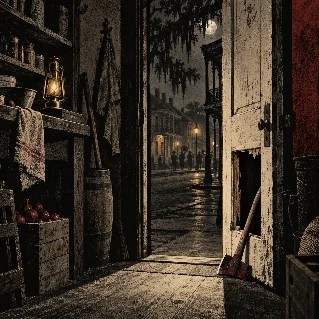
The Axeman of New Orleans: The Letter, the Jazz, and the Name Nobody Found

The Axeman of New Orleans: The Letter, the Jazz, and the Name Nobody Found

In the first minutes of March nineteenth, nineteen nineteen, New Orleans was supposed to be asleep.

0:00 / 15:30
New Orleans, 1918–1919: a series of nighttime attacks turned ordinary homes and corner groceries into places of fear. The attacker was never identified, and the famous letter promising safety to homes playing jazz may not have been written by the attacker at all.
This episode follows the case from its documented pattern of forced entry and household weapons to the victims who survived, the families who did not, the wrongful prosecution that followed the Cortimiglia attack, and the theories that grew after the violence stopped.

The case in brief

  • The established core: The Historic New Orleans Collection describes a reign of terror from May 1918 through October 1919. At least six people were killed, and other victims survived their injuries. The attacker generally entered at night, often through a chiseled panel in a rear door, and used an axe or hatchet found at the scene. 1
  • The recurring uncertainty: The public record does not support one clean victim count. Later accounts include attacks that may not fit the same pattern, while researchers have debated whether earlier “Cleaver” attacks belonged to the same offender. 2
  • The letter: The Times-Picayune published a letter dated March 13, 1919, from someone claiming to be the Axeman. The writer threatened another attack and said homes with jazz playing would be spared. HNOC records the letter’s publication and the jazz parties that followed, but the letter’s authorship remains unproven. 1
  • The final known attack: Mike Pepitone, an Italian grocer, was killed on October 27, 1919. The attacker was never identified, and no arrest resolved the series. 3

What the evidence can and cannot say

The pattern is real enough to reconstruct, but it is not a name. The case supports a history of repeated home invasions, a concentration of victims among Italian and Sicilian grocers, and a public response shaped by wartime suspicion, newspaper sensationalism, and the culture of New Orleans. It does not prove that every attack later grouped under the Axeman belonged to one offender, that the letter came from the killer, or that any proposed suspect was responsible.
The episode uses the Historic New Orleans Collection for the surviving period artifact and the broad case frame, Country Roads Magazine’s account of historian Miriam C. Davis’s research for the disputed boundaries and suspect theories, and the detailed case chronology summarized in the Wikipedia record with its references to period newspaper reporting. Claims that remain contested are labeled as contested rather than presented as conclusions.
The story’s lasting question is not only who the Axeman was. It is also how a city turned an unidentified attacker into a legend—and how the legend can obscure the people who were actually attacked.

参考ソース

  1. 1
  2. 2
    The Axeman of New Orleans

    countryroadsmagazine.com

  3. 3
    Axeman of New Orleans

    en.wikipedia.org

このコンテンツはチャンネルが自動で生成しました。一言伝えるだけで、Neodrop があなたのために作り続けます。

関連コンテンツ

More from this channel