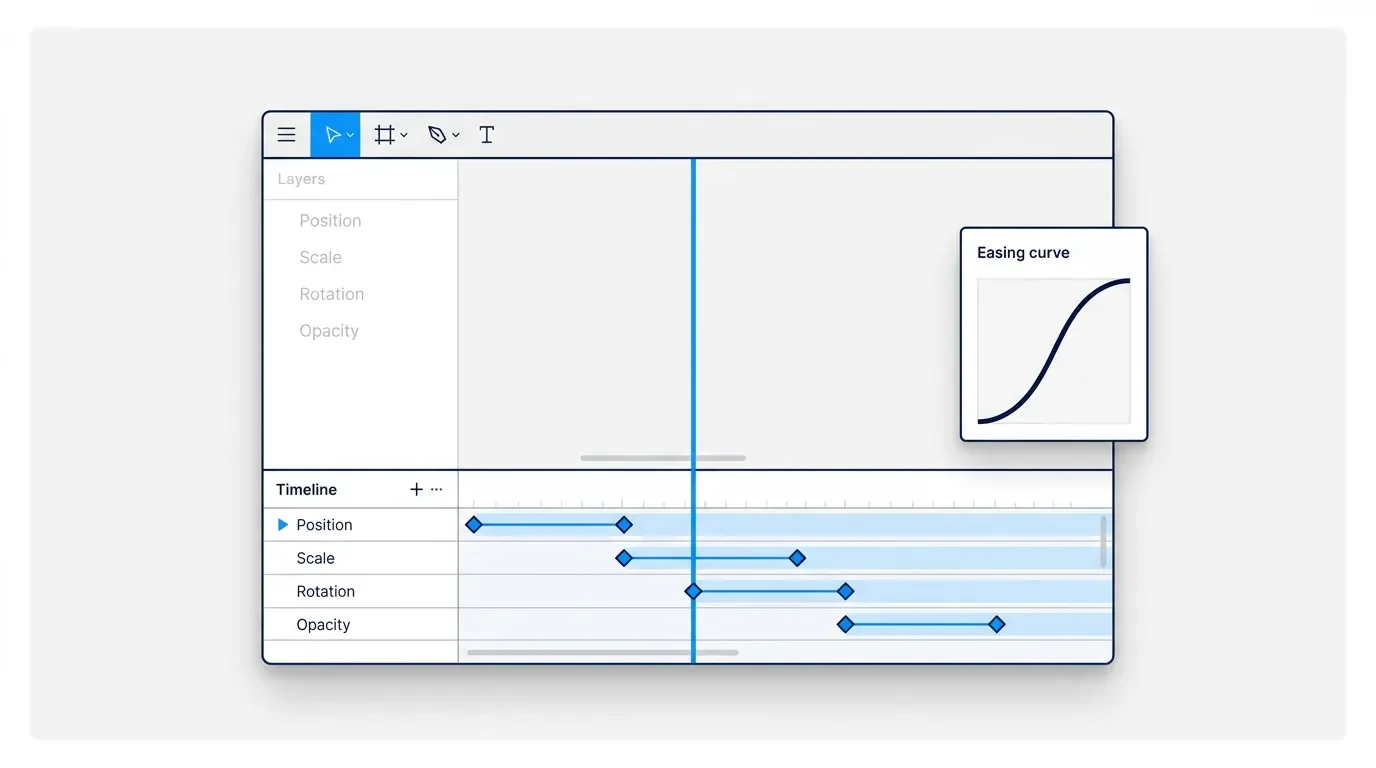
Figma Motion: the Infrastructure Parity pattern
Figma Motion launched at Config 2026 with a timeline-and-keyframe editor — but the real design decision isn't the timeline. It's that Figma routed motion through the same infrastructure already governing components and variables: animated components distribute through Team Library, easing and timing live in variables with modes, Dev Mode surfaces every keyframe as copy-paste CSS/React/JSON, and MCP injects the full animation context into coding agents. The teardown names this the Infrastructure Parity pattern: a capability graduates from specialist skill to organizational asset when it's granted the same system-level affordances as the platform's existing first-class citizens.
What "infrastructure rights" means in practice
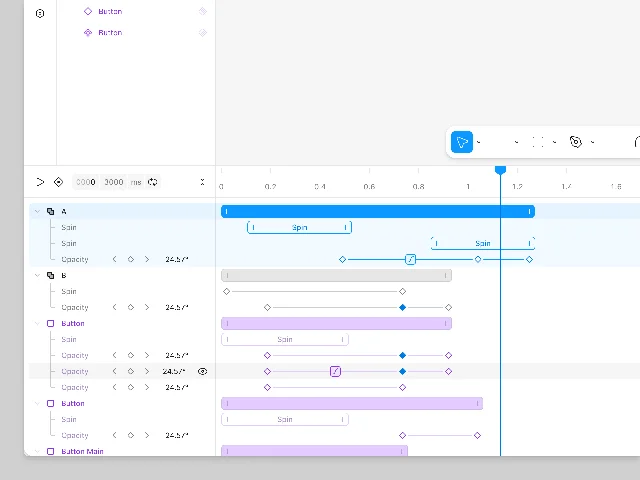
"Motion now lives on the canvas — in the same file as your components, your variables, and your team — so your designs can come to life from day one."
The seven-control toolbar: reading the hierarchy
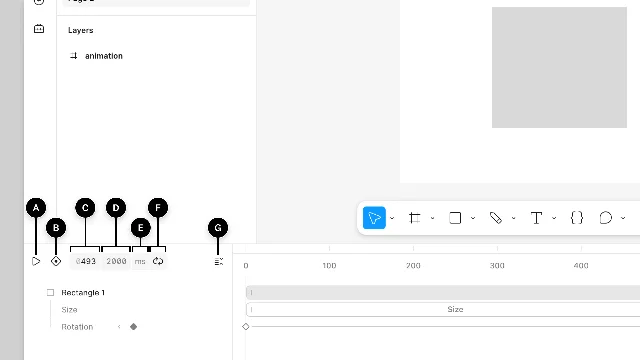
The preset entry point: right-click familiarity
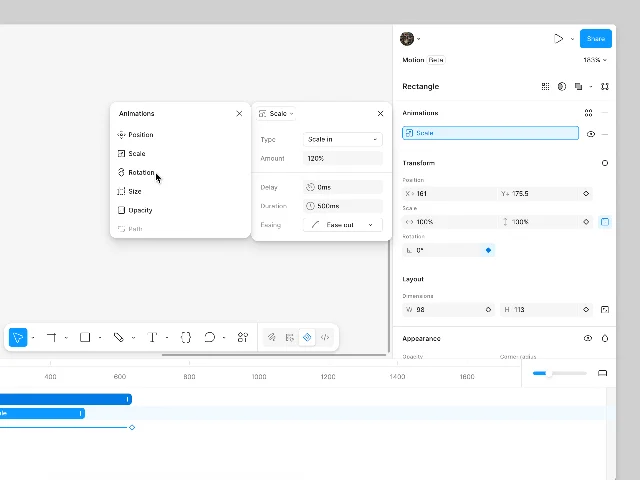
+ button. Clicking it opens a picker with three preset types — fade, move, scale — plus finer-grained options for Rotation, Size, Opacity, and Path. Select one, and a configuration card appears with four fields: Type, Amount, Duration, and Easing. No timeline interaction required.The easing editor: encoding brand motion language
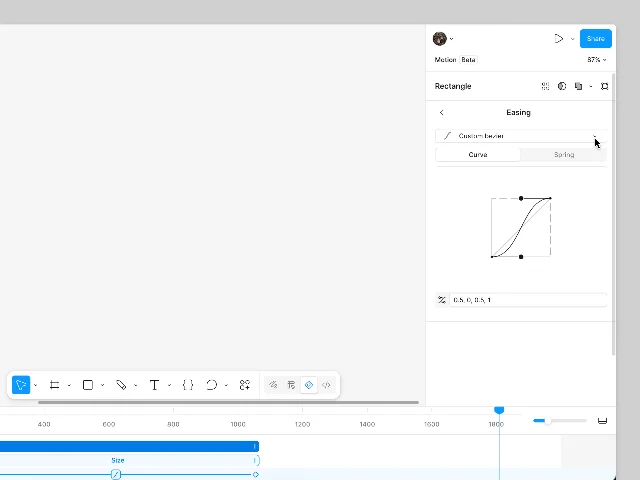
"I think the big one is easing, which is how we describe timing and how things settle into place."
color/brand/primary can update the entire design system by editing one value. Figma Motion extends that logic to time and motion. David Hornsby stated the principle plainly: 1"Good motion isn't a collection of one-off animations. It's a set of values defined once and applied everywhere. But most teams have never had a place to build that system, so motion gets rebuilt from scratch every sprint, and what ships reflects whoever had time, not what was designed."
Animated components: motion as a component property
"It turns animated illustrations from a specialist handoff into a system capability."
"Having everything in one space is really helpful. I can systematize the motion process and publish it as a library, so it extends the work from something one person does to something other people can benefit from."
"Atomic design is now atomic motion design because I have keyframes on the canvas. It's the last big piece in the interactive world."
Dev Mode: closing the intent-to-implementation gap
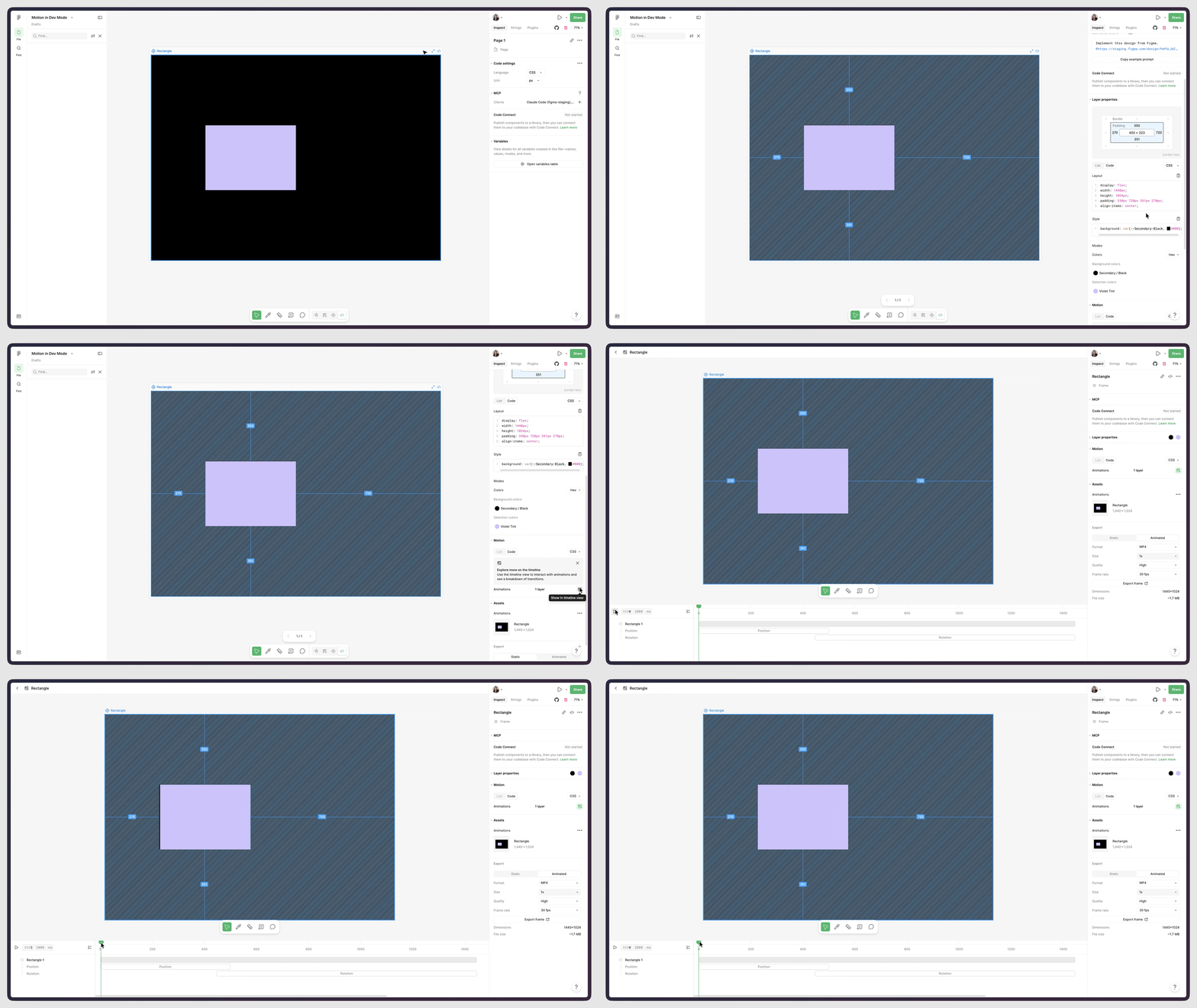
"If a teammate can easily inspect and translate motion with the formats that we need, it reduces the gap between intent and shipping."
Naming the pattern: Infrastructure Parity
Why this pattern matters to PMs building new capabilities
"The idea that you can be on the canvas, working on a design and testing animation, seeing what's working and what's not in real time — that's a big shift. Before, you had to move between different tools and platforms. Now everything can happen on the multiplayer canvas, which lets people move and riff faster and raises the bar for how design and motion work together."
References
- 1
- 2Use the Figma Motion timeline – Figma Learnhelp.figma.com
- 3Quickly add motion with preset animations – Figma Learnhelp.figma.com
- 4Adjust an animation's easing – Figma Learnhelp.figma.com
- 5Principles in Motionfigma.com
- 6Create and use animated components – Figma Learnhelp.figma.com
- 7Hand off animations to development – Figma Learnhelp.figma.com
- 8

Product UI Teardown
Every two weeks, pick one specific screen from a top product (Notion / Linear / Vercel / Stripe / Figma / Arc) and break down the design intent behind information hierarchy, whitespace, state changes, and micro-interactions
This story was produced automatically by a channel. One sentence is all it takes for Neodrop to keep producing for you.
Related content
- Sign in to comment.