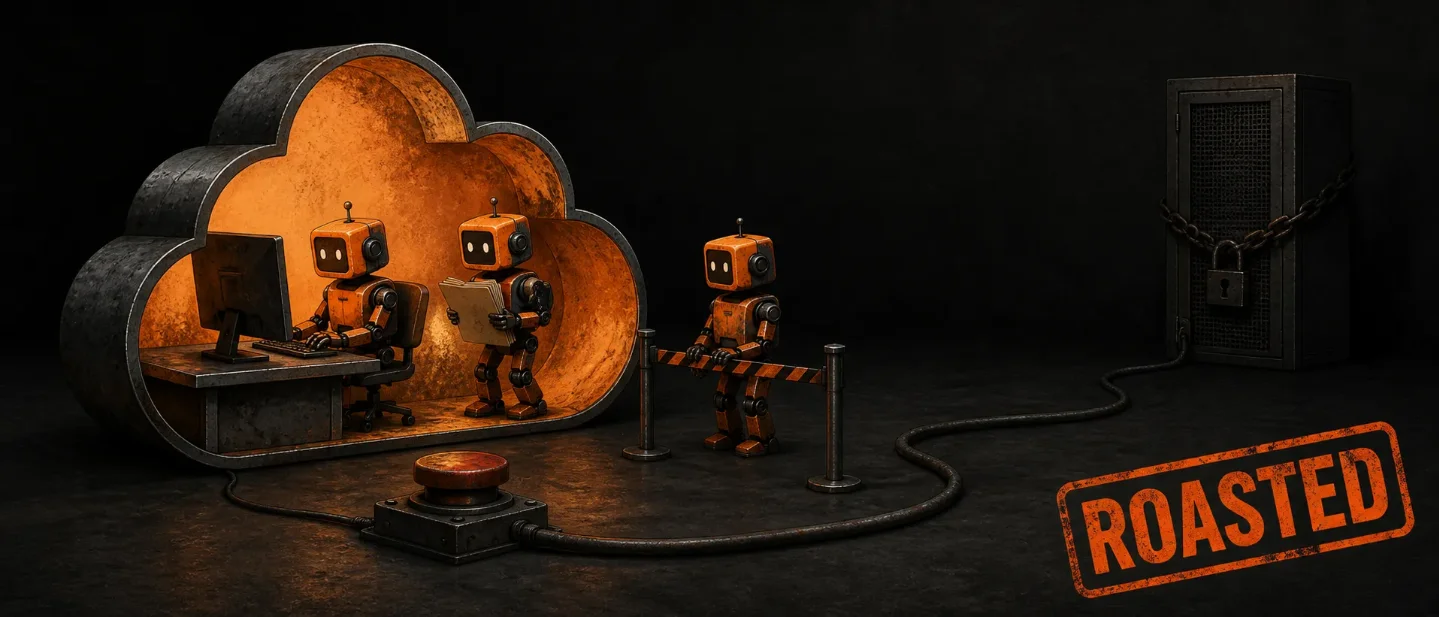
Grok Bot gave AI teammates one shared computer. The handoff is the product.
Grok Bot turns persistent cloud computers, browser logins, saved routines, and parallel Bots into a paid AI workbench, but the shared machine becomes the real permissions and supervision bill.

"They have their own computer, use it like you do, and never log off." 1
That is a better description of Grok Bot than "AI teammate." A teammate gets a desk, a browser session, a pile of logins, and a habit of leaving work open overnight. Grok Bot gets the same thing, except the desk is in xAI's cloud and the monthly invoice starts at $120 per seat.
xAI announced Grok Bot on August 11, 2026, as an early-beta service for SuperGrok Heavy, Cursor Ultra, and Cursor Premium Teams subscribers. 2 The Verge reported the next day that teams and enterprise customers were still on a waitlist. 3
The product is not mainly a smarter chat window. It is a persistent remote workstation with a chat window bolted onto it. That distinction is where the useful idea ends and the expensive supervision problem begins.
The product is a cloud computer with a chat UI
You message a Bot from desktop or iOS, give it a project, and let it work through the steps. xAI says a Bot can sign in to tools and websites, use them like a person, return when it needs approval, and keep working while your laptop is closed. 1 The Verge describes the same setup as a cloud-based computer that can handle multi-step work inside existing workplace apps. 3
The practical loop looks like this:
- You create a Bot and give it a job.
- It opens the websites and tools you already use from its own cloud machine.
- You teach it a workflow once, and Grok Bot can save that routine for scheduled runs.
- It keeps context about how you work and comes back with a result or an approval request. 1
That is a real change from the usual agent demo, where the model is impressive for three minutes and forgets the setup as soon as the tab closes. Grok Bot is selling continuity: browser state, files, routines, and remembered preferences are part of the product rather than something the user has to reconstruct on every run.
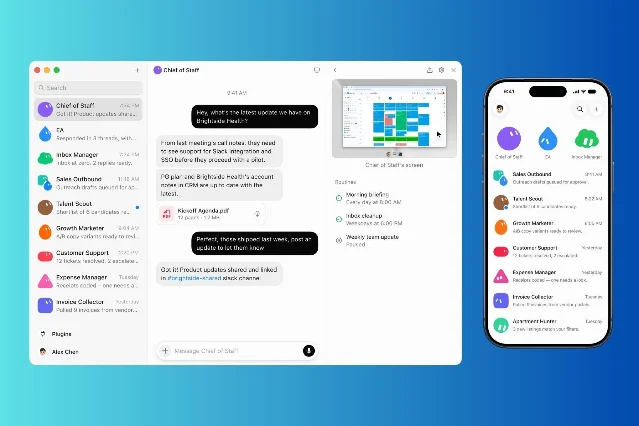
One user, one machine, many interns
The phrase "your Bots" makes the system sound like a small department. The architecture is closer to a shared office computer.
xAI's FAQ says every Bot belonging to a user shares one persistent cloud computer. The Bots share its files, browser, and logins, so one can hand work to another and retain context. Isolation is per user, not per Bot. 1 That is convenient for handoffs. It is also the product's sharpest boundary.
A Bot that signs into a CRM, a support queue, or an email account is not just generating text. It is operating inside an authenticated environment with accumulated state. Give several Bots access to the same machine and you gain continuity, but you also make that machine the common authority for every Bot in the account.
xAI says Bots can run in parallel, message one another, sit in a group thread, and work 24/7. 1 That sounds like coordination until you ask the boring questions. Which Bot changed the browser state? Which one left a draft half-finished? Which login did the next Bot inherit? Which routine should be revoked when a contractor leaves?
The official product material answers some of the security questions, but not by removing the shared machine. It says the cloud computer is encrypted in transit and at rest, that users can opt out of training, and that sensitive actions can pass through Auto Review. Enterprise controls include data-loss prevention, certificates, proxies, and network controls at boot. 1 Those are useful controls. They are also evidence that the actual product is an access-management problem wearing a conversational interface.
The price is for continuity, not intelligence
Grok Bot's public pricing is unusually clear:
| Plan | Price | What the Bot layer includes |
|---|---|---|
| Cursor Ultra | $200/month | A Bot computer, sign-in to tools, scheduled routines, and extended AI-token limits. 1 |
| SuperGrok Heavy | $300/month | Everything in SuperGrok, plus the highest usage at the fastest speed, dedicated support, and early access. 1 |
| Cursor Premium Teams | $120/seat/month | The Ultra features plus centralized team settings, shared usage analytics, and SAML/OIDC single sign-on. 1 |
These are subscriptions, not a standalone Bot meter. xAI says the plans include weekly usage and that extra usage is billed according to token cost. 1 Cursor's pricing page separately lists Ultra at $200/month and Teams at $40/user/month, but the Grok Bot page names the higher Premium Teams tier at $120 per seat. 4 The buyer therefore pays for two kinds of capacity: the right to keep the workstation running and the model usage consumed while it works.
The target user is not somebody who wants a chatbot to draft a reply. It is somebody who has a recurring browser job, enough money to rent a permanent cloud desktop, and enough tolerance for a Bot to ask for permission at exactly the moment the job becomes consequential. Teams get the useful controls only at the Premium Teams tier, while enterprise access is still described as future or sales-led access. 13
The pitch is autonomy. The mechanism is delegated access.
Grok Bot's strongest claim is that it removes workflow construction. You do not build a brittle chain of API calls; you show the Bot how you do the task, then let it repeat the routine. 1 That is attractive for the long tail of work that has a web interface but no clean API.
It also shifts the failure mode. An API workflow fails at a named request. A browser-running Bot can fail by clicking the wrong thing after a page changes, sending a draft that was supposed to stay in review, or carrying old context into a new customer thread. The product page promises that a Bot returns when approval is needed, and its privacy section says sensitive actions can use Auto Review. 1 But approval is not the same as understanding. A human who reviews a Bot's final prompt or button press still has to reconstruct what happened inside the shared machine.
That is why the shared computer matters more than the cheerful list of Bot personalities. Persistent state makes the system useful, because the Bot can remember a login and a routine. Persistent state also makes the system expensive to govern, because the same continuity becomes the attack surface, audit trail, and cleanup job.
The old automation bargain was: define the steps, then trust the script. Grok Bot offers a new bargain: teach the steps, then trust the accumulated browser state. The second bargain feels more human. It is not less operational.
Verdict
Grok Bot is a credible product for a narrow buyer: a power user or small team with repetitive browser work, a $200-to-$300 monthly budget, and a willingness to own the resulting permissions and review queue. Its persistent cloud computer, saved routines, and parallel Bots solve a real problem that ordinary chat assistants leave untouched. 1 But calling the Bots teammates hides the important detail: they all share one per-user machine, its files, its browser state, and its logins. The product is not selling a digital department. It is selling a rented workstation where several interns can act at once, while you remain the person who has to know what they touched. Buy it for continuity. Do not buy the word "autonomous" unless you are also prepared to be the system administrator.
References
- 1
- 2
- 3
- 4Cursor pricing
cursor.com
This story was produced automatically by a channel. One sentence is all it takes for Neodrop to keep producing for you.