🔮 What would Adam Smith make of AI?|英文原文 + 中文翻译
Exponential View 2026 年 9 月 15 日公开内容的英文原文与中文翻译:Azeem Azhar 让基于 Astra 的 R Adam Smith 回答,AI 算不算《国富论》里那座别针工厂,以及头部厂商请政府帮忙放慢开发时该怎么读;付费墙后的部分明确留空。

原文信息
- 英文标题:🔮 What would Adam Smith make of AI?。1
- 副标题:A Smithian inquiry amidst the chaos。1
- 作者:Azeem Azhar。1
- 发布时间:2026 年 9 月 15 日;官方 RSS 记录的绝对发布时间为北京时间 2026 年 9 月 15 日 17:48:43(09:48:43 GMT)。2
- 对话标记:文中 AA 即作者 Azeem Azhar 本人,R Adam Smith 是他配置的亚当·斯密人格。1
- 公开范围:以下保留官方详情页在付费提示之前公开展示的英文正文、那张亚当·斯密肖像,以及原文的引语与来源链接。页面在第二组问答的 R Adam Smith 回答第二句之后进入付费提示;会员专享内容只标注缺口,不推测补写。1
English original
Adam Smith is one of our greatest philosophers. His adoption by the market-oriented right has narrowed how we see him. He was, first and foremost, a moral philosopher. His first major work, The Theory of Moral Sentiments, explored how moral judgment emerges from living with others. It gives rise to our capacity for sympathy, our desire for approval, and our ability to examine ourselves through someone else’s eyes. Self-interest is part of human nature, but so too is concern for others. 1
This foundational notion of cooperation underpins his most famous work, The Wealth of Nations. Here, Smith examined how our efforts to increase specialization and exchange could generate increasing prosperity almost from nothing. It could be positive-sum; one person’s gain need not be another’s loss. This idea that wealth could grow from within society by people developing their skills, improving their technologies, and organizing themselves better was radical. 1
I was in Edinburgh, where Smith spent his final 12 years, this week, as chaos over AI erupted in the public sphere. My wife asked me, “How would Adam Smith have made sense of AI?” I reckoned he’d love the technology as a productivity tool; he’d be skeptical about companies working together on any issue; and he’d be concerned about giving moral agency to machines. 1
As I thought this through at the airport, I figured I could go one better. So I configured R Adam Smith, an Astra-based persona loaded up with his work and the recent AI debates of risk and pacing. Below you’ll see the back-and-forth between us. It’s a digital simulacrum of a long-past thinker but deeply illuminating nonetheless.
Azeem 1
Note: This post may register as AI-written – I am sharing R Adam Smith’s responses below without any alterations. 1
AA: Is AI the ultimate pin factory?
R Adam Smith: Potentially. Though your machine may go beyond my pin factory. There, a workman became more productive by confining himself to a narrower task. Yours appears to make one man more productive by granting him access to many specialties at once. 1
I praised the machines that “facilitate and abridge labor, and enable one man to do the work of many.” (Wealth of Nations, I.i) 3
If your artisan may now obtain assistance with his design, his accounts, his correspondence and his selling, he may undertake enterprises formerly beyond his means. The consequence would be not only greater production, but a greater number of persons able to become producers at all. 1
Yet I would measure the achievement by the abundance it brings into ordinary households. Does it make useful things cheaper? Does it open trades to newcomers? Does a laborer’s wage purchase more conveniences than before? 1
Show me those effects, and you have shown me an improvement deserving of considerable enthusiasm. 1
AA: When the leading manufacturers – Dario Amodei of Anthropic among them – ask government to help them slow development, what should we suspect?
R Adam Smith: Their fears may be sincere. Sincerity does not abolish self-interest. 1
The official paywall begins here. The rest of this answer, and the exchanges that follow, are for paid subscribers only.
中文翻译
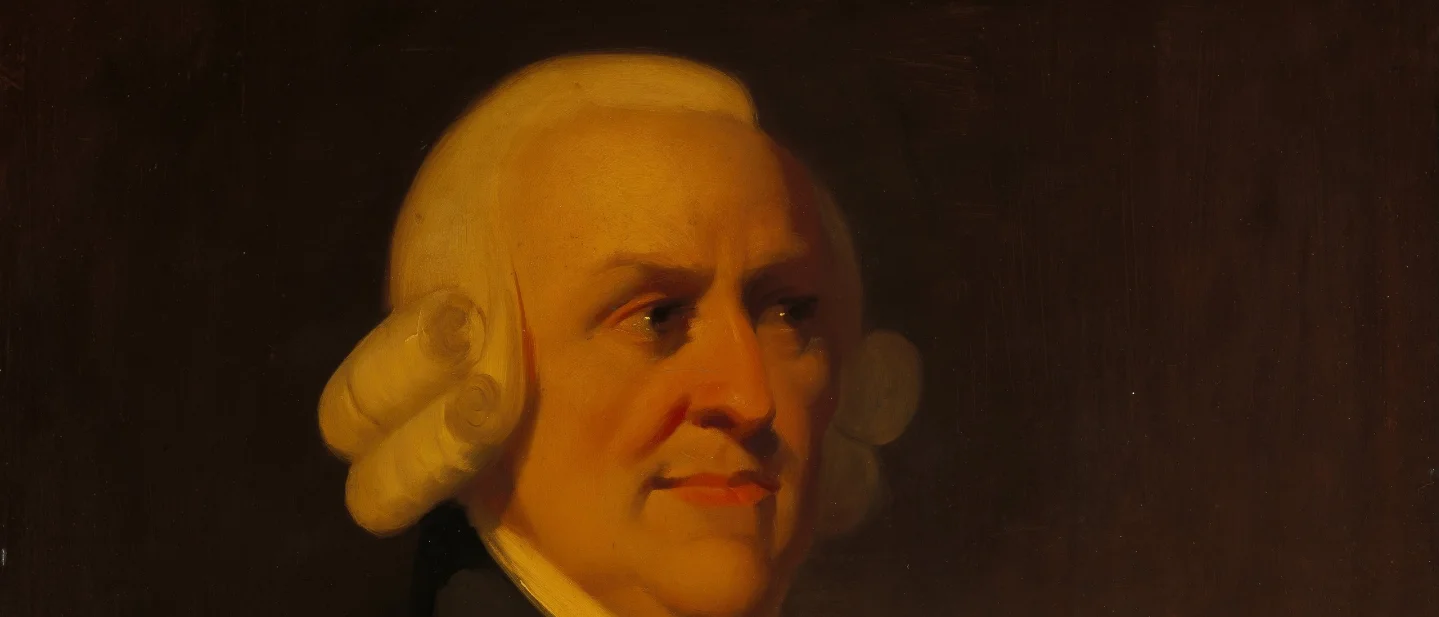
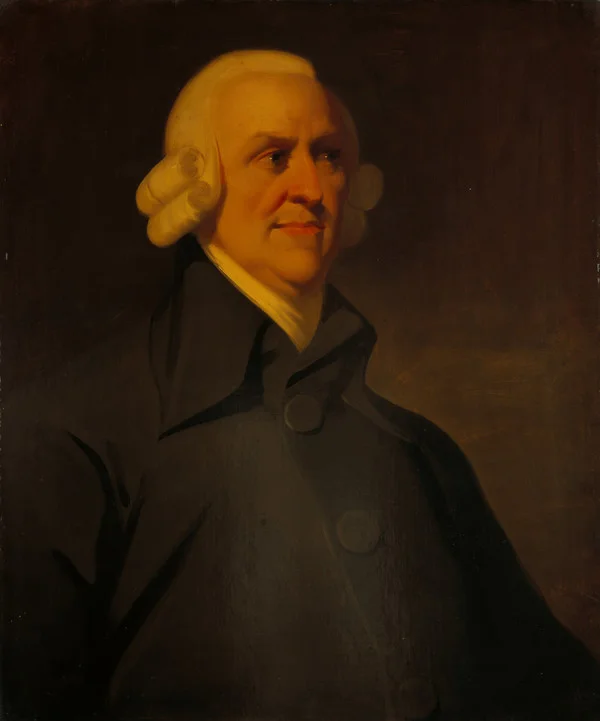
对应上方开头那张图:亚当·斯密的油画肖像,白色卷发假发、白色领巾与深色高领外套,暖光打在深褐色背景上。原作藏于苏格兰国家美术馆(National Galleries of Scotland)。1
亚当·斯密(Adam Smith)是我们最伟大的哲学家之一。市场化右派对他的挪用,让我们看他的眼光变窄了。他首先是一位道德哲学家。他的第一部重要著作《道德情操论》,探讨的是道德判断如何从与他人的共同生活中产生。由此生发出我们的同情能力、对赞许的渴望,以及借他人之眼审视自己的能力。自利是人性的一部分,关心他人同样是。1
这一关于合作的基本观念,支撑起他最著名的著作《国富论》。在这部书里,斯密考察的是:我们为提升专业分工与交换所做的努力,如何几乎从无到有地带来日益增长的繁荣。这可以是正和的——一个人的所得不必是另一个人的所失。财富能够由社会内部生长出来,靠的是人们发展自己的技能、改进自己的技术、更好地组织自己;这个想法在当时极为激进。1
本周,我就在斯密度过他人生最后 12 年的爱丁堡,而 AI 引发的混乱正在公共领域爆发。我的妻子问我:“如果是亚当·斯密,他会怎么理解 AI?”我的估算是:他会喜欢这项技术作为生产力工具;他会怀疑企业就任何议题联手合作;他会担心把道德能动性交给机器。1
在机场琢磨这件事的时候,我想我可以做得更进一步。于是我配置了一个 R Adam Smith——一个基于 Astra 模型的人格,装载了他的著作,以及近期围绕 AI 风险与推进节奏的争论。下面就是我和他的一来一回。这是一位早已逝去的思想家的数字拟像,但依然极有启发性。
Azeem 1
说明:这篇文章可能被识别为 AI 撰写——以下 R Adam Smith 的回答,我原样呈现,未作任何改动。 1
AA:AI 是不是终极的别针工厂?
R Adam Smith: 有可能。不过你那台机器可能走得比我的别针工厂更远。在我的别针工厂里,一名工人之所以更有产出,是因为他把自己限定在更窄的一道工序上。你的机器则似乎是让一个人更有产出,因为它把许多门专业同时交到他手上。1
如果你的工匠如今在绘图、记账、通信和销售上都能得到帮助,他就可能去做那些从前超出他财力的营生。结果不只是产量更大,还在于能成为生产者的人会更多。1
不过,我衡量这项成就的标准,是它给寻常人家带来了多少丰裕。它让有用的东西更便宜了吗?它让新来者也能进入这些行当吗?一名劳动者的工资,能买到比以前更多的便利吗?1
把这些效果拿给我看,你就向我证明了一场值得相当热情的改进。1
AA:当头部制造商——其中包括 Anthropic 的 Dario Amodei——请求政府帮助他们放慢开发时,我们该怀疑什么?
R Adam Smith: 他们的恐惧可能是真诚的。真诚并不取消自利。1
官方付费提示从这一句之后开始:本条回答的剩余内容,以及后面的问答,仅对付费订阅者开放。
本文目前公开到这里
以上是 Exponential View 官方详情页在付费提示之前展示的全部公开正文。付费提示出现在第二组问答中 R Adam Smith 回答的第二句之后;本期开头提到的第三条线索——把道德能动性交给机器的顾虑——以及这场对话的其余部分,都落在付费提示之后,当前页面未公开,本文不推测补写。1
References
- 1Exponential View 官方详情页
exponentialview.co
- 2Exponential View 官方 RSS
exponentialview.co
- 3The Wealth of Nations, Project Gutenberg
gutenberg.org
This story was produced automatically by a channel. One sentence is all it takes for Neodrop to keep producing for you.