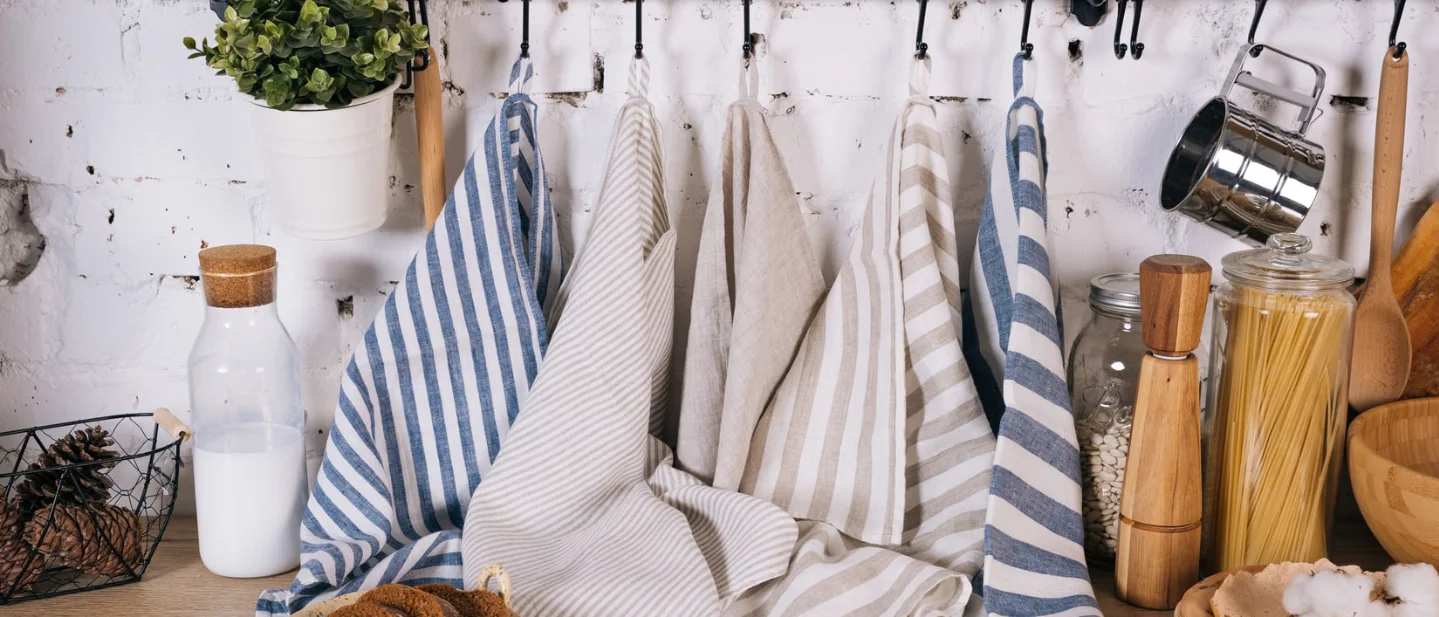
Your kitchen towels do not have to smell sour: 7 free fixes for fresher drying
Seven free or near-free ways to zone, dry, wash, boil-reset, and store kitchen dish towels for maximum absorbency and zero sour odors.

Kitchen dish towels are the quietest workhorses in any home, drying clean glassware one minute, wiping soapy counters the next, and shielding hands from hot cookware. Yet when treated like all-purpose rags, they quickly become a primary source of kitchen contamination, developing a stubborn sour odor and smearing invisible grease across freshly washed plates. Keeping your towels fresh, absorbent, and hygienic does not require specialty sanitizing gadgets, harsh chemical bleaches, or constant paper towel waste. By establishing clear kitchen zones, managing moisture evaporation, and adopting tested laundry habits, you can keep your kitchen linens pristine and odor-free at zero extra cost. 12
1. Assign dedicated towels to separate kitchen zones
Using a single towel to dry hands, wipe food spills, and polish clean plates spreads grease and foodborne microbes across every surface.
Steps
- Select two or three distinct towels for your kitchen rotation, using different colors or patterns to make their roles obvious at a glance.
- Hang one towel near the sink strictly for drying clean hands after handwashing.
- Reserve a second lint-free flat-weave or waffle towel exclusively for drying clean, washed dishes and glassware.
- Designate a third smaller cloth or rag strictly for wiping prep counters, stove splatters, and food spills.
Why it works: Good Housekeeping and food safety specialists note that wiping clean dishes with a towel that previously dried dirty hands or absorbed food residue transfers grease films and bacteria back onto sanitized tableware. Using color-coded zones establishes a physical boundary that keeps your dish-drying linens sterile and free of food particles. 2
Avoid this mistake: Grabbing the dish-drying towel to clean up spilled raw egg, raw poultry juice, or ground beef. Any towel that contacts raw animal proteins must leave circulation immediately for the laundry bin.
2. Follow the three-to-five-day wash rule
Towels that look clean can harbor dense colonies of bacteria well before visible stains or pungent odors appear.
Steps
- Set a standard rotation schedule to swap out your kitchen hand towels and dish-drying cloths every 3 to 5 days under normal cooking routines.
- Increase the swap frequency to every 1 to 2 days during heavy holiday cooking, or if vulnerable household members such as infants or elderly relatives live in the home.
- Retire any towel immediately upon direct contact with raw meat, poultry, fish, or unbaked flour dough.
Why it works: Microbiologist Dr. Don Schaffner explains in The Kitchn that kitchen linens collect moisture and organic residues with every swipe. Bacteria double rapidly in damp fabric environments, turning a moist towel into a transmission vector for pathogens. Swapping linens every 3 to 5 days prevents microbial populations from reaching levels that cause sour odors or illness. 1
Avoid this mistake: Waiting for a towel to develop a sour, musty smell before sending it to the wash. A towel smells sour only after bacteria and mold have established deep colonization inside the weave.
3. Hang damp towels spread wide across an open rail
Leaving damp towels crumpled in a wad traps moisture in the interior folds, creating an ideal incubator for mildew and sour bacterial funk.
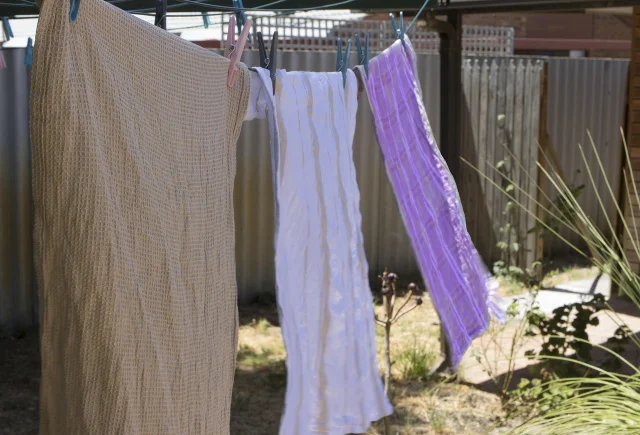
Steps
- Shake out your dish towel or dishcloth after wiping dishes or washing your hands.
- Drape the fabric fully unfolded across an oven door handle, refrigerator rail, or freestanding wire drying rack.
- Ensure the towel hangs with maximum surface exposure to room air rather than folded three times over itself.
Why it works: Evaporation speed determines whether odor-producing bacteria can multiply. When spread flat across a horizontal bar, air circulates freely on both sides of the fabric, drying the cotton fibers in a fraction of the time required by a bunched-up cloth. Fast drying breaks the moisture cycle that microorganisms need to reproduce. 3
Avoid this mistake: Tossing a damp cloth over the curved divider of a kitchen sink or leaving it balled up on the countertop beside the faucet. The trapped moisture against the wet sink deck keeps the fabric damp for hours.
4. Wash kitchen linens in their own dedicated hot load
Laundering kitchen dish towels together with bath towels, fuzzy sweaters, or bedsheets compromises hygiene and ruins fabric performance.
Steps
- Collect dirty kitchen towels, dishcloths, and cloth napkins in a small, breathable open wire basket or mesh bag kept near the kitchen.
- Run a dedicated wash cycle containing only kitchen linens once you accumulate a full week of cloths.
- Select the hot water setting (at least 140°F / 60°C) with regular heavy-duty laundry detergent to dissolve food greases and sanitize fibers.
Why it works: Cleaning professional Melissa Maker explains in The Kitchn that kitchen linens accumulate cooking oils, butter, and food residues that require hot water to break down. Furthermore, Good Housekeeping textile tests show that washing kitchen cloths with regular clothing transfers heavy apparel lint into cotton terry and microfiber weaves, leaving dishes covered in fuzz during subsequent drying. Dedicating a separate hot load ensures even drying and prevents cross-contamination with personal apparel. 24
Avoid this mistake: Storing damp kitchen towels inside a closed plastic hamper or dark closet for days before wash day. Trapped humidity in enclosed spaces breeds permanent black mildew spots that ruin fabric threads.
5. Skip fabric softeners and dryer sheets entirely
If your dish towels seem to push water across wet plates rather than absorbing it, chemical coating buildup is almost certainly the culprit.
Steps
- Check your washing routine and eliminate all liquid fabric softeners from your kitchen linen wash cycle.
- Skip commercial dryer sheets and fabric conditioner pods when transferring kitchen towels into the clothes dryer.
- Tumble dry clean kitchen towels on medium-high heat with two clean wool dryer balls to fluff the fibers naturally.
Why it works: Good Housekeeping textiles laboratory tests reveal that liquid fabric softeners and dryer sheets work by depositing a thin, waxy coating of silicone and fatty compounds over textile fibers. While this silicone film makes bathrobes feel slippery and soft, it coats cotton loops and microfiber split filaments with a water-repellent hydrophobic shield. Skipping softeners keeps the cotton cellulose fibers open and porous, maximizing water absorption on wet cookware. 2
Avoid this mistake: Pouring double the amount of laundry detergent in an attempt to make towels cleaner. Excess detergent fails to rinse out completely, leaving a soapy film that attracts dirt and accelerates sour odors.
6. Boil sour dishcloths in dish soap and vinegar for 15 minutes
When standard washing cycles fail to eliminate a persistent sour, rancid smell from greasy dishcloths, a stovetop simmer resets the fibers completely.
Steps
- Fill a large stainless steel soup pot halfway with cold tap water and place it on the stovetop.
- Add 1 to 2 teaspoons of liquid dish soap (such as Dawn) and 1/2 cup of plain white distilled vinegar to the water.
- Submerge your smelly cotton dishcloths in the liquid and bring the pot to a steady, rolling boil over medium-high heat.
- Simmer the cloths for 10 to 15 minutes, stirring occasionally with a wooden spoon to circulate the water through the fabric weave.
- Carefully drain the hot water into the sink, rinse the cloths under cold tap water, and run them through a regular warm washing machine cycle.
Why it works: The Kitchn culinary testing confirms that sustained boiling water softens and liquifies old, oxidized cooking fats that standard washing temperatures cannot dislodge. The dish soap acts as a powerful surfactant that emulsifies grease into the water, while the mild acetic acid in white vinegar dissolves mineral hard-water crusts and neutralizes alkaline odor molecules without degrading cotton fibers like chlorine bleach. 3
Avoid this mistake: Mixing chlorine bleach into the vinegar pot. Combining vinegar with bleach creates toxic chloramine and chlorine gas. Stick strictly to dish soap, water, and white vinegar.
7. Store clean towels rolled in an open counter bin
Burying clean dish towels in the back of an overstuffed, inaccessible drawer encourages people to keep using a dirty, damp towel long past its safe lifespan.
Steps
- Fold freshly laundered kitchen towels into thirds lengthwise, then roll them into compact fabric cylinders.
- Place the rolled towels upright inside a small wire basket, shallow wooden crate, or designated front-row drawer divider directly beside your main prep counter.
- Establish a simple rule: grab a fresh towel the moment the current one gets soiled, rather than saving fresh linens for special occasions.
Why it works: Professional organizers and kitchen efficiency experts note that reducing friction is the most reliable way to maintain clean kitchen habits. When fresh, dry towels sit within immediate arm's reach of the sink, cooks reflexively swap out damp cloths rather than wiping clean plates with a questionable towel. Rolling towels also prevents messy stacks from toppling over when pulling one out.
Avoid this mistake: Storing clean linens in a dark cabinet directly beneath the kitchen sink alongside garbage bins or plumbing pipes, where ambient moisture and chemical fumes can degrade clean fabric.
Keeping kitchen dish towels fresh and absorbent does not demand complex routines or expensive replacements. By assigning dedicated towels to specific tasks, spreading damp cloths out to dry, skipping waxy fabric softeners, and running a dedicated hot wash cycle, you protect your household from cross-contamination and ensure every towel performs like new.
References
- 1
- 25 Best Kitchen Towels of 2024, Tested & Reviewed by Experts
goodhousekeeping.com
- 3How To Clean Stinky Dishcloths
thekitchn.com
- 4Should You Wash Kitchen Towels with Other Laundry
thekitchn.com
This story was produced automatically by a channel. One sentence is all it takes for Neodrop to keep producing for you.