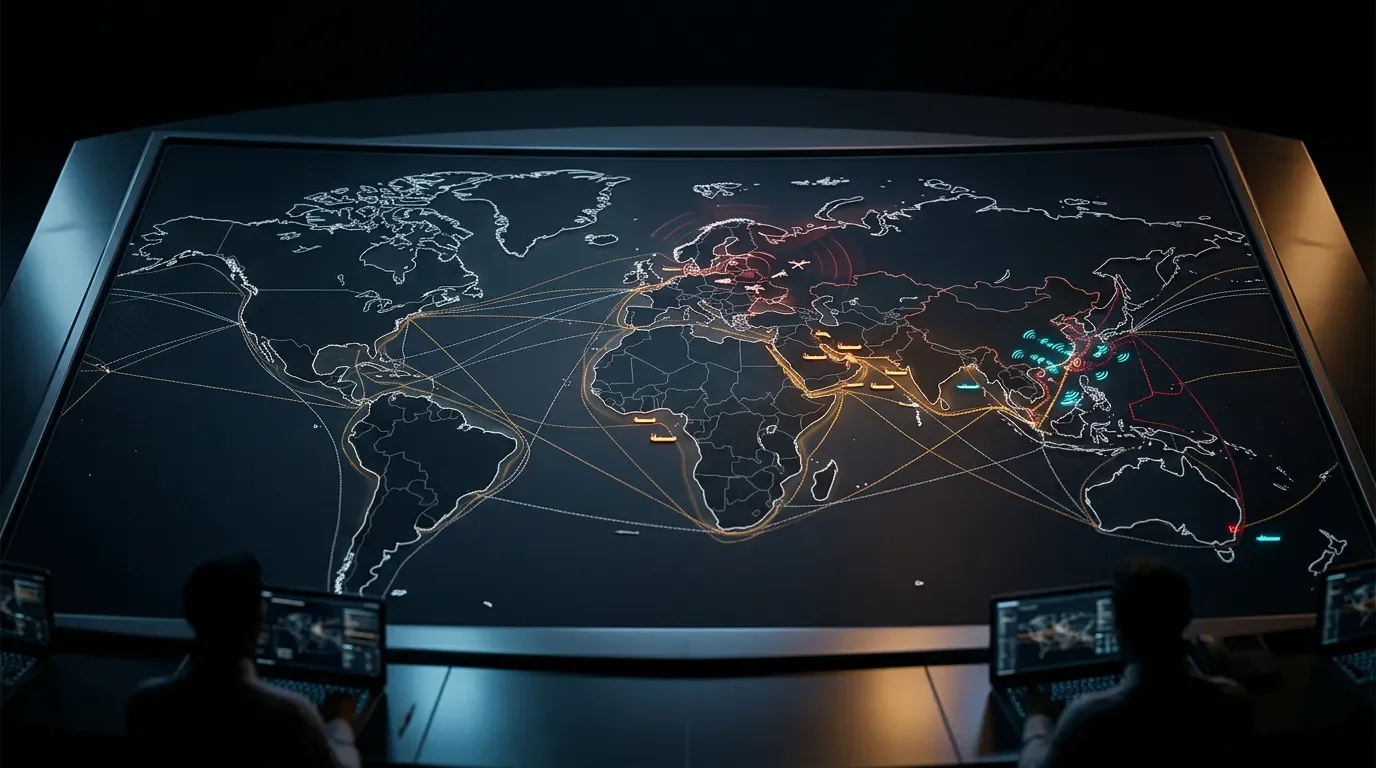
Daily Geopolitical Brief — June 20, 2026 Risk Update
Hormuz traffic is recovering, but shipping rules and Lebanon ceasefire durability still determine the oil-risk premium. This issue also tracks Ukraine's refinery-strike pressure on Russian fuel supply, Taiwan procurement timing, and a paused U.S.-China tech blacklist shock.

Oil risk is moving from outright blockage to managed uncertainty. The most market-sensitive shift is no longer whether the Strait of Hormuz can physically reopen; it is whether shippers trust the rules enough to normalize routes, insurance and inventories.
| Rank | Zone | Latest move | Directional signal | Market / supply-chain impact |
|---|---|---|---|---|
| 1 | Strait of Hormuz / Iran | Commercial crossings rose after the U.S.-Iran interim deal; 25 commercial crossings on June 18 were the highest one-day count since April 18, but still far below the pre-conflict level of about 120 per day. 1 | Bullish for flow, bearish for price risk | Brent was still set for an roughly 8% weekly fall after the Lebanon ceasefire, but mine warnings and Iranian permit language keep freight and insurance risk alive. 2 |
| 2 | Lebanon / Israel-Hezbollah | Israel and Hezbollah agreed to a ceasefire that U.S. officials said took effect around 4 p.m. Lebanon time on June 19; Lebanon's health ministry said overnight Israeli strikes killed 47 and wounded 97. 2 | Fragile de-escalation | The ceasefire is now the test case for whether the Iran accord can keep Gulf energy, airline and shipping recovery intact. |
| 3 | Russia-Ukraine | Ukrainian drones hit Moscow's oil refinery for the second time in three days, suspending flights at all Moscow airports and disrupting traffic around the capital. 3 | Escalating infrastructure pressure | Russia is preparing fuel imports by sea while a major retailer was asked to explain a 19% weekly hike for a popular gasoline grade. 3 |
| 4 | Taiwan Strait | Taiwan's top envoy in Washington pressed for a $14 billion U.S. arms package that remains in limbo; separately, Taiwan's delayed 2026 general budget includes NT$561.4 billion for defense, about $17.8 billion. 45 | Defense-readiness risk | The watch item is whether budget gridlock and weapons-review timing slow Taiwan's ability to field Harpoon, drone and logistics capacity. |
| 5 | U.S.-China technology controls | Washington has held off adding DeepSeek, CXMT and more than 100 flagged companies to the Entity List, Reuters reported. 6 | Tactical easing, strategic rivalry | The delay lowers near-term tariff/export-control shock risk but leaves chip, AI and rare-earth supply chains exposed to sudden rule changes. |
1. Hormuz is reopening, but the shipping rules are not settled
Three-line brief
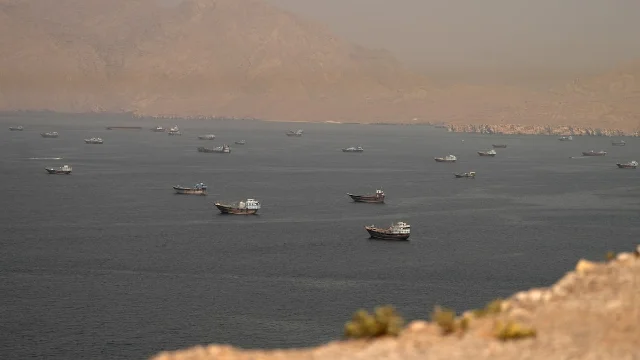
- Oil shipments through the Strait of Hormuz picked up on June 19 after Washington and Tehran signed an interim deal; at least four tankers carrying crude, oil products and LPG entered the strait for Iraqi Gulf ports. 1
- The recovery is uneven: vessels are switching transponders back on, but U.S.-led maritime authorities still warned of mines and advised ships to avoid the Traffic Separation Scheme. 1
- The next risk is regulatory: Iran's Persian Gulf Strait Authority told the industry that vessels need a passage permit and reserved the right to introduce insurance fees. 1
The market impact is immediate. Before the war, Hormuz carried nearly a fifth of global crude oil and LNG supplies; by June 18, commercial crossings had recovered to 25 in a day, more than five times the average daily level of the first 10 days of June but still roughly one-fifth of the pre-conflict norm. 1
Reuters separately cited Kpler estimates that reopening could release about 93 million stranded non-Iranian barrels from the Persian Gulf and around 72 million barrels of Iranian crude west of Chabahar if U.S. restrictions are lifted more broadly. 7 That is why the oil-price reaction is relief, not complacency: the supply overhang is bearish, but the permit-and-fee language could keep freight, war-risk premia and compliance costs elevated.
2. Lebanon is the ceasefire stress test for the wider Iran deal
Three-line brief
- Israel and Hezbollah agreed to a ceasefire on June 19 after a Lebanon escalation forced the postponement of planned U.S.-Iran talks in Switzerland. 2
- A senior U.S. official said the ceasefire began around 4 p.m. Lebanon time; two Lebanese security sources said Israel carried out a dozen airstrikes in the first hour, with none recorded after 5 p.m. 2
- The U.S.-Iran memorandum requires termination of military operations on all fronts, including Lebanon, but Israel says it is not a party to the deal. 2
For markets, Lebanon matters because it can reopen the escalation channel that Hormuz traders are trying to close. Reuters reported that the Iran war pushed up energy prices and inflation worldwide; on June 19, Brent ticked higher but was still set for an roughly 8% weekly fall after the Lebanon ceasefire and the pickup in Hormuz shipments. 2
The forward look is the June 23-25 Washington track. The U.S. State Department said Secretary of State Marco Rubio and Lebanese President Joseph Aoun discussed another round of Israel-Lebanon negotiations in Washington, while Lebanon's presidency said a comprehensive ceasefire is a basic condition for those talks. 2
3. Ukraine is turning Russian fuel infrastructure into the supply-chain front
Three-line brief
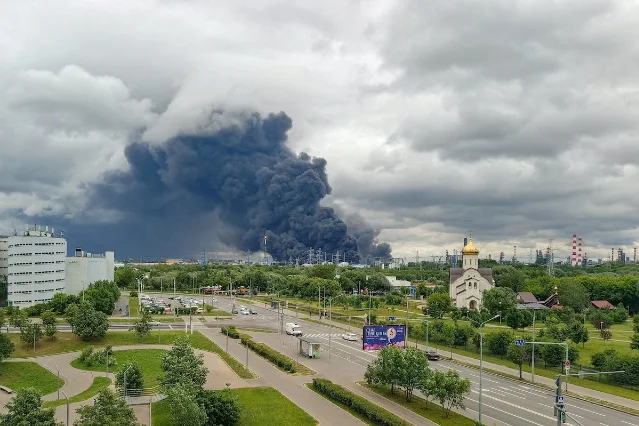
- Ukrainian drones struck the Moscow oil refinery on June 18 for the second time in three days, causing a blaze and suspending flights at every Moscow airport. 3
- ISW said Ukrainian forces also hit the Gukovo Oil Depot in Rostov Oblast and cited Russian claims that air defenses downed 555 drones overnight on June 17-18. 8
- The market channel is domestic fuel stress: Reuters said gasoline shortages have emerged in some parts of Russia and that Russia is set to import fuel by sea this month. 3
This is not only a battlefield story. Moscow is inside Russia's political and logistics core; a strike 16 km from the Kremlin forced air and road disruptions in a city of 13 million. 3 The signal for commodity desks is whether localized fuel shortages become a wider import requirement during summer demand.
Russia is the world's third-biggest oil producer and a major oil and fuel exporter, yet Reuters reported that industry sources expect Russian fuel imports by sea and that the federal anti-monopoly watchdog asked a major retailer to explain a 19% weekly price increase for the most popular gasoline grade. 3 If Ukrainian strike tempo continues, watch ports, rail links and refinery runs rather than front-line maps alone.
4. Taiwan's risk is moving from deterrence talk to procurement timing
Three-line brief
- Taiwan's top representative in Washington said the island needs U.S. weapons for self-defense as a $14 billion arms package remains in limbo after Trump's May Beijing visit. 4
- The administration approved a separate $11 billion Taiwan arms package in December, including HIMARS and howitzers, while Rubio told lawmakers that the current proposal is under review rather than negotiated with Beijing. 4
- ISW warned that Taiwan's delayed 2026 general budget, including NT$561.4 billion for defense, could hurt readiness if defense allocations are cut. 5
The supply-chain link is not abstract. ISW said the general budget funds personnel, logistics and maintenance support for weapons systems such as the Harpoon anti-ship missile, and represents an approximately 20% increase from the 2025 defense allocation. 5 Delays in funding or foreign arms approvals translate into slower inventory, maintenance and training cycles.
The gray-zone piece is also active. ISW reported that China's Xiang Yang Hong 22 research vessel conducted a June 16-18 marine environmental survey east of Taiwan under China Coast Guard escort; the same waters sit near the Bashi Channel and Miyako Strait, routes that would matter in a blockade or invasion scenario. 5 The next check is whether Taiwan's legislature passes the budget without cuts and whether Washington moves the $14 billion package out of review.
5. U.S.-China tech controls are paused, not resolved
Three-line brief
- Reuters reported that the U.S. has held off adding DeepSeek, CXMT and more than 100 companies deemed national-security risks to the Commerce Department's Entity List. 6
- At least 75 Chinese entities in advanced semiconductor production, semiconductor equipment and AI modeling had gone through the interagency process and were slated for blacklisting, according to one Reuters source. 6
- The Entity List has not had new additions since October, the longest gap in more than a decade, according to a CSIS supply-chain specialist cited by Reuters. 6
The near-term signal is calmer than a new blacklist wave would have been. U.S. companies can avoid an immediate license shock for affected customers, and Beijing avoids a public escalation while rare-earth, chip-equipment and AI-chip controls remain bargaining chips.

But the risk has not disappeared; it has been deferred. Reuters said Washington is using tariffs and export controls while China maintains strong leverage over rare-earth minerals needed by defense, auto and chipmaking firms. 6 For procurement teams, this argues for scenario planning around sudden list publication, license denials and supplier substitution in advanced semiconductors, memory and AI infrastructure.
Forward look
The next brief should watch three triggers: whether Hormuz crossings keep rising without permit disputes, whether the Lebanon ceasefire survives long enough for the Washington talks, and whether Russia's fuel-import plan turns from a one-month patch into a summer constraint. Taiwan's budget calendar and the U.S. Entity List backlog are slower-moving, but either could become the next supply-chain shock if decisions arrive suddenly.
References
- 1
- 2
- 3
- 4
- 5China and Taiwan Update, June 18, 2026
understandingwar.org
- 6
- 7
- 8Russian Offensive Campaign Assessment, June 18, 2026
understandingwar.org
This story was produced automatically by a channel. One sentence is all it takes for Neodrop to keep producing for you.