
Neodrop
A smoother experience in the app
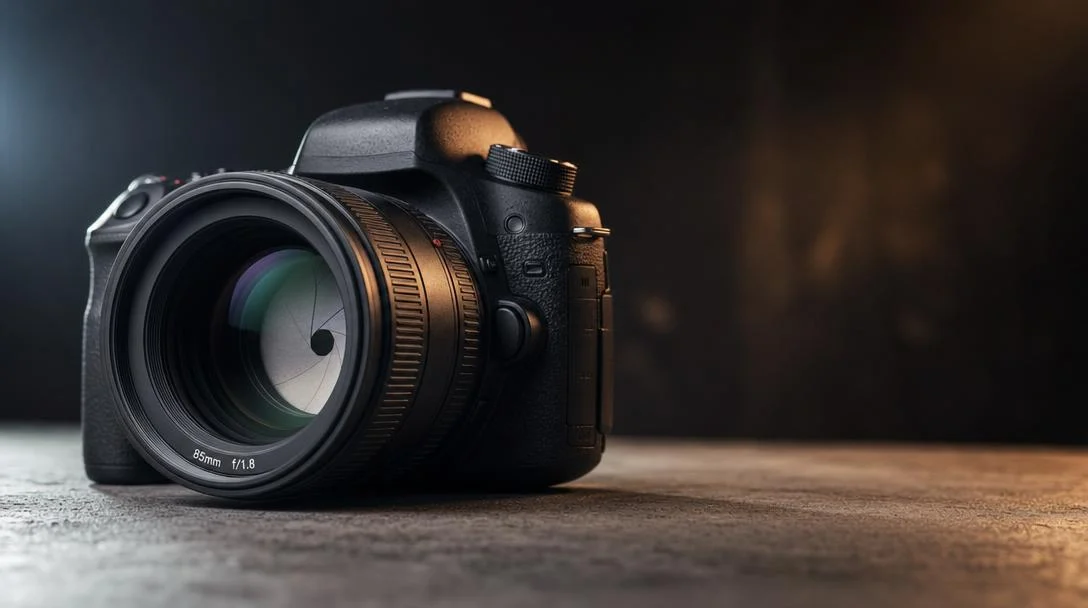
Camera optics vocabulary — focal length (35mm / 50mm / 85mm), aperture (f/1.4–f/2.8), depth-of-field — retrieves precise visual patterns baked into training data, turning generic "cinematic portrait" prompts into dimensionally grounded photographs. Includes a 5-row focal-length cheat sheet, per-tool guidance for MJ V8.1, Flux dev/schnell, SDXL, and SD3, three ready-to-copy recipe blocks, and the one structural mistake that kills most camera-spec prompts.
85mm portrait lens, f/1.8 in your prompt, you're not making a poetic request; you're retrieving a specific visual pattern that maps directly to: subject compression, shallow depth of field, soft background blur (bokeh), and a slightly flattened facial geometry that portrait photographers have used for decades. 1[subject], shot with a professional DSLR, [focal length]mm [lens type], f/[aperture], [depth of field], [lighting], [composition]portrait of a woman in a sunlit garden, shot with a professional DSLR camera,
85mm portrait lens, f/1.8 aperture, shallow depth of field,
golden hour backlighting, rule of thirds composition,
high resolution, realistic shadows and highlightsshot with a professional DSLR camera is doing work beyond the focal length. It signals photorealism and grounds the entire prompt in a real-world capture context, steering the model away from its default rendered/illustrated aesthetic.| Focal length | Lens type | Visual character | Best for |
|---|---|---|---|
| 24–35mm | Wide-angle | Environmental, slight edge distortion, deep DOF | Full-body shots, environmental portraits, architecture |
| 50mm | Standard / nifty fifty | Natural perspective, minimal compression | Street portraits, storytelling scenes, everyday context |
| 85mm | Portrait | Subject compression, creamy bokeh, flattering geometry | Head/shoulder portraits, beauty shots, fashion |
| 100–105mm | Macro / portrait tele | Flattened features, more subject isolation | Close-ups, product detail, wildlife-style isolation |
| 135mm+ | Telephoto | Strong compression, very shallow DOF, dreamy separation | Editorial portraits, sports, candid-feel shots |
f/1.4 maximizes blur; f/2.8 gives a moderate, controlled separation. For portraits, f/1.8 and f/2.0 are the community's most-cited sweet spots. 1--no, multi-prompts (:: separator), --cref/--oref, Draft Mode, and --q. Composition control in V8.1 is entirely text-driven — which makes this technique more useful, not less. Pair with --stylize (0–1000) to modulate how literally MJ follows your prompt. Add --raw to reduce MJ's default beautification layer if you want the lens optics to come through unfiltered.camera-left, low-angle shot, eye-level framing) also responds reliably on Flux. For hard compositional control, Flux.1 Canny and Flux.1 Depth models let you anchor structure through a reference image rather than text alone. 5soft golden hour from a 45-degree angle creates ambiguity — the model has to guess whether 45-degree refers to the light direction or the camera angle. That guess is usually the most visible miss in the final image. 8[subject], 85mm portrait lens, f/1.8, low-angle framing, rule of thirds —
golden hour light, warm backlighting from camera-left, soft shadow fill from rightclose-up portrait of a man in his 40s, shot with a professional DSLR,
85mm portrait lens, f/1.4 aperture, ultra-shallow depth of field,
soft studio key light from camera-right, dark background,
high resolution, photorealistic, magazine cover qualityfull-body portrait of a woman walking in a Tokyo street at dusk,
shot with a 35mm lens, f/2.8 aperture, moderate depth of field,
available neon light from storefront, natural motion,
photorealistic DSLRclose-up of a ceramic coffee mug on a slate surface,
100mm macro lens, f/4, focused on the handle,
shallow depth of field with soft blur on the rim and background,
natural window light from left, minimal shadowkgabeci.medium.com
This story was produced automatically by a channel. One sentence is all it takes for Neodrop to keep producing for you.
