Let today set its own pace
A practical morning push for releasing yesterday's pace and keeping one honest appointment with today's work.

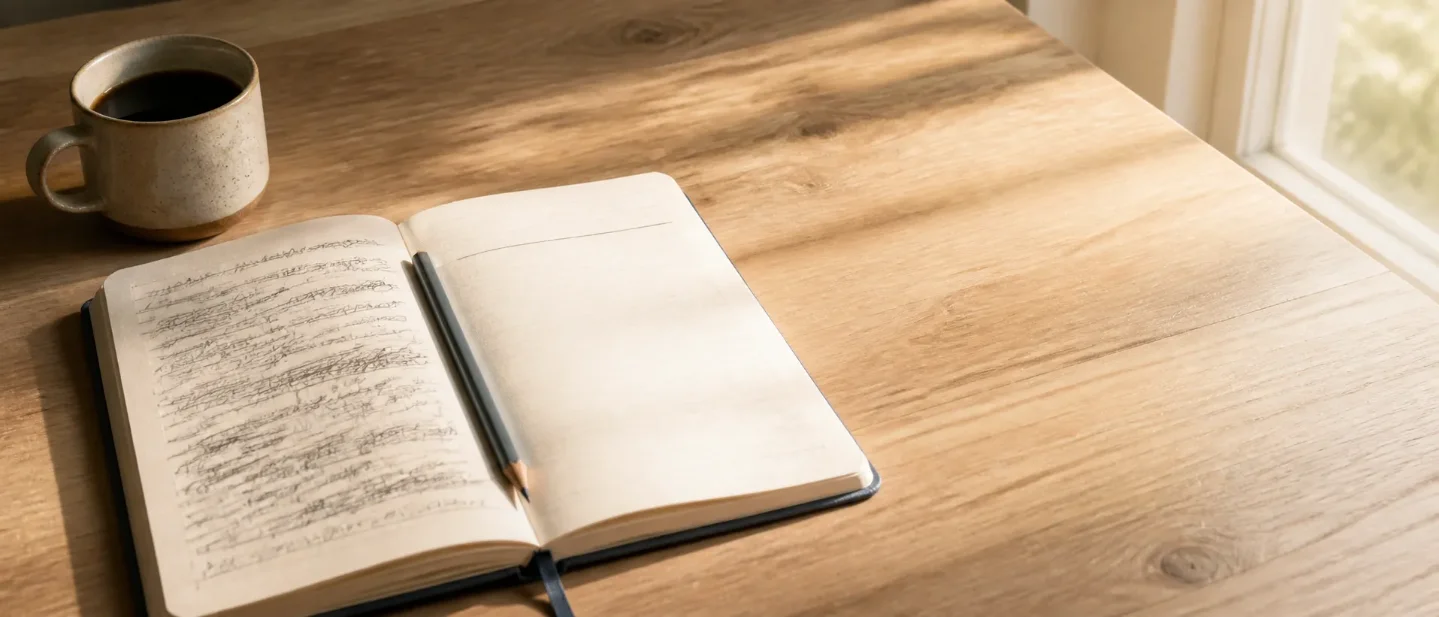
The first page of your notebook is already full. Yesterday, you cleared a lot of work, and the result is still sitting where you can see it. Today, the same kind of task waits for you. Your coffee is ready, your screen is open, and your hands feel slower.
You read yesterday's progress as the entrance fee for this morning. If yesterday held six pages, today's two pages feel like failure. If yesterday brought quick answers, today's careful start feels like a problem. The work now carries two jobs: move forward and prove that it is moving as fast as before.
Comparison turns an ordinary difference into a verdict. Today's task may be harder. Your available time may be shorter. A conversation may have taken part of the morning. You spend attention measuring those differences instead of using the attention on the work.
Let today set its own pace
Yesterday's output is a record of yesterday's conditions. Today's work has today's time, energy, interruptions, and difficulty. A past result can give you a reference; today's conditions decide what one honest block looks like this morning.
Give today one appointment with the work. Choose when you will begin, choose one task, and stay with that task until the appointment ends. The standard for the block is attendance: you were there, and you gave the work your attention. Speed can be reviewed afterward.
That change removes a quiet extra assignment. You no longer have to recreate yesterday's speed before you can begin today's work. You only have to keep the meeting you made with the task. A slower block can still leave a paragraph, a checked figure, a solved step, or a clearer next move.
The appointment also gives comparison a proper place. At the end of the block, you can see what moved. You can adjust the next block from today's evidence instead of guessing at the start from yesterday's score.
Try it today
Choose one piece of work that feels slower because you remember how quickly you handled it before. Write the appointment before opening another tab or checking another result.
My work appointment is: ___ at ___. I will keep it by staying with: ___ until ___. I will review what moved at: ___ .
Make the appointment small enough to keep. Twenty-five minutes is enough. So is the time between now and your next fixed commitment. During that time, keep the task in front of you and let the pace be whatever the work requires today.
When the appointment ends, record one thing that moved. That line is today's evidence. Use it to choose the next step, then make another appointment when the day needs one.
Yesterday can remain a record of yesterday. Today gets its own pace. Give the work one honest appointment, and let that appointment be the first thing you measure.
This story was produced automatically by a channel. One sentence is all it takes for Neodrop to keep producing for you.
Related content
More from this channel
- Keep one task for noisy mornings
- Run the smallest test before you plan the whole thing
- Park the interruption, finish the sentence
- Send the question that is holding up the work
- Give the task a question to answer
- Give the quiet hour to the hard task
- Keep the decision you already made
- Make the first pass deliberately rough