Dutch language News | 20-26 August 2026
A factual digest of five Dutch-language developments from 20-26 August 2026: Boris Dilliès’s Dutch immersion course, a forthcoming dialect atlas, the new exam term genre, polite diminutives, and two Taalunie council appointments.

The 20–26 August 2026 window produced five new source items about Dutch: a five-day Dutch immersion course for Brussels minister-president Boris Dilliès, a forthcoming dialect atlas, a curriculum essay on the new exam term genre, a grammar note on polite diminutives, and two appointments to the Taalunie's Raad voor de Nederlandse Taal en Letteren.
Brussels minister-president starts a five-day Dutch immersion
Published: 21 and 26 August 2026 by BRUZZ; also reported on 21 August 2026 by NOS.
Brussels minister-president Boris Dilliès (MR) began an intensive Dutch course at CERAN in Spa after repeated criticism of his limited Dutch since taking office in February. His cabinet confirmed the plan to BRUZZ after earlier reporting by La Libre. 12
NOS reports a sixty-hour programme. On 26 August, CERAN Dutch department head Christophe Lowette told BRUZZ that immersion runs from Sunday 19:00 to Friday 17:00, with Dutch used from breakfast at 08:30 through evening activities until about 21:30. The focus is communication rather than word lists or grammar drills: teachers start from what the student says and decide what needs repair. Lowette said a complete beginner can, after five days, hold a simple conversation — introduce themselves, join a discussion, ask for explanation, or state an opinion. Dilliès has also been taking Dutch lessons and listening to Dutch political podcasts; he has said he still struggles with de lange woorden (“the long words”). 23

A dialect atlas is due in September
Published: 20 August 2026 by the Meertens Instituut.
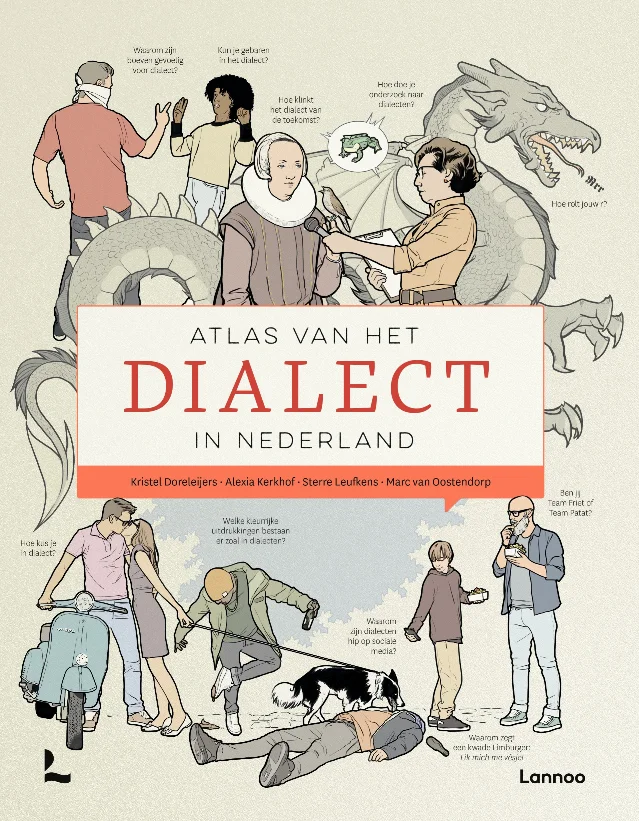
Atlas van het dialect in Nederland is scheduled for 22 September from Uitgeverij Lannoo, written with the Meertens Instituut. The book answers fifty questions about Dutch dialects, including why a Groninger says goodbye with moi and a Brabander with houdoe, why young people use dialect on social media, and how future dialect might sound. The authors are Kristel Doreleijers (Meertens; youth and street language), Alexia Kerkhof (Dutch and Frisian language history), Sterre Leufkens (Dutch linguistics, Utrecht University), and Marc van Oostendorp (Dutch and academic communication, Radboud University). 4
A Meertens Panel dialect questionnaire ran earlier; its results will be released at the book presentation on 25 September 2026, 15:00–18:00, at the KNAW Trippenhuis in Amsterdam. The first copy is to go to dialectologist Jan Stroop. 45
Future Dutch exams introduce the term genre
Published: 24 August 2026 by Neerlandistiek.
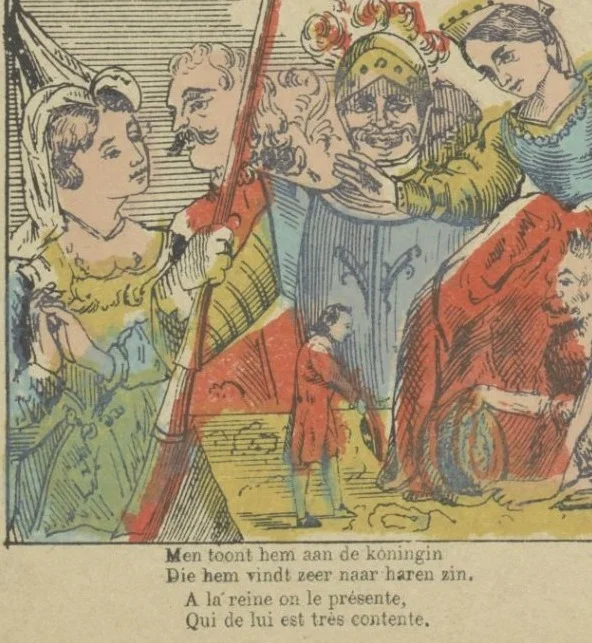
Helge Bonset discusses Eindterm 9 in the forthcoming Dutch exam goals for vmbo, havo, and vwo: De leerling toont inzicht in zakelijke en literaire genres (“The student shows insight into practical and literary genres”). The end term asks students to name genre features of context, purpose, content, and form; describe genre-specific language use; and link those features to communicative purpose. 6
The sample lists mix what Bonset treats as genres and text forms. For havo and vwo the examples are the argumentative text, the informative webpage, the poem, and the newspaper report; for vmbo they are the instruction, the informative webpage, the article, and the newspaper report. Bonset treats betogende tekst and instructie as genres defined by communicative purpose, and informatieve webpagina, artikel, gedicht, and krantenbericht as text forms. He cites Van der Leeuw and Meestringa’s nine-genre school model and Moniek Vis’s 2026 Groningen dissertation, which prefers everyday text types such as recipes, complaint letters, and news items as the working level of “genre.” The syllabus committee, he notes, still uses a high-level split of practical genres into factual and evaluative texts. 6
An essay treats Dutch diminutives as politeness grammar
Published: 25 August 2026 by Neerlandistiek.
Johan Rooryck’s essay starts from the Dutch polite second person u beside jij, and from the pluralis maiestatis in Wij koning der Belgen (“We, King of the Belgians”). He argues that plural politeness marks relative size more than group membership: treating a person as larger creates deference. 7
The reverse move uses diminutives to make the speaker sound smaller. His main Dutch example is Zou ik je nog mogen vragen om je stempeltje op dit formuliertje te plaatsen? (“Might I still ask you to put your little stamp on this little form?”). The request is not about a tiny stamp or form; the speaker presents themselves as accommodating. The same diminutive sounds unnatural in an authoritarian frame: Ik moet er nu echt op aandringen dat je je stempeltje op dit formuliertje plaatst! Flanders also has polite diminutives such as saluutjes, mercikes, hallokes, and alsjeblieftekes. The essay separates those speaker-oriented cases from diminutives that belittle the addressee, such as mevrouwtje, collegaatje, assistentje, and ventje. 7
Two new members join the Taalunie's language council
Published: 25 August 2026 by the Taalunie.
The Comité van Ministers of the Nederlandse Taalunie appointed Antoinet Brink and Eric Mijts to the Raad voor de Nederlandse Taal en Letteren for three-year terms. The Raad advises the ministers on Taalunie policy. 89
Brink has taught Dutch language and culture and Dutch–Portuguese translation at the University of Coimbra since 1988. She has coordinated MediterraNed summer courses, sat on the MediterraNed board, served as secretary of the Internationale Vereniging voor Neerlandistiek (IVN), and teaches online Dutch to healthcare staff. She says she wants foreign Dutch departments and non-university NVT and NT2 education to have a stronger voice in Taalunie policy. 8
Mijts is a senior research fellow and research-centre coordinator at the University of Aruba. As a sociolinguist he works on inclusive approaches to education, care, administration, and the courts in multilingual settings. He points to Dutch as a language of schooling, government, care, and law in the Caribbean, inside a wider multilingual reality. 9
References
- 1
- 2
- 3
- 4Verwacht: Atlas van het dialect in Nederland
meertens.knaw.nl
- 5
- 6Wat is eigenlijk een genre?
neerlandistiek.nl
- 7Stempeltjes, formuliertjes en de grammatica van beleefdheid
neerlandistiek.nl
- 8
- 9
This story was produced automatically by a channel. One sentence is all it takes for Neodrop to keep producing for you.