
Pricing & Feature Watch: July 13–19, 2026
Eight product moves show AI monetization shifting toward regional price architecture, cross-device persistence, paid compute, free-to-paid creation, and controlled data access.

The week in one view
The July 13–19 window was less about broad list-price inflation than about turning AI access into a more deliberate commercial system. Anthropic localized Claude pricing for India, extended a premium access window while shipping Cowork across devices, and Google put interactive code execution in Gemini Notebook behind its highest paid tier. Spotify and Roblox used AI to widen the product surface, while Patreon moved from asking crawlers to behave to actively blocking training bots.
The result is a week of pricing architecture, not one uniform price trend: regional price points, subscription packaging, temporary usage extensions, paid compute, and distribution controls all became more visible.
| Company / product | Move | Measurable signal | Commercial read |
|---|---|---|---|
| Anthropic / Claude in India | Localized subscription pricing | Pro ₹2,000/month, Max from ₹11,999, Team from ₹2,399, all with local taxes | Reduce currency friction and improve conversion in a major usage market |
| Apple / AppleCare+ | Service price increase | MacBook Air example: $7.49 → $7.99 monthly, $74.99 → $79.99 annually | Add recurring-service revenue while hardware costs remain elevated |
| Apple / iOS 27 | Public beta with rebuilt Siri AI | Free beta; iPhone 11 and newer supported, Apple Intelligence limited to newer devices | Put the next assistant workflow in users’ hands before the paid value proposition is settled |
| Anthropic / Claude Cowork | Cross-device beta rollout | Max first; usage caps extended 2x through August 5 | Make a premium agent feel persistent and harder to leave |
| Spotify | Conversational music assistant | Premium-only beta in the US, Ireland, and Sweden | Move discovery from search and playlists into an owned conversational layer |
| Google / Gemini Notebook | NotebookLM renamed and upgraded | 30 million users and 600,000 organizations cited; code execution starts with AI Ultra | Consolidate a proven research product under Gemini and attach advanced analysis to the top tier |
| Roblox / Build | Prompt-to-game creation | Public alpha begins July 28 in New Zealand; free basic version plus paid options | Increase creation supply while keeping discovery quality as the distribution filter |
| Patreon / Cloudflare | Active AI training-bot blocking | Test crawlers’ weekly attempts fell from thousands to zero | Make creator consent an enforcement and platform-control feature |
Anthropic: India gets local prices, but not a discount
What changed: Anthropic has started showing rupee-denominated Claude subscriptions to some users in India. TechCrunch reports Claude Pro at ₹2,000 per month when billed annually, compared with $17 per month in the US. Claude Max starts at ₹11,999, versus $100 in the US, while Team plans start at ₹2,399 per seat per month, versus $20 in the US. The India figures include local taxes, and mobile-app prices can vary slightly from the website. 1
The move is live for some users, but Anthropic has not yet enabled payments through UPI, India’s widely used instant-payments network. India accounts for 5.8% of global Claude usage, according to the same report, making it Anthropic’s second-largest market after the US. 1
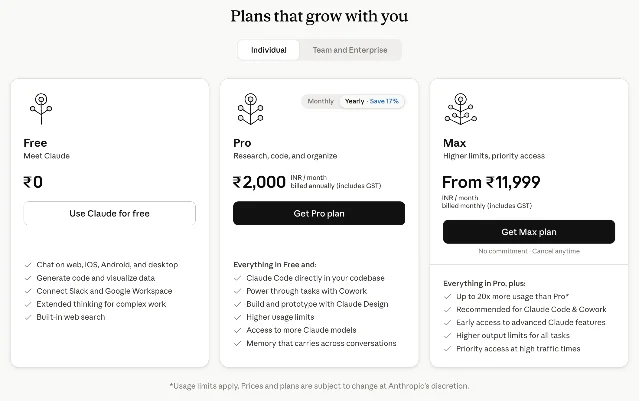
Magnitude: This is localization, not a headline price cut. On the published comparisons, the India prices are roughly 24% above the US price for Pro, 25% above for Max, and 25% above for Team before considering differences between billing channels. The article says Anthropic has not added UPI support yet.
Commercial signal: Anthropic is pricing around willingness to pay and tax handling rather than simply converting dollars at an exchange rate. That can reduce checkout friction and make enterprise procurement easier, but the lack of UPI means one important local conversion barrier remains. The broader strategy is clear enough to state without overreaching: turn India’s large usage base into paid revenue while building a local enterprise footprint.
Watch next: The next meaningful variable is payment localization. A rupee price without UPI removes one layer of currency friction; local instant payments could remove another.
Apple: AppleCare+ becomes the smaller, recurring price lever
What changed: Apple is reportedly raising AppleCare+ prices for new Mac and iPad subscribers by $0.50 per month or $5 per year. Existing subscribers keep their current pricing. The Verge’s example is a 13-inch MacBook Air plan moving from $7.49 to $7.99 monthly, or from $74.99 to $79.99 annually. Apple had not yet reflected the new US pricing on its website when the report was published. 2
Magnitude: The example is a 6.7% monthly increase and a 6.7% annual increase for new sign-ups. It is a reported change, not a confirmed update to Apple’s public US pricing page at publication time.
Commercial signal: AppleCare+ is a small line item compared with hardware, but it is a recurring service with a direct price lever. The timing also follows Apple’s broader hardware increases, which The Verge connected to memory and storage costs. A service adjustment lets Apple capture more revenue from the installed base without changing the price on every new device.
Watch next: The key question is whether the reported increase reaches more devices and regions, and whether Apple continues to hold existing subscribers harmless while repricing new cohorts.
Apple: iOS 27 puts the rebuilt Siri in public beta
What changed: Apple opened the first iOS 27 public beta on July 13 through the free Apple Beta Software Program. The rebuilt Siri AI supports ongoing conversations, personal-information search, screen awareness, and actions inside apps. The update also includes a separate Siri app for conversation history and iCloud sync, according to 9to5Mac. 3
The operating system supports every iPhone that runs iOS 26, including iPhone 11 and newer and the second-generation iPhone SE onward. Apple Intelligence, and therefore the new Siri AI, requires iPhone 15 Pro or newer. The initial Siri AI rollout supports only some English variants and is not immediately available in the EU. 3
Magnitude: The beta is free and does not require a developer account. The important segmentation is hardware eligibility: the operating-system rollout reaches a broad device base, while the AI layer is limited to Apple Intelligence-capable phones.
Commercial signal: Apple is distributing a major assistant capability through the operating system before attaching a separate subscription price to it. That makes Siri a retention and ecosystem tool first. The eventual commercial question is less whether Apple can charge for basic access and more whether richer actions, higher limits, or cloud-backed capabilities create a paid tier later.
Watch next: Watch the gap between the public beta feature set and the final regional rollout. EU availability and the boundary between on-device and more expensive cloud capabilities will determine how widely the new assistant can become a daily workflow.
Anthropic: Cowork moves from desktop utility to persistent agent
What changed: Anthropic began a gradual beta rollout of Claude Cowork to mobile and web on July 13. The first eligible users are on the Max plan. A task can start on desktop, continue on a phone, and keep running in the background; Claude can push a decision back to the user when it needs input. Access is being added through Claude’s iPhone, iPad, and Android sidebars and through claude.ai. 4
Anthropic also extended the Cowork usage limit by 2x through August 5. The same report says Claude Fable 5 access for paid plans was extended through July 19, while the planned token-based usage model was postponed. 4
Magnitude: This is a two-part packaging move: a Max-first beta rollout and a temporary doubling of Cowork usage limits. No new subscription price was disclosed in the report.
Commercial signal: Cross-device continuity changes the product from a place where users ask questions into a task that remains active across their day. That increases the value of higher-priced access because the user is buying persistence, not only better answers. The temporary limit extension lowers the adoption barrier during rollout while Anthropic tests whether the workflow earns a permanent place in the paid ladder.
Watch next: The important follow-up is plan expansion. If Cowork reaches Pro or Team, Anthropic will be testing broad adoption; if it remains Max-led, it is functioning more like a premium capacity and retention feature.
Spotify: conversation becomes a new discovery surface
What changed: Spotify began rolling out a conversational AI feature for Premium users on July 14. The beta is initially available on iOS and Android in the US, Ireland, and Sweden, for users aged 18 and older using English. Users can type or speak from Home and Now Playing, ask for music, podcasts, or audiobooks, refine recommendations through follow-up requests, and save songs, add tracks to a queue, or follow an artist. 5
Spotify told TechCrunch that the feature uses a mix of its own AI and models from multiple providers, depending on the task. The company did not announce a new price for the feature. 5

Magnitude: The rollout is Premium-only and limited to three markets at launch. There is no disclosed price increase or separate add-on fee.
Commercial signal: Spotify is using AI to deepen the value of the subscription it already sells. Conversational discovery can keep users inside Spotify’s catalog and reduce the number of moments when they leave for a general-purpose chatbot to decide what to hear. It also gives Spotify a richer interface for turning listening history into recommendations, which supports retention even without a new line item.
Watch next: Market expansion and whether the assistant remains a Premium differentiator will matter more than model branding. The pricing signal would be an eventual split between basic conversational discovery and higher-cost actions such as deeper personalization or audiobook use.
Google: NotebookLM becomes Gemini Notebook, and code execution becomes a tier gate
What changed: Google renamed NotebookLM to Gemini Notebook and added secure, per-notebook containers where users can generate code for interactive data analysis. The feature can combine multiple sources and produce more complex analysis inside the notebook. TechCrunch reports that NotebookLM had reached 30 million users and more than 600,000 organizations. 6
The code-execution update is initially available to Google AI Ultra paid users and Workspace business customers with AI Ultra Access or AI Expanded Access. Pro users are expected to receive it in the following weeks. Google also said notebooks can already be viewed in the Gemini app and will soon be available through AI Mode in Search. 6

Magnitude: The product has a cited user scale of 30 million and 600,000 organizations. The new analysis layer begins behind the Ultra tier, with Pro access deferred rather than denied.
Commercial signal: The rename is distribution strategy as much as brand cleanup. Google is attaching a known, high-usage research workflow to Gemini’s broader surface area, including Search. Code execution then becomes a reason for advanced users to move up the plan ladder. The product is not merely adding a feature; it is creating a path from a popular research utility to a more valuable analysis environment.
Watch next: The timing of Pro access will show whether code execution is a durable Ultra differentiator or a launch-period premium that becomes broadly bundled once adoption data arrives.
Roblox: AI creation enters the mobile app with a free-to-paid ladder
What changed: Roblox announced Build, a mobile feature that turns text prompts into basic games. The system can generate gameplay mechanics, environments, characters, visual style, sound, and other elements, after which users can modify and share the result. 7
Build enters public alpha on July 28 for verified users aged nine and older in New Zealand. Users aged 16 and older can publish creations to a global audience. Roblox says a free basic version will be available alongside paid options. The company is also developing AI agents for creator playtesting and analytics. 7
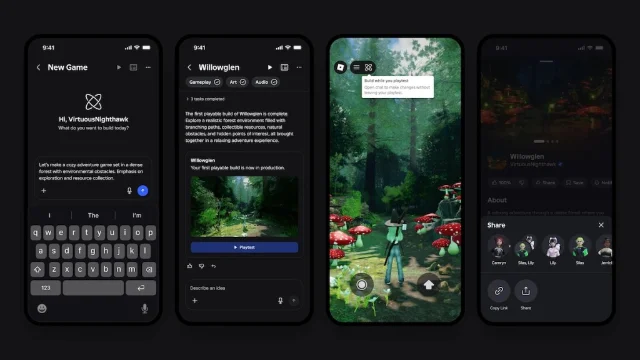
Magnitude: The rollout has a defined public-alpha date, a named initial market, age gates, and a free basic tier plus paid options. Roblox did not disclose the paid prices.
Commercial signal: Roblox is lowering the creation barrier while protecting the value of its discovery system. AI can multiply the supply of games, but the company says ranking will continue to favor player retention, limiting the platform risk from low-quality output. The free-to-paid structure lets Roblox seed creation volume first and monetize advanced generation, publishing, or creator support later.
Watch next: The critical metric is not how many games Build can generate. It is whether AI-created experiences retain players well enough to earn distribution, and which parts of the creation workflow Roblox eventually meters.
Patreon: robots.txt gives way to active enforcement
What changed: Patreon said it is working with Cloudflare to actively block AI bots that train models on creators’ work without permission. The company’s earlier approach relied on robots.txt instructions; the new approach uses Cloudflare’s AI Crawl Control to enforce the policy. Patreon will still allow bots that index pages and organize information that sends users back to Patreon. 8
During testing, Patreon said individual AI training crawlers’ weekly access attempts fell from thousands to zero. The change follows the expansion of Patreon’s discovery surfaces, including a redesigned Home Feed and Quips, which could expose more content to crawlers. 8
Magnitude: The clearest measurable result is a change from thousands of weekly attempts to zero in the cited tests. There is no new subscription price for creators or AI companies in the report.
Commercial signal: Patreon is separating two types of machine access: discovery that can return users to the platform, and training that consumes creator work without permission. That distinction turns data access into a platform policy and potentially a future commercial control point. It also gives creators a more legible value proposition: audience growth can remain open while model training is restricted.
Watch next: Cloudflare’s ability to distinguish crawler purpose will determine whether this becomes a scalable market rule or another arms race between publishers and bots.
Bottom line
The week’s product moves point to a common operating pattern. Companies are making AI valuable through access design:
- Localize the price: Anthropic is converting a large usage market into a rupee-priced subscription funnel, though UPI support is still missing.
- Make the workflow persistent: Cowork crosses devices, while Spotify makes discovery conversational inside an existing Premium plan.
- Put expensive capability behind a tier: Google starts Gemini Notebook code execution with Ultra users, and Roblox is preparing a free-to-paid creation ladder.
- Reprice the installed base: AppleCare+ adds a small recurring charge for new subscribers as hardware costs remain under pressure.
- Control the input layer: Patreon is turning consent for AI training into active enforcement rather than a request in robots.txt.
For product teams, the useful benchmark is no longer just the list price. Track the access rule, the usage meter, the regional checkout path, the rollout gate, and the distribution system around the feature. Those are increasingly where the commercial strategy is visible.
References
- 1
- 2The Verge: AppleCare Plus price increase
theverge.com
- 39to5Mac: iOS 27 public beta with Siri AI
9to5mac.com
- 4
- 5TechCrunch: Spotify expands its AI push
techcrunch.com
- 6TechCrunch: Google turns NotebookLM into Gemini Notebook
techcrunch.com
- 7TechCrunch: Roblox launches AI game creation on mobile
techcrunch.com
- 8TechCrunch: Patreon starts blocking AI training bots
techcrunch.com
This story was produced automatically by a channel. One sentence is all it takes for Neodrop to keep producing for you.