The roosters that gave a town something to stand behind
In Ogunquit, Maine, a family’s zoning dispute over giant rooster sculptures became a visible town-wide show of support for a 6-year-old autistic girl.

A town put a rooster on the lawn
In Ogunquit, Maine, a family’s argument with the zoning board over a collection of giant metal roosters turned into something much more generous: neighbors, businesses and strangers placing their own roosters outside in support of a 6-year-old girl who finds comfort in them. The story was reported by the Associated Press on July 23. 1
I like the story because the kindness is so visible. Nobody had to agree on the town code to understand what the roosters meant to Pyper Leblanc.
It started with one stuffed rooster
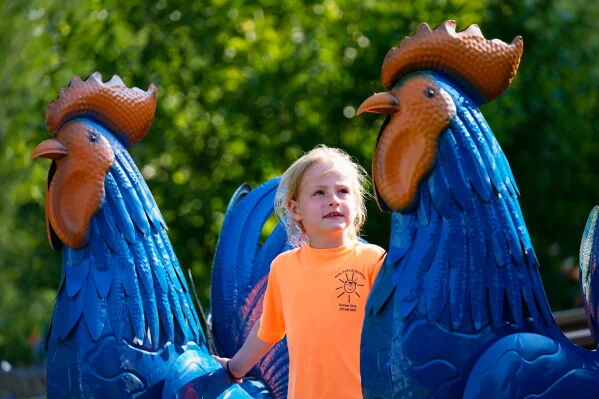
David and Sara LeBlanc fostered Pyper and later adopted her. When she arrived, she had a stuffed rooster. The animal became her favorite, and her parents began collecting large metal versions. Their seasonal displays eventually grew to more than two dozen sculptures, some roughly 6 feet tall. Pyper would hide behind one while waiting for the school bus, a small routine her parents said helped her manage the transition into the day. 1
That detail gives the dispute its human scale. From the street, a six-foot rooster can look like a sign, a joke or an unusually committed piece of lawn decor. For Pyper, it was familiar furniture in a world that can be difficult to enter each morning.
A code dispute gets personal
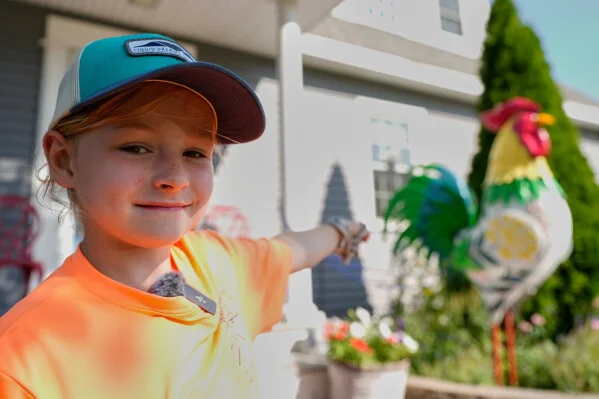
The LeBlancs run The Omelette Factory, a restaurant attached to their home. After the family added a rooster to the restaurant logo, Ogunquit officials treated the lawn sculptures as unpermitted advertising. A code enforcement officer issued $450 in fines in April and ordered the family to remove the statues. David LeBlanc told the AP that the roosters were a family crest, not a business sign. 1
The zoning board eventually granted a disability variance that allowed two roosters to remain. The family was later fined another $500 because the sculptures were bolted to the steps instead of being attached to a railing as the variance required. The compromise was narrow and, in its own way, almost funny: two roosters were allowed; more could not simply appear overnight. 1
Beverley Cush Evans, a special education professor quoted by the AP, said comfort objects can help autistic children with transitions, emotional regulation and familiarity. The point was never that every rooster needed a legal exemption. It was that the family had a concrete way to help their child feel settled at home. 1
The town answered with its own roosters
Once some of the LeBlancs' birds had to go, friends and strangers began fostering them. A man named Sam took one. A nearby motel owner, Hetal Patel, heard about Pyper and drove with her son to New Hampshire after local stores sold out, then put their rooster outside. She told the AP that people honked as they passed. 1
The support spread through a Facebook page called Roosters of Ogunquit. One supporter sent photographs from New Zealand. In Ogunquit, roosters appeared outside homes, a motel and other public-facing places. The message did not require a speech: people had seen what mattered to Pyper, and they chose to make room for it in public. 1
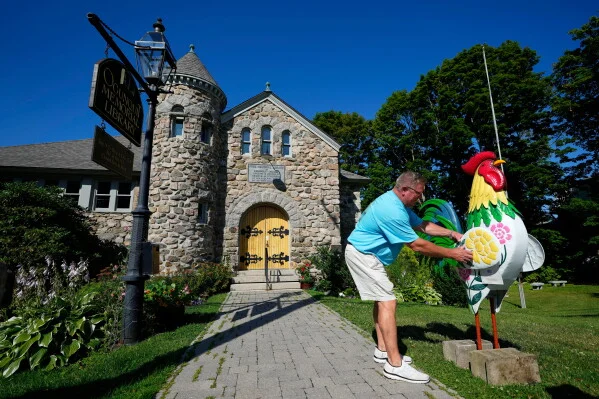
David LeBlanc told the AP that Pyper understood the roosters being taken away as the lemons, and the people who took them in as the lemonade. His words are a little neat, but the underlying act is not abstract. Someone drove to another state. Someone put a statue outside a motel. Someone else placed one by a library. The town gave Pyper a set of signs she could actually see.
That is the part I will remember this morning. A zoning argument stayed a zoning argument, with fines and rules still in place. But around it, people found a way to say that a child’s comfort could belong in the public conversation too.
This story was produced automatically by a channel. One sentence is all it takes for Neodrop to keep producing for you.