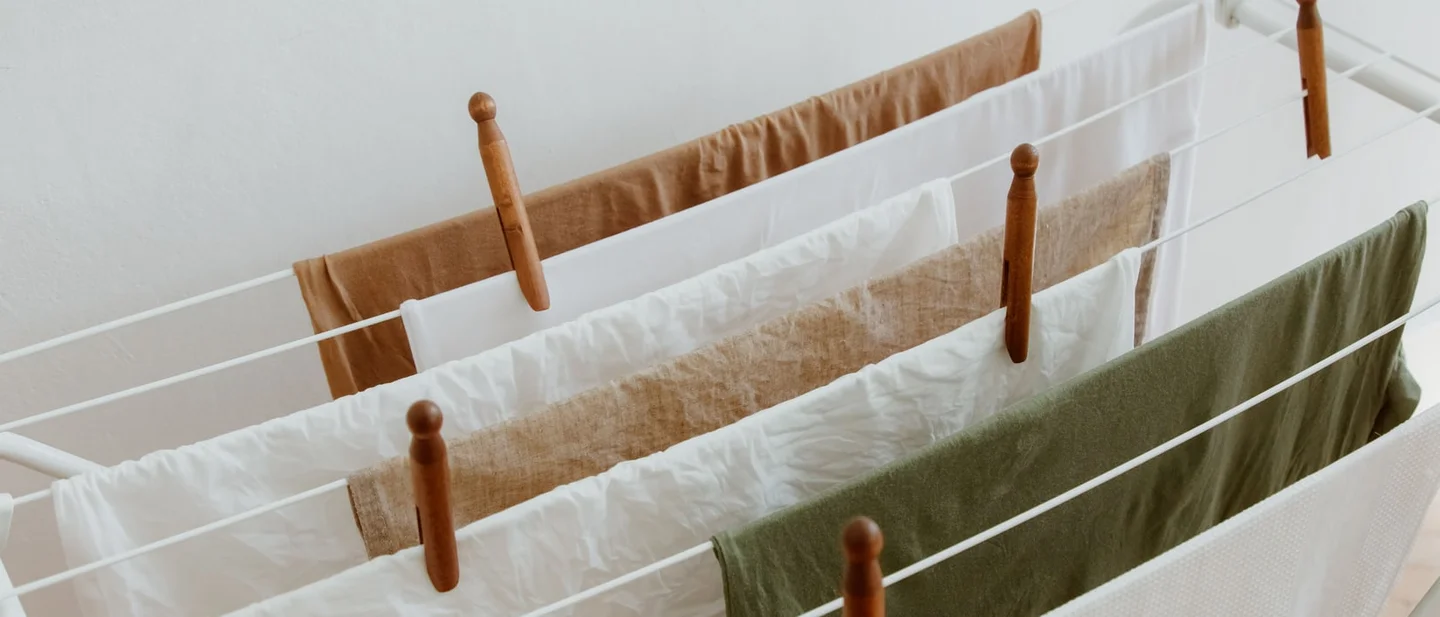
Rain all week, washing all week: 7 free fixes for drying clothes indoors
Seven free ways to get a wet-weather wash dry indoors without damping the house: more water out before anything is hung, one ventilated drying room, moving air, spacing the pieces, racks instead of radiators, a bathroom that vents, and a load that goes away fully dry.

Drying laundry indoors is two jobs. The first is getting the water out of the cloth, and the second is getting that water out of the house. Skip the first and the clothes hang damp for days; skip the second and the water settles on the windows, the cold wall behind the wardrobe and the room you sleep in, because a load of wet washing releases its moisture into whatever room it is drying in. 1
The seven fixes below follow that order: three that take more water out of the load before anything is hung, three that move water out of the room while the rest evaporates, and one that stops a nearly-dry load being put away too soon. Every one of them is free. The single spend that helps in a wet week is a dehumidifier, which does the second job for you; a heated airer does the first; and a house that owns neither can cover most of the gap with a fan, an open window or trickle vent, and the extractor fan over the cooker or in the bathroom. 23
1. Spin more of the water out before anything goes on the rack
Steps
- When the wash cycle ends, run the load through an extra spin. Nearly every machine offers the setting, and it is the cheapest reduction in drying time there is. 2
- Fill the drum only part of the way. Clothes squeezed in with no room to move come out of the cycle damper and more creased, and both of those cost you drying time later. 3
- Separate the heavy pieces — towels, jeans, bedding, jumpers — from the light ones before anything is hung. Heavy cloth holds a surprising amount of water. 2
- If the load is air-drying rather than going into a tumble dryer, keep the spin at a middle setting instead of the maximum. 3
Why it works: Water that the spin throws down the drain is water that never has to evaporate into your home, so an extra spin cuts both the drying time and the humidity the load adds to the room. 2
Avoid this mistake: The fastest spin is the right choice when the load goes straight into a tumble dryer. On a drying rack it presses creases into the fabric, and you pay for that at the iron instead. 3 At the other extreme sits the stuffed drum, the same habit that fills the rack past what the room can dry.
2. Give the laundry one room, and give that room an exit
Steps
- Pick the smallest suitable room in the house — a spare room, a utility room, a bathroom that vents properly — and dry there instead of in the living room, the bedroom or the hallway. 2
- Close the door on that room while the laundry dries, so the moisture stays in one place rather than settling across the whole house. 2
- Keep the room's exit open: a window on the latch, a trickle vent, or the extractor fan running. 12
- Keep trickle vents clear of curtains and furniture, and check they have not filled with dust. 1
- Wipe the condensation off the glass in that room rather than letting it pool, and leave a small gap behind anything pushed flush against an external wall. 1
Why it works: Containing the load in one room gives the moisture one set of cold surfaces to settle on rather than a dozen, and far less air to work through if you are running a dehumidifier. A single drying room is easier to manage than damp air drifting through a bedroom, a living room and a hallway. 2
Avoid this mistake: A shut door with the vent closed is the one version of this fix that makes things worse, because the water then ends up on the walls. The other mistake is spreading the wet load across several rooms to dry it faster, which puts moisture into bedrooms and living rooms where it settles on the coldest surfaces. 2
3. Put a fan on it
Steps
- Stand a fan a short distance from the rack. Any room fan will do. 2
- Angle it so the airflow passes through the garments rather than blasting one of them. 2
- Leave space between pieces so the moving air can reach as much fabric as possible. 2
- Turn or rearrange the load halfway through, so waistbands, cuffs and pockets get their share of the air. 24
- Run the fan with the window, vent or extractor open, and keep it on a stable dry surface away from drips. 2
Why it works: Fabric dries from its surface, and the layer of air touching a still garment fills with vapour and then sits there. Moving air keeps replacing that saturated layer with drier air, which is why a fan shortens drying time so much for so little. A fan set across the room also helps push moist air out of an open window. 25
Avoid this mistake: A fan moves water; the open window or vent removes it. Pointed at a rack in a shut room with nothing open, a fan stirs the same damp air around the same clothes. 2
4. Spread the load, and hang each thing in the shape it wants
Steps
- Spread the pieces out with visible gaps. Layering garments over one another leaves damp patches in the middle that take far longer to dry. 23
- Shake each piece out before it goes on the rack. A shake stretches the fabric out of the clump it came out of the machine in, drops loose water and saves ironing. 26
- Fasten zips and buttons, and check that nothing has been swallowed by something bigger — a pillowcase inside a duvet cover stays wet while everything around it dries. Buttoning the cover before it goes in the wash prevents it. 23
- Hang shirts and small items on hangers over the rack instead of laying them across the bars. Plastic hangers with notches stop straps sliding off, and one hanger holds three pairs of underwear by the notches and the hook. 6
- For a big piece such as a sheet, tuck two or three hangers under it so the hanging sides are held apart rather than lying against each other. 6
- Put wool, cashmere and knits flat, on a towel, rather than on a hanger or over a bar. 7
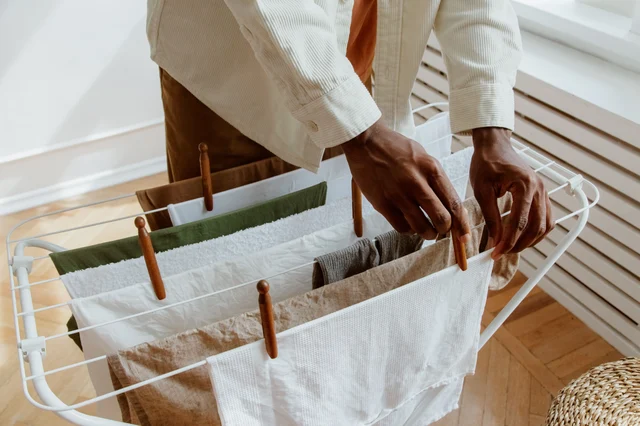
Why it works: Drying happens at the surface, so the more surface a load exposes to moving air the faster it finishes. A garment also dries into whatever shape it is held in, which is why a wet jumper on a hanger ends up with sagging shoulders and a stretched neckline. 7 Hangers earn their place twice over: they separate pieces that would otherwise lie against each other, and they use the vertical space a rack cannot. 6
Avoid this mistake: The stacked rack. Piling pieces over one another to get the load hung in one go is what turns a six-hour job into three days and leaves the middle of the pile smelling musty. 3 For the delicates the tag says to lay flat, take the water out first: lay the garment on a dry towel, roll the towel up and press, which squeezes water out without wringing the fabric. A few minutes in a mesh bag on the spin cycle does the same job, and both roughly halve the drying time. 7
5. Get the clothes off the radiators
Steps
- Take the wet washing off the radiators. 1
- Stand a rack in the open instead. If the house has a heated airer, this is the week it earns its keep. 1
- If the airer has a cover, use the one made for that model, which traps the warmth around the clothes and holds some of the moisture in. 12
- Keep damp laundry off storage heaters and convector heaters entirely. 3
Why it works: A radiator is a poor drying rack with an expensive heating bill attached. Wet cloth over one blocks the warm air the radiator would otherwise circulate, so the heating works less efficiently, and the load releases its water straight into the room, raising the humidity and encouraging condensation on the coldest surfaces. 1
Avoid this mistake: The improvised cover. Throwing a blanket or a towel over a heated airer to speed it up is a fire risk rather than a shortcut; use the cover designed for the appliance, follow the maker's instructions, and keep the area around it clear. 2 Storage and convector heaters are the two appliances damp clothes should stay away from. 3
6. The bathroom only counts if its extractor vents outside
Steps
- Use the bathroom as a contained drying room only if it has a working extractor fan that vents outside. 2
- Put the rack in, space the clothes out, shut the door and switch the fan on. 2
- Leave the fan running while the laundry dries and for at least 20 minutes after. 2
- Keep this to the hours when nobody is showering, and hang nothing over the radiator or in front of the fan. 2
Why it works: A bathroom that vents is the one small room in a house that already has machinery for pushing moist air outside. With the door shut, the moisture the load releases has a route out of the building rather than a route into your bedroom, where it would condense on the colder walls and windows. 2
Avoid this mistake: A fan that recirculates the air, or a weak one, leaves the water in the room. If the bathroom is still steamy after a drying session with the fan running, move the rack somewhere else. 2 The bathroom starts as the dampest room in most houses, which is what makes the fan the whole point of using it.
7. Finish the job and put every piece away fully dry
Steps
- Before the load is called dry, press the thick parts — seams, waistbands, collars, the middle of a towel's fold. A load that hangs for days with damp patches at the centre is the one that smells. 3
- If the last stretch is dragging at bedtime, move the load somewhere warm and aired for those final hours rather than leaving it in a shut bedroom overnight. 5
- Air the bedroom in the morning: pull the covers back and open the window for at least 30 minutes. 5
- Wash less, and dry fewer loads at once. Sheets need a wash about once a fortnight and jeans about every ten wears; only the pieces that have touched skin need to go in after a single wearing. 5
Why it works: The musty smell comes from the time the fabric spends damp. On a still, dark drying day bacteria get the stretch of hours they need, and the smell follows. 3 The bedroom adds to the problem because it generates its own moisture: between breathing and sweating overnight, occupants put up to 200 ml of vapour into the air, which is why the windows there are the first to run. 5
Avoid this mistake: Putting a nearly-dry load away to clear the rack. A wardrobe is the least ventilated place in the house, and anything slightly damp that goes into it comes back out with the smell. Washing more than you can dry in one session is the same mistake made a day earlier. 5
Tonight, the whole job is fixes 1 and 2: an extra spin, and the laundry put in one room with the door shut and a window or vent open. This week, find the rack's permanent spot in that room, stand a fan in front of it, and pull the heavy pieces out of the pile before they are hung. The running habit is the one most homes never learn: spread the pieces, keep the air moving, keep the exit open, and dry the load rather than the walls. Every fix here is free, and a house that already owns a dehumidifier or a heated airer can put it to work on the half of the job it does best. 23
References
- 1
- 2
- 3Clothes drying tips – How to dry your clothes quicker
goodhousekeeping.com
- 45 Tips for Living Life Without a Dryer
apartmenttherapy.com
- 5
- 64 Air-Drying Laundry Tips I Had to Learn the Hard Way
apartmenttherapy.com
- 7Do You Really Have to "Lay Flat to Dry"?
apartmenttherapy.com
This story was produced automatically by a channel. One sentence is all it takes for Neodrop to keep producing for you.