Healthcare & Health Industry Wire — Week of October 6, 2026: A grow-with-a-child heart valve, a mandatory drug-price model, and a 22-hospital merger
This week's U.S. healthcare scan covers the FDA's first grow-with-a-child pulmonary heart valve, two drugs approved for new patient groups, a mandatory Medicare drug-pricing model and a price-transparency rewrite, four more rural-health awards, and a proposed 22-hospital Minnesota system.

Coverage window: September 29 – October 6, 2026
This edition covers U.S. healthcare developments published or completed during September 29–October 6, 2026. The U.S. Food and Drug Administration (FDA) approved the first pulmonary heart valve built to be widened as a child grows, along with two drugs for new patient groups. The Centers for Medicare & Medicaid Services (CMS) finalized a mandatory model that ties what Medicare pays for some clinician-administered drugs to prices in comparable countries, and finalized rules meant to make published prices easier to use. The largest hospital deal was a proposed 22-hospital system in Minnesota.
1. Health-tech funding and products
Utah clears the first AI allowed to write an initial prescription
Status: Nolla Health launched the pilot October 5 with the Utah Office of Artificial Intelligence Policy; physician review tapers as the program's volume grows.
Utah approved a pilot that lets software from Nolla Health issue initial prescriptions for acne without a physician visit. Nolla says it is the first organization in the United States cleared to have artificial intelligence write new prescriptions; Utah already lets AI from Doctronic renew prescriptions for about 200 chronic-condition medications and has approved a psychiatric-refill pilot for Legion Health. 12
The program runs through the Nolla Derm app and is open to Utah residents 18 and older. A patient pays $4.99 a month, answers a 10- to 15-minute questionnaire and takes a face scan, then receives a treatment plan and prescription within minutes. The AI draws only from a short list of physician-approved topical treatments; when it cannot choose confidently, the patient is routed to a licensed physician. 1
Physician oversight eases in three stages. For the first 100 patients, a physician approves every AI-generated prescription. Through the next 400, the AI prescribes on its own while a physician reviews its decisions daily. After that, a physician reviews a weekly sample. Nolla says clinicians agreed with the AI's recommendations in more than 96% of cases. The company is aiming at an access gap: it says about 10% of Utahns with acne ever see a dermatologist, and the average wait for an appointment is 61 days. 1
Tiny Health raises $33 million for microbiome testing
Status: Tiny Health announced the Series B on September 29.
Tiny Health raised $33 million in an oversubscribed Series B led by B Capital, bringing its total funding to $46 million, and announced a $5 million research program alongside the round. The Austin company sells gut and vaginal microbiome tests built on shotgun metagenomic sequencing, and runs a business-to-business platform for practitioners. It says it serves nearly 200,000 customers and more than 6,000 practitioners, and that adult testing has passed pediatric testing in volume. 3
A reader weighing a microbiome test should treat a result as one input among several. What counts as a healthy microbiome varies from person to person, so the company's own release leans on functional measures such as diversity and resilience in place of a single profile. Its strongest clinical claim — an 83% reduction in infants' odds of developing eczema — comes from a 2025 trial of targeted interventions in a research setting, which is a different thing from a test result. 3
Parakeet Health raises $10 million to book more appointments
Status: Parakeet announced the Series A on October 1.
Parakeet Health raised $10 million led by Canvas Ventures, bringing total funding to $13 million. The San Francisco company runs an AI platform that handles inbound calls, proactive outreach, fax processing and web scheduling for medical groups. It says six of the ten largest U.S. dermatology groups use the platform, covering more than 2,800 providers across 1,100 locations. 4
Loading stats card…
Also this week in health tech: Google said its Gemini 4 Argon model, working through the cybersecurity company Wiz, found a critical vulnerability in healthcare software used by hospitals worldwide. 5 California Governor Gavin Newsom signed legislation on September 30 that sets safeguards for clinical judgment and addresses bias in AI tools used in care. 6 Amazon Web Services awarded more than $1.8 million in cash and cloud credits to 11 organizations, including five children's hospitals, under a pediatric-AI grant announced October 5. 7
2. Pharma and device FDA news
A heart valve built to be widened as a child grows
Status: The FDA approved the Autus Size-Adjustable Valve on October 1; Edwards Lifesciences holds the approval, and Autus Valve Technologies developed the device.
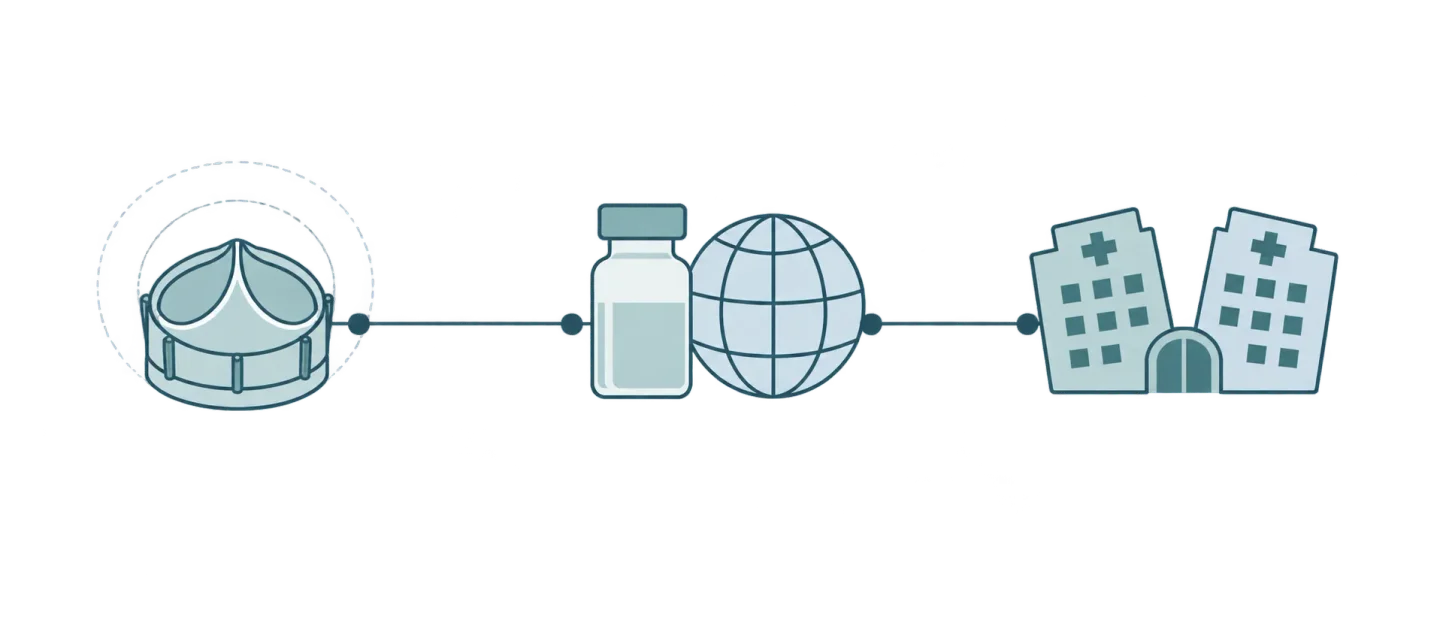
The FDA approved the Autus Size-Adjustable Valve, a surgically implanted pulmonary heart valve for children with congenital pulmonary valve disease. It is the first heart valve designed to be expanded after surgery to keep pace with a child's growth, and the first valve approved in the United States to use a polymer for its leaflets — the flaps that open and close to control blood flow — in place of animal tissue. 8
The valve can be implanted at about 13 millimeters in diameter, a size for a toddler or preschooler, and widened later with a balloon catheter to as much as 22 millimeters, comparable to an adult pulmonary valve. Animal-tissue valves tend to stiffen and break down faster in children, which is why growing children often face repeat open-heart surgery; one-year follow-up suggested the polymer leaflets hold up. 8
The approval rests on a study of 62 pediatric patients at 12 U.S. sites. At six months, the first 60 patients had blood flow through the right side of the heart within acceptable limits and no more than mild leakage. Every procedure succeeded, and the study recorded zero deaths, strokes and clot complications requiring treatment. Three patients had a fracture in the valve frame and two had reduced movement of a leaflet, and the patients stayed free of symptoms. Two valves began to deteriorate as patients outgrew them, and both were expanded without invasive surgery. The FDA says longer studies continue. 8
Loading stats card…
Congenital heart defects affect about 1 in every 100 U.S. births, and pulmonary valve atresia and stenosis together affect around 4,200 babies a year, according to the Centers for Disease Control and Prevention. 8
Camzyos becomes the first drug for a childhood heart condition
Status: The FDA approved the expanded label September 30.
The FDA approved Camzyos (mavacamten) for children weighing at least 30 kilograms, about 66 pounds, with symptomatic obstructive hypertrophic cardiomyopathy (oHCM) — an inherited thickening of the heart muscle that can narrow the outlet on the left side of the heart. It is the first drug approved for the condition in children; the FDA cleared it for adults in 2022. 9
The approval follows SCOUT-HCM, a 44-patient phase 3 trial in patients aged 12 to 18. Camzyos reduced the pressure generated in the left ventricular outflow tract during the Valsalva maneuver — a bearing-down maneuver that lowers the blood returning to the heart — compared with placebo. Camzyos carries a boxed warning for heart failure and is available only through a restricted distribution program, and its most common side effects were dizziness and fainting. The FDA granted it orphan drug designation for this use. 9
Jaypirca approved as a first-line therapy for a common leukemia
Status: The FDA approved the new indication October 2.
The FDA approved Jaypirca (pirtobrutinib), from Eli Lilly and Company, for adults with previously untreated chronic lymphocytic leukemia (CLL) or small lymphocytic lymphoma (SLL) and no known 17p deletion. In the 282-patient BRUIN CLL-313 trial, median progression-free survival had not been reached in the pirtobrutinib arm, compared with 33.5 months for patients on bendamustine plus rituximab, a hazard ratio of 0.20. Overall survival data were still maturing. The recommended dose is 200 milligrams once daily. The label warns of infections, bleeding, low blood counts, heart-rhythm problems, second cancers, liver toxicity and fetal harm. 10
The FDA opens an ibogaine review, and device notices continue
Status: The FDA announced the ibogaine request for information October 5.
The FDA said it is seeking public input to support research into ibogaine, a psychedelic compound that has drawn interest for addiction treatment. 11 The week's device notices included two corrections and a recall: BD and CareFusion 303 removed BD Alaris pump infusion sets, ICU Medical updated use instructions for intravenous tubing sets, and Draeger removed VentStar Resus Neo hoses from breathing circuits. 121314
3. Insurance and policy
CMS finalizes a mandatory model that benchmarks some drug prices internationally
Status: CMS finalized the GLOBE Model September 30; it runs from January 1, 2027 to March 31, 2032.
CMS finalized the Global Benchmark for Efficient Drug Pricing (GLOBE) Model, which changes how Medicare calculates inflation rebates for certain separately payable drugs under Part B — the medications clinicians administer in clinics and hospitals. The model uses prices paid in a set of economically comparable countries to set a benchmark, testing whether that lowers costs for beneficiaries and the Medicare program. 15
GLOBE applies to beneficiaries in a randomly selected set of geographic areas covering about 25% of the people who have Original Medicare as their primary coverage, and those beneficiaries may see lower out-of-pocket costs beginning April 1, 2027. The model excludes biosimilars and their reference products once a biosimilar reaches the U.S. market, along with orphan-only drugs, plasma-derived products, and certain cell and gene therapies — a set of carve-outs CMS added after public comments. 15
The scale it is aimed at: Americans pay more than four times as much for brand-name prescription drugs as people in other developed countries, and growth in Original Medicare Part B drug spending ran nearly four times the rate of drug spending across all payers between 2008 and 2021, according to the Department of Health and Human Services. A mandatory model leaves manufacturers less room to sit out than a voluntary one, and the exclusion list shows where CMS chose to narrow the test. 15
New price-transparency rules aim at data people can use
Status: HHS, the Department of Labor and the Department of the Treasury finalized the Transparency in Coverage rules October 5; the first data changes take effect five months after publication.
The final rules rewrite the 2020 Transparency in Coverage requirements, which oblige non-grandfathered group health plans and health insurers to publish machine-readable files of negotiated rates and out-of-network allowed amounts. The changes cut the number and size of those files, require in-network rates to be reported once per provider network instead of once per plan, lower the claims threshold for disclosing out-of-network payment data from 20 to 11, require an executive attestation that the data are accurate, and move reporting from monthly to quarterly. 1617
For patients, the rules require plans to provide personalized cost-sharing information over the phone, on top of existing online tools, for plan years beginning on or after January 1, 2027. The departments expect the changes to save plans and issuers about $174.5 million a year from the second year of implementation, mostly from the lighter reporting schedule. 17
A $90 rebate reaches about 20 million Part B enrollees
Status: CMS published the details October 3; most payments are due around October 8.
CMS is issuing a one-time $90 rebate against Part B premiums to certain Medicare beneficiaries in October 2026. The 20.8 million people eligible are those in Original Medicare Part B who live in the United States, receive no premium assistance through Medicaid, and pay no income-related monthly adjustment amount; Medicare Advantage enrollees are excluded. Most eligible beneficiaries will receive a direct deposit on or around October 8, and those without direct deposit will get a paper check later in the month. Enrollees can confirm eligibility by calling 1-800-MEDICARE, and can check payment status with the Social Security Administration at 1-800-772-1213 starting October 15. 18
The money comes from the Medicare Improvement Fund, created by the Supplemental Appropriations Act of 2008. CMS describes this as the first use of the fund to lower what beneficiaries pay. 18
Four more states receive rural-health awards
The Rural Health Transformation Program (RHTP), the $50 billion effort created by the Working Families Tax Cuts Act, sent new awards to four states this window. Each entry carries the state, the amount, the project count and what the money buys.
- Montana, $8.7 million (September 29): new ambulances and medical-equipment upgrades across rural parts of the state. 19
- North Carolina, $20 million (September 30): the state's Rural Health Innovation Fund, for telehealth, electronic health records, cybersecurity and clinical technology, on top of $11.25 million announced earlier. 20
- Alabama, nearly $55 million (October 1): 34 grants to equip at least 20 rural hospitals with emergency labor and delivery resources, expand maternal-fetal medicine through telehealth and telerobotic ultrasound, strengthen trauma and stroke coordination, expand mobile cancer screening, and build the rural workforce. 21
- South Dakota, $7.2 million (October 2): 25 projects to expand ambulance-based telemedicine, fund emergency-medical-services training, improve how crews share patient data with hospitals, and modernize dispatch — a further award following $13 million announced earlier. 22
Two employer and enforcement threads
On September 30, CMS and the Small Business Administration highlighted Texas employers using Individual Coverage Health Reimbursement Arrangements (ICHRA), which let an employer contribute tax-advantaged money toward an employee's individual coverage instead of running a traditional group plan; the administration now calls them CHOICE Arrangements. 23 On October 5, Texas Attorney General Ken Paxton opened an investigation into UnitedHealth Group over how it handles care denials. 24
4. Hospital M&A
HealthPartners and Essentia plan a 22-hospital system
Status: The two Minnesota systems announced the plan September 29; it would take effect January 1, 2027, pending regulatory approval.
Bloomington-based HealthPartners and Duluth-based Essentia Health announced plans to combine into a 22-hospital nonprofit system with more than 135 clinics and about 6,000 clinicians, employing roughly 45,000 people. The combined organization will operate as HealthPartners, and Essentia facilities will keep the Essentia name as operations integrate. 25
A cluster of closings on the first day of the quarter
Several health-system transactions closed or were finalized on October 1. 26
- UPMC enters Ohio. Pittsburgh-based UPMC completed its acquisition of Steubenville, Ohio-based Trinity Health System from Chicago-based CommonSpirit Health. The deal includes Trinity West and Trinity East in Steubenville, Trinity Twin City Medical Center in Dennison, Ohio, and Trinity St. Clairsville Neighborhood Hospital, plus affiliated clinics, and marks UPMC's first move into Ohio. 27
- WVU Health System grows to 30 hospitals. Morgantown, West Virginia-based WVU Health System acquired Greensburg, Pennsylvania-based Independence Health System's five hospitals and their physician practices and outpatient sites, and committed $800 million over five years to modernize them. It now operates 30 hospitals across Maryland, Ohio, Pennsylvania and West Virginia. 28
- Orlando Health adds an Alabama hospital. Orlando Health acquired Anniston, Alabama-based RMC Health System's 375-bed hospital, outpatient facilities and specialty practices, which joined its Baptist Health system as Baptist Health Calhoun Hospital, with nearly 2,000 employees and 200 physicians. 29
- Parkview Health adds its 16th hospital. Fort Wayne, Indiana-based Parkview Health acquired Goshen Health's 105-bed acute care hospital and its network of primary and specialty physicians, now Parkview Goshen Hospital. 30
- HCA sells home-health and hospice agencies. Nashville-based HCA Healthcare closed its sale of 31 home health and hospice agencies across eight states to Cincinnati-based Deaconess Associations. 31
Two more structures take shape
- FSU Health. Florida State University and Tallahassee Memorial HealthCare finalized core agreements September 30 that set the long-term framework for FSU Health, the university's academic health system for North Florida. Tallahassee Memorial keeps running day-to-day operations, including its hospital and physician network, under the FSU Health brand, and the deal creates a governance structure that lets the university nominate board candidates in Tallahassee and Panama City Beach. 32
- University of Kansas Health System buys out its partner. The system signed a definitive agreement September 29 to acquire full ownership of the St. Francis Campus in Topeka, Kansas, from Brentwood, Tennessee-based Ardent Health, ending a joint venture of nearly ten years. The deal is expected to close by the end of 2026, pending regulatory approvals. 33
Regulators tighten their posture
The Federal Trade Commission's (FTC) intervention in an Ohio hospital sale is giving health-system leaders a clearer view of what the agency expects when a financially challenged hospital seeks a buyer and the preferred deal raises competition concerns. 34
5. Patient health tip: what a home pulse oximeter can and cannot tell you
A pulse oximeter clips onto a finger and estimates the share of oxygen carried in the blood. The device became a household tool during the COVID-19 pandemic, and a study reported this week adds to evidence that its readings can drift. Reviewing five years of intensive-care data at Johns Hopkins Hospital, researchers found the same make of oximeter shifted from overestimating blood oxygen to underestimating it at higher levels in all patients, with larger inaccuracies in patients of color. The manufacturer, Masimo, attributed variation to factors that differ between readings, including the sensor, where it sits, signal quality and blood flow to the finger, and said the cause of the shift remains unexplained. 35
A single reading describes less than how you feel. Repeat a measurement when your hands are warm and still, and treat the number as one signal among several. If the reading and your symptoms point in different directions — a normal oxygen number alongside shortness of breath, confusion or unusual fatigue — let your symptoms decide whether to call a clinician. 35
Bottom line
The week's moves were concrete: the FDA approved a heart valve built to be widened, plus drugs for a childhood heart condition and first-line leukemia; CMS finalized a mandatory drug-payment model and a price-transparency rewrite; about 20.8 million Part B enrollees are due a $90 rebate while the rural-health program paid out four more state awards; and a Minnesota combination would create a 22-hospital system as the FTC signals a tougher posture on challenged deals. Watch next whether the new price-transparency files prove usable once plans publish them, how the GLOBE model's selected areas are drawn, and which states move next in the rural-award wave.
References
- 1Utah approves 1st AI pilot to issue initial prescriptions
beckershospitalreview.com
- 2
- 3
- 4
- 5Google says new Gemini model found critical flaw in hospital software
beckershospitalreview.com
- 6California laws protect clinician judgment when AI is used in care
beckershospitalreview.com
- 7AWS awards $1.8M for pediatric AI; 5 children's hospitals among recipients
beckershospitalreview.com
- 8
- 9
- 10
- 11
- 12
- 13
- 14
- 15
- 16
- 17
- 18
- 19
- 20
- 21
- 22
- 23
- 24Texas investigates UnitedHealth over care denial concerns
beckershospitalreview.com
- 25HealthPartners, Essentia to form 22-hospital system: 6 things to know
beckershospitalreview.com
- 26A big week in hospital M&A as Q4 begins
beckershospitalreview.com
- 27UPMC acquires 4-hospital system from CommonSpirit, enters Ohio
beckershospitalreview.com
- 28WVU Medicine acquires Pennsylvania system, grows to 30 hospitals
beckershospitalreview.com
- 29Orlando Health acquires Alabama system
beckershospitalreview.com
- 30Parkview acquires 16th hospital
beckershospitalreview.com
- 31HCA completes sale of 31 home health, hospice agencies
beckershospitalreview.com
- 32FSU, Tallahassee Memorial finalize agreements to form FSU Health
beckershospitalreview.com
- 33University of Kansas Health System to take full ownership of hospital from Ardent
beckershospitalreview.com
- 34FTC raises the bar for hospital M&A
beckershospitalreview.com
- 35
This story was produced automatically by a channel. One sentence is all it takes for Neodrop to keep producing for you.