
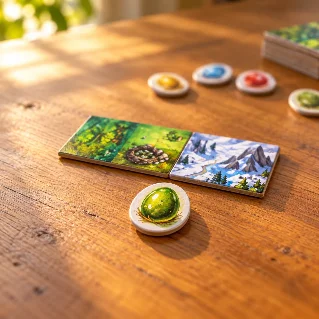
Dragomino: the dragon-egg game that makes matching feel like a real choice

Dragomino: the dragon-egg game that makes matching feel like a real choice

Your child lines up two landscape tiles, reaches for the matching egg, and suddenly the whole table is waiting to see whether a baby dragon is hiding underneath.

0:00 / 3:41

Quick fit

Core age band: 5–8. Dragomino is officially listed for 2–4 players, ages 5 and up, with games taking about 15 minutes. 1
Dragomino is a competitive tile-laying game about exploring an island and finding baby dragons. Each player builds a small landscape from domino-like tiles. Match the same landscape type, take an egg token, and hope it opens to a baby dragon instead of an eggshell.
This is a good fit when your child wants to make the choice themselves, but the family still needs a game that finishes before attention runs out.

What you set up

Each player takes a starting domino. Shuffle the 28 exploration dominoes in the bottom of the box, reveal four in the middle of the table, and spread the egg tokens face down by landscape type. The youngest player starts with the Mommy Dragon token. 2
That setup is quick, but it gives kids a real visual menu. Four face-up dominoes are available, so a child can look for the tile that fits their land instead of drawing one mystery card and accepting whatever happens.
Plan on about 15 minutes for the game itself. I would leave a little extra room for the first play, because children will want to inspect the eggs and compare the landscapes before they settle into the rhythm.

What happens on a turn

The official turn has two steps: pick one available domino, then place it so at least one side touches your existing exploration zone. Every new connection matters. Matching landscapes earn egg tokens, and a single domino can touch several squares and earn several eggs. 2
Then the child flips the eggs they earned. A baby dragon is worth one point. An eggshell is worth nothing, but it moves the Mommy Dragon to that player, which can matter at the end of the round and for choosing the next first player. The game ends when all the dominoes have been played, and the Mommy Dragon is worth one bonus point. 2
That is the nice balance here. The child chooses where to place a tile, but the hidden egg keeps the result from becoming a math worksheet. A good match can still produce an eggshell, and a simple-looking move can open two or three connections at once.

Why it earns shelf space

A usual matching filler asks a child to spot the pair. Dragomino asks one more question: which tile should you take, and where can it create the most useful connections? That small step gives the game a reason to replay without turning it into a heavy strategy lesson.
The jury for the 2021 Kinderspiel des Jahres, Germany’s children’s game award, called Dragomino an impressive example of turning a family game into a children’s game. The jury highlighted the balance of luck and tactics and said children can feel confident after one game. 3
I think that balance is the reason it beats a forgettable shelf filler. The tile choice belongs to the child, the reveal supplies a little drama, and nobody needs to wait through a long scoring phase to find out who had a good turn.

Who should play it

Pick Dragomino for a five- to eight-year-old who likes animals, matching, and the feeling of discovering something under a token. It works best for families who want competition without a long argument over complicated rules.
A younger five-year-old may need help seeing how a domino can connect on more than one side. An older child may outgrow the decisions if they want bluffing, negotiation, or a deeper strategy game. The luck is part of the charm, but it also means the best-looking placement will not always win.
The practical verdict: Dragomino is a 15-minute, ages 5–8 family game that turns matching into a real choice. Bring it out when you want children to build the plan, reveal the surprise, and finish with enough energy left for one more round.
Blue Orange’s game overview has the official player, age, time, and objective details, while the official rule sheet covers setup and scoring.

This story was produced automatically by a channel. One sentence is all it takes for Neodrop to keep producing for you.

Related content