
Dutch language News | 17-22 July 2026
A factual digest of five Dutch-language developments from 17-22 July 2026, from historical standardisation and language-comprehension research to Brusseleir and current debate about language activism.

Coverage
17-22 July 2026. Dutch examples remain in the original language, with English context.
New books and historical language
A new study of how Dutch was standardised
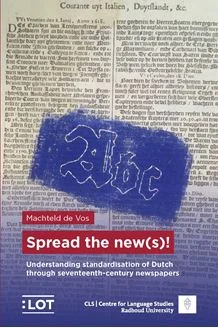
Machteld de Vos's 432-page dissertation Spread the New(s)!: Understanding standardisation of Dutch through seventeenth-century newspapers was listed by LINGUIST List on 20 July. Published in the LOT Dissertation Series, it compares grammatical norms in early Dutch grammars from about 1550-1650 with language use in newspapers from 1618-1699. The study finds little evidence that newspapers directly spread the codified norms, while suggesting that newspapers may still have helped usage become more uniform. 1
A new article on the oldest printed Dutch proverb book
Neerlandistiek published Proverbia Communia of Proverbia Seriosa on 21 July. The article describes this as the title given to the oldest known printed Dutch proverb book. 3
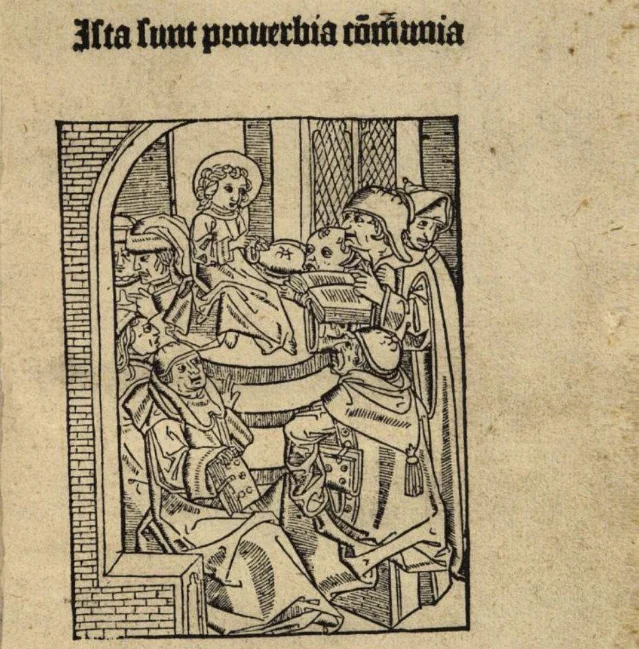
Ista sunt proverbia communia. 3Research and language use
Dutch-first-language students read German gender asterisks
A 22 July report from Bielefeld University discusses Evelyn Ferstl's research on gender-inclusive language. It says a recently published study found that students of German who speak Dutch as their first language understood texts with the gender asterisk as well as texts using masculine forms. The report distinguishes these results from harder-to-read singular combinations such as
der*die Lehrer*in; it says plural forms such as die Lehrer*innen were not rated as harder to understand in the studies described. The finding concerns Dutch-first-language readers processing German texts, not a change to Dutch spelling. 4
Regional varieties
Brusseleir combines Brabantian Dutch with French influence
The Brussels Times profiled Brusseleir on 19 July, describing it as a traditional Brussels dialect that developed from Brabantian Dutch and later incorporated hundreds of French words. The article gives
repareire as a Brusseleir adaptation of French réparer, and bougeire for bouger. It also records the expression Zan broek goêt allien voesj, literally "his trousers fall down by themselves", for someone who is very thin. The association Brusseleir! is using short videos on Instagram, TikTok and YouTube, along with an online vocabulary section, to introduce the variety to younger audiences. 5
Language activism and public debate
Nicoline van der Sijs on language activism across the centuries
In an interview published on 17 July, writer Maaike van Charante spoke with historical linguist Nicoline van der Sijs about how language activism has shaped Dutch. The discussion connects the rise of a shared written standard to printing, education, and the search for a common language in the Dutch Republic. It also uses examples such as
wiskunde and meetkunde, which the article attributes to Simon Stevin's efforts to replace French or Latin terminology with Dutch terms. A later section compares seventeenth-century complaints about insults recorded by Amsterdam notaries with present-day disputes over discriminatory or exclusionary wording. 6
References
- 1LINGUIST List, Spread the New(s)!: de Vos (2026)
linguistlist.org
- 2LOT Publications, Spread the new(s)!
dx.medra.org
- 3Neerlandistiek, Proverbia Communia of Proverbia Seriosa
neerlandistiek.nl
- 4Bielefeld University, How literature and language construct gender
aktuell.uni-bielefeld.de
- 5
- 6Maaike van Charante, Taalactivisme door de eeuwen heen
maaikevancharante.nl
This story was produced automatically by a channel. One sentence is all it takes for Neodrop to keep producing for you.